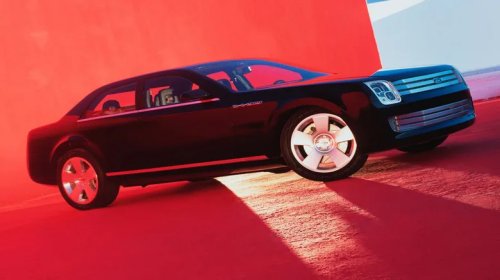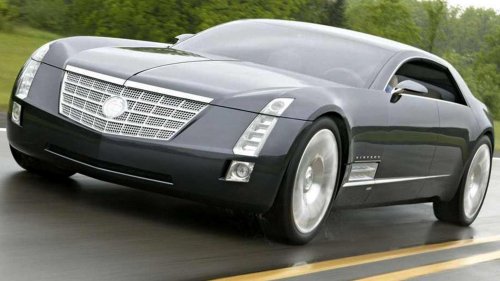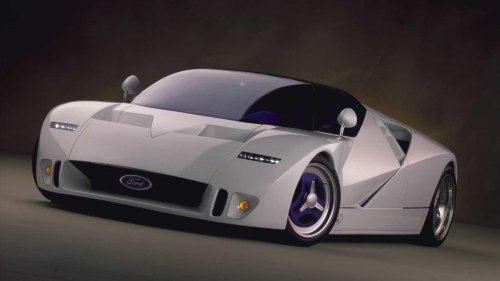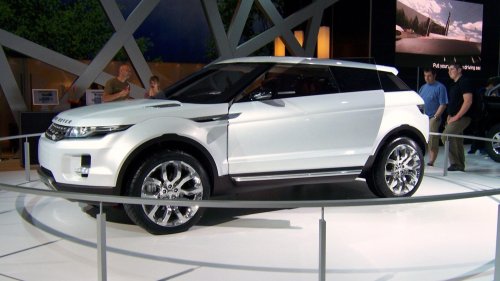
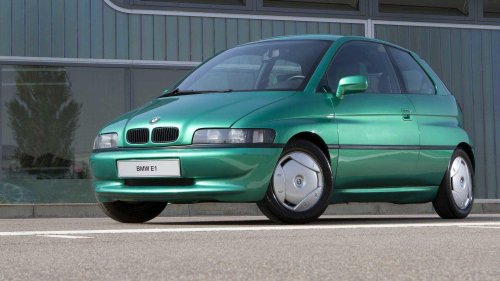
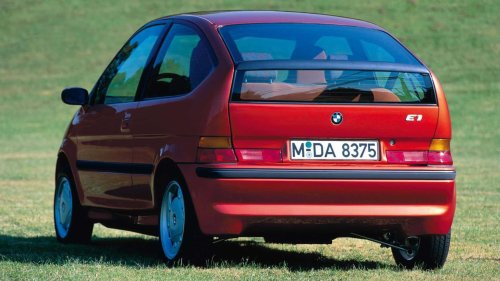
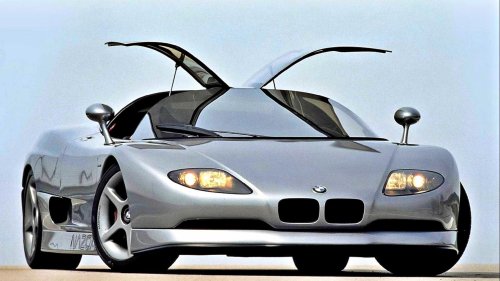
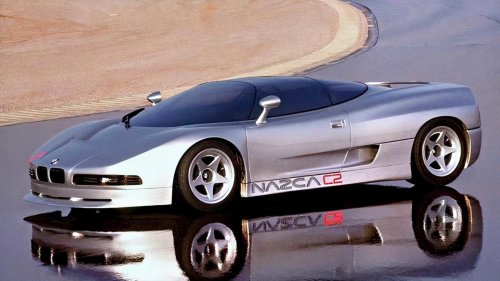
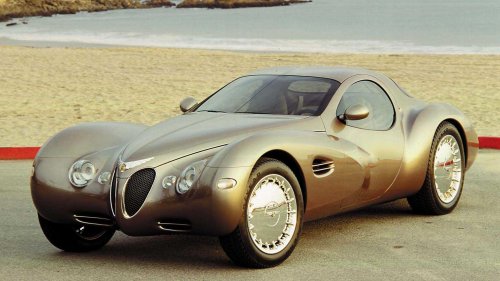
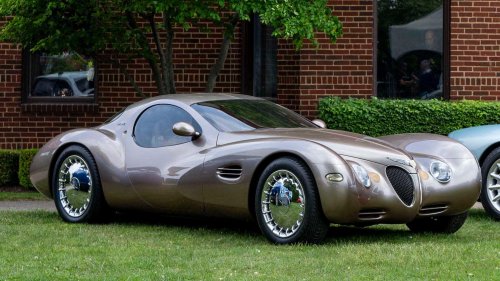
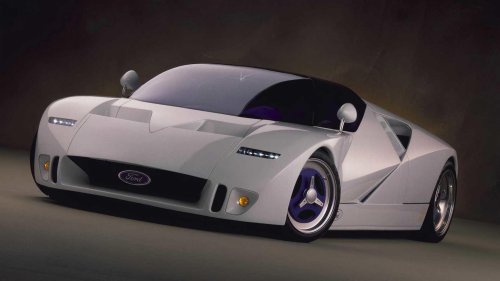
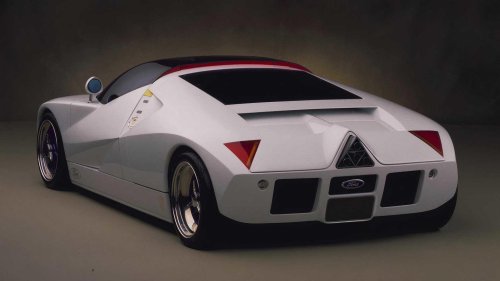
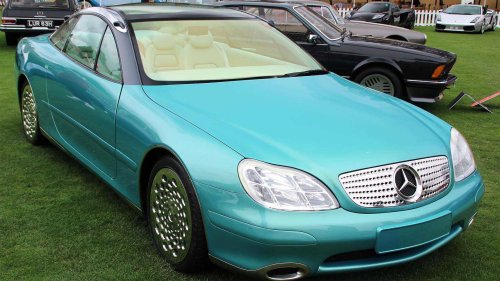
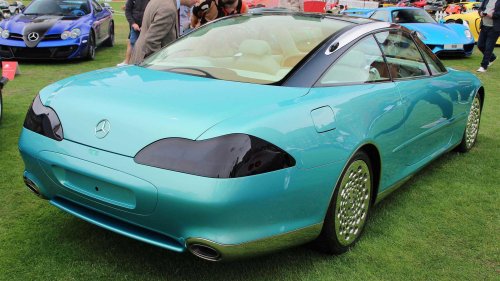
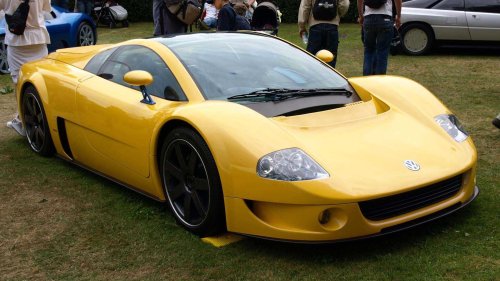
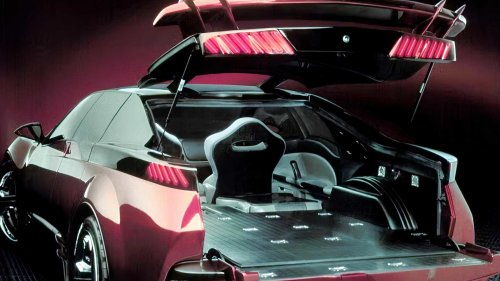
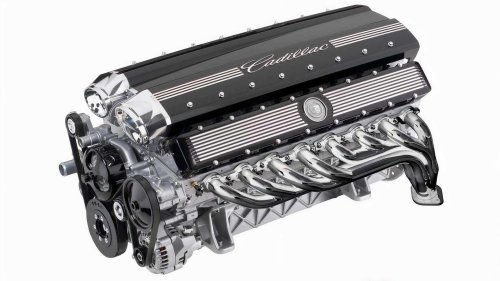
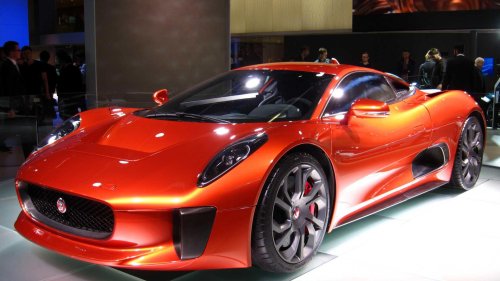
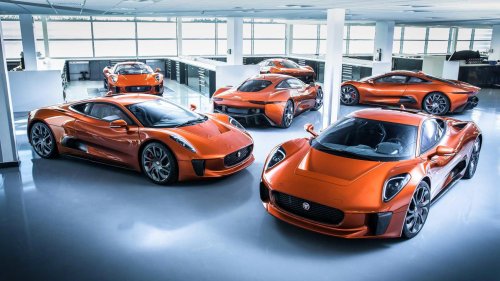



















Some concept cars make it to production largely unchanged, and these normally have an impact beyond that of just another model, because they take the wow from the motor show to our roads. Notable examples are the Audi Le Mans Quattro, which became the 2008 Audi R8 Coupe, the Land Rover LRX that became the 2012 Land Rover Range Rover Evoque, and the Hyundai Concept 45 that was launched as the Hyundai Ionic 5 in 2022.Many others dazzle on the motor show floor, but do not make it to the showroom floor. Some have elements that do, others were created just to dazzle, and that was that. But some concept cars would really have made an impact if they were ever produced. Here is a look at some of those.Models are listed in chronological order. Toyota AXV-IV - 1991 Super Lightweight Construction Wiki commons Mytho88Toyota introduced various concept cars throughout the '90s to demonstrate specific design ideas. The AXV-IV was all about lightness, aerodynamics, and fuel efficiency. This was a front-engine, rear-wheel drive coupe. The body was made with ultra-lightweight aluminum, magnesium, and carbon fiber. Even the springs, mounted inside the MacPherson struts in front, were made with fiberglass-reinforced plastic. The aluminum parts were made using aerospace technology, including extruding, precision casting, as well as foamed and honeycomb panels. The AXV-IV weighed only 992 pounds. The engine was an 804cc two-stroke with direct injection that pushed 63 horsepower through a five-speed manual transmission to the low-resistance 135/55R16 rear tires.Wiki commons Mytho88 If Toyota had pushed some of the ideas built into the tiny AXV-IV into production, it could have resulted in a Lotus-like movement in micro sports cars. But the cost of manufacturing would have been an issue, and increasing safety regulations would have made the production car heavier, negating all the benefits of the concept. Carbon fiber is used in cars today, though it is expensive. You will find it in high-end sports cars, on some EVs, and in performance parts like spoilers. BMW E1 - 1991 An EV Ahead Of Its Time BMWThe BMW E1 concept was way ahead of its time when shown at the Frankfurt Motor Show in 1991. Most EV concepts then were little more than golf carts with a body on them, but the E1 was a fully functional EV, with dual front airbags and other crash-safety gear. It was very light but strong, using an aluminum frame with plastic panels. It had a rear-axle-mounted motor and a sodium-sulphur battery under the rear seat, considered the safest place for it. The motor made 50 horsepower, and the E1 could reach a speed of 75 mph. Range was a very respectable 125 miles. Charging was via a standard electrical plug housed in one of the kidney grillle panels, and took six hours. The battery chemistry was a problem, and the original prototype caught fire while charging. The 1993 E1 was powered by a more stable sodium-nickel chloride battery.BMWBMW was aware of the limitations of the E1, and it was pitched as an urban mobility vehicle. Given that most city drivers travel less than 40 miles per day and the speed limits in urban areas, the E1 could have been a viable production car once the battery was sorted out. It would certainly have kick-started the EV industry ten or fifteen years earlier than when Tesla did in 2008. BMW Nazca M12 - 1991 Carbon Supercar BMW BMW had a bumper concept year in 1991, and showed the wild Nazca M12 supercar at Geneva. The car was 172 inches long, 78 inches wide, but only 43 inches high. The body was sculpted with carbon fiber, still an exotic material back then. It only weighed 2,425 pounds and had a drag coefficient of 0.26. The mid-engine was the M70 V12 from the 850i Coupe and 750i, a 5.0-liter V12 that sent 300 horsepower to the rear wheels through a six-speed manual transmission. Top speed was 184 mph.BMWBMW built two more Nazca concept cars in the following years, the last a Spyder layout. But strict emissions regulations, and the sheer cost of making this car out of carbon fiber back then meant it never went into production. But if it did, BMW could have had a supercar division today, taking on Ferrari and Lamborghini. Chrysler Atlantic - 1995 Retro Beauty Never Made Chrysler For a carmaker now making only minivans, Chrysler used to have a pretty wild side back then. Take the Chrysler Atlantic concept of 1995. It was an awesome retro-remake of the Art Deco Bugatti Atlantic from the 1930s. It was all stylish curves and sensual bulges, with barely a straight line to be seen. It had 22-inch wheels with sculpted chrome rims, and a prominent ridge that ran fore to aft on the body. The Atlantic was made from steel and had a straight-eight engine, so someone must have thought about production in the future. But the engine was merely two Neon inline-fours welded together, and none of the engineering made sense. The Atlantic, beautiful as it was, was destined to remain a concept.Chrysler It turns out the Atlantic's engine bay could have accommodated the Viper 8.0-liter V10 engine, and some of the chassis parts were Viper as well. The car could have gone into production still looking pretty much Art Deco, but with serious power and great sound. After all, it turned the Plymouth Prowler into a production model, and don't forget the P.T. Cruiser. If Chrysler had turned the Atlantic concept into a snarling V10 reality... Ford GT90 - 1997 Supercar Successor To The GT40 FordFord dropped the GT90 concept at the Detroit Auto Show in 1995. Hailed as America's space-age supercar, it was seen as the successor to the iconic GT40. It was a mid-engine layout, with a quad-turbo V12 that made 720 horsepower and 660 pound-feet of torque, with a claimed top speed of 253 mph. The engine was made by chopping the front and back two cylinders off two Lincoln V8s, making a 6.0-liter, 48-valve V12. Much of the rest of this car was borrowed from the Jaguar XJ220, including the five-speed stick shift and double wishbone suspension on each corner. There was a lot of carbon fiber and honeycomb aluminum used in the body of the car.FordThe Ford GT90 never made it into production, although some of the design language was later seen in lesser cars like the Cougar and Ka. Had Ford produced the GT90, it would have taken on the European supercars of the time head-on. It did not, perhaps could not. After all, Ford at that time owned Jaguar and failed to really do anything with that iconic brand. Mercedes-Benz F200 Imagination - 1996 Much Of The Future Foretold Wiki Commons MrWalker The Mercedes F200 Imagination was aptly named, as this concept car, launched at the 1996 Paris Motorshow, was a showcase for innovation on steroids. The tech that most caught attention was the drive-by-wire, where the steering wheel and other controls were replaced by electronically-controlled joysticks. Move on to the side, and the car turns. Move it forward, and the car speeds up. It has not really caught on. Active suspension did, as did cameras replacing rearview and side mirrors, an early infotainment/instruments screen, an early dashcam, an onboard computer and navigation system, headlights that could adjust to conditions and focus on a curve in the road, and keyless entry, all featured in this car. Butterfly folding doors made an appearance, but that was not popularly taken up.Wiki Commons MrWalker What would have happened if Merc had taken the Imagination to production back then? It was never meant to be, but in a way, most of the great ideas did get to market, and we can find them in our cars today. The joystick controls not so much, although there are rumors that Ferrari has recently taken out a patent on something similar. Volkswagen Syncro W12 - 1997 VW's Shot At Supercar Status Wiki Commons Flickr DarrenVolkswagen's name literally means People's Car, and the company built its success on the mass-market cars like the Golf, Passat, and Polo. But in the late '90s, VW felt the need to create speed, and in 1997, it launched the Volkswagen Syncro W12 concept. The Syncro was a four-wheel-drive, beautiful mid-engine supercar that held all manner of speed records with the one prototype, but the car itself never went into production. That VW failed to enter the supercar market then, or a couple of years later with the Nardo, is not important. What was, is the W12 engine that flowed from this project. VW took two VR6 engines and combined them side by side on a common crankshaft, creating a 6.0-liter twelve-cylinder engine that was 24 percent shorter than a V12, about the size of a V8. Weight was cut to a minimum by using aluminum alloy for the crankcase, alloy pistons, and aluminum cylinder heads. The Volkswagen Nardo was shown as a further development of the Syncro Concept.Wiki Commons Lebubu93If Volkswagen had produced the Syncro or Nardo concepts, these would have been stand-out supercars, but Volkswagen is not a supercar brand. The W12 did live on, first in the Audi A8, then in the ill-fated luxury Phaeton, and still in the Bentley Continental. A later W16 iteration of the same engine powered the wild Bugatti Veyron and the models that followed. Pontiac Rageous - 1997 Family-Friendly Muscle Car GM If a camel is a horse designed by a committee, the Rageous is a camel with wheels. It first showed at the 1997 North American International Auto Show, and at first glance, it was a doozy. A 5.7-liter V8 making 315 horsepower and 335 pound-feet of torque, with a five-speed manual, a bit heavy, but still running 0-60 in 5.5 seconds. All good so far, but then it got weird. It was also a hatchback with a huge 49 cubic feet boot, a large wing at the back, mounted on the drop-down tailgate. Four bucket seats, four door, suicide layout, minivan level of storage spaces, the weird goes on. The Rageous was a family-friendly muscle car, and it never made it out of the motor show. If you compare it to earlier, more focused Pontiac ideas, like the '60s Banshee, designed to compete with the Corvette, the Rageous is all over the place.GMWhat would have happened if Pontiac had decided to produce the car? It would have been a commercial flop. It had too many lanes to stay in, and it was not particularly good at any of them. Too expensive for a family car, too complicated for a muscle car. The Rageous would, however, be a much sought-after collector's car in the same way that the Edsel is. Cadillac Sixteen - 2003 The Ultimate Concept Car CadillacCadillac needed to make a statement at the turn of the millennium, to tell all the upstarts that the boss was still in business. Cadillac channeled the 1930s introduction of the V16 with this retro-ish monster. It was 215 inches long, had four seats, and a 13.6-liter V16 making 1,000 horsepower and 1000 pound-feet of torque. No turbos, just cubic inches. The interior was as luxurious as the exterior was outrageous. The engine was, for the time, quite advanced. It was made by stitching together two V8s, and you could shut down half or even three-quarters of the cylinders to save fuel, a feature still found today in the big Caddy V8s. The wheels were a massive 24 inches, but anything smaller would have looked ridiculous on this monster. In spite of its size, the Sixteen weighed in at 5,000 pounds.Cadillac What would have happened if Cadillac decided to produce the Sixteen? It would have sold at a massive price, in very small numbers. The Sixteen would have had to be mainly hand-built. But production was never the aim of this monster. Cadillac was flexing its muscles and telling the motoring public where it intended to go with its cars. You can see the lineage of the Sixteen in the long-wheelbase Escalade SUV today, and that was probably always the aim of this car. Jaguar C-X75 - 2010 The Right Car At The Wrong Time Rutger van der Maar via commons.wikimedia.org Jaguar introduced the C-X75 concept car at the 2010 Paris Motor Show, a radical extended range hybrid, designed to challenge the McLaren supercars of the day. The powertrain was made up of four electric motors, one on each wheel, which produced 778 horsepower. The batteries were recharged with two diesel micro-gas turbines. Although it was intended as a design study, it did briefly start production, and it was featured in the Bond movie Spectre. The C-X75 was Jaguar-beautiful, and the levels of innovation were cutting-edge. The production models did switch from the micro-turbines to a more conventional gas engine.JaguarThe Jaguar C-X75 was a brilliant concept, and it would have been a top supercar in any other circumstances. The power and range of this early hybrid could have challenged the early dominance of Tesla and could have sped up the development of performance hybrid supercars. But the great recession intervened, and the world wanted affordable rather than flash then, and the rest is history.