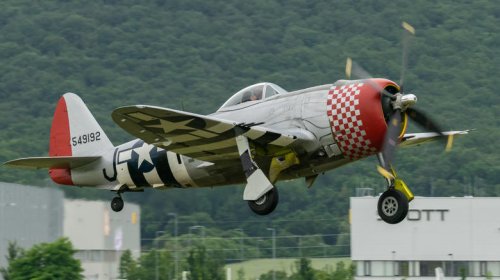
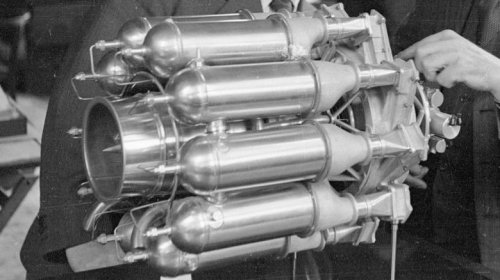
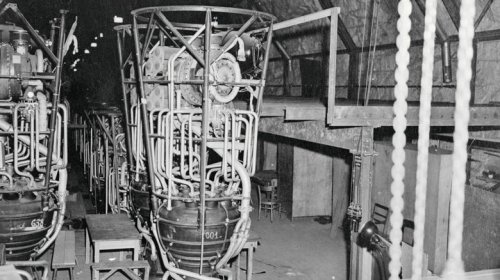
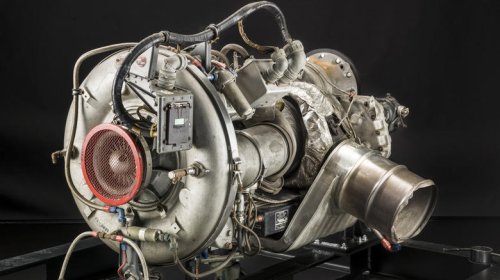



















Armstrong Siddeley Jaguar J-1The unwieldy rotary engine of the First World War made way for a new setup. By the war's waning days, rotaries began disappearing in favor of radial engines. Both were internal combustion engines, but instead of having a stationary crankshaft around which the engine rotated, radial engines used cylinders arranged around a central hub. As in a traditional engine, the crankshaft in a radial spun as the piston fired. This setup reduced the gyroscopic effect that World War I pilots struggled against in combat.Air-cooled radials also provided better power for their weight. In 1920, the United States Navy declared it exclusively use air-cooled radials in its plans. Other services soon proclaimed the same. In 1922, the Armstrong Siddely Jaguar J-1, designed by Charles Lawrance, broke records for durability. Its steel-lined aluminum cylinders provided 300 hours of operation at a time when 50 hours was the standard. The lightweight reliability proved perfect for the Navy's need for light and dependable aircraft engines.Radial engines advanced over the following two decades. Many famous warbirds of the Second World War used radials, including the Focke Wulf Fw 190, Republic P-47 Thunderbolt, and others. As combat often requires the most power, jets replaced radial engines in the post-war years but continued to play a role in civilian and non-combat applications.Whittle W-seriesPiston-driven planes dominated the skies of World War II, both as radials and as inverted V configurations found in the Supermarine Spitfire and Messerschmitt Bf-109. But as powerful as these engines grew by the war's end, they couldn't stand up to the emerging jet age.The Germans are often credited with innovating jet technology during the Second World War, but development occurred in England as early as 1932. That's when Sir Frank Whittle patented his jet aircraft engine. A turbojet that created as much as 1,240 pounds of thrust via a single-stage compressor, the W.1 had potential, but it would take time to develop. It would be five more years before the Whittle was ready for its first bench test on April 12, 1937. By 1939, the British Air Ministry had contracted an engine to test the new Gloster E.28/39 airframe.As noted above, the Gloster Meteor achieved operational status before the end of World War II, but it would be by the latter half of the 20th century that jet aircraft played the most significant role. The jet age had well and truly arrived, thanks in part to the Whittle W-series. The Me-262 predated the Meteor by a matter of months. Due to the Germans' desperate use of the 262 in combat, it became more famous than the Meteor.V-2 rocket enginePerhaps one of the reasons Germany became known for its propulsion technology was the V-2 missile. Humanity had been experimenting with rocketry as early as 1921 when inventor and physicist Robert H. Goddard envisioned sending the craft into space, but World War II accelerated the science.At the height of the Second World War, Germany launched unpiloted V-2 rockets willy-nilly at London with little regard for what they hit. The progenitor of the intercontinental ballistic missile (ICBM), V-2s, used rocket engines for propulsion.The engine in question was a liquid-fuel rocket that generated up to 56,000 pounds of thrust. Considering that the Whittle jet engine was thrusting in the 1,200-pound range, that was some serious power. After being ignited by a pyrotechnic device, the fuel burned at about 4,900 degrees Fahrenheit until it was exhausted.The V-2 rocket was not the first experiment with rocketry, but it did showcase its application in warfare. More advanced liquid-fueled rockets are used today in modern ICBMs, capable of carrying out attacks thousands of miles from launch. They are often used in first-stage launch vehicles that send astronauts and satellites into space. While the first space war is yet to break out, satellites have been used exhaustively for communication and intelligence gathering on the battlefield.Boeing 502With all this talk of rockets and jet engines, it is easy to forget the turbine, but we won't let that happen. Every jet engine is a type of turbine designed to propel an object by directing thrust power rearwards. Thrust power is the force that propels an object forward, and in the case of a jet, it is created by the rapid expulsion of high-velocity gases. A turboshaft turbine uses the energy it creates to drive machinery.As mentioned above, early helicopters utilized piston engines, but as the science progressed, things changed thanks to the Kaman K-225. In 1951, a Kaman K-225 helicopter previously fitted with a reciprocating engine received a transplant. The Boeing 502 gas turbine that went into its engine bay made it the first helicopter to fly with a transmission driven by a gas turbine. There were several advantages to turbine power, including lighter weight, increased safety, and higher payload capability.Helicopters were just the beginning. With turbine engines proving their utility in the air, they began to appear in tanks. One of the first production tanks to use a turbine was the Swedish Strv-103 main battle tank.Today, America's frontline M1 Abrams main battle tank uses an AGT1500 Gas Turbine Engine developed by Honeywell Aerospace Technologies. The 1500 hp turbine in the M1A2 can propel the 68-ton armored vehicle up to 42 mph up to 265 miles on a single tank of fuel — as long as you're cool with a miles-per-gallon rating of about 0.6 mpg.