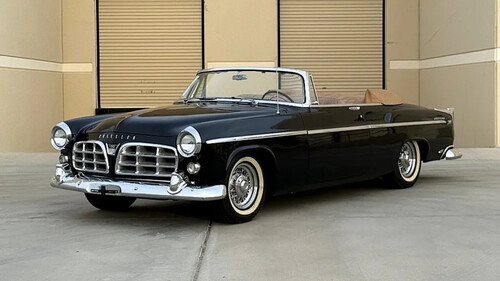
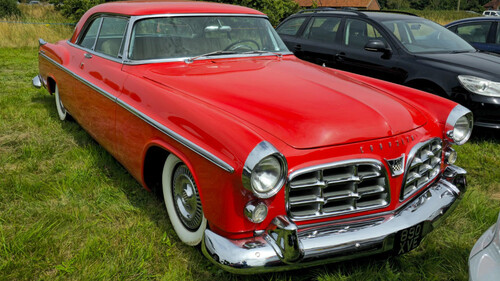
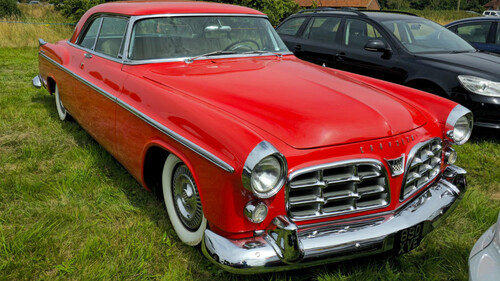
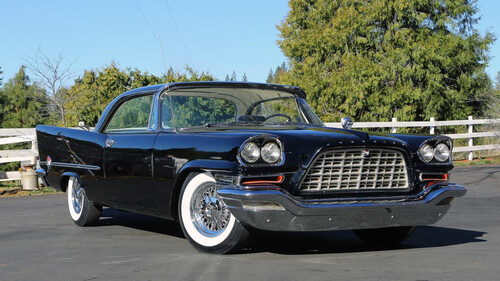
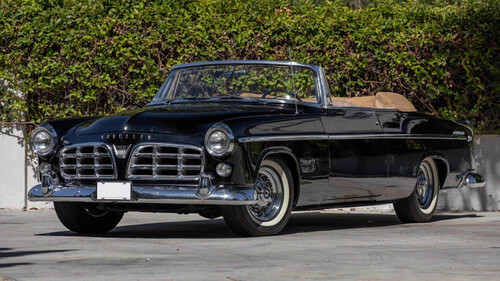
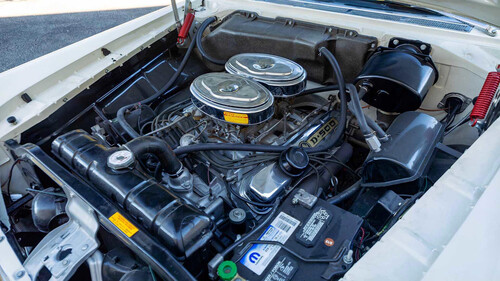
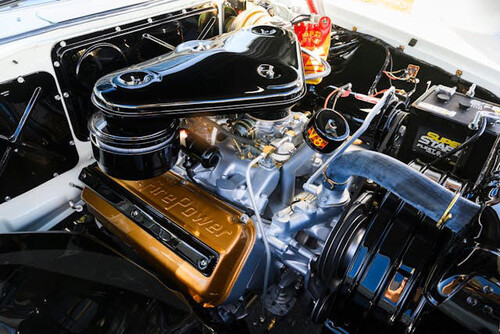
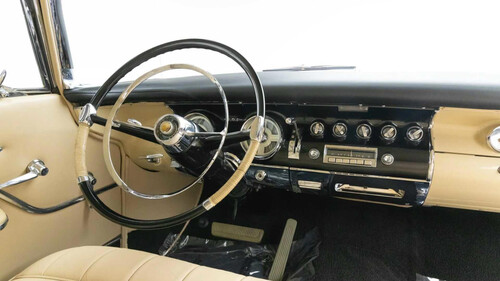
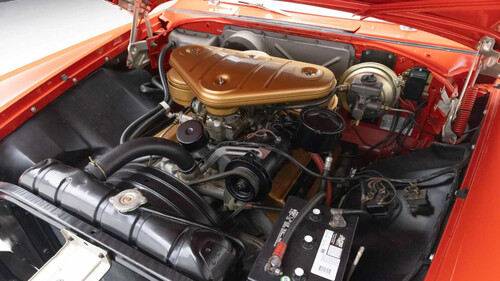
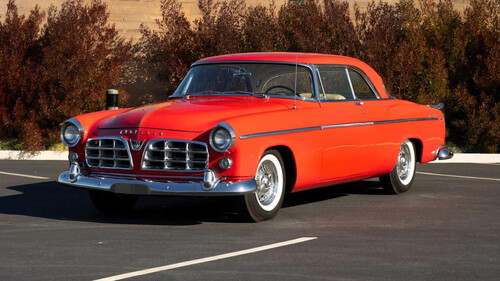
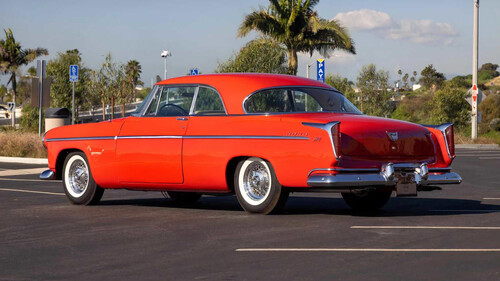
Luxury met early muscle when the 1955 Chrysler C-300 changed expectationsIn 1955, while America was fixated on pastel coupes, glittering hardtops and ever taller tailfins, Chrysler quietly rolled out something very different. The Chrysler C-300 fused a serious racing engine with a full-size luxury body and, in the process, rewrote what buyers could expect from an upscale coupe. Long before the muscle car era had a name, this car showed how early muscle could live comfortably in a world of leather seats and power accessories. Today, the 1955 Chrysler C-300 is often introduced as the first true muscle car, yet it was marketed to bankers and executives rather than street racers. That tension between refinement and raw force is what made the C-300 so disruptive and why its influence still runs through modern performance sedans and grand tourers. The moment America met early muscle Contemporary footage of the C-300’s launch paints a vivid contrast with the chrome-heavy fashions of mid‑1950s America. While mainstream buyers chased pastel-colored coupes and flashy trim, a darker, more purposeful Chrysler appeared in showrooms, described in one period account as a mysterious machine that seemed to come from a different mindset. A modern video on why the car is often called the first muscle car notes that in 1955 America was obsessed with glistening hard tops and tail fins, yet this Chrysler arrived with a far more serious demeanor, a point underscored in a detailed walkaround of the model in archival footage. Rather than relying on bright colors and ornament, the C-300 projected power through stance and proportion. It shared the basic body with Chrysler’s New Yorker and Windsor lines, but the details were tightened and cleaned up. The grille carried a simple egg-crate pattern, the side trim was restrained and the car generally looked more like a competition machine in formalwear than a boulevard cruiser. That visual seriousness set the stage for what sat under the hood. Why the C-300 wears the “first muscle car” label Debate over the first muscle car will never fully end, but the C-300 checks several boxes that enthusiasts now treat as defining. It was a relatively ordinary full-size body stuffed with a large, high output V8, it was marketed on performance and it carried that performance straight into organized racing. A modern explainer on the car’s legacy notes that in 1955 a mysterious performance coupe appeared just as America’s appetite for power was growing, and that it delivered in ways earlier hot Fords and Oldsmobiles did not, as seen in period commentary linked in the same historical overview. Unlike later intermediate muscle cars, the C-300 did not shrink the body to chase weight savings. Chrysler instead built a high performance variant of its most formal two-door hardtop. The result earned the nickname “the banker’s hot rod,” a phrase that appears in modern descriptions of the car as America’s first true muscle machine. One such summary describes how the C-300 hardtop coupe combined a refined full-size design with unprecedented performance and notes that the model was widely regarded as America’s first true muscle car, a reputation that still follows it in enthusiast circles and is reflected in coverage from classic car historians. The argument for its primacy rests on timing and intent. Earlier V8 cars offered speed, but the C-300 was built from the start as a homologation special to win on the track and impress on the street. That dual mission, combined with its 300 horsepower rating and luxury trimmings, set a pattern that later Detroit muscle would follow. The luxury coupe that hid a race engine On paper, Chrysler positioned the C-300 as the top of its 1955 lineup. It sat above other models in price and specification and was built in limited numbers. A period fact sheet lists the 1955 Chrysler 300 as the most powerful automobile in the company’s catalog and frames it within broader Chrysler Facts, Figures, Specifications that covered the full range of New Yorker, Windsor and other variants, as detailed in the official Chrysler Facts, Figures,. Inside, the C-300 went beyond brute strength. A modern restoration listing describes it as a refined, full-size automobile with abundant luxury features and lavish interior appointments, a characterization that matches period brochures and owner recollections. The car carried high grade upholstery, full instrumentation and the kind of ride isolation expected from a flagship. An enthusiast-focused sales description notes that the C-300 offered a level of comfort and finish that set it apart from later bare-bones muscle machines, a point highlighted in the profile of the 1955 Chrysler C300. This combination of quiet luxury and serious performance hardware is what made the car feel so different. Buyers could sit in a well-trimmed cabin, surrounded by chrome and leather, yet know that the engine in front of them was essentially a race-prepared Hemi. The Hemi heart: 300 horsepower from 331 cubic inches The centerpiece of the C-300 story is its engine. Chrysler dropped a modified version of its early Hemi V8 into the car, a powerplant that enthusiasts still refer to simply as the Hemi. A museum profile of a surviving example notes that the 1955 Hemi 300 used a 331.1-cubic-inch Hemi with hemispherical combustion chambers and that the engine’s nickname came directly from that chamber design, as described in the New England museum’s overview of the Hemi 331.1-cubic-inch powerplant. Contemporary driving impressions underline that the car was named for its output. A modern test drive video explains that the 1955 Chrysler 300 carried that badge because it was the first Chrysler with 300 horsepower and notes that the engine displaced 331 cubic inches, a detail repeated in the on-road commentary that accompanies the 331 cubic inch demonstration. To reach that figure, Chrysler engineers borrowed heavily from the company’s racing program. Higher compression, more aggressive camshaft profiles and dual four-barrel carburetors helped the 331.1-cubic-inch Hemi achieve the magic 300 horsepower rating. That number was not just a marketing hook. It made the C-300 one of the most powerful American production cars of its time and gave it the authority to dominate stock car racing. From showroom to speedway The C-300’s racing success is central to its legend. Chrysler built the car to compete in NASCAR and other stock car series, and the strategy paid off. Period accounts describe how the car’s Hemi engine and heavy duty suspension allowed it to run away from rivals on high speed ovals, and later enthusiasts have framed the model as an early salvo in what would become the muscle car wars of the 1960s. A retrospective discussion among enthusiasts describes the 1955 Chrysler C-300 as an early start to those muscle car wars and links that status to the way manufacturers later escalated displacement and horsepower until the early 1970s. One such conversation, hosted in a community devoted to performance cars, explicitly connects the C-300’s success in the mid‑1950s to the trend toward ever larger engines that eventually stalled during the 1973 oil crisis, a historical arc summarized in the muscle car wars discussion. On the street, the same traits that made the C-300 a winner on track translated into strong acceleration and high top speeds for owners. Contemporary testers praised its ability to cover long distances quickly and comfortably, a combination that anticipated the later idea of the American grand touring coupe. Production numbers, price and exclusivity Part of the C-300’s mystique comes from how few were built. A detailed video breakdown of the model’s history notes that the car carried a base price of 2939 dollars and that only 1720 C-300s were produced for the 1955 model year. Those figures, presented in a modern analysis of the car’s market positioning, show that Chrysler aimed the C-300 at a relatively narrow audience of buyers willing to pay a premium for performance, as outlined in the enthusiast review of the 1720 C-300s. Within Chrysler’s broader 1955 range, that price placed the C-300 near the top. The same fact sheet that labels the 1955 Chrysler 300 the most powerful automobile in the lineup also catalogs the New Yorker Deluxe, Windsor Deluxe and other trims, reinforcing how distinct the 300 was within the company’s portfolio, a distinction documented in the official Chrysler-300 application data. Low production and high performance have helped the C-300 age gracefully in the collector market. An auction listing from Phoenix, Arizona, for chassis number 3N551301 with engine number CE555235 recorded a sale price of $77,000 USD for a well presented example. That record, which lists the car simply as a 1955 Chrysler C-300 and highlights its condition and specification, shows how collectors value the combination of rarity and historical significance, as seen in the catalog entry for the $77,000 USD sale. How Chrysler wrapped muscle in formal sheet metal The C-300’s styling has always been part of its appeal. Rather than advertise its performance with stripes or scoops, Chrysler chose a clean, almost conservative look. The car’s two-door hardtop body, shared with other Chrysler models, featured a long hood, short rear deck and a relatively upright roofline. Subtle details like the egg-crate grille and discreet badging set it apart without shouting. Paint and trim options underscored that restrained approach. Period color charts for Chrysler’s 1955 models list shades such as Desert Sand alongside more traditional hues, and these charts are preserved in specialist references that catalog paint codes for the 1955 Chrysler range. One such database lists Desert Sand under a specific code for that year and manufacturer and ties it directly to Chrysler’s 1955 offerings, as documented in the Desert Sand entry. Underneath, the car used heavy duty springs and shocks to cope with the engine’s power and the demands of racing. Technical references for replacement suspension parts list specific applications for the 1955 Chrysler 300, New Yorker Deluxe and Windsor Deluxe, reinforcing how the C-300 shared basic architecture with its siblings while receiving uprated components. This shared platform is evident in parts catalogs that group Chrysler-300, Chrysler-New-Yorker-Deluxe and Chrysler-Windsor-Deluxe together for 1955, as shown in the New Yorker Deluxe and Windsor Deluxe listings. Digital trails and modern documentation Interest in the C-300 has also been preserved and amplified in the digital era. Detailed historical videos on the model’s origins and racing record are hosted on platforms that rely on developer tools for video integration. One such resource is the YouTube developer documentation, which is cited in connection with an explainer titled “Why Is the 1955 Chrysler C-300 Called the First Muscle Car” and appears in the citation trail as Discovered via Why, linking modern storytelling about the Chrysler and the phrase Called the First Muscle Car to the underlying technology that distributes those videos. More from Fast Lane Only Unboxing the WWII Jeep in a Crate 15 rare Chevys collectors are quietly buying 10 underrated V8s still worth hunting down Police notice this before you even roll window down