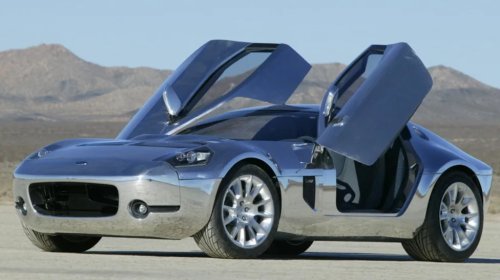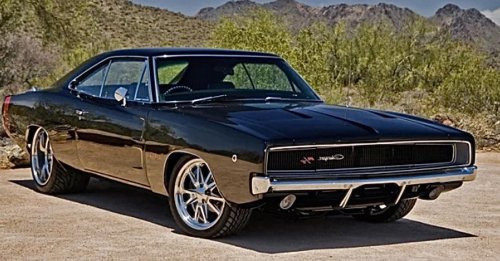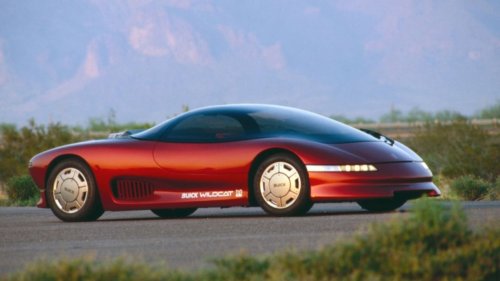



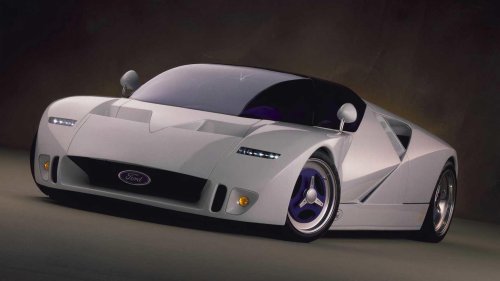



























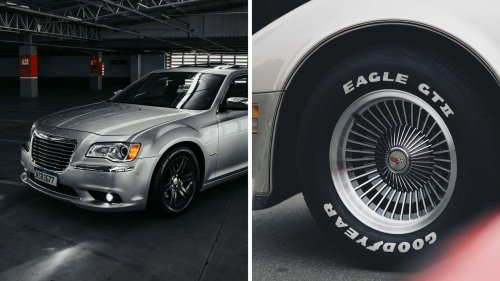
American brands created the concept cars below to showcase the engineering might or bright new ideas that were soon to be filtered down into real production cars. Sometimes the design of these machines influenced the cars that we could buy. Sometimes they existed to show possible new design paths for the future. Sometimes, they serve as testbeds for new technology.Nearly always, they were awesome and revealed how far American auto engineers could push the envelope, producing machines we wish could have been sold in the same image as the concepts. From sports cars to luxury coupes, here are some of the most desirable machines produced as concepts, all made in the USA.To provide you with the most up-to-date and accurate information possible, the data used to compile this article was sourced from various manufacturers and other authoritative sources, including Hagerty, Hemmings, museums, and official heritage institutions. Specs provided serve as a guide, but due to the nature of the available data, they may vary from the actual specifications of the concept described. 1986 Chevrolet Corvette Indy Chevrolet Corvette Indy concept 1986, side profileToday, a mid-engined Chevy Corvette is now the norm, but back in the 80s, there were various attempts to research the feasibility of a 'Vette with its engine out back. The 1986 concept was a lightweight, carbon fiber and Kevlar-bodied supercar with an IndyCar engine, displacing just 2.65 liters, hence the name Chevrolet Corvette Indy. Here, the goal was also to push advances in technology with features such as adaptive suspension, four-wheel drive, four-wheel steering, and more, especially on the inside. Model Example: Basic Specifications Its cabin featured various displays, including a CRT screen with a working version of very early GPS navigation, as well as a backup camera and an array of other features. This testbed of a vehicle was ostensibly going to showcase the next Corvette's design direction, but it was mostly a typical concept, radical yet not for production. A version used for publicity housed a more traditional 5.7-liter V8, but this was a special, 32-valve, overhead-cam V8 tuned by Lotus that would appear in the C4 Corvette ZR-1. 1988 Pontiac Banshee IV Pontiac Banshee IV concept, front 3/4As part of a long-running series of concepts that date back to the 60s, the Pontiac Banshee from 1988 was the most futuristic iteration yet, and the most advanced. Its body is modern even by today's standards, and that's before we look at the spec sheet. Unfortunately, the engine was not as impressive as the overall design, but it was also a little different. The engine was of an experimental, unitized design; the block and heads were a complete, closed unit without separate head gaskets. ABS was fitted, and the bodywork placed a heavy emphasis on futuristic design. Model Example: Basic Specifications Inside, the Banshee IV continued the futuristic theme with many features. Among the gray plastic that dominated the cabin was a sea of buttons, eccentric, two-part seats with built-in speakers, and a floating section for the top. It previewed one of the first implementations of GPS technology, again, on a CRT screen like the Corvette Indy. Other features included an electrically adjustable wheel, pedals, and a driver's seat. The most notable thing about this concept is that it previewed, pretty accurately, the design direction of the subsequent fourth-gen Chevy Camaro, though the radical influence of the Banshee would be pared back drastically. 1988 Oldsmobile Aerotech 1988 Oldsmobile Aerotech concept, front 3/4Despite coming from an old brand like Oldsmobile, the Aerotech concept was a cutting-edge test bed for the new Quad 4 engine, a four-cylinder, twin-cam mill that was produced from the end of the 80s until as late as 2002. Despite its diminutive size, the Quad 4, when turbocharged, could produce as much as 900 horsepower for the 'short tail' version of the Aerotech, seen above with the wing attached. One turbocharger was fitted to this version. No actual road cars were turbocharged, but the testing of this iron-block, aluminum-head design proved the Quad 4's strength. Model Example: Basic Specifications A 'long-tail' version of the Aerotech was produced, with an elongated rear like a McLaren Speedtail. This one produced around 1,000 horsepower thanks to a twin-turbocharged setup. Both versions of the Aerotech were inspired by Le Mans racing cars with lightweight carbon-fiber-bodied designs and a focus on aerodynamics, with speeds of over 250 mph proven in various speed runs. As a test bed and publicity generator, the Aerotech accomplished its purpose, but it's a shame it was never released as a more refined supercar. 1989 Dodge Intrepid 1989 Dodge Intrepid ConceptIf this concept looks familiar, that's because it ostensibly paved the way for the similar-looking Mitsubishi 3000GT and Dodge Stealth. Chrysler and Mitsubishi's partnership resulted in these two badge-engineered twins, with the former providing the design and the latter providing the powertrain and underpinnings. Arriving in time for the 1987 Detroit Auto Show, the Intrepid concept wore styling that would showcase some of the Dodge Stealth/3000GT's lines later on. Model Example: Basic Specifications Aside from the glass canopy and the mid-engine setup, this concept was reasonably production-ready and realistic. Instead of an exotic engine that befits a mid-engined car, the Turbo III engine was installed, a relatively small four-cylinder, turbocharged, with a Lotus-engineered DOHC head. This engine would later feature in the Dodge Spirit R/T, and in fact, this setup made slightly more power than the naturally aspirated, 3.0-liter V6-powered Dodge Stealth. 1995 Ford GT90 1995 Ford GT90 concept, front 3/4Fast-forward to the 1995 Detroit Auto Show, and America, once again, proved it had the might of both incredible engineering and out-of-the-box thinking when it came to performance car concepts. Looking relatively production-ready and feasible, the Ford GT90 would have been anything but practical or cheap to run, but it was a masterpiece of design, futuristic form, and wore the Blue Oval's 'New Edge' design. The GT90 was designed to showcase Ford's technical prowess and also marked the 30th anniversary of the iconic GT40 racing car. Model Example: Basic Specifications It was built with the Jaguar XJ220's chassis and suspension, while the exotic 5.9-liter, quad-turbocharged V12 in its rear was built on the reliable Ford Modular engine architecture, albeit with four extra cylinders. The futuristic design, blue interior, New Edge design details, and impressive powertrain made it very interesting, and with a longer development window, it could have been a competitor to the best European supercar rivals. Zero to 60 mph was said to be in the order of three seconds, and a top speed was estimated at 235 mph. Its badge and very 90s-Ford-inspired interior may have made it a hard sell to Ferrari owners, though. 2000 Chrysler 300 Hemi C Chrysler 300 HEMI C Convertible Concept (2000), front 3/4The Chrysler 300 Hemi C was designed as a concept to show the future of the brand's return to rear-wheel drive, and the concept, released for the 2000 North American International Auto Show in Detroit, featured a rear-drive setup accompanied by a Hemi V8 engine. Chrysler wanted to revive its V8 heritage, as well as resurrect the memory of cars like the 1957 Chrysler 300C. Its design is modern with inspiration from the 50s 300C, with a muscular stance and opulent style distinguishing it from similar models like the Chrysler Sebring convertible. Model Example: Basic Specifications Rear-wheel drive was the focus, but the Hemi was also an unmistakable highlight for many enthusiasts. The Hemi engine would finally return in 2003, starting with the Dodge Ram, then the Durango, and the new Chrysler 300C. While the engine's output looks mild by today's standards, it's worth remembering that the naturally aspirated version of Cadillac's XLR from 2004 made 320 horsepower. This model could have been a hit, but it wasn't to be - later on, Chrysler would release the Crossfire, which was rear-wheel drive, but based on the Mercedes-Benz SLK and powered by six cylinders instead of eight. 2002 Cadillac Cien Cadillac CienThis American concept is all exotic and European-looking, with styling and design that would have made it a hit for sure. The Cadillac Cien (Cien = Spanish for one hundred) was shown off at the 2002 Detroit Auto Show to celebrate the centenary of the brand. It was built with all the qualities you would expect of a proper supercar from Europe - the lightweight composite construction, active aerodynamics, and cohesive design, influenced by fighter jets. Model Example: Basic Specifications Prestigious UK-based engineering brand Prodrive assisted with the development, and the Cien was a real working machine. Under the hood was something European: a big V12 engine, but designed by Cadillac and based loosely on the Northstar V8 engine architecture, albeit with a 60-degree bank (instead of 90 degrees) and some other features like displacement on demand and direct injection. Inside, the interior was not for all tastes but certainly stood out with its retro influence and flair. A supercar we wish Cadillac could have brought into the world, to finish what the XLR started. 2004 Chrysler ME FourTwelve 2004 Chrysler ME Four-Twelve PosedChrysler produced its own take on the European sports car theme with the ME FourTwelve - it featured a design that looked production-ready on the outside with styling that was every bit as convincing as anything from McLaren, Bugatti, or Koenigsegg. There were a few rough edges, including the odd interior shown in the computer-generated images, but as a design for a flagship supercar, Chrysler had gone out of its comfort zone and produced something incredible. A working prototype was produced after the initial design was revealed and featured a Mercedes-Benz engine - the M120. Model Example: Basic Specifications The M120 is a V12 produced by the German brand that is featured in various Mercedes-Benz flagships, but this version was modified, and four turbochargers were installed: this gave the car its name - ME (for mid-engine) and FourTwelve for the quad-turbo, twelve-cylinder setup. A lightweight carbon fiber body and carbon-fiber/aluminum unibody design kept weight down, which, along with the big power output, made this an impressive machine in 2004. Speed and acceleration were estimated at under three seconds to 60 mph and a top speed of just under 250 mph. This would have made it a rival to the Bugatti Veyron, albeit perhaps not as luxurious. 2005 Ford Shelby GR-1 2005 Ford Shelby GR-1 ConceptFirst revealed in 2004 as a clay model, the Shelby GR-1 was later unveiled as a working model at the 2005 North American International Auto Show. This concept is inspired by the Shelby Daytona, the coupe evolution of the Shelby Cobra racing car, built to take on Ferrari. Some of its underpinnings are shared with the Ford Shelby Cobra Concept that was revealed a year earlier, including the 6.4-liter V10. The mighty ten-cylinder engine is based on the Ford Modular architecture, although its displacement is unique. Other components were shared with the first-gen Ford GT, which also debuted at this time. Model Example: Basic Specifications Details like butterfly doors, its polished aluminum exterior, and a driver-focused interior make the GR-1 especially interesting. It was, like many concepts, unfeasible when the time came to put it into production. Modifications were needed, but the main issue was commercial viability. Few would likely be sold, and the price would be high. In the end, the model was announced to be built by Superformance under license, but since 2019, none have materialized. Superformance has said that they are still trying to get the project up and running. 2009 Chevrolet Stingray Corvette Stingray Concept profile shotThe last model here is an all-American hero, recognizable and yet different from any Corvette before. It is called the Chevy Stingray, inspired by the Corvette Stingray Racer concept from the 50s. Like that concept, this one featured a metallic finish, as well as emphasized wheel arches and a sleek front end with minimal headlights. Its rear end is inspired by the Corvette split-window design that became iconic. Some of the exterior design is radical, such as the large intakes in the front fairing and the large vents in the rear fascia. Model Example: Basic Specifications Scissor doors were specified, and an advanced hybrid system was touted, but most sources suggest that the driving prototype made do with an LS3 V8 - the same as the C6 Chevy Corvette. Technology was supposed to be another strong suit of the Stingray. In the end, the concept looked like a futuristic Corvette with some obvious features that would probably not make production. It did influence later design, however, with some of the radical lines and details, like the slim headlamps, making it to the C7 'Vette.