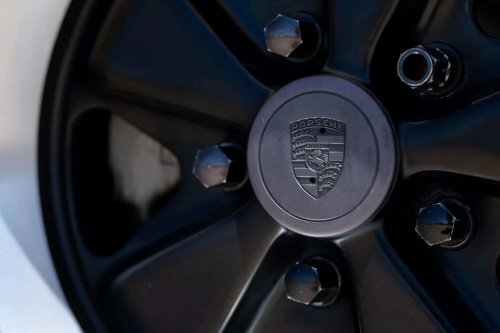
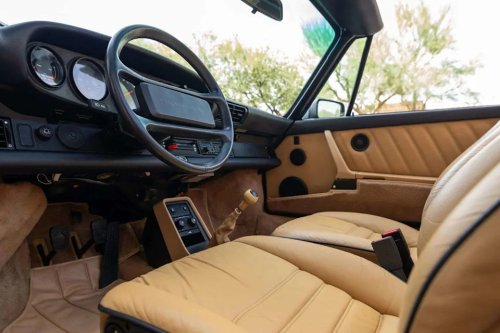
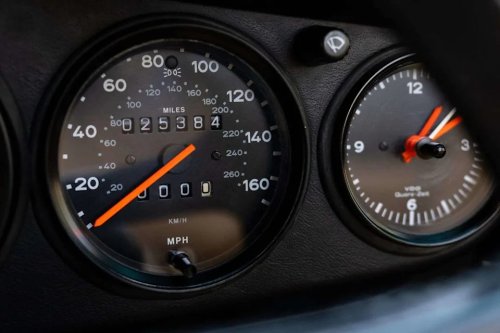
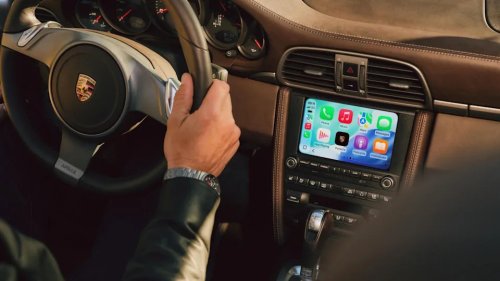
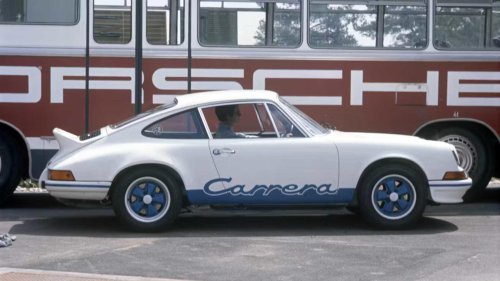
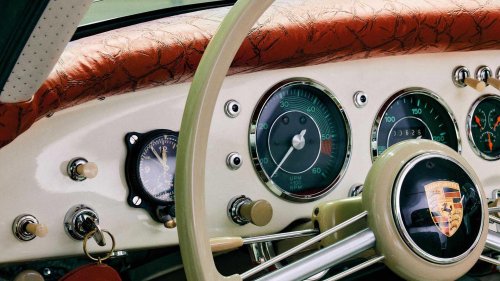
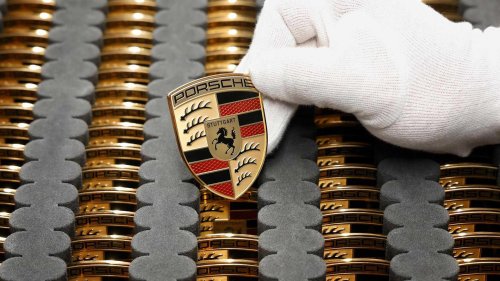
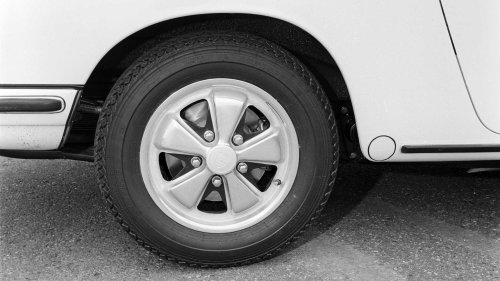
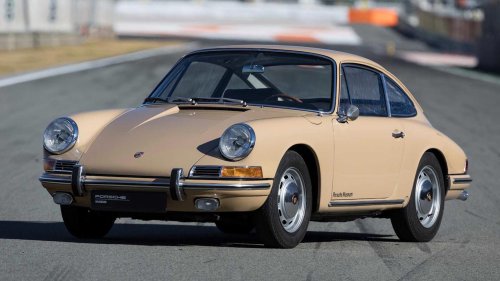
It's one thing to see the color difference between a white Porsche and a red one. It's another to know why the white one might be more valuable. Much like designer watches, coins, or comic books, some cars boast unique attributes that can significantly increase their value. Even just small differences can have consequences. However, spotting these minute, seemingly mundane alterations can be tough.Having all the info on hard can be tough, too, especially when it comes to Porsches. They're not exactly Hondas, and there have been loads of subtle, small details embedded in various Porsche models throughout the years that can make or break the bank, or cause someone to gain or lose a significant amount of money. The following six design details are important for any aspiring Porsche collector to know like the back of their hand. Fender Script & Font porsche-911-carrera-rs-27-4First up on our list is the huge, detailed world of Porsche fender scripts and other decals. For most other brands, the differences between one decal or another aren't a big deal. However, as many of you know, there are loads of small nuances across the Porsche lineup, and even the difference in decal font makes a big difference. This is especially the case for models produced during the fender script and original side decal era, whose timelines loosely line up with the late 1950s, 1960s, and 1970s.When it comes to whether fender scripts on Porsche 356 models are real or not, there are a few dead giveaways. For starters, watch out for reproductions that boast a thinner, more computer-styled font. Originals tend to have slightly blockier letters. In addition, a tiny Registered Trademark symbol, which looked like an "R" with a circle around it, must be present to prove an original definitively. Some reproductions have a larger "R" or lack one altogether. There are also casting marks to consider, which can be found on the back of the scripts, along with specific soldering patterns that reportedly differ from year to year.Pay attention to side decals, too. These were more popular in the 1960s and 1970s, especially on special-edition models or Carreras. Much like the scripts discussed above, original decals tend to have thicker, blockier fonts. From a distance, you can't accurately tell if a decal is a reproduction, but up close, a keen eye can spot it. According to sources like PelicanParts.com, a legitimate "Carrera" decal from the early 1970s can cost up to $1,500. However, reproductions can be had for as little as $25. We found one for sale in Germany, a blue "Carrera RS" side decal from a 1973 911, for sale for $1,299. Dashboard/Trim Material 1958 Porsche 356 A Coupe DashboardOne of the most popular things to do for old, sometimes tired Porsches is to give them a thorough reupholstering. It's a noble effort, tearing out all the old leather and veneer only to install new, fresh material to liven things up a bit. However, depending on how well the original stuff actually held up, you might end up devaluing your Porsche by trying to give it a breath of fresh air. There are a few ways to tell if this has been done.For starters, leather and vinyl have very different properties when scrutinized. Vinyl is a cheap, popular alternative to leather, especially for those who are doing restorations on a budget. In older Porsches, you can check whether the material is vinyl or leather by pressing down on a patch of the suspected material. If the wrinkles are caused by the depression "spidering" outwards, it's genuine leather. If they don't, and only the portion where the depression is occurring is affected, it's most likely vinyl. Vinyl is also waterproof, whereas leather typically isn't, so a drop of water in an inconspicuous area can tell you the truth, too. Badges Mean Everything Porsche badgeAs with our first point, the Porsche badge and other specific markings make a huge difference in authenticity. Not to mention, a faulty badge or one placed in the wrong spot can tell you a lot about the car's past, Porsche or not. For example, a misplaced hood badge? That could be the car has been in an accident and had its hood repaired or replaced with a non-factory component. No rear deck lid badging? It could mean the same thing, and neither bodes well for valuation.When it comes to Porsche badges specifically, there are a few things to keep in mind. All authentic Porsche badges are handmade and hand-enameled. They're also plated in real gold underneath the enamel. While you need a magnifying glass to spot fakes, you can still make the decision. For one thing, non-authentic Porsche badges typically have a slightly domed front, indicating a machine-pressed enamel job. In addition, pitting or dimpling in the wrong places can be seen beneath the enamel, indicating a fake. You should also look for manufacturing stamps on the badge's backside. Factory Wheels Matter, Too 1966 Porsche 911 S In 1967, Porsche produced the 911 R. It was a lightweight, racing-derived model equipped with 15x6-inch Fuchs 6R wheels. They were only installed on the front axle, and are deep-dishes. Finding a pair is exceedingly difficult, and they can fetch over $5,000 easily. There's also the Carrera RS 15x8 Fuchs from 1973, which saw use on the Carrera RS 2.7 Lightweight, along with the 2.8 RSR. They were produced for just over six months and command an average price of $4,500 for a decent set.When looking for genuine wheels, it's important to know the little details that help determine whether a specific rim is genuine. For one, virtually every Porsche wheel carries a unique, 11-digit part number on the back of one of the spokes. The Porsche logo will often be embossed on the inside of the rim, too. Also, finding supplier logos, such as Fuchs, on the backs or insides of the rims is a huge plus. Fakes also tend to be heavier, with many imperfections, casting/forging errors, and flaws in the clear coat finish. Factory Option Codes & Their Visual Markers Porsche-911_2.0_Coupe-1964-Exterior 4Before 1970, no Porsche came with a build sheet, meaning finding specific option codes in a pre-1970 Porsche is impossible, so you need to rely on visual cues. During this pre-build sheet era, Porsche used a four-digit numbering system that began with 9. Using this system, the brand was able to denote any options installed on any given model. Records of which VIN received which option are extremely hard to come by, as they were kept solely by Porsche back in the day. However, now that plenty of folks have gotten access to the old records, we can accurately tell which option code corresponds with which option.Let's run down a few popular options found on pre-70s Porsches. For example, option code 9512 denotes the addition of a heated glass rear window for 911s fitted with a targa roof. If you wanted a set of Fuchs forged alloy wheels, and many folks did, you needed option code 9120. There were also the famous Blaupunkt radios, of which six were offered as options, carrying the option codes 9320, 9322, 9323, 9325, 9326, and 9327. You could even have a popular electric sunroof if you selected option 9474. Stampings, Dates, & Build-Plate Locations 1967 Porsche 911 S Magnus Walker AuctionThere are numerous places throughout earlier Porsche models, such as the 356 and pre-1970 911s, that contain bits of numerical information to help decipher what the heck is going on with that particular model. For starters, looking underneath the front hood, or frunk's, lid, you might be able to spot the chassis / VIN plate right near the latch. Alternatively, it could be on the driver's side A-pillar. On 356s and early 911s, a body plate — also known as a Reutter plate — is typically stamped into the driver's side door jamb.Most body panels on older Porsches carry two- or three-digit body codes that match the last two or three digits of the VIN, typically stamped on the sheet metal inside. If these all correspond, you have a numbers-matching body that's never had any panels swapped out. When it comes to deciphering the actual build date, it is impossible to do so without paperwork sourced directly from Porsche for pre-1970 models. One built after this can find the compliance decal located on the driver's side door jamb.



















 +59 others