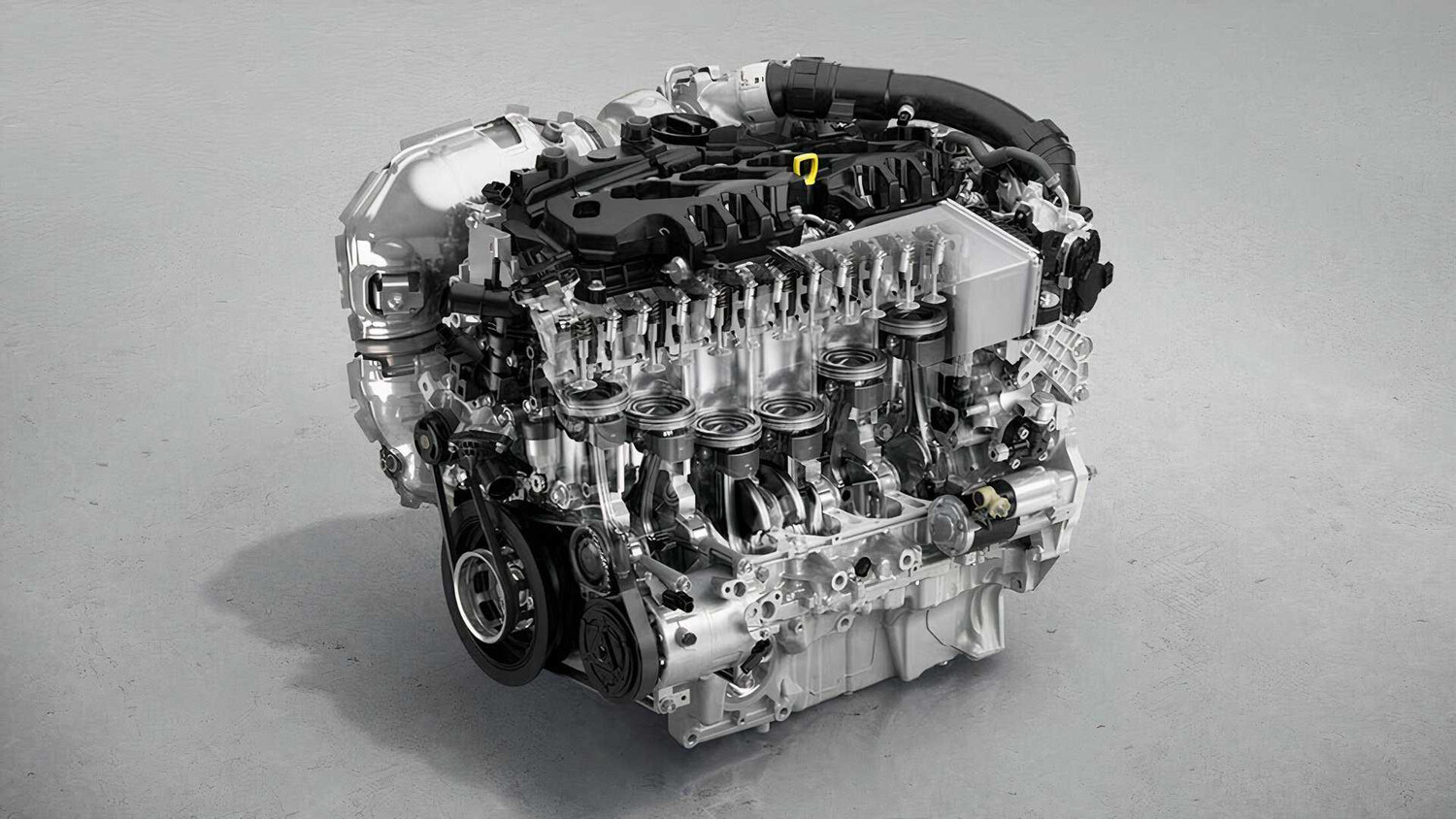
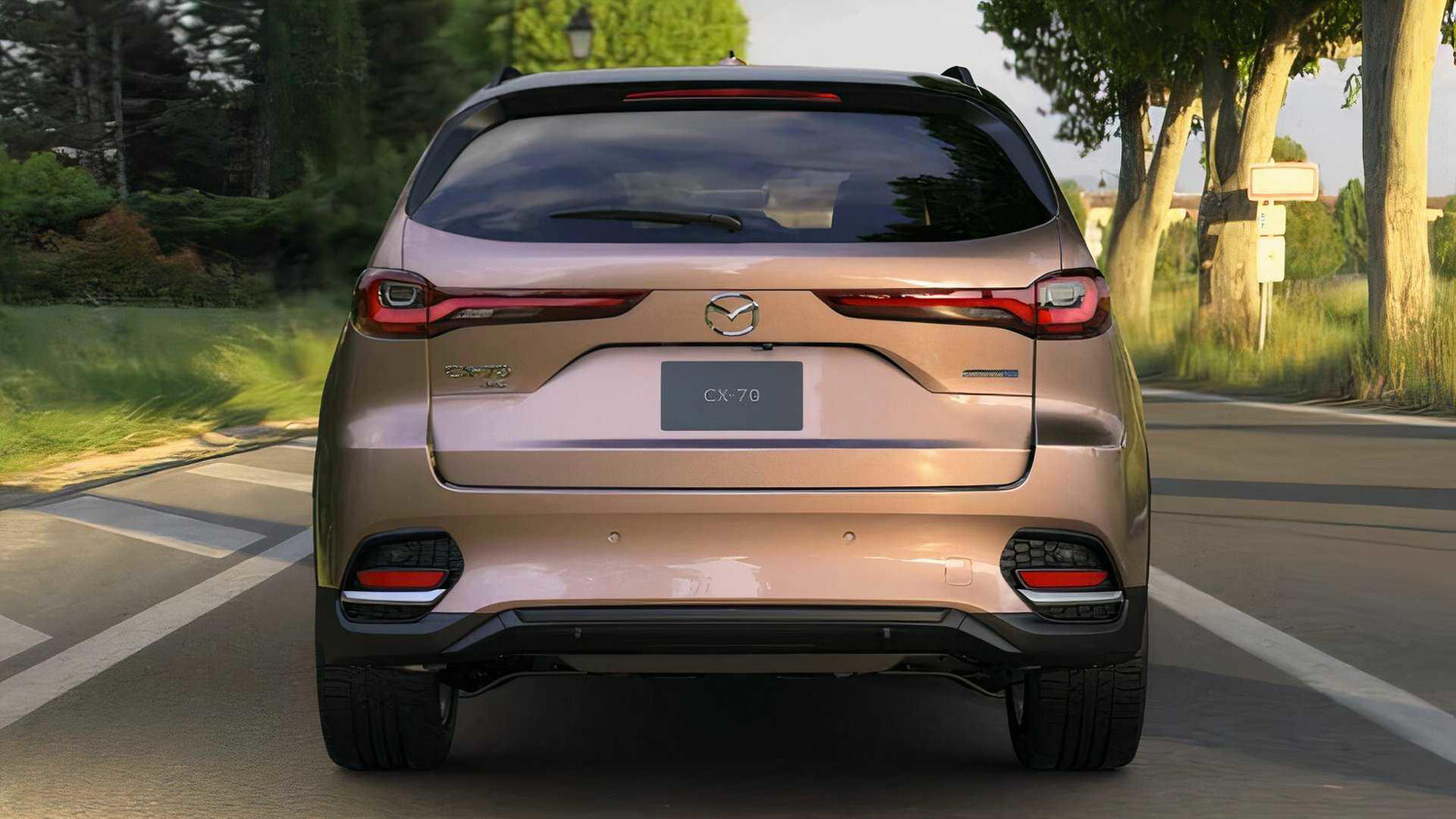
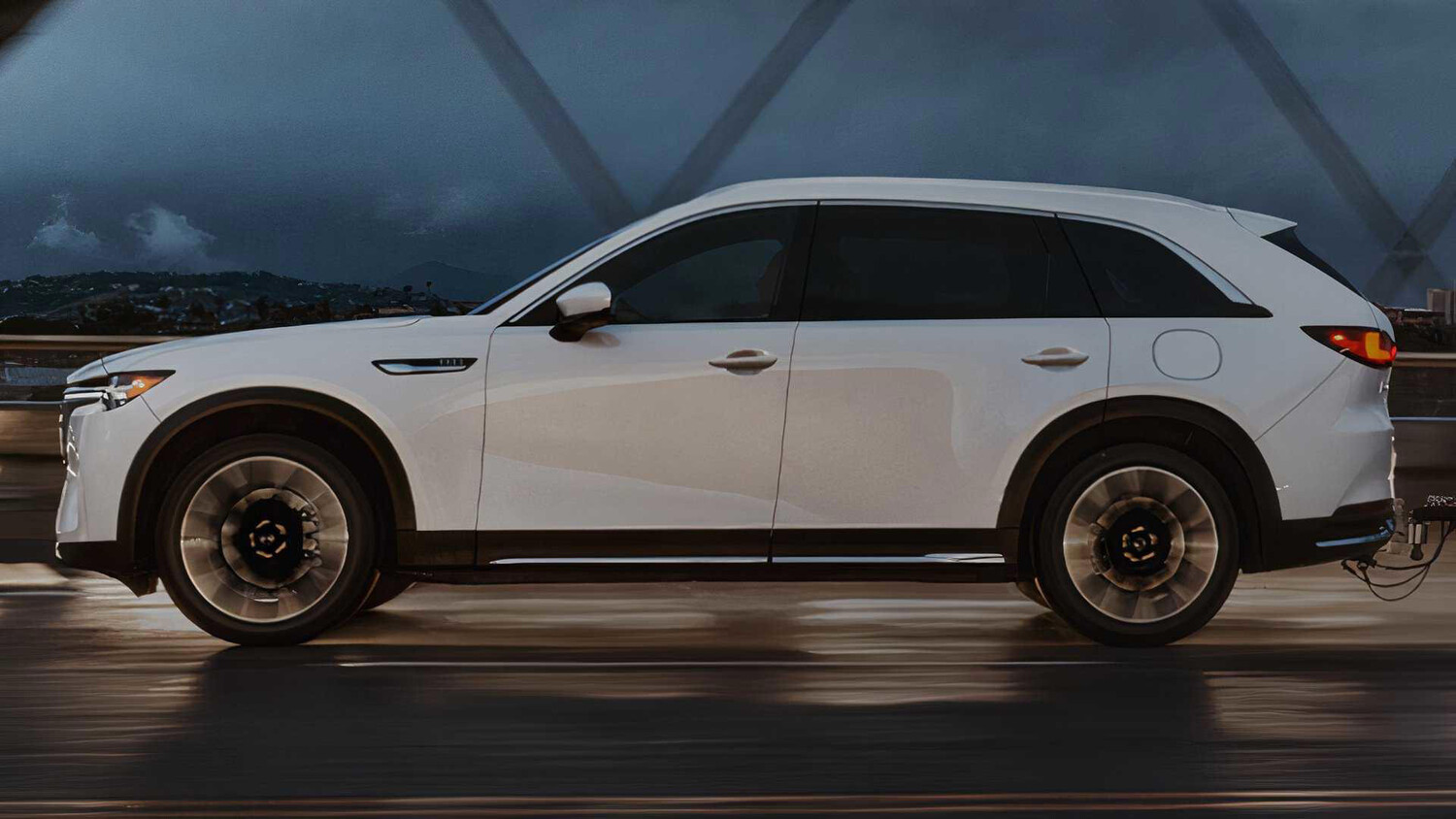
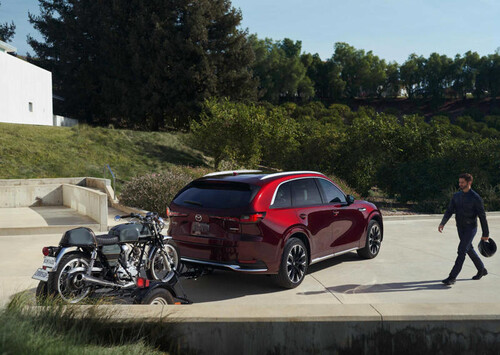
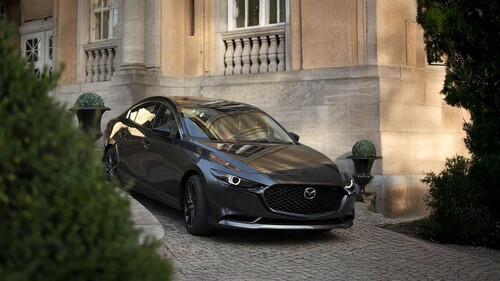
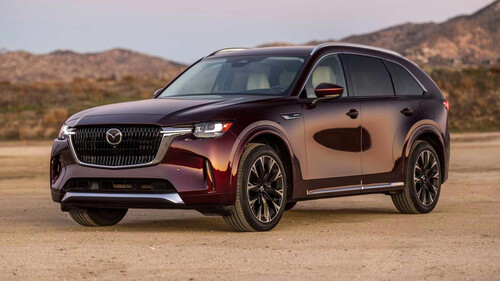
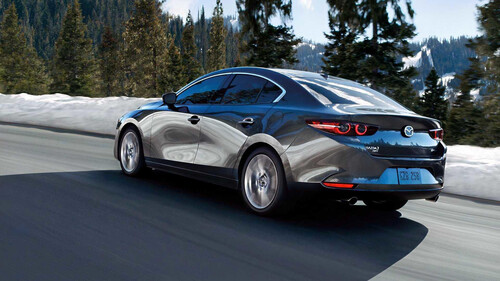
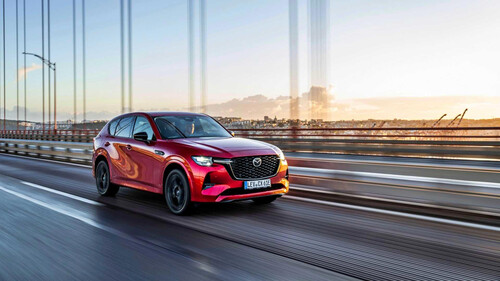
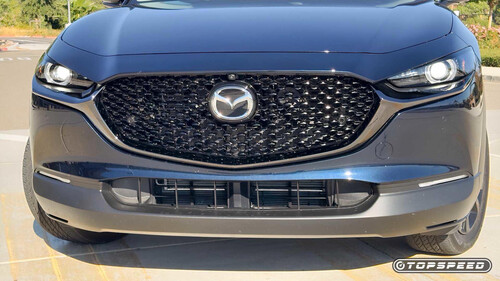
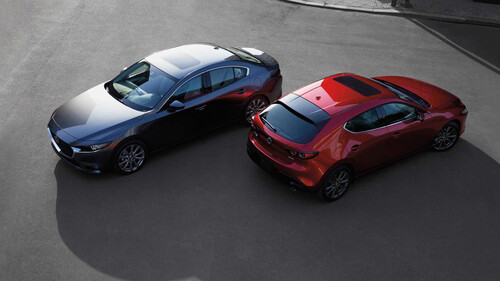
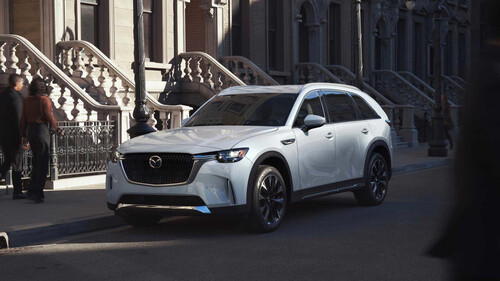
The general trend these days is for manufacturers to use as small an engine as they can get away with. There are many reasons for this, with the primary one being maximizing fuel efficiency. The more compact an engine is, the less energy it needs to work at its peak potential, and thus the less fuel it drinks. Twinning a smaller powerplant with a turbocharger affords it the grunt it needs to work effectively across a range of driving scenarios, while remaining more efficient than older and larger units. In addition, their smaller sizes ensure that they take up less space, allowing automakers to optimize internal room.Mazda has recently gone against this trend though, and resurrected its own inline-six engine following nearly two decades of predominantly using four-pot powerplants. This may seem counterintuitive to modern needs, but there are some key benefits that the Japanese brands' design brings to the table. Mazda Once Relied On The Six-Cylinder For Its Larger Offerings MazdaLike its mass market rivals, Mazda has worked hard to provide a range of different models over the years, with its products running from small grocery-getters like the 2, to larger executive sedans like the 626. While tiny three and four-cylinder engines make sense in its more compact offerings, vehicles produced to be bigger and offer more power traditionally made use of six-cylinder engines. Mazda developed several V6 designs that were utilized predominantly throughout the 1990s, with the last of these being the K family. Having been used in cars like its Millenia luxury sedan, it switched to using Ford's Cyclone and Duratec V6 engines from 2002 until 2015.The Millenia illustrates the previous time Mazda tried to make it as a luxury carmaker, with the machine being its flagship offering that utilized the V6 as the range-topping powerplant option. This was a time when the marque took on the likes of BMW, Lexus, and Mercedes-Benz as it looked to appeal to luxury buyers. It was produced from 1993 to 2002, with the smooth Miller Cycle engine providing not only strong power and refinement, but solid fuel efficiency versus its rivals.The Millenia was canceled in the end as Ford swiveled Mazda towards the more affordable side of the market, but it remains as a reminder that Mazda's switch back towards luxury isn't unprecedented. Mazda ended up switching its range purely to four-cylinder engines beyond 2015, since a focus on efficiency and harnessing turbocharging technology became more widespread across the automotive landscape. In 2022 though, this all changed. Mazda Once More Has A Six-Cylinder Engine In Its Range MazdaEarly in the 2020s, Mazda did an about-turn as it focused its attention on a new segment of the market. Having struggled to make much ground in the mainstream arena, the company elected to pivot towards the premium market, and take on higher-end European manufacturers such as Audi and BMW with a range of new SUVs.The thing is, simply dumping one of its hybrid four-cylinder engines wouldn't do if it wanted to succeed in the luxury sector, so Mazda made the decision to develop an all-new six-cylinder called the Skyactiv-G 3.3. Having debuted in 2022, this marked the first time in two decades that a Mazda sported a six-pot engine of its own volition. This allowed them to match their European rivals, which include a six-cylinder engine in competing SUV models like the Audi Q5 and BMW X5.Beyond this, Mazda also looked at developing an all-new form of inline-six called Skyactiv-X. Envisioned as being sold alongside the Skyactiv-G unit, it was based on the four-cylinder design of the same family that uses Spark Controlled Compression Ignition, or SPCCI. SPCCI works by introducing a lean fuel/air mixture into the engine, before then igniting it with a small injection of atomised fuel at exactly the right time. The result of this is an engine that can run without the knocking and unstable combustion that is usually caused by such a setup, and allows it to run in a more efficient state for 80% of its runtime.This saves fuel, though Mazda ultimately ditched the six-pot 3.0-liter version of the engine, and only introduced the four-cylinder unit in its Mazda3 and CX-30 models in 2019. Therefore, the Skyactiv-G remains the only Mazda I6 on the market. Still, the technology is fascinating, and further shows the level Mazda is going to make the inline-six a viable solution in 2026. Six-Cylinder Engines Are More Refined Than Four-Pots MazdaThe reason for Mazda pivoting back towards the six-cylinder is primarily due to the extra refinement they offer over a traditional four-cylinder. A well-designed four-cylinder can easily stack up against a six-pot unit in terms of outright power these days, but they're naturally less balanced than an I6. This means that more vibrations are produced under load, which makes the car feel less smooth as you're driving along. For a luxury car, this is a big no-no.This was the logic behind Mazda opting for an I6 design rather than a V6 that it knows better, as the former is better balanced than the latter, which means it brings more refinement to the party. You have to give away more space to house one versus a more compact V6 design, but Mazda's large SUV range had more than enough room to swallow it without issue. Aside from being smoother than the four-cylinder engines that are so popular in today's society, a six-pot also offers superior reliability in comparison to a boosted engine, for the most part.To make the kind of power needed from a large SUV, a turbocharged four-cylinder has to be pushed hard, which creates more heat and puts its internal components under greater stress. A six-pot can run leaner due to having extra pistons to share the workload, meaning its parts aren't worked so hard. Over time, this should result in superior reliability. The I6 may produce more emissions and be less fuel efficient than a four-pot, but the increased refinement and effortless power it provides make it the better option for a higher-end luxury vehicle. Mazda's Skyactiv G Is Available In Two Flavors MazdaThe Skyactiv-G 3.3 is based on Mazda's 2.5-liter turbocharged four-cylinder engine from the same family, though it features some other revisions aside from being equipped with an extra two cylinders. The all-aluminum design uses different-shaped intake ports than its four-pot sibling, as they were changed to increase the amount of airflow going through the engine. The stronger six-cylinder powerplant also uses a slightly higher compression ratio, while electronically-controlled oil squirters help keep the unit nicely lubricated. Where The Mazda Skyactiv-G 3.3 Is Found 2022-Present Mazda CX-60 2023-Present Mazda CX-90 2024-Present Mazda CX-70 2024-Present Mazda CX-80 Two different versions of the engine are available within Mazda's offerings, the standard output and the high output. The base variant produces 280 horsepower and 332 lb-ft of torque, and is generally found in Mazda's lower-end SUV trims. More expensive vehicles get the high-output variant, which is pretty much identical to the standard engine, other than the level of turbo boost it runs. While the former makes do with 14 pounds of boost, the latter utilizes 19 pounds, which increases its peak output to 340 hp and 369 lb-ft of torque.Due to the extra potency of the high-output 3.3-liter engine, it needs to run on premium fuel, while the normal one can use regular gas. Additionally, the engine comes mated to a single-motor mild hybrid setup, which helps increase throttle response and allows the engine to have an easier time of things, boosting fuel economy. Mazda's I6 Is Only Available In Mazda's High-End SUVs Right Now Mazda As far as where you can get the Skyactiv-G 3.3, it's pretty straightforward. In the US, you can have the powerplant in either the five-seat CX-70 full-size SUV, or the larger eight-seater CX-90 full-size SUV. On the other side of the Atlantic, the engine is featured in the smaller CX-60 mid-size SUV, as well as the three-row CX-80 mid-size offering. Most trims of either model in the US come with the 280 hp engine, and you'll need to spend some extra cash on the two range-topping Turbo S variants to get the 340 hp powerplant.The I6 has proven its worth in the real-world, too. We drove the CX-90 equipped with the Skyactiv-G engine in 2024, and felt that the engine not only provided excellent grunt and pulling power in an SUV the size of the CX-90, but that it was also refreshingly responsive. As the icing on the cake, we felt it hummed a smooth song and provided excellent refinement, which in turn helped make the CX-90 a genuinely competitive luxury SUV. This was an impressive effort, given the brand hadn't developed its own six-cylinder engine for over 20 years. There Are Multiple Routes To Having One In Your Life MazdaIf you fancy having one of Mazda's I6s in your life, then buying brand-new is the best way to ensure it'll be in tip-top condition. Despite being the larger of the two options, the CX-90 provides the cheapest route to securing a Skyactiv-G 3.3, courtesy of the base Select version that'll set you back $39,300. The most affordable CX-70 is the Preferred trim, which starts from $42,750. If the more powerful Turbo S variants interest you, then be prepared to hand over $53,440 for the CX-70 Turbo S Premium, and $54,140 for the CX-90 Turbo S Premium Sport.Should these outlays sit a little too high for your budget, then some money can be saved by exploring the used market, instead. Savings are harder to find on the newer CX-70, though the CarBuzz Marketplace reports that used 2025 models can be found for around $38,000, a $4k saving on a brand-new Preferred spec. The savings are stronger when it comes to the Turbo S though, with the machine valued at just $43k. The CX-90 offers even better value.Current listings reveal that base used cars from 2024 can be had for less than $30,000 on average, while the Turbo S AWD is available for a shade over $32k on average. This is a pretty stunning saving, given that a new one demands over $20k more.Mazda certainly isn't resting on its laurels by taking on the premium European manufacturers, with its smooth I6 putting it squarely in the conversation when it comes to offering a refined experience that makes its offering feel more upmarket. Time will tell whether the powerplant will prove as reliable as the six-cylinder engines used by its rivals, but it's at least refreshing to see these larger engine designs still popping up every now and again. Especially given the sea of four-cylinder and hybrid engines that dominate the current automotive landscape. Long may it continue.Sources: Mazda.