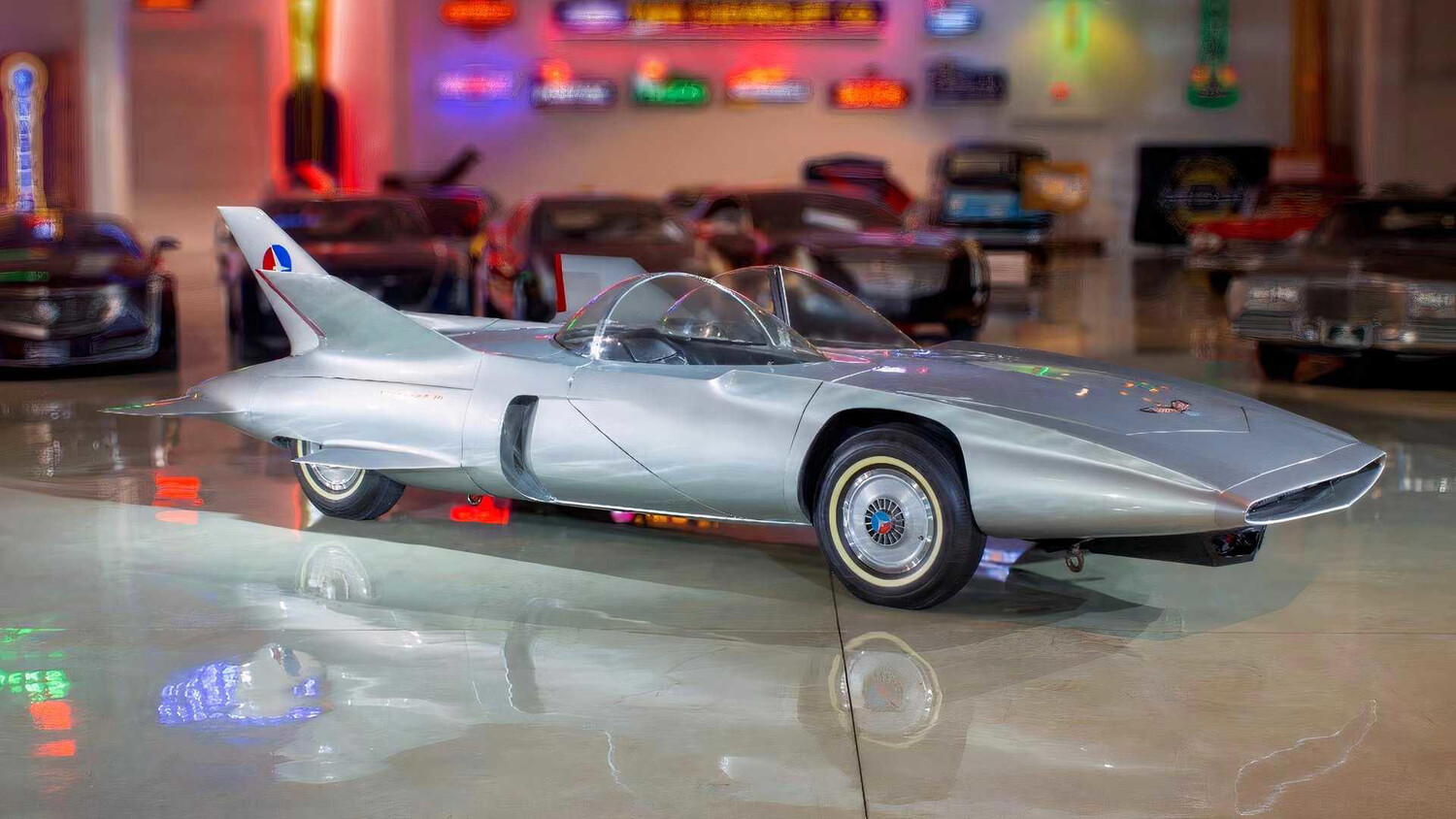
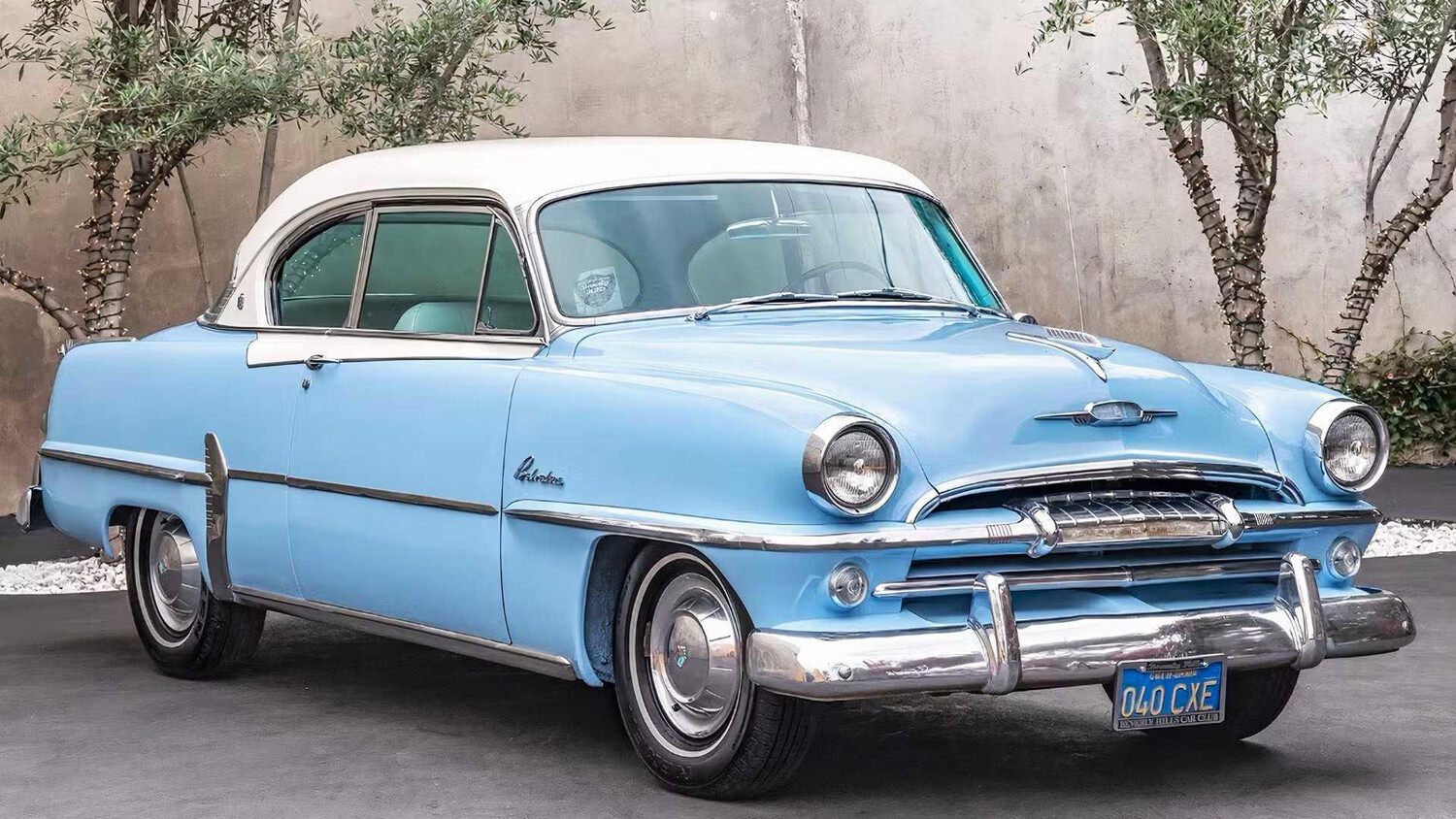
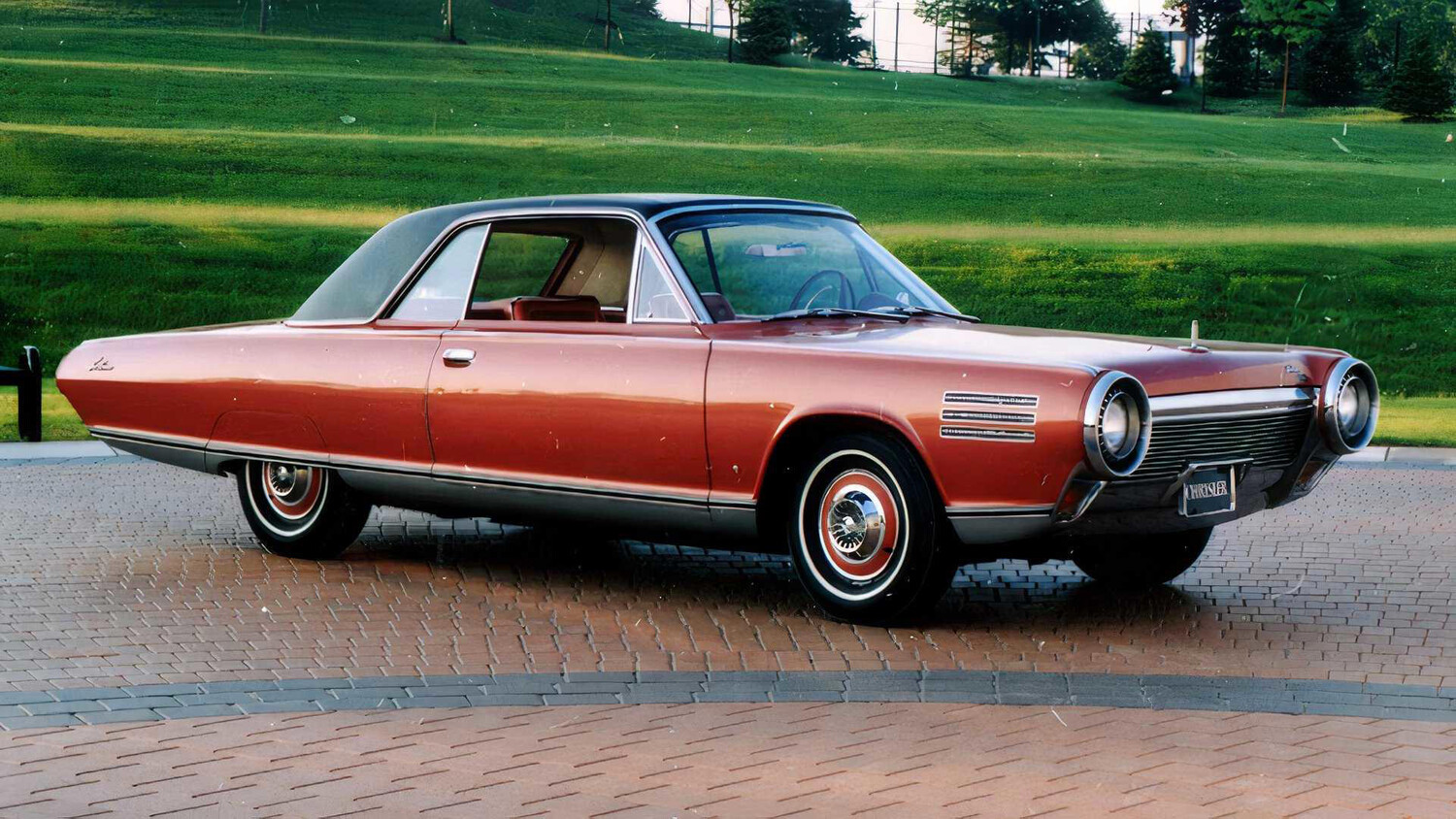
Sometimes, car brands take innovation a few steps too far, presenting new cars that barely look like cars. Tubular bodies, pointed nose cones, bubble cockpits, wings, and tails – some of these concepts look like they belong in the air more than on the road. That's exactly what General Motors did in the '50s, long before today’s land-speed record rockets roared across the salt flats; its bold experiment pushed automotive design to its limits.This car had a fuselage-like shape eerily similar to modern speed record machines, complete with a pointed nose, small wings, and a tail fin. It looked more like a jet than a car, but it never took flight. Instead, it was GM’s rolling lab for turbine engine technology, testing the idea of jet propulsion on four wheels. It could have been the first jet-powered car for the public, but practicality and cost got in the way. For a brief moment, it captured imaginations, then slipped quietly into automotive history – an overlooked icon of ambition and speed. The GM Firebird I Was Supposed To Be A Street-Legal Rocket General Motors The 1950s and 1960s were filled with optimism in the automotive world. Science and engineering have made leaps and bounds, pushing car designs and technology forward into a better world for the future. This meant many concept cars showed off new technology and space-age designs. This also means some automakers experimented with alternative methods of propulsion. This eventually became a forgotten era of automotive research, especially with the growth of the muscle car era. That said, two automakers, GM and Chrysler, experimented with turbine engines for cars. It’s Not An Airplane Everything about the Firebird I screams airplane. It has a large turbine engine port at the rear, a bubble cockpit, wings, and a sharp nose. The four wheels and small size offer some indication that this car could be driven fast on an open stretch of highway, take flight, and then land somewhere else. This would have been the first flying car, making The Absent-Minded Professor and Flubber come true, but in a way that wasn’t presented in those movies. Despite its shape, the Firebird I was not a flying car; it simply looked like an airplane. Incredible Jet Turbine Power From GM In The 1950s General Motors The Tim Taylor character from the television series Home Improvement would have been embarrassed to see a car shaped like an airplane with only 370 horsepower at 13,000 rpm. That said, you have to remember that this car was made in the middle of the 1950s, so that made it ridiculously powerful for its time.The Firebird I used a Whirlfire Turbo Power gas turbine engine. Unlike a jet airplane, which develops thrust through the action of exhaust gas through a tail cone, the Firebird I’s engine sent power from the turbine engine to the rear wheels through a transmission. It Was A Lab Experiment The Firebird I was meant to be only the test bed of engineering. The idea originated with Harley J. Earl and developed under the direction of Charles L. McCuen. Every surface of the vehicle was refined in the California Institute of Technology wind tunnel and made of fiberglass-reinforced plastic, which made the body extremely light. The entire vehicle only weighed 2,800 pounds. Testing in this lab was key because CalTech had one of the first studies of the application of aerodynamics in automobile design. This allowed GM to optimize every surface of the car. No wonder it was shaped like an airplane. From Firebird XP-21 To Firebird I General Motors The Project Name Took Shape General Motors had been researching the potential of using turbine engines in vehicles since the 1940s, but nothing took shape or was tested until the early part of the 1950s. The first prototype wasn’t called the Firebird I, but instead the Firebird XP-21. It was later renamed to Firebird I, which led to the II and III variations of the turbine-powered car. Impracticality In Every Sense Of The Term Every version of this car was impractical, but that didn’t stop GM from making four versions between 1953 and 1964. The only driver qualified to operate it during much of its lifespan was Emmet Conklin, who was a key engineer for this project. Eventually, Mauri Rose, a professional Hall of Fame driver, drove the car at the Indianapolis Motor Speedway. He was only capable of reaching 100 MPH, which is only half of the theoretical 200-MPH top speed.The challenge of this airplane-style car wasn’t that it couldn’t reach its quoted top speed, but when Rose drove it, he slowed out of second gear for fear of crashing the car. When he shifted into second gear, the wheels began to lose traction quickly. That means he reached 100 MPH in first gear in this extremely aerodynamic car. GM Created Other Turbine-Powered Prototypes General Motors Firebird II The Firebird I was the first in the series that led to four turbine-powered prototypes. The second model was much different than the first. The Firebird II was designed as a four-seat family car, which made it much more practical than the first model, which had only one seat and no luggage area. The Firebird II still maintained a strong futuristic element in its looks, and it had disc brakes on all four wheels, unlike the drum brakes on the Firebird I. Firebird III General Motors The third model in the series arrived in 1959 and took another approach to turbine power. This model was a two-seat sports car with sleek, aerodynamic lines and two separate canopies. This was a little strange, but part of GM's experimentation with future possibilities. The Firebird III’s steering was controlled by a joystick located between the seats, and it had some modern amenities, including anti-lock brakes, air conditioning, and cruise control. Firebird IV The final turbine-powered model in this series was the Firebird IV, which was revealed at the 1964 New York World’s Fair. This model was not functional and was only used as a display piece. On a concept level, this car was meant to potentially allow owners to enjoy a self-driving car, but that never happened, and still hasn’t. The Firebird IV eventually became the Buick Century Cruiser. This car was eventually crushed, and the only evidence of its existence are a few photos of the car. Chrysler Attempted The “Turbine Car” Too Beverly Hills Car Club A Different Approach To Turbine Power Chrysler attempted to make turbine power work in cars during the 1950s, but chose to go a different route from GM. They put a 100-horsepower CR1 engine in the Plymouth Belvedere in 1954. With encouraging results, they moved on to create the CR2 engine with twice as much power and improved fuel mileage. This new engine was tested in three different Plymouth cars in the late 1950s. The Chrysler Turbine Car Arrives Chrysler After a series of multiple tests, Chrysler introduced the most famous turbine-powered vehicle in the mid-1960s. The Chrysler Turbo Car was powered by a 130-horsepower A-831 engine, and the car was made from scratch with help from Ghia. Best of all, it was technically fully street legal.This car was assembled in Italy and Detroit and wore only one paint color, called Turbine Bronze, which is an orange-brown color. There were 55 models of this car created and tested in real-world settings for three months. The program lasted two and a half years and was successful enough to launch more generations of turbine cars from the brand. Useless But Cool: What Was GM Thinking? General Motors GM was testing more than just the feasibility of turbine power when it created the Firebird I. It was an impractical car in every way, but it tested aerodynamics along with turbine power. This made the airplane-shaped car cool, but ultimately useless. The models that followed seemed a little better, but the Firebird turbine cars never made it to production. Chrysler Got It Right The Chrysler turbine engine experimentation was much more successful than GM’s and lasted for several years. In fact, Chrysler considered producing 500 Dodge Coronets with the sixth-generation turbine engine. This never occurred because of emissions regulation constraints, but it shows that Chrysler was on the right path to powering cars with turbine engines.The Firebird I was a jet-powered Firebird from GM that flew too close to the sun, and like Icarus, the program eventually fell flat on its face and was discontinued.Sources: GM, Chrysler.