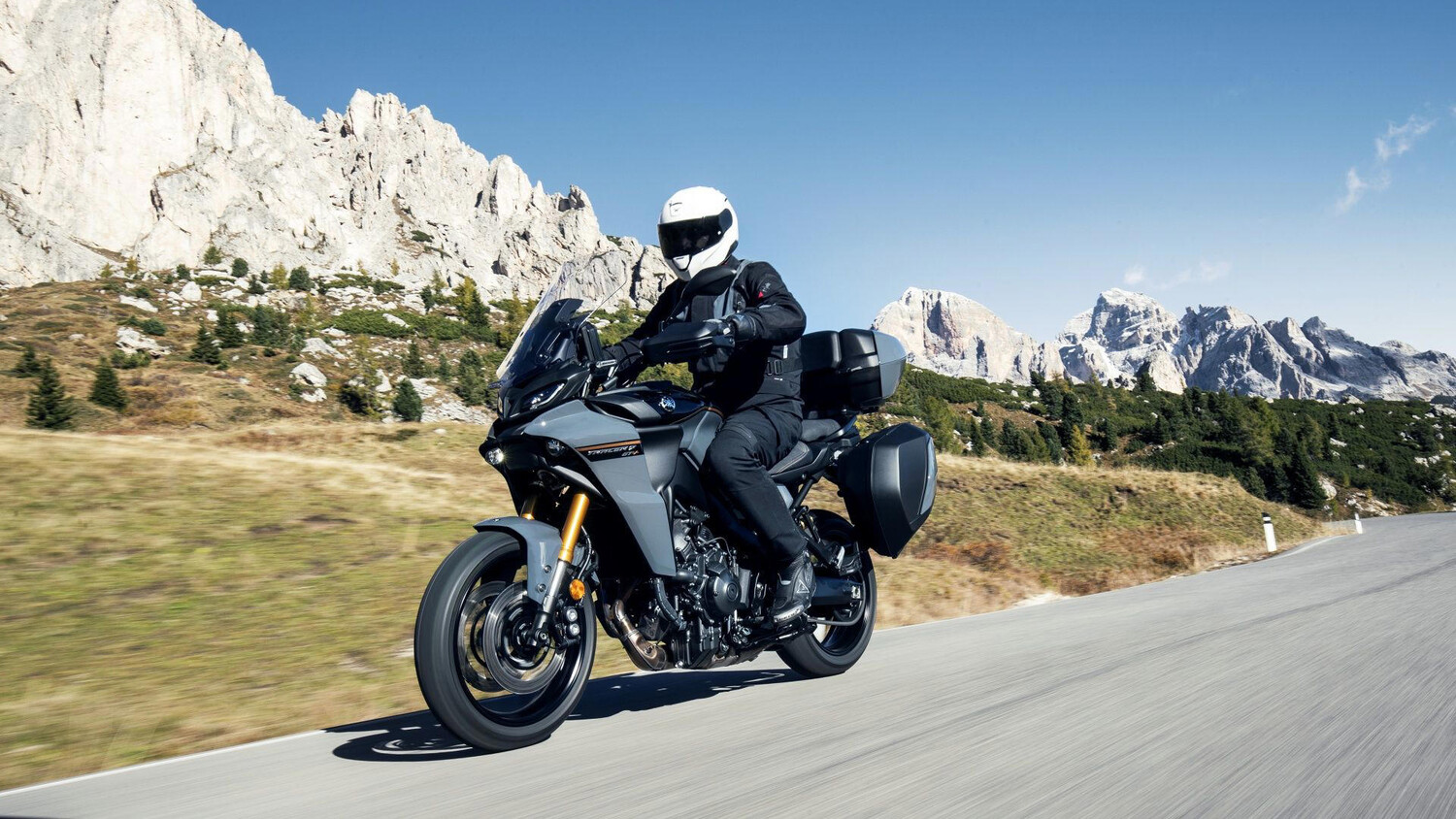
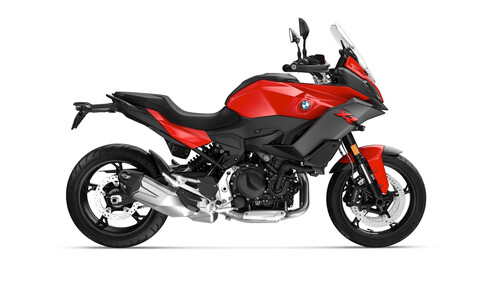
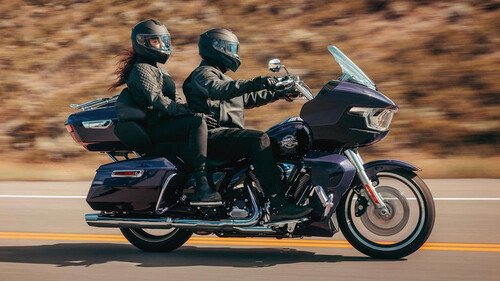
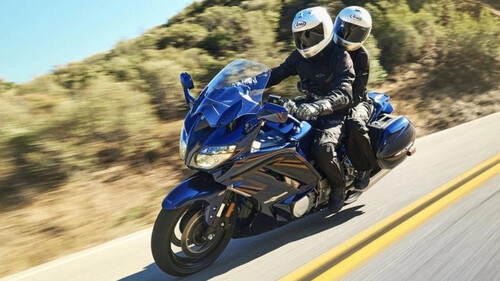
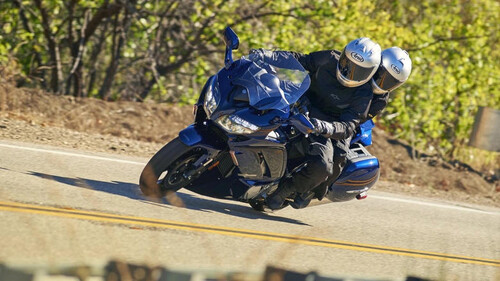
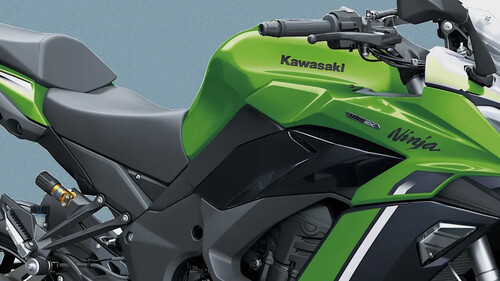
A buyer evaluating a touring bike typically has a clear mental shortlist built from years of reading and riding, and the brands on their list got there by being around long enough to accumulate a reputation. BMW's R 1300 RT carries a pricing premium that no individual specification fully justifies, yet it sells without much resistance because the brand's touring story goes back to the 1950s. On the same lines, Yamaha's Tracer inherits decades of FJR loyalty. As impressive as these are, a relatively newer Honda has these popular kids sweating. It builds on the capable Africa Twin platform and promises brilliant value with practicality in 2026. Brand Names Matter Over Spec Sheets A front 3/4 action shot of a 2023 Yamaha Tracer 9 GT+Most bikes in the sport-touring motorcycle segment sell on reputation alone. It’s a given if you think about it, as brands are built on reputation, and that alone is a huge proof of a sound decision for new or even experienced buyers alike. The badge on the tank does the talking, and the spec sheet is mostly a formality thereafter.For Honda, that credibility lives almost entirely in the Gold Wing, a motorcycle that operates in a different league at a different price point. Below it, Honda hasn't seriously contested this segment in the U.S. But since 2022, one Honda has been quietly making a case elsewhere. In fact, by 2023, it had outsold every rival sport-tourer across Europe and, surprisingly, most American riders are still catching up to that fact. The Honda NT1100 DCT Is The Sport-Tourer That Outclasses Rivals Quietly HondaHonda introduced this platform in Europe in 2022 and spent three years validating it before bringing it stateside. Over 12,000 units sold in Europe meant any first-year engineering concerns had already been addressed before American buyers even encountered the bike. The 2025 U.S.-spec NT1100 DCT is priced at $11,899 (the 2026 model goes up by $100) with the DCT as the only transmission on offer. It will surely divide opinions, but the rest of the package is harder to argue with. At that price, there is nothing quite like it, particularly in terms of practicality. The Honda NT1100's 1,084cc Parallel-Twin Isn't Chasing Numbers HondaFor the record, 101 horsepower and 86.2 lb-ft of torque, with the peak torque arriving at 5,500 rpm, is foundational to the big parallel-twin. In practical terms, though, these numbers mean that fourth-gear roll-ons at 50 mph are immediate, with no need to downshift twice before a passing move. The Unicam SOHC runs four valves per cylinder through a 44 mm PGM-FI throttle body, helping that immediacy in acceleration, albeit not being as sharp as, say, a Fireblade. Africa Twin Platform With Full-Size Capability HondaThe parallel-twin came from the Africa Twin, which is a solid pedigree for an engine expected to run hard and run long. Honda solid-mounts it to the frame using biaxial balance shafts that handle vibration suppression without the weight penalty of rubber-mounted setups, and the chassis stiffness benefits as a result. The Africa Twin's real-world durability record is the NT1100's most understated selling point. Honda schedules valve clearance checks for the NT1100 at 16,000-mile intervals and oil changes every 8,000 miles. For a rider putting serious miles on the clock annually, that service cadence is measurably cheaper and well-spaced. Engine Specifications How Honda's DCT Changes The Sport-Touring Equation HondaThree modes help the rider to switch between the fully automatic shifting 'Drive', higher shifting points in 'Sport', along with more aggressive engine braking, and even a 'Manual', where the rider takes over with paddle triggers on the left grip. What it removes from the equation is clutch fatigue across multi-hour stints, inconsistent shifts in stop-and-go traffic, and the mental overhead of gear selection when the road demands full attention.Riders who start skeptical typically stop thinking about the absence of a clutch lever within the first ten minutes; the intuitiveness almost feels surreal. The one genuine adaptation is slow-speed maneuvering, where rear brake modulation replaces clutch slipping in tight situations. There is a learning curve, but a short one at that. Showa Hardware That Works With The Rider HondaUp front is a 43 mm Showa SFF-BP inverted fork with 5.9 inches of travel handling suspension duties. Showa's SFF design splits functions between the two legs, with compression damping on one side and spring-rebound on the other, which reduces unsprung weight and keeps the front end composed when the road surface changes mid-corner. The rear runs a Pro-Link Showa single shock, also with 5.9 inches of travel. Curb weight is 547 pounds with all fluids aboard, and the fork is preload-adjustable if the stock setup runs too soft for heavier luggage loads and panniers. Why The NT Feels Lighter Than It Actually Is HondaThe parallel-twin's compact dimensions allow Honda to mount the engine mass low and centrally between the axles. A bike's real-world feel at speed is always different from its weight on the center stand, and the NT1100 is a consistent example of that. Riders transitioning from larger-displacement tourers will find that it moves with less inertia than the spec sheet implies, and recovers stability on corner exit without requiring active correction, offering a more natural feel and transition. Six-Axis IMU, Five Ride Modes, And Nifty Creature Comforts HondaThe NT1100 is packed to the gills with modern electronics. The five ride modes covering Tour, Urban, Rain, and two fully customizable settings, along with cornering ABS backed by a six-axis IMU, all make that evident. Honda Selectable Torque Control offers three levels of intervention on top of all the other aids. Throttle-by-wire, cruise control, heated grips, and a 6.5-inch TFT touchscreen with wireless Apple CarPlay and Android Auto check the creature comfort boxes. All of that is standard equipment at the base price. What The 2025 Update Added To The U.S.-Spec NT1100 HondaThe 2025 model standardized the TFT display with smartphone connectivity and, to top things off, the windscreen adjusts through a five-step, 6.5-inch range with one hand, adding to comfort on long trips. The European specification includes an electronic suspension variant not currently offered in the U.S. market, and that is the one area where the American buyer gets a trimmed-down version, being the only substantive gap against the higher-spec competition. Honda NT1100 Vs. Rivals: The Value Case Yamaha MotorsportsAt $11,999 for the 2026 NT1100 DCT, it sits at the entry point of a segment where the pricing climbs fast. The 2025 Kawasaki Versys 1100 SE LT ABS asks $19,499, with its 1,099cc inline-four, electronic suspension, and saddlebags bundled in. That is a fuller touring package, but the gap is $7,600. The Yamaha Tracer 9 at $12,599 is the closest match in price, but its 890cc triple produces 69 lb-ft of torque, 17 lb-ft short of the Honda, and it ships without DCT or standard heated grips. The 2026 BMW F 900 XR opens at $12,695 on paper, but getting it to the NT1100's standard equipment level requires adding plenty of dollars to the mix. The base-price parity disappears before you leave the dealership.HondaFinally, the NT1100 is not the most powerful option in this comparison, nor the lightest, nor the most feature-loaded. What the NT1100 is, however, is the most complete standard-equipment package under $12,000 in the touring segment, built on an engine with a documented long-distance service record and sold with a transmission that its nearest competitors still treat as a premium upgrade. For buyers who measure a touring bike by what it delivers between the dealership and the destination, the NT1100 makes a case that its price tag significantly understates.