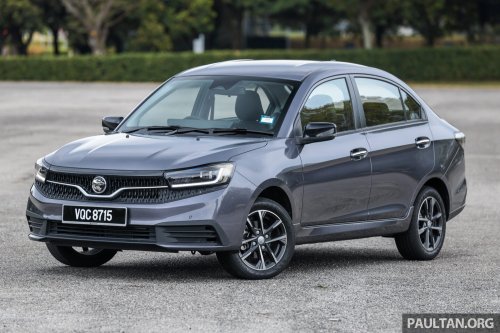
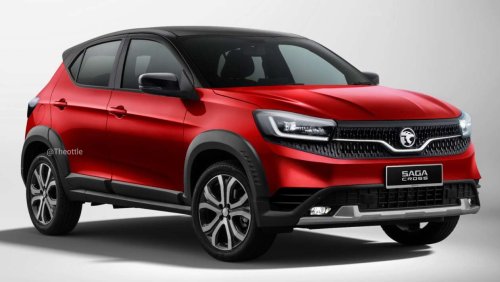
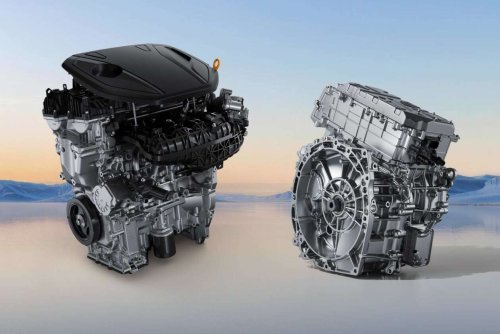
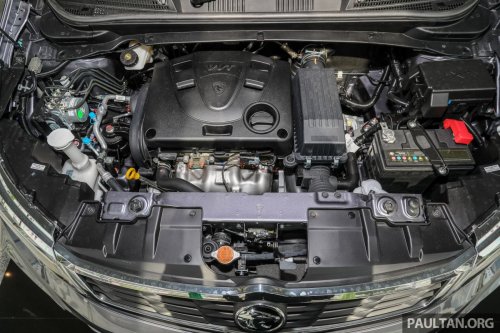
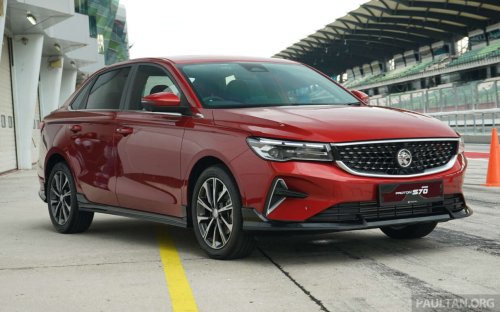
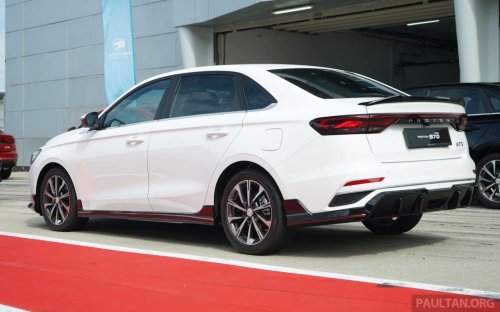
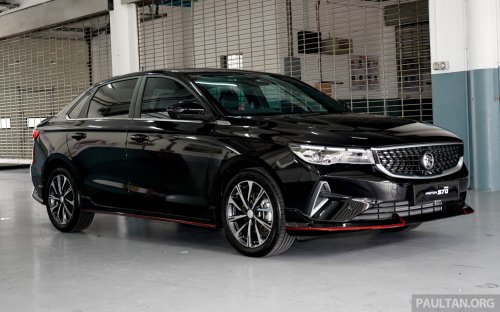
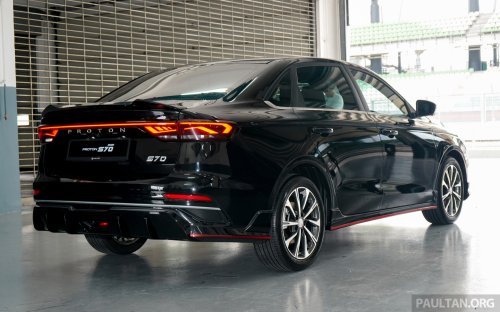
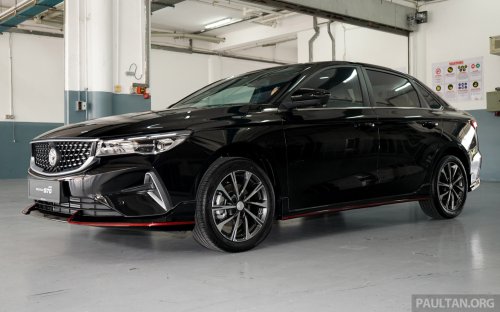
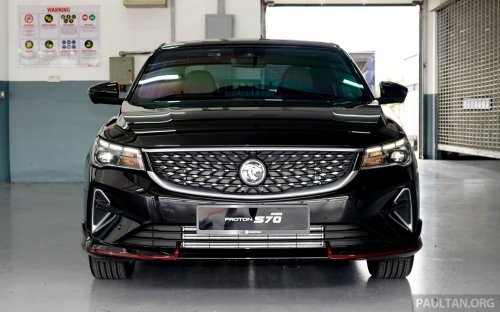
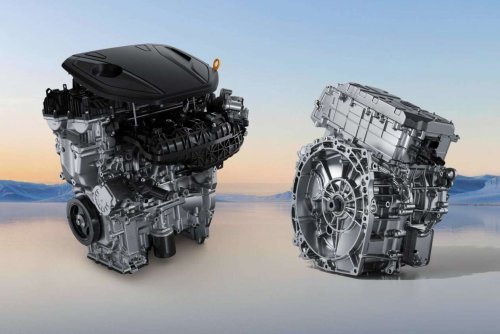
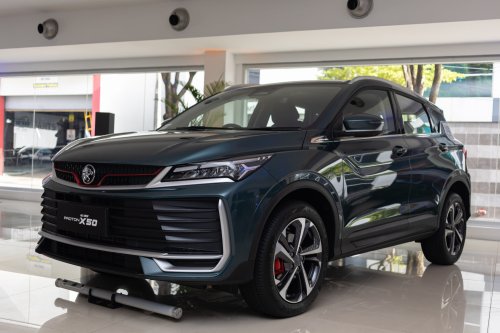
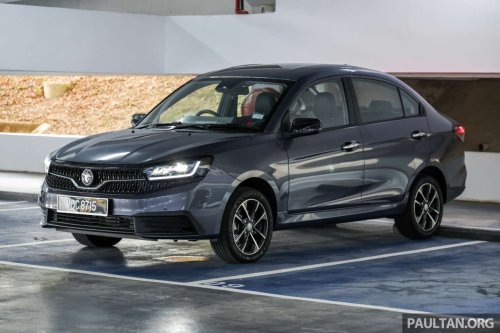
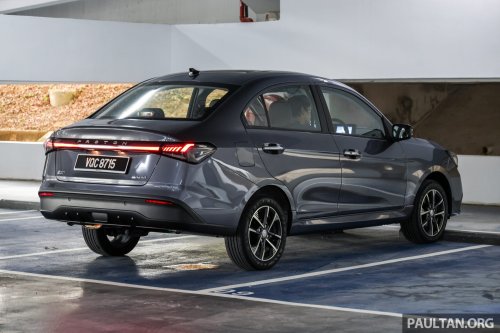
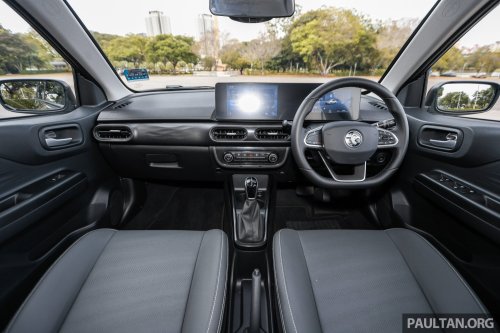
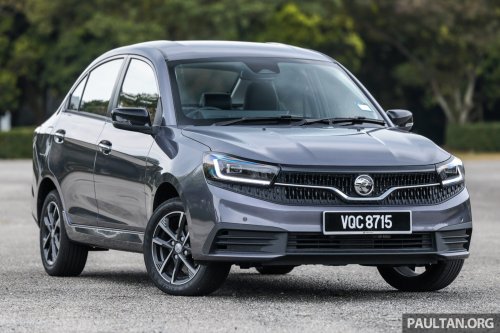
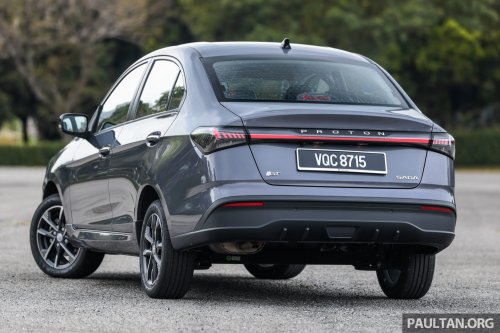
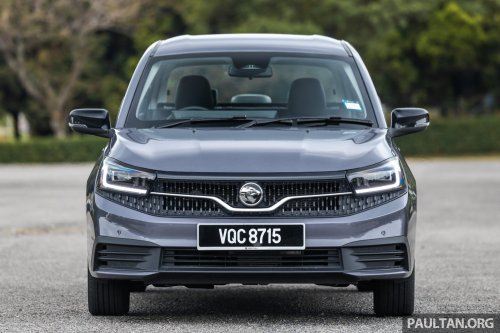
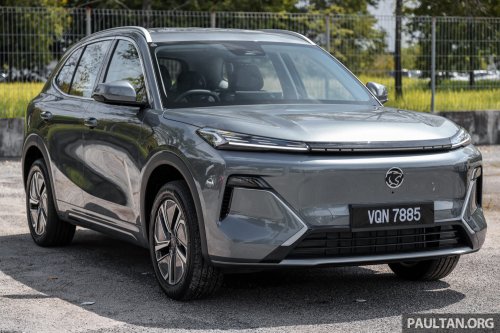
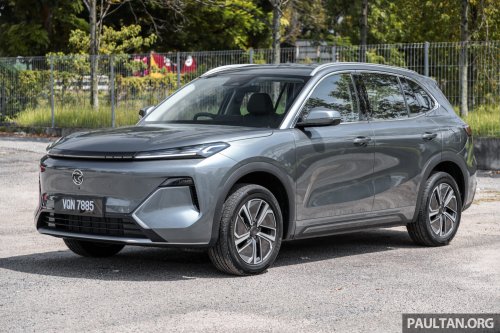
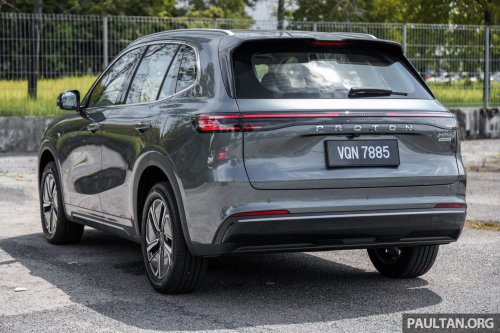
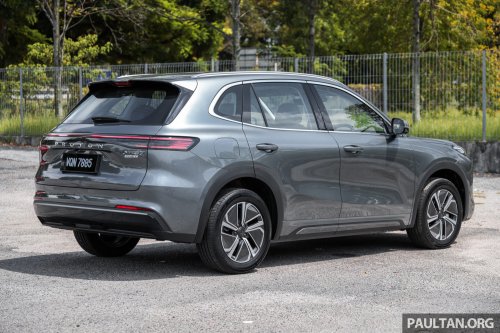
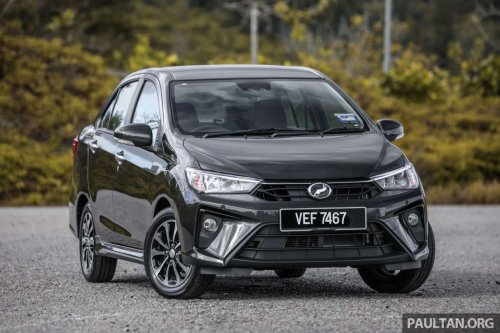
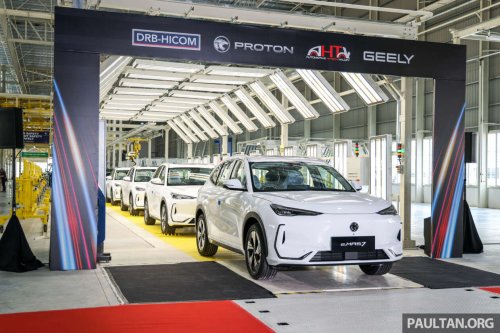
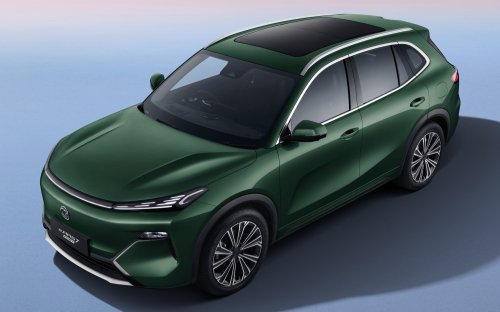
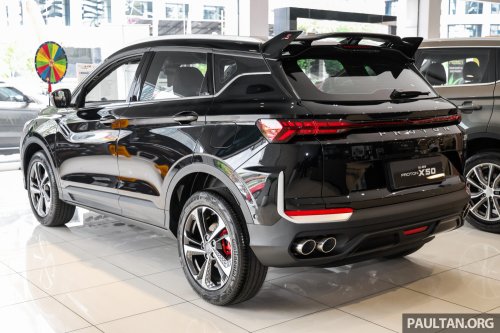
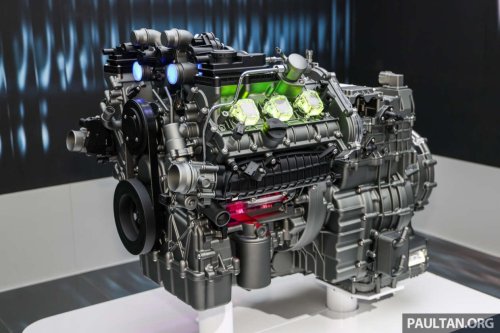
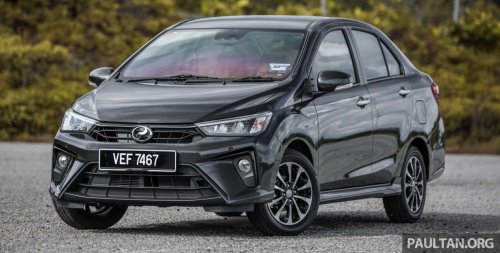
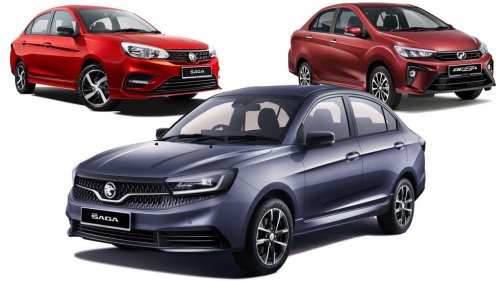
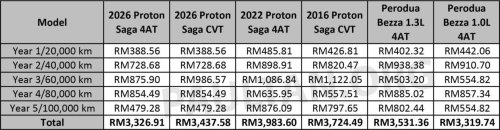
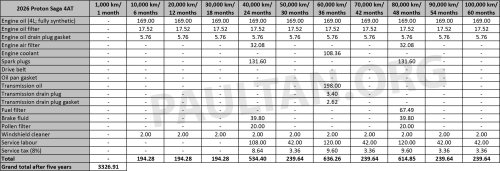
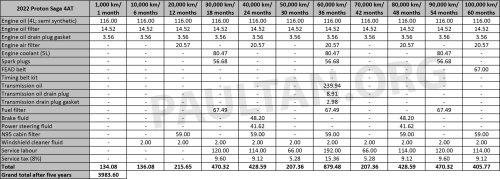
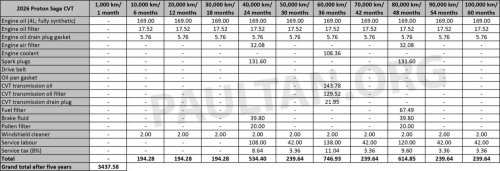
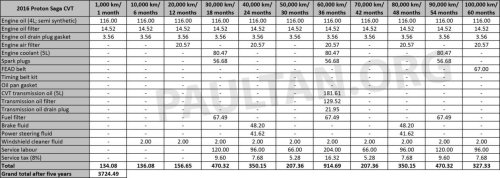
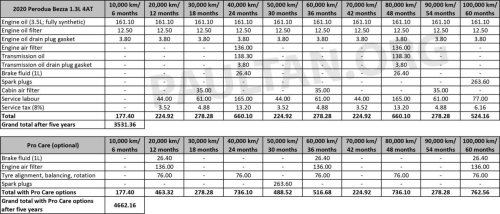
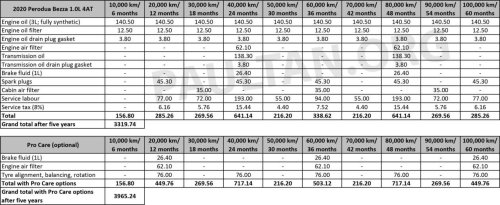
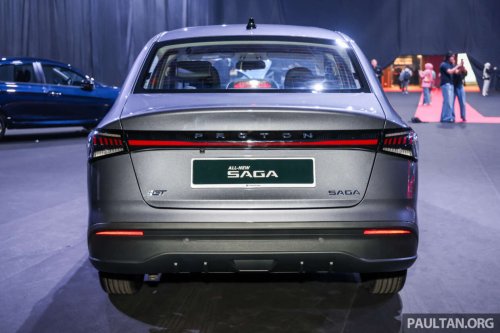
The heavily revised Proton Saga MC3 was launched in late November this year with some big changes, one of them being its powertrain. Gone is the 1.3 litre CamPro engine and in comes a 1.5 litre mill that serves up 120 PS and 150 Nm of torque. With these figures, the new BHE15PFI engine, which is naturally aspirated and comes with port fuel injection, makes 25 PS and 30 Nm more than the departed CamPro unit. That’s not all because unlike the CamPro engine, the new one in its place uses a timing chain instead of a belt. Depending on which of the three variants offered you choose, the Geely-derived mill is paired with either a Punch VT3 clutch-based CVT (Premium) or an Aisin-sourced four-speed automatic (Standard and Executive) – the latter was already introduced for the MC2 since 2023 and replaces the previous Hyundai-sourced automatic gearbox. So, how have all these mechanical changes affected the Saga’s maintenance cost? Well, Proton has updated the aftersales page of its official website with the relevant numbers, so let’s go through them. Saga 4AT variants’ maintenance costs compared Looking purely at the grand totals, we can see that the new Saga with a 4AT is cheaper to maintain over five years compared to its equivalent predecessor by RM656.69. While both are Aisin gearboxes, the cost of the transmission oil and related replacement parts are cheaper for the newer model. Going through the rest of the service schedule, the service intervals for certain components are further apart for the new engine. As an example, the engine air filter for the CamPro engine needs to be changed every 20,000 km/12 month, which is more often than the Geely-derived engine that requires changes every 40,000 km/24 months. Engine coolant changes are also less frequent for the latter at every 60,000 km/36 months instead of every 30,000 km/18 months. There are also some service items that aren’t present for the newer Saga MC3 4AT such as power steering fluid (the new car has electric power steering) and a N95 cabin filter (a pollen filter is listed instead). The switch to a timing chain for the Saga MC3 4AT means there’s no need for a timing belt replacement, which costs RM334.68 for the older Saga and happens at the 110,000 km/66 months mark. A drive belt for ancillary systems (air-conditioning and power steering) is still required for both at the same cost of RM67. The lower maintenance cost for the newer Saga also stems from the removal of the 1,000 km break-in service that was part of the older model’s service schedule. As before, free labour for the first three service intervals is included with each purchase. One thing to note is the newer engine uses fully synthetic engine oil, which costs more than the semi synthetic oil used by the CamPro engine (RM169 vs RM116), and its spark plugs cost more (RM131.60 vs RM56.68) as well. Even so, over a five-year/100,000-km period, the overall cost is less for the Saga MC3 4AT. Saga CVT variants’ maintenance costs compared 2026 Proton Saga MC3 CVT maintenance schedule The Saga previously dropped its CVT and used a 4AT exclusively when it received its first facelift (MC1) back in 2019. Prior to the MC3, the last time the Saga was offered with a CVT was when it entered its third generation in 2016. As we reported at the time, the 2016 Saga used the Punch VT2, also a clutch-based CVT, that is older than the newer VT3+ in the MC3. It appears the switch to a newer CVT has helped the MC3 in terms of maintenance cost. 2016 Proton Saga CVT maintenance schedule In the same vein as its 4AT counterpart, the newer Saga MC3 CVT is cheaper to maintain over five years compared to its older equivalent by RM286.91, with both using the same transmission oil filter and drain plug priced at RM129.52 and RM21.95 respectively. The majority of the savings, as far as we can tell, is from the lower cost of replacing the CVT oil (RM143.78 for the MC3 vs RM181.61) – same service internal of 60,000 km/12 months – with the reduced maintenance cost of the new engine also applied here. The CVT is still more costly to maintain compared to the 4AT because the former requires a transmission oil filter (RM129.52). Even within the new Saga MC3 range itself, there are a few differences between variants equipped with the 4AT or CVT. The Bezza enters the picture 2020 Perodua Bezza 1.3L 4AT maintenance schedule During the launch of the Saga MC3, the company claimed its offering was the cheapest to maintain in the A-segment sedan market. The only other competitor in this space is the Perodua Bezza, so we pulled the numbers for that model to compare too. Over five years, the Bezza with the 1.3 litre engine, which is closer in terms of displacement to the Saga’s 1.5 litre unit, costs RM3,531.36 to maintain. This is more than both the 4AT and CVT versions of the Saga MC3 by RM204.45 and RM93.78 respectively, despite the Bezza’s fewer service items. 2020 Perodua Bezza 1.0L 4AT maintenance schedule Yes, the Saga MC3 is cheaper to maintain compared to the Bezza, although the differences are negligible if we spread them out over five years. If we add in all of Perodua’s Pro Care service items that are optional, the discrepancy grows even larger. Widening the scope for the sake of it, the Bezza with a smaller 1.0 litre engine costs RM3,319.74 to maintain over five years, which is less than the 4AT and CVT versions of the Saga MC3 by RM7.17 and RM117.84 respectively. Again, negligible differences over a long period. Other things worth mentioning As always, the cost of owning a car goes far beyond just maintenance, as there are other things to consider like fuel consumption, which the Saga (4.9 l/100 km CVT and 5.1 l/100 km 4AT) is now closer to the Bezza 1.3L (4.76 l/100 km or 4.55 l/100 km with Eco Idle) despite the increased engine capacity. The Bezza 1.0L wins in this aspect with its 4.69 l/100 km. There’s also the matter of consumables (brake pads, shock absorbers, batteries and tyres) that can differ depending on an owner’s use case. Lower-end variants of the Saga MC3 and Bezza come with 14-inch wheels and share the same tyre profile of 175/65. Higher-end variants of both come with 15-inch wheels, although the Saga’s tyres have a different profile (185/55) compared to the Bezza that uses narrower 175/60 profile tyres. The Bezza also has an idling stop system that requires a more expensive 12-volt battery to function, while the frameless wipers on the Saga are costlier to replace. Then there’s the yet-unknown cost of replacement parts of the new Saga’s engine after the warranty period ends. This being a far more advanced design compared to Perodua’s older but tried and tested engines, it’s fair to assume its parts will be more expensive down the road too. One evidence of this is the more expensive spark plugs used by the Saga MC3 which are changed every 40,000 km/24 months, with the total cost similar to that of the Bezza that changes its spark plugs at 100,000 km/60 months for RM263.60 The Bezza’s road tax is RM70 for its 1NR-VE 1,329 cc inline-four, while the Saga MC3’s 1,499 cc unit costs RM90, so only a fully-loaded plate of nasi kandar separates them – the Bezza 1.0L’s road tax is just RM20. As for the matter of purchase price, the 1.3L variants of the Bezza start at RM43,980 OTR without insurance and peak at RM49,980. By comparison, the Saga MC3 is from RM38,990 to RM48,990, with an early bird rebate (valid until the end of 2025) reducing the prices by RM1,000. However, the 1.3L variants of the Bezza come with solar and security window film from the factory, so you don’t have to pay out of pocket like you would with the Saga MC3. So, the new Saga MC3 is priced less than its comparable rival and is cheaper to maintain, even when compared to its predecessor. As usual, things are not always as clear cut when you consider things beyond the standard service costs, but this still seems like a step in the right direction for Proton, but what do you think? Share your thoughts in the comments below. Compare prices between different insurer providers to save the most on your car insurance renewal compared to other competing services. Many payment method supported and you can pay with instalment using Grab PayLater or Shopee SPayLater.



















 +8 others