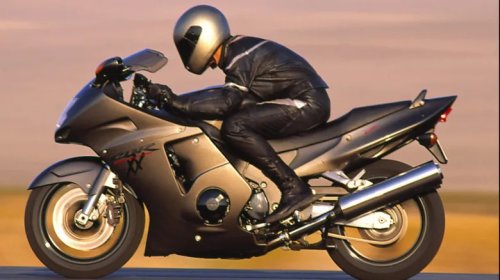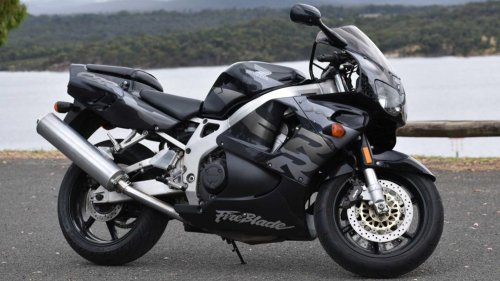
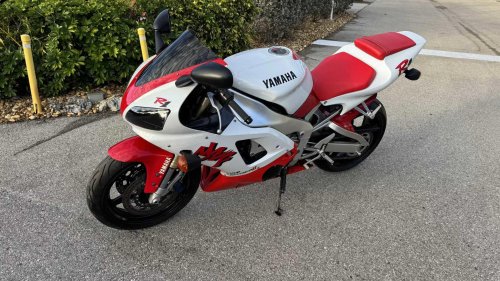
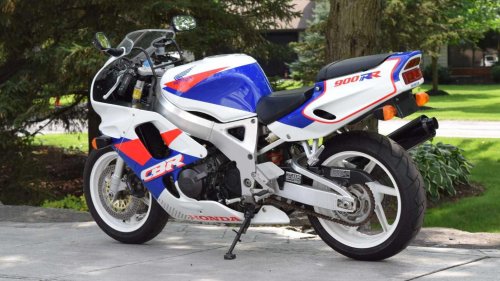
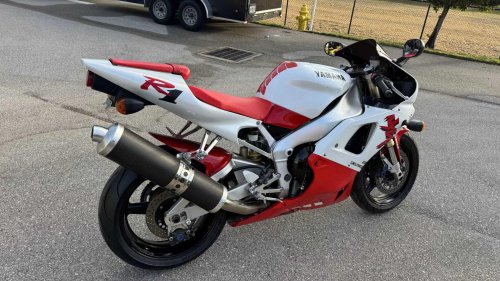
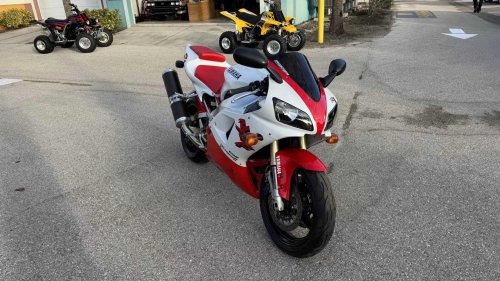
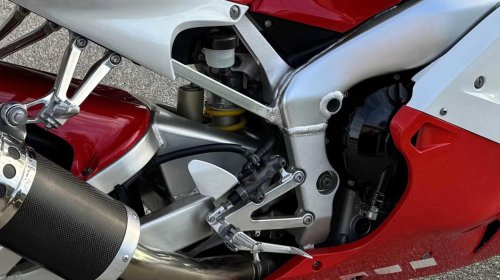
















For most of the 1990s, Suzuki had the sport bike market locked down. It had arrived in 1992 with a machine that broke every assumption about what a liter-class bike needed to be, and for six years nobody had come close to answering it. The formula was deceptively simple: take a big engine, wrap it in a chassis that weighed no more than a 600, and let the physics do the rest. The press loved it. Riders bought it in droves. The competition watched, struggled, and mostly failed to respond.Then 1998 arrived, and Yamaha walked in with a different answer entirely. Not a refinement of the established formula, but a clean-sheet redesign built around one objective: beat the benchmark, whatever it took. The result didn't just match the class leader. It rewrote what the class was capable of, and left every other manufacturer scrambling. How Honda Made the Sport Bike World Its Own Collecting Cars The Honda CBR900RR FireBlade landed in 1992 as something the sport bike world had not seen before. Its rivals were the big-displacement bruisers of the late 1980s: the Yamaha FZR1000 and the Suzuki GSX-R1100, both producing more peak power but carrying 240 to 250 kg of wet weight. The FireBlade answered them not with more horsepower, but with dramatically less mass. Its wet weight of 205 kg was 34 kg less than the FZR1000 and 50 kg less than the GSX-R1100. Honda's engineering chief Tadao Baba had built it around the dimensions of a 600cc bike with a 900cc engine inside, and the result out-cornered anything in its class while keeping pace with the straightline machines on any real road.By 1998, Honda had spent six years refining that formula. The fourth-generation CBR900RR featured a stiffer frame returning to the rigidity of the 1992 original, revised triple-clamp geometry, larger front brake discs with bigger calipers, and an engine rebuilt with lighter internals to reduce friction. Claimed output had risen to 130 hp at 10,500 rpm, with dry weight cut to 180 kg. No rival had seriously threatened it in any comprehensive head-to-head test. Honda had every reason to believe 1998 would be another year at the top. What none of them had seen was what Yamaha had been building in secret. What Yamaha Built to Beat It MecumThe Yamaha YZF-R1 was revealed at Intermot in Cologne in September 1997, and the reaction from the press was immediate. Here was a 998cc machine weighing 177 kg dry, sitting inside a 1,395mm wheelbase shorter than the original 1992 FireBlade, claiming 150 hp from a completely new engine architecture. The project had been led by Kunihiko Miwa, whose brief was not to update Yamaha's existing YZF1000R Thunderace but to beat the CBR900RR outright. The Thunderace used a conventional gearbox layout with the mainshaft positioned behind and below the crankshaft, which forced a long engine, a longer wheelbase, and more total mass. Miwa's team solved the problem by repositioning the gearbox mainshaft directly above the crankshaft. Yamaha called it a stacked gearbox, and it made the new engine 81mm shorter than the Thunderace's unit and 9.5 kg lighter.That shorter engine unlocked a longer swingarm within a more compact overall package. Mass centralized. Weight distribution shifted forward. The aluminum Deltabox II frame used the engine as a stressed member, tying the headstock directly to the swingarm pivot through the motor itself and adding rigidity without adding weight. The EXUP exhaust power valve managed gas flow across the rev range, which meant the engine pulled hard from low revs rather than only coming alive at the top end. The R1 launched in the US at $10,199, against the CBR900RR at $9,999. On paper, the two bikes were within $200 of each other on the showroom floor. What Honda Got Right and Where the Gap Opened Mecum Auctions The FireBlade's philosophy had been correct in 1992 and remained correct in 1998. Honda had spent six years iterating on a strong foundation, and the result was a more refined, more capable motorcycle than the 1992 original. The problem was not that Honda had stood still. The problem was that Yamaha had taken the same weight-first philosophy, added 80cc of displacement, redesigned the transmission architecture from scratch, and extracted 20 more horsepower from the package. As TopSpeed noted in their R1 retrospective, the stacked gearbox concept was subsequently adopted across the industry because it was the correct engineering answer to the compact liter-class problem. Honda's refinement had been outrun by Yamaha's reinvention. The Specs That Settled the R1 vs Fireblade Argument MecumThe top speeds look almost identical, which is exactly what Honda was counting on. For six years, near-matching top-end performance had kept the FireBlade ahead in any class comparison. Cycle World's 1998 head-to-head at Streets of Willow changed that framing. The R1 turned the quickest lap on track, ran the quarter-mile in 10.32 seconds at 138 mph, and hit 60 mph in 2.8 seconds. The CBR ran a 10.67-second quarter at 130 mph and a 2.9-second 0-60. On machines of this performance level, those are not small margins. The Honda was faster than almost anything else on sale that year. The R1 was faster than the Honda by every metric that counted.The deeper story was in mid-range torque. The CBR900RR produced around 62 lb-ft at the wheel in period testing. The R1 was generating closer to 72 to 73 lb-ft across a broader spread of the rev range, and at 6,000 rpm it was putting out nearly 80 horsepower, a figure 15 to 20 horsepower ahead of most rivals at that engine speed. The EXUP valve was central to that: where most 1,000cc engines of the era traded low-end torque for peak power, the R1 refused to make that compromise. It pulled hard from the bottom, kept pulling through the mid-range, and then extended further at the top than the CBR could follow. The implications went beyond one model year. The R1's success in the 1,000cc class was among the factors that influenced World Superbike's eventual decision to raise the four-cylinder class limit from 750cc to 1,000cc, a shift that reshaped the entire category. What They're Worth Now and What to Look For MecumThe 1998 R1 commands a premium over the 1999 for one reason above all others: the original red-and-white "4XV" livery. It is the bike that appeared in every launch test, and it is the one that defined the model's image. Mechanically, the 1999 is the better buy. Yamaha lengthened the gear-change linkage shaft to address the transmission jumping-out-of-gear issues that affected early production bikes, smoothed the ignition mapping, and revised the fuel tank reserve. Buyers who want to ride rather than display will find the 1999 the more sorted machine, but the 1998 will always fetch more from collectors.The FireBlade tracks slightly below R1 values at most condition levels, reflecting the market's greater enthusiasm for Yamaha's engineering story, though a clean SC33 example sold for $7,172 with 8,309 miles, representing fair market for a rider-grade original. Buying One Today: What to Check Mecum On both bikes, originality is the single biggest value driver. Aftermarket exhausts, modified fairings, and track conversions are extremely common on first-generation R1s, and returning a modified R1 to stock can be expensive. Know what correct looks like before you buy.The R1's known weak points are well documented. The engagement dogs on first and second gear wear from hard use, causing the bike to jump out of gear under power. A firm test ride in second at high revs is the standard check. Cylinder head cracks are a known issue on the combined barrel-and-case casting, and oil consumption above a liter per 1,000 miles warrants further investigation. The FireBlade is generally more forgiving mechanically: Honda's build quality means these engines can cover very high mileage with proper maintenance, though fork seals and suspension will need full attention on any bike at this age. The 1998 model's 16-inch front wheel limits modern tire choice, though a 17-inch wheel from a VFR750F fits without modification for those who want broader options.For a buyer who wants the greater performance and the more consequential engineering story, the R1 is the answer. For a buyer who values refinement, reliability margin, and the bike that first proved the lightweight liter formula could work, the FireBlade remains a compelling choice. Both were genuinely great motorcycles at the time. One just happened to arrive with a clean sheet of paper and a specific mandate to win.Sources: Classic.com, Cycle World Archive, Iconic Auctioneers, TopSpeed.