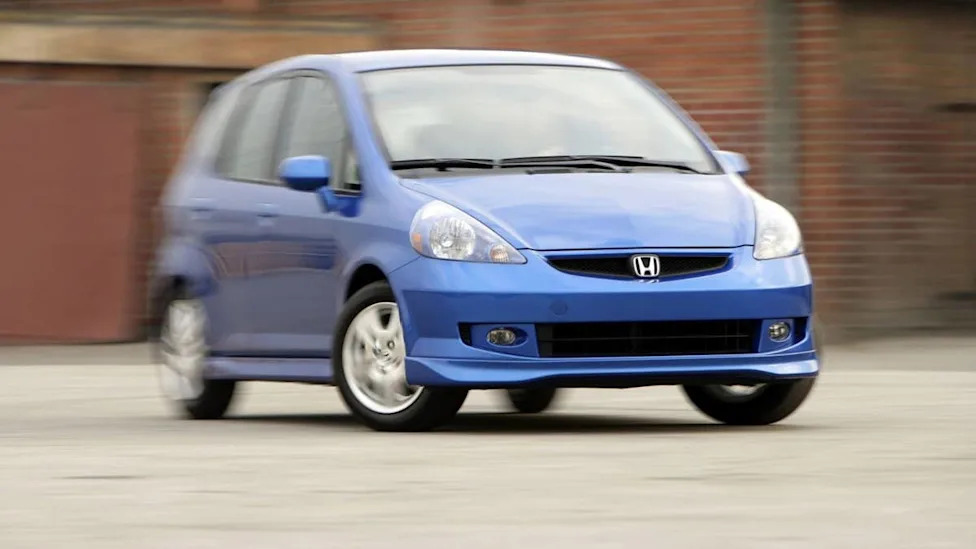
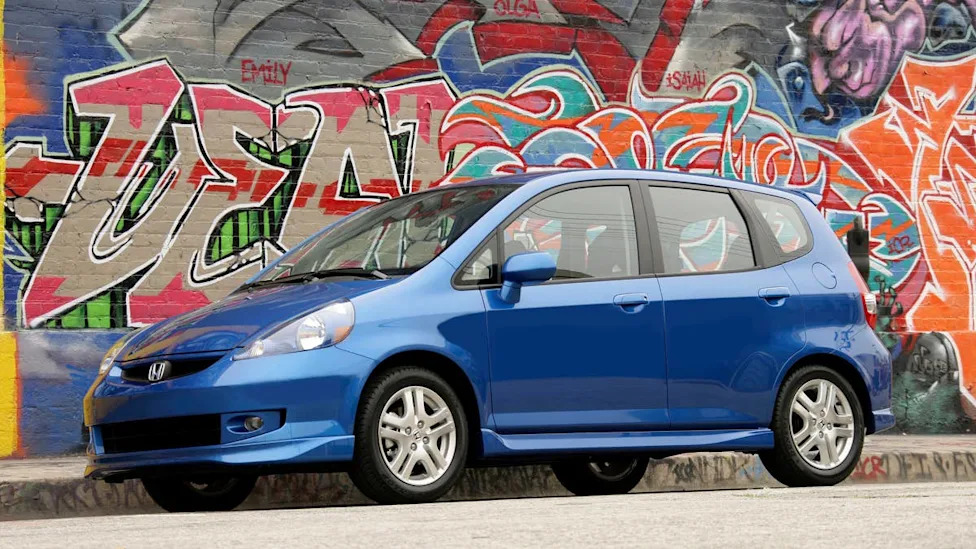
Autoblog and Yahoo may earn commission from links in this article.The Fit Obsession is RealIf you're a car enthusiast that spends way too much time on social media, there's a good chance that your feeds have been looking a little different lately. What used to be a steady stream of posts and short form videos of track day footage and urban car spotting, has been slowly inundated by content regarding one particular small car: the Honda Fit.But whether it be “Honda fihhh” memes on the comments sections of Instagram and TikTok posts, a Fit owner showing off a unique build, or someone posting onboard footage of them tackling the Tail of the Dragon, it's not hard to tell that the humble Fit has taken on a life of its own only a few years after it left the US market. These days, the Fit has evolved well beyond its roots as a humble, pint-sized fuel-efficient 5-door to being a new dream machine for spirited drivers on a budget.AdvertisementAdvertisementHowever, the outright obsession over the humble Honda Fit isn’t something that has emerged entirely out of thin air. The Fit is a modern-day cult classic because it is one of the few cars to perfectly balance reliability and affordability while still being heaps of fun.HondaView the 3 images of this gallery on the original articleThe Price is Right Over the past few years, it has been a bit rough for buyers hunting for a set of wheels on the used car market. The combination of higher prices, as well as questionable service and maintenance history have made buying a used car feel less like comparative shopping and more like a dice roll at the craps table of doom. However, against that backdrop, the Honda Fit has quietly emerged as one of the smartest buys for those with a fairly limited budget.The newest of the bunch are the third-generation Fits, which were sold between the 2015 and 2020 model years. These regularly pop up anywhere between $10,000 and $16,000 depending on mileage and trim, though some low-mile, higher trim 2017-2020 models may command a small premium. But even if that price range feels like a stretch, the second-generation GE8 (2009–2014) and the original first-gen GD (2007–2008 in the US) models push the price floor even lower, with clean examples hovering well under the five-figure mark.AdvertisementAdvertisementThough it may seem intimidating to consider such an older car, data can help quell those fears. According to the data-driven car search and research firm iSeeCars, the Fit is the most reliable 5-year-old used car for the money. They found that its 10.9-year remaining lifespan and average list price of $18,445 in 2025, would results in costs of $1,693 per year; about half the average per-year cost of a five-year-old used car at $3,310. Additionally, they found the Fit to be the second-most reliable 10-year-old used car for the money, as they found its 8.6-year remaining lifespan and average list price of $11,492, to result in costs of $1,341 per year.The Fit is a bonafide fuel sipperBut in an era where gas prices seem to fluctuate to the point of no return, the Honda Fit's fuel economy figures remain a goalpost for even today's most fuel efficient fuel-sippers. According to government figures, third-gen CVT-equipped Fits are EPA-rated at 33 mpg city and 40 mpg highway, while the stick-shift versions don’t fall far behind at 29 mpg city and 36 mpg highway.Older versions of the fit aren’t far behind. The second-gen models are rated at 28 city and 35 highway with an automatic, while stick-shifts have 27 city and 33 highway. Even the EPA-estimated fuel economy of the original first-generation model still holds up today, as Fits from the 2007 to 2008 model years managed a respectable 27 to 28 city and 34 highway.These official ratings are frequently backed by real-world data from the enthusiast community. Owners on the r/hondafit subreddit have regularly shared that the fuel economy of their Fits have either met or even exceeded the EPA estimates, which is highly dependent on one’s individual driving style and habits. In extreme cases, extremely high numbers could be achieved; one owner bragged in a thread from two years ago that he got “62 mpg on a road trip” in their 2016 EX model, while others reported averages around the 30s, with the worst being around the mid to high 20s.The Fit is supported by a strong aftermarket and racing communityBut although it was originally designed to be a fuel-sipper, the Fit has quite an interesting reputation for secretly having the exact opposite kind of persona of a high-mileage hyper-miler. AdvertisementAdvertisementFor years, weekend racers have found the Fit to be an unconventional, but formidable force on the autocross circuit. The combination of a low curb weight of about 2,500 pounds, a short wheelbase, and a suspension geometry that genuinely rewards driver input has made the Fit an unexpectedly satisfying car to drive at the limit and a genuine contender in SCCA-sanctioned competitions. Even throughout its production run, Honda knew that the Fit has been a popular choice for local track days, as well as for hobby racers looking to race in the SCCA’s B-Spec class. As a result, the Honda Fit's has robust aftermarket support for both seasoned racers and for casual enthusiasts looking to aesthetically improve their Fits. In the same vein as older Hondas like the EF and EG Civic, a healthy community of dedicated enthusiasts have kept aftermarket parts suppliers busy creating dedicated mods for all three US-bound generations of the Fit. Everything and everything can be modified to the heart’s desire. A wide variety of parts, including coilover suspension kits from the likes of Tein, Cusco and RS-R, intake and exhaust systems from J's Racing, Skunk2 and Spoon, big brake kits, and even engine swaps have kept the subcompact 5-door as a blank canvas for even the wildest builds. Multiple generations of Fit have even been found to be viable candidates for the ever-popular Honda four-banger swap that promises big power and unsurpassed reliability: Honda’s own K-series. Originally fitted onto a wide variety of Honda vehicles, including, but not limited to the Accord, CR-V, Acura RSX, TSX, as well as Japanese and European Civic and Integra Type-Rs, the K-Series has enjoyed near-mythic status akin to Japanese powertrains like Toyota’s 2JZ and Nissan’s RB series. AdvertisementAdvertisementIn a 2018 interview for Road & Track, TCS Racing’s Seamus Erskine explained that although such a swap (which he did to a Fit built for American Endurance Racing) required TSX and Accord parts, the Fit was more than a viable option for such an engine swap. “The K24 engine fits in the second-gen almost like Honda intended for it to go there,” he said. HondaView the 3 images of this gallery on the original articleThe Right Car at the Right TimeThe Honda Fit was never supposed to be cool. It was designed to be a practical, affordable, and sensible car for the masses; a car designed to be a simple appliance with Honda's legendary reliability. However, some of the same qualities that made it easy to dismiss when new are exactly what make it so compelling right now. AdvertisementAdvertisementUltimately, the Honda Fit is a testament to the idea that you don't need a massive engine or a six-figure price tag to have a car with personality. It's a Swiss Army knife on wheels that can handle IKEA and Costco runs, and tear up a canyon road or an autocross course. Though Honda may have pulled it from the US showrooms, its loyal community of owners and the endless stream of memes ensure that the Fit's legacy is only just getting started.So, if you find yourself scrolling through your feed and pausing on a "Honda fihhh" comment on a post asking "car guys" for buying advice for a cool, cheap car; know that for once, the internet can be surprisingly right. The Fit isn't just a sensible choice. It's a cult icon that not only proves the best things may not only come in small, incredibly practical packages; they can be the most unexpected cars. Whether you're looking for a reliable daily or a budget-friendly track project, there's probably a Fit out there waiting to show you why the hype is well-deserved.This story was originally published by Autoblog on May 15, 2026, where it first appeared in the Features section. Add Autoblog as a Preferred Source by clicking here.



















 +64 others