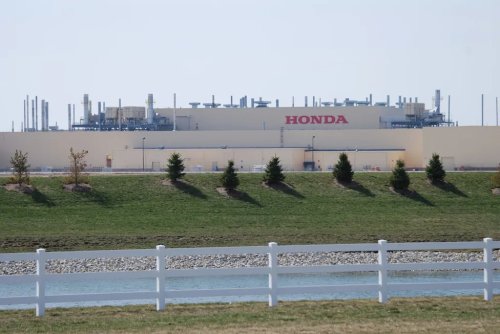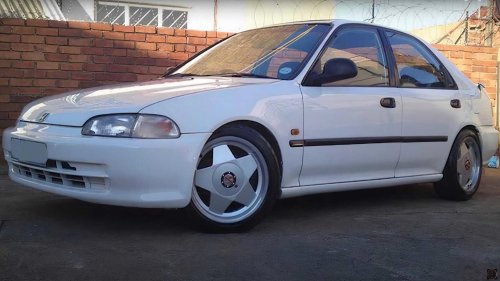
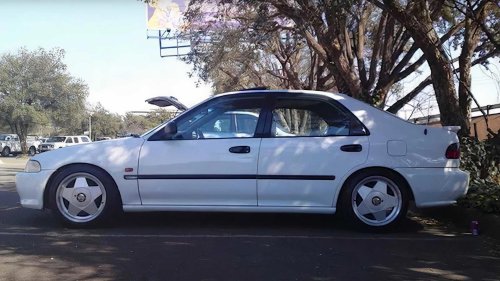
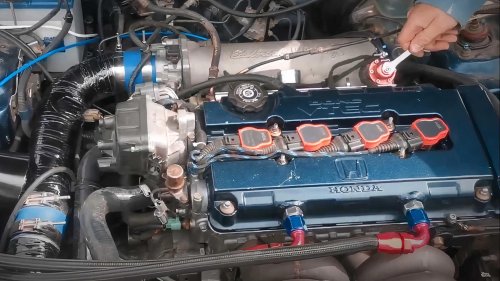
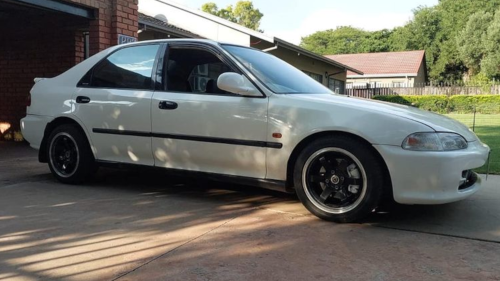
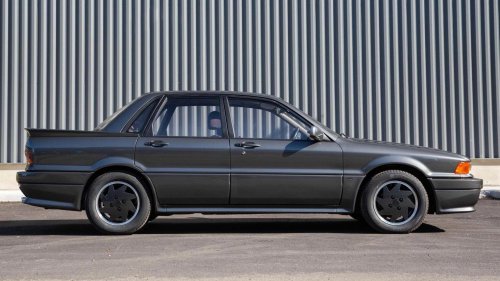
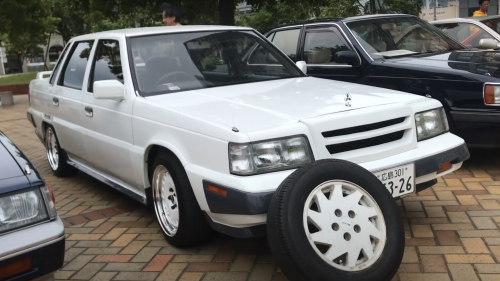
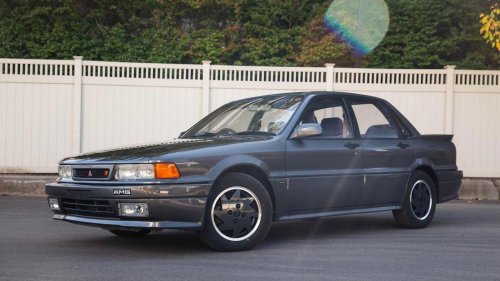
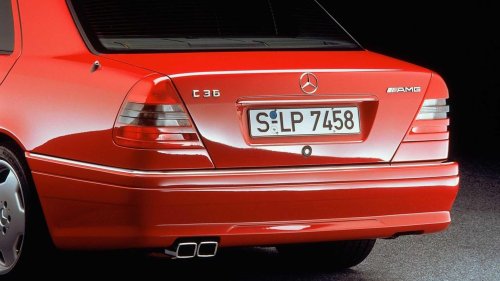


















Jump LinksHonda Ballade AMG FactsThe Mitsubishi Debonair AMGThe Mitsubishi Galant AMGAMG. It's one of the most famous tuning companies out there. Its reputation is so famous, and so connected to Mercedes-Benz, you can consider it akin to Shelby and Ford. Before AMG was purchased by Mercedes in the late 1990s, though, it was responsible for some strange collaborations with other automakers, but one such joint effort stands out for not really standing out at all. In fact, both brands would rather people not know about this car.The collusion in question is AMG's short-lived and now-hushed relationship with Honda. Specifically, AMG and Honda came together to bring a tuned version of Honda's Ballade — basically an upscale Civic — to South Africa. AMG had just completed work on a couple of vehicles for Mitsubishi, so they were somewhat well-read regarding Japanese cars. However, unlike the Galant AMG, the Ballade AMG would not enjoy nearly as much fame. But, just like a hipster's mindset, its lack of public awareness is exactly what makes the Ballade AMG cool. The Weird Honda In Question: The Ballade AMG YT: Chris VS Cars Honda Ballade AMG Facts Produced from 1996 until 2001 Built to help increase Honda's presence in South Africa Honda nor AMG will say exactly how many were produced Some sported cosmetic tweaks only, whereas others were also tuned for performance If we can wager a guess, most of you reading this may have never even heard of the Honda Ballade. It started its life in 1980 as a more upscale version of the Honda Civic, as Honda needed a model which could compete with the likes of the Toyota Sprinter and the Nissan Laurel Spirit, whereas the Civic was meant to go head-to-head with the Toyota Corolla and the Nissan Sunny.The Ballade was discontinued in Japan following the 1987 model year, but it lived on in select markets. From 1987 to 1995, the Ballade sat quietly in Honda's model lineup, maintaining its slightly more upscale feel over its sibling, the Honda Civic. Then, in 1996, the Ballade received a model update, and gained some useful creature comfort like a cupholder, an optional tape deck, and the option to select sporting alloy wheels at certain trim levels.1996 also saw the introduction of our model of interest, the Ballade AMG. In short, Mercedes-Benz found itself in need of a more affordable model on its South African roster, as the entry-level 190E was still deemed too expensive. Honda, at the time, was looking to gain a foothold in South Africa as a whole. So, a deal was struck between the two automotive giants, and the Ballade AMG was born. It was to be sold in Mercedes-Benz dealerships and built in Merc's existing East London factory.YT: Chris VS Cars Exact details regarding the Ballade AMG are scarce. However, CarBuzz has scoured near and far and learned everything there is to be learned about the thing. We do know it was built between 1996 and 2001, and featured a few key AMG upgrades to set it apart from the standard Ballade. It also came with a choice between two stages of tuning, the first being cosmetic upgrades only, with the second getting some AMG performance goodies.Buyers received white-faced gauges, a trunk spoiler, and aftermarket 15 or 16-inch Remotec wheels. Second phase models received all the cosmetic upgrades along with a mildly-tuned 1.8-liter Honda B18 engine with a tuned 1.6-liter also on offer. Information regarding the exact amount of Ballade AMGs sold is unknown, as both Honda and AMG won't elaborate much about the car. It seems both companies would rather forget than remember one of the strangest Hondas ever made. Honda and Mercedes-Benz eventually parted ways in South Africa, and are now sold in separate dealerships. The Ballade AMG's Powerhouse YT: VisioRacerLike we said before, details regarding the elusive little AMG are hard to come by, but we do know a few important pieces of information regarding its powertrain and most of what AMG did to the Ballade to transform it into something they thought deserved to wear their badge, at least at the time.The Ballade AMG used a tuned version of Honda's B18B4 engine, a 1.8-liter unit which only saw action in Civics meant for the South African and Middle Eastern markets from 1996 to 2000. In its stock form, the B18B4 made 138 horsepower during its final year of production. AMG took the motor and gave it a going-over. The details of the going-over are hazy, but we do know the Ballade AMG received a performance exhaust system. The result of AMG's tuning was an additional 35 horsepower, which suggests other trickery was at play under the hood, too. What Happened To The AMG Ballade? Facebook Marketplace Once again, details are hazy, but we do know enough about the South African market to guess. South Africa is currently one of the biggest markets for AMG-branded models, and the same goes for BMW M. It's also a popular home for GTI and R versions of the Golf. Basically, those guys love performance cars.The main problem is that South Africa's largest car market is situated nearly 6,000 feet above sea level, and naturally aspirated cars suffer as a result. At that altitude, you can expect a car to lose around 18% to 20% of its quoted power output unless it has some form of forced induction. In short, the AMG Ballade did not feel particularly fast at anything above sea level, so one of two things happened. If you browse Facebook Marketplace, you'll see that these AMG Ballades were either turbocharged or junked. There doesn't appear to be any in-between. Other Japanese AMGs Cars & BidsBefore AMG was purchased by Mercedes-Benz in 1999, the tuning company was independent and free to choose what make and model their next project would be. The Honda Ballade AMG wasn't the first Japanese car they tuned. In fact, the first one came a decade prior, and wore a Mitsubishi badge. Sure, it's the three-pointed star models which have gained fame and attracted immense values over the decades, but for a true AMG enthusiast, there is something particularly interesting and alluring about these early ventures. The Mitsubishi Debonair AMG YT: WasabiCars The Mitsubishi Debonair AMG came about in 1986, and was the first Japanese car to be tuned by the boffins at AMG. As for performance upgrades, the Debonair AMG didn't receive much, although it was fitted with a 2.0-liter supercharged inline-four which produced 190 horsepower, a pretty big number for a modest, 1980s sedan. The main changes made to the Debonair AMG were cosmetic, as AMG re-imagined its old-man looks with a new grille, side skirts, better wheels, and a trunk spoiler. As with the Ballade, these are now incredibly thin on the ground, and difficult to find in good, honest, and original condition. The Mitsubishi Galant AMG Cars & Bids The next, and more famous, AMG-Japanese collaboration was the Mitsubishi Galant AMG, which was produced from 1989 to 1994. Like the Ballade AMG, the Galant AMG came with a choice between two phases, one of which was purely cosmetic and received some fancy wheels, ground effects, a wood-trimmed shift knob and different seats. The second phase was the one to have, with it sporting a tuned 2.0-liter 4G63 inline-four engine making 170 horsepower and packing a rev limit of 8,000 rpm. Before we had the Lancer and its Evolution offshoots, this was peak Mitsubishi. Why Mercedes-Benz Bought AMG Mercedes-Benz It may seem odd for a company whose early-life docket included random Japanese commuter cars. But, the fact of the matter is, those only make up the tip of AMG's pre-Mercedes itinerary iceberg. AMG itself was founded by ex-Mercedes-Benz engineers who worked very closely with the company, even though there was no official business tying them together back then. AMG's main focus in the beginning was motorsport, and the production car tuning only came later.As time wore on, Mercedes-Benz turned to AMG more and more for performance models, with the first Mercedes model to be jointly developed with AMG being the C36 AMG, a derivative of the Mercedes-Benz C-Class, which came about in 1993, seven years after the Debonair AMG was already produced. The success of the C36 AMG was apparent, and the companies began working together more closely following the model. In 1999, Mercedes-Benz purchased 51 percent of AMG, cementing the tuning company as Merc's performance arm.Prior to production models being sold through Mercedes-Benz dealers, AMG would convert your Mercedes for you after purchase, and this led to some pretty wild and now hugely collectible creations. For instance, one of the wildest and now most celebrated AMG models is the iconic AMG Hammer. This slab-sided slice of '80s excellence was produced in tiny numbers, and now examples are worth multiple hundreds-of-thousands of dollars. That's not particularly surprising, as the conversion cost back in the day cost in the region of $125,000, whereas a new M5 would set you back just under $50,000. Still, if a flashy Testarossa wasn't your thing, and an M5 wasn't exclusive enough, the 180-MPH Hammer might've then made fiscal sense. Maybe.