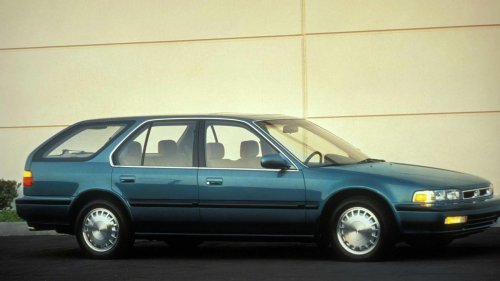
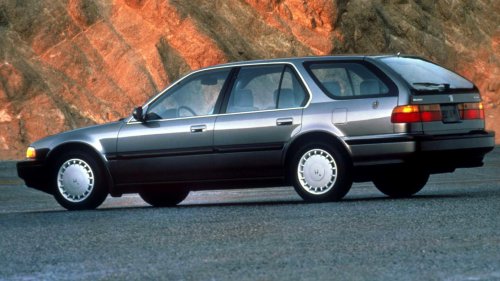
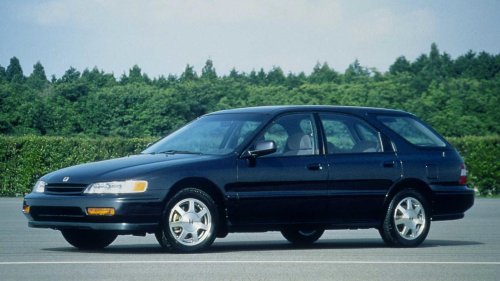
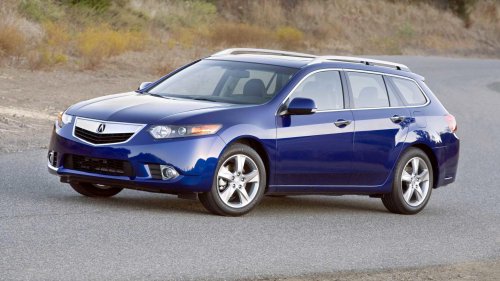
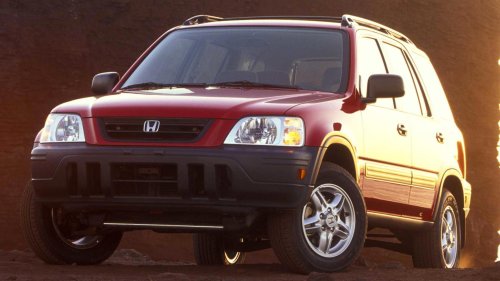
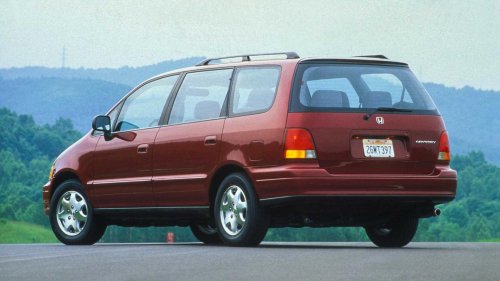
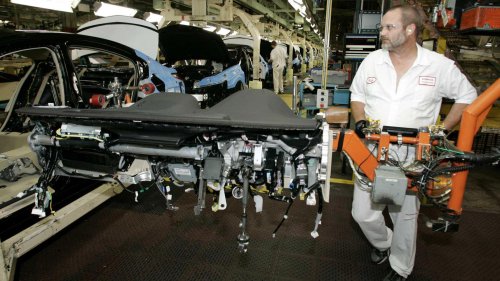
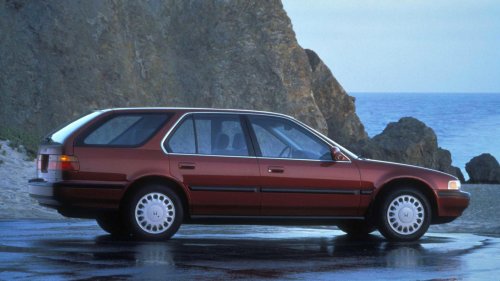
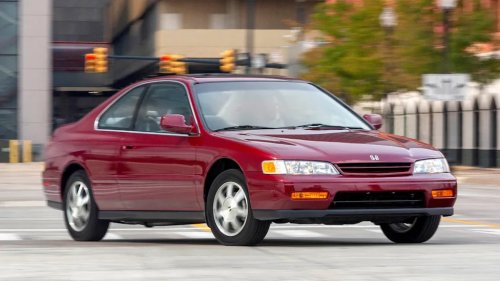
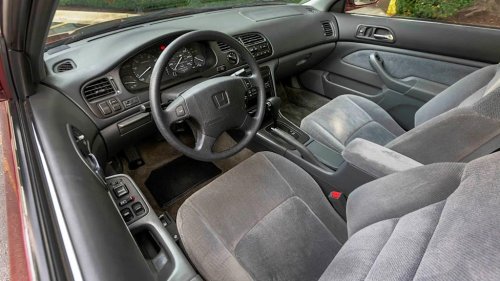
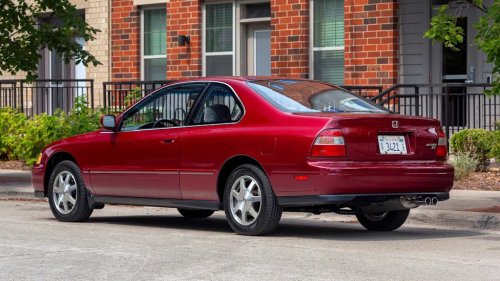
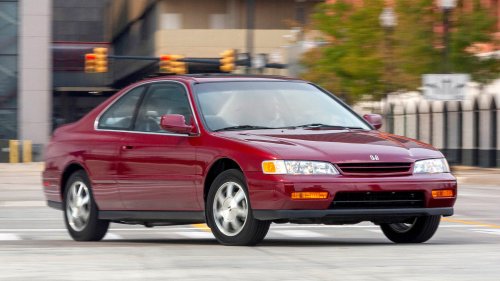
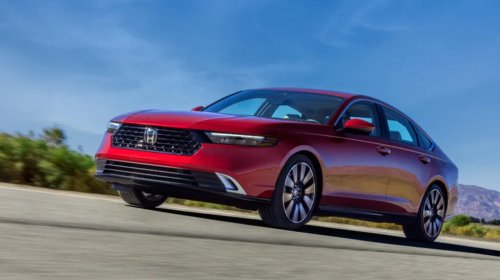
Jump LinksThe 1991–1993 Accord WagonThe 1994–1997 Accord WagonThe Rise Of Crossovers & SUVsThe Minivan Boom & Limited PracticalityCannibalized Sales & Development CostsDid Honda make an Accord Wagon?Was the Accord Wagon sold in Europe?Do Accords have hatchbacks?Is the Accord Crosstour a wagon?The death of the American station wagon wasn’t a sudden execution; it was a slow, calculated phasing out driven by profit margins and shifting consumer demands. At the heart of this transition stands the Honda Accord Wagon - a vehicle that spoke of peak Japanese engineering and practical design before the "lifestyle" SUV movement relegated it to the back burner.Many will see the Accord Wagon as a representation of a lost era where driving dynamics and cargo capacity lived in perfect harmony. Globally, the nameplate thrived across five distinct generations, yet in the United States, its presence was a fleeting, two-act play that ended just as the industry hit a developmental crossroads. And that's a huge pity.The information in this article is sourced from Honda and Acura, and is correct at the time of writing. Overview Of The Honda Accord Wagon Honda USA The Honda Accord Wagon was never an afterthought or a crude extension of the sedan. In fact, it was a purpose-built variant designed to maximize the modularity of the global Accord platform. Across its lifespan, five generations of the Accord wagon were produced, though their availability was strictly dictated by regional demand. The 90s Accord Wagon was largely a global product, but by the late 1990s, the lineage diverged into market-specific models that saw the US being sidelined.Honda Accord Wagon Generations:First Generation Wagon (1991–1993): The first of the Honda Accord Wagons was based on the fourth-generation Accord (CB chassis). This was the first Accord developed by Honda R&D Americas and manufactured in Ohio, for the US market before being exported back to Japan. Second Generation Wagon (1994–1997): Based on the fifth-generation Accord (CD chassis), this model refined the "AeroDeck" philosophy. It offered a more aerodynamic profile and the introduction of VTEC technology to the long-roof segment. Third Generation Wagon (1998–2002): Based on the sixth-generation Accord. However, while the US received a larger, widened Accord sedan, the wagon was built on the narrower JDM/European chassis (CF6/CH9), which formed part of the reason why it was not sold in North America. Fourth Generation Wagon (2003–2008): Based on the seventh-generation Accord, this generation was known as the Accord Tourer in Europe and the Accord Wagon in Japan (CM chassis). This generation leaned into premium aesthetics and a double-wishbone suspension. Fifth Generation Wagon (2009–2015): Based on the eighth-generation Accord, this final iteration (CW chassis) focused on sport over utility. It sacrificed some cargo volume for aggressive styling. And while it never wore a Honda badge in the US, it made a brief appearance under the Acura marque. The Accord Wagon’s American Era (1991–1997) The 1991–1993 Accord Wagon (4th-gen Accord Platform) Honda USA The 1991 debut of the Accord Station Wagon marked a significant milestone for Honda’s North American operations. Built on the CB chassis, the wagon was a masterpiece of the "Man Maximum, Machine Minimum" philosophy. It featured a low beltline, expansive glass, and a sophisticated four-wheel double-wishbone suspension - a setup usually reserved for sports cars. Under the hood sat the 2.2-liter F22A6 inline-four engine, which, in the range-topping EX trim, produced 140 horsepower and 142 lb-feet of torque.The Accord Wagon offered the same crisp steering and chassis composure as the sedan, all while providing a cavernous 64.5 cubic feet of cargo space with the rear seats folded. Its build quality was peerless for the era, featuring tight panel gaps and a high-quality interior that mocked the cheap plastics found in domestic rivals. However, despite all the good it stood for, it remained a niche product, appealing to a specific demographic who valued Japanese reliability over the sheer size of the Ford Taurus or Chevrolet Caprice wagons. The 1994–1997 Accord Wagon (5th-gen Accord Platform) Honda USA The 1994 redesign brought the CD chassis into play and also introduced a more rounded, organic aesthetic that aligned with 1990s design trends. The 1994–1997 Honda Station Wagon was wider and more structurally rigid than its predecessor, offering improved crash safety and cabin insulation. Honda also introduced the updated 2.2L F22B1 VTEC engine in the EX trim, which pushed the output to 145 hp and 147 lb-ft.This generation represented the pinnacle of the Honda-badged wagon in America. It was exceptionally refined and boasted a ride quality that rivaled entry-level luxury cars. Honda attempted to inject more character into the lineup, but the market was already beginning to look towards crossovers and SUVs. While the 1994–1997 models were arguably the best wagons Honda ever sold in the US, sales began declining, and by 1997, the writing was on the wall. Sales data and market trends showed that buyers were no longer interested in the low-slung utility of a station wagon; they wanted a higher hip point and a tougher image. And as the 1997 model year concluded, Honda quietly pulled the plug on the Accord Wagon - a move that would leave a void in its American lineup for more than a decade. The Acura Connection (2011–2014) 2011 Acura TSX Sport WagonThe name 'Accord Tourer' comes from the sophisticated European and Japanese variant that North American enthusiasts spent years envying from afar. When the eighth-generation global Accord was developed, Honda realized that the new car was too small and sport-oriented for the mainstream American market, which now preferred the wide-body Accord sedan. However, seeking to salvage something from what remained in the station wagon segment, Honda brought the Euro-spec Accord wagon to the US in 2011 and rebadged it as the Acura TSX Sport Wagon.Mechanically, the TSX Sport Wagon was powered by the legendary 2.4L K24Z6 engine, producing 201 hp and 170 lb-ft. It featured an exceptionally stiff chassis and a premium interior that was leagues ahead of the standard Honda fare. Yet, the American execution - note: not quality - was flawed. To avoid cannibalizing sales of the RDX crossover, Acura made the Sport Wagon available with just a 5-speed automatic transmission, front-wheel drive, and the four-cylinder engine, omitting the V6 and 6-speed manual options offered in the sedan.Despite its sharp handling and "sport-touring" credentials, the lack of an all-wheel drive (AWD) option and the limited powertrain choices sealed the wagon’s fate in America before it even had a shot at reclaiming lost fame. The TSX Sport Wagon lasted only until 2014, selling in small numbers compared to the MDX and RDX, and served as a final, somber confirmation that the American wagon market had officially collapsed. Why Did Honda Axe The Accord Wagon In The US? The Rise Of Crossovers & SUVs Honda The primary executioner of the Accord Wagon came from within its own ranks, with the Honda CR-V in 1997. The SUV’s arrival coincided perfectly with the Wagon’s ‘97 discontinuation, and it offered something the Accord Wagon could not: a commanding driving position and the psychological security of available Real-Time AWD. For the everyday American consumer, the transition from a low-slung wagon to a high-riding crossover felt like an upgrade in status and capability, even if the actual performance and fuel efficiency figures were inferior. Across the board, the SUV became the new symbol of the active American lifestyle, making the station wagon appear outdated by comparison. The Minivan Boom & Limited Practicality Honda While the rise of the SUV was asserting pressure, the "Minivan Boom" of the 1990s squeezed the wagon from the other side of the spectrum. Families that required genuine hauling capacity migrated to the Honda Odyssey, which offered three rows of seating and sliding doors that were infinitely more practical than a traditional wagon. The station wagon occupied a middle ground that no longer existed; it wasn't as tough as an SUV, nor as cavernous as a minivan. Caught in this sudden rise in popularity between its siblings - the CR-V and the Odyssey - the Accord Wagon lost its USP (Unique Selling Proposition) as the go-to family carrier. Cannibalized Sales & Development Costs Honda USA From the cold corners of the accounting division and the bleak balance-sheet perspective, the Accord Wagon became a liability for Honda in the US. Maintaining a unique body style - complete with specific rear doors, roof stampings, and glass - for a vehicle that sold in a fraction of the sedan's volume was a financial drain. Honda’s production lines were more profitable when dedicated to high-volume sedans and the ever-increasing demand for crossovers and SUVs. Thus, developing a US-specific wagon variant for the sixth-generation Accord would have required massive capital expenditure for a shrinking market share, and Honda analyzed the ROI and realized that every dollar spent on a wagon was a dollar not spent on the more lucrative SUV segment. Will The Honda Accord Wagon Ever Make A US Comeback? Honda USA The short answer is: almost certainly not. The automotive landscape in 2026 is defined by the "unholy trinity" of electrification costs, platform consolidation, and the unwavering SUV dominance. In a world where Honda is pouring billions into more lucrative vehicle options and its future e:Architecture EV platforms, there is no financial room for a niche, low-margin station wagon in North America.Compounding this, the 11th-generation Accord has been strictly streamlined as a sedan to simplify production. Sadly, the low-profile Accord Wagon is a victim of its own excellence in a market that no longer values its specific virtues, which is truly sad - for many, it would make the perfect addition to the modern Honda lineup. FAQs Did Honda make an Accord Wagon? Yes. Honda engineered five generations of the Accord Wagon between 1991 and 2015. It was sold in the US between 1991 and 1997. Was the Accord Wagon sold in Europe? Yes. The Accord Wagon was marketed there as the Aerodeck or Accord Tourer. European market conditions allowed the wagon to thrive there through the eighth-generation platform until 2015. Do Accords have hatchbacks? The original 1976 Honda Accord debuted as a three-door hatchback. Modern iterations are exclusively available as sedans. Is the Accord Crosstour a wagon? Technically, no. The 2010–2015 Accord Crosstour was classified as a mid-size crossover SUV that featured a polarizing fastback roofline. It failed to capture either traditional wagon purists or dedicated SUV buyers, and was ultimately cut completely.