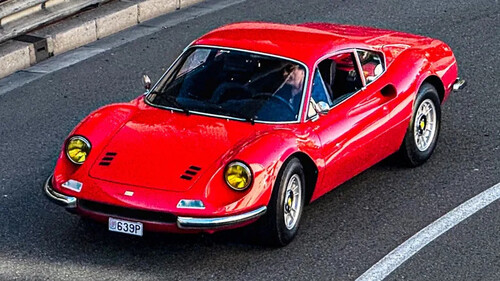
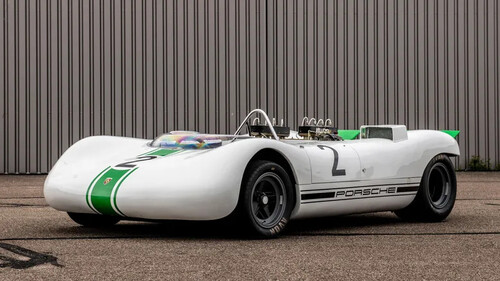
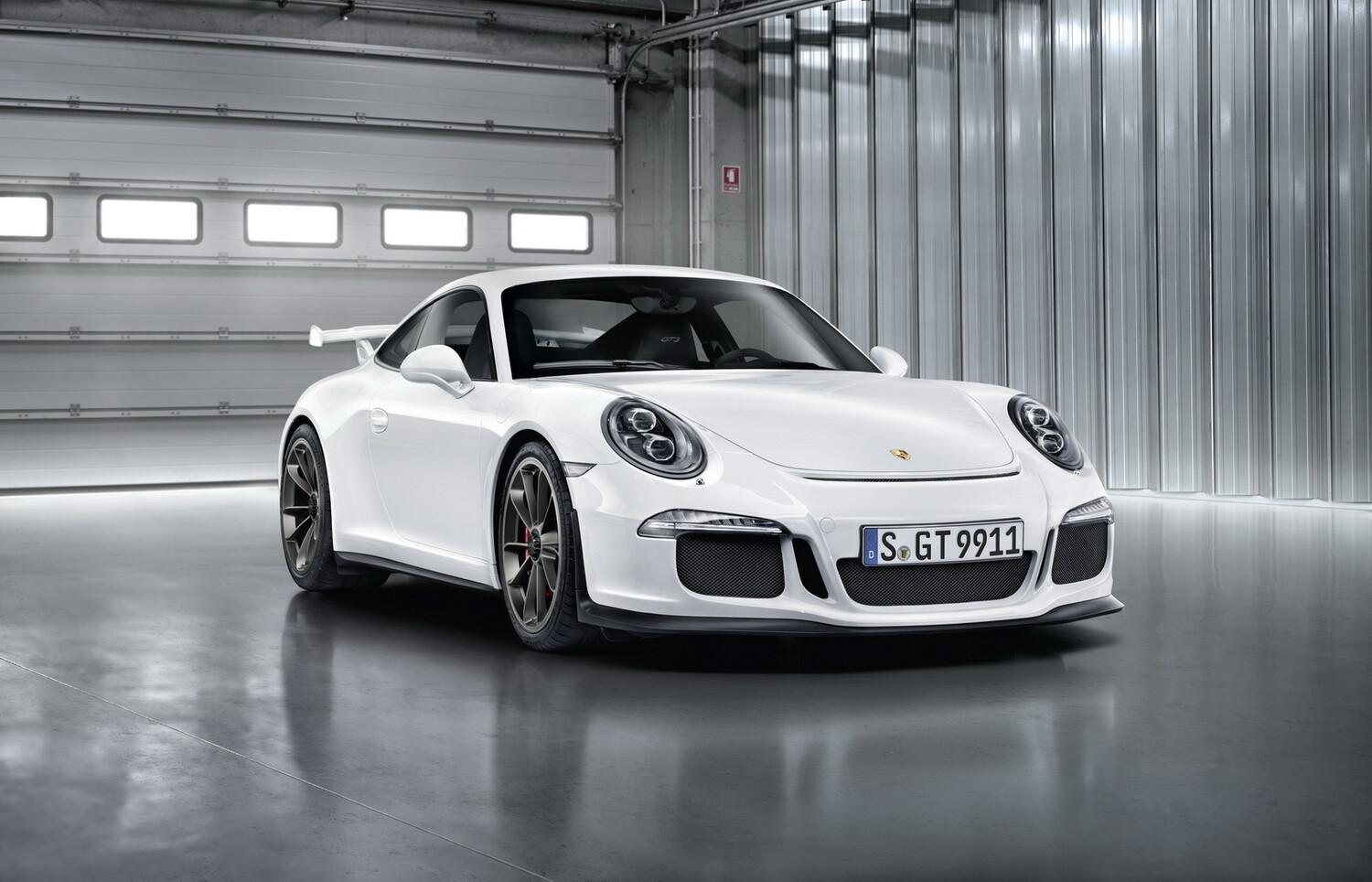
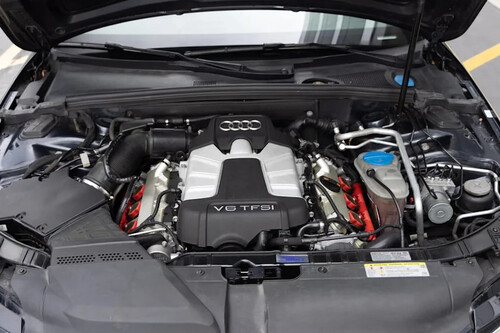
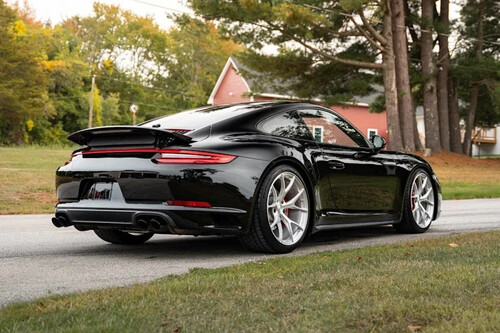
Autoblog and Yahoo may earn commission from links in this article.The internal combustion engine can be produced in a number of configurations, and while the inline-six is great for smoothness and torque, it may be a little too long for some applications. When you need something more compact that still has six cylinders, two options are available: the V6 or the boxer-six/flat-six. How do these differ? In this article, we'll explore the basic layouts of each and how they contribute to or detract from a car's greatness when compared to each other.V6 vs Boxer-Six: What They Are and How They DifferNissanThe V6 engine was first introduced in the middle of the 20th century by Lancia in the Aurelia sedan, but it's now in use by a plethora of automakers from Ferrari to Nissan. It consists of two banks of three cylinders each, typically with a 60-degree angle between each bank, though 90-degree V6s have also appeared. There are also 120-degree V6 engines, such as those in the McLaren Artura and the Ferrari 296 GTB. Regardless, each bank has its own cylinder head. Because this is essentially two three-cylinder engines sharing a common crankshaft, the V6 is inherently unbalanced, and manufacturers use balancer shafts to offset the vibrations caused by odd firing intervals. When the angle of the V6 is greater than the common 60-degree configuration, usually because the engine has been adapted from a V8 design (like the engine in the Alfa Romeo Giulia Quadrifoglio), the engine requires additional harmonic balancing and the use of a split-pin crankshaft to avoid vibrating itself to pieces. The main benefit of the V6 is that it's short, providing more space for ancillary components in the engine bay, and its compactness means it can even be suitable for front-wheel-drive applications. The wider the angle of the Vee, the more space there is in the valley between the cylinder banks for things like turbochargers, and because the banks move closer to the floor the wider the angle grows, the better the center of gravity of the engine, which improves handling. However, this widening also makes the engine take up more space from side to side, which can create packaging challenges for the steering rack, battery, and other components. 120-degree V6s are very close to boxer engines, so let's discuss those.Related: V8 vs Inline-Six: Which Engine Design Actually Makes More Sense?The boxer or flat engine can be considered a Vee engine with a 180-degree angle. A boxer-six is basically a V6 that has been flattened, concentrating weight down low to improve handling. Porsche has stuck with the boxer engine for generations because of this low center of gravity, but there's another benefit. Because the flat-six is a reciprocating engine, where the horizontally opposed cylinders' primary and secondary vibrations cancel out those on the opposite side of the engine, there's no need for counterbalancing as there is in a V6. This contributes to greater reliability and simplicity. It also explains where the 'boxer' name comes from; the pistons move toward and away from each other like two boxers' gloves meeting in the middle. However, this layout is extremely wide, which makes changing things like spark plugs and valve covers difficult. The flat-six can also suffer from oil pooling in the cylinders caused by nothing more than gravity. But on the plus side, the engine's small vertical footprint has allowed the likes of Subaru to fit components like the intercooler above the engine, leaving space in front of the engine for other accessories.Flat-Six vs V6: Pros and ConsSinger Vehicle DesignThe V6 engine is used far more prolifically than the flat-six, so we'll start there.V6 Pros:Cost: The V6 is more widely used, so sourcing components is easier, especially when the engine is adapted from an existing V8 design.Complexity: The V6 is far simpler to understand and easier to work on, which makes maintenance simpler and cheaper.Length and versatility: The V6 engine is short and compact, which allows it to be used in a variety of applications; a V6 can easily be mounted transversely for FWD applications.Gravity: Because the engine's cylinders are arranged more vertically, oil runs down the cylinder walls instead of pooling around the piston, as in a boxer.V6 Cons:Balance: The V6 is naturally unbalanced, requiring balance shafts/harmonic balancers to fire relatively smoothly.Noise: The V6's lack of inherent smoothness can result in a gruff engine note.Packaging: A V6 is taller than a flat-six, which raises the center of gravity.ar.inspiredpencil.comView the 2 images of this gallery on the original articleFlat-Six Pros:Handling: A flat-six is essentially a 180-degree V6, with its cylinders adjacent to the crankshaft, concentrating weight low down and contributing to a lower center of gravity, which improves handling.Natural balance: Because the pistons fire in a reciprocating motion relative to each other, their forces cancel each other out, resulting in a smoother engine.Sound: Thanks to the balance of the engine, the flat-six has an arguably better engine note that is both distinctive and smooth.Flat-Six Cons:Maintenance: Accessing the spark plugs and removing the cylinder heads is much more difficult in a flat/boxer engine than in a Vee engine, making basic servicing trickier.Cost: Because they're uncommon relative to V6s or inline engines, boxer engines can be more difficult to source parts for, and understanding how they work is not something all mechanics can promise.Packaging: Due to their unusual width, boxer engines take up a lot of space at the bottom of an engine bay, which can prove challenging for other parts.Reliability: Because oil tends to pool at the bottom of the engine, the flat-six can struggle to start when cold, and leaks are not uncommon.V6 vs Flat-Six: The VerdictBYDAdvertisementAdvertisementView the 2 images of this gallery on the original articleAs with all engines, which is better depends mostly on the application. The low center of gravity, inherent smoothness, and relative exoticism of the boxer engine make it a great choice for performance applications like the Porsche 911, and the unique 'buzzsaw' sound is a great byproduct. With V6s, their low-end torque, ease of maintenance, and common use make them more cost-effective and easier to replace. They also boast a low center of gravity relative to inline-six engines, and their versatility means they can be used in front-wheel-drive applications with ease. Overall, the flat-six and its boxer configuration are unbeatable from a handling perspective, but a boxer's complexity and relative unreliability mean the V6 is the champion in the vast majority of applications.This story was originally published by Autoblog on May 11, 2026, where it first appeared in the Features section. Add Autoblog as a Preferred Source by clicking here.