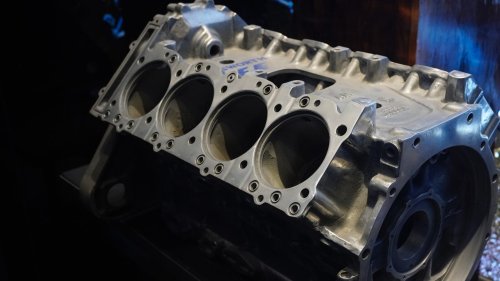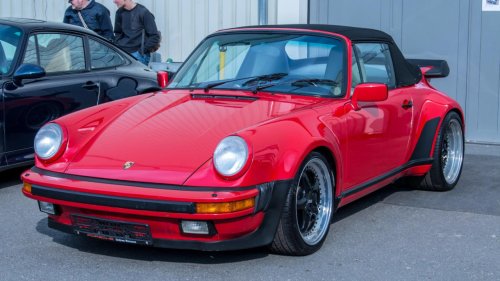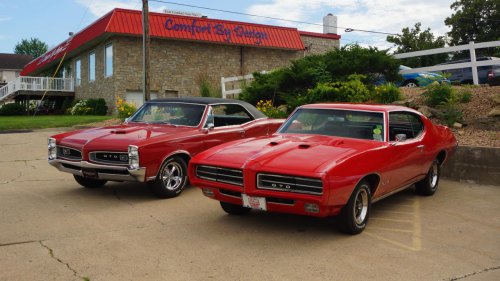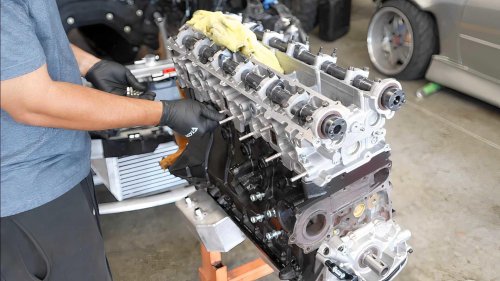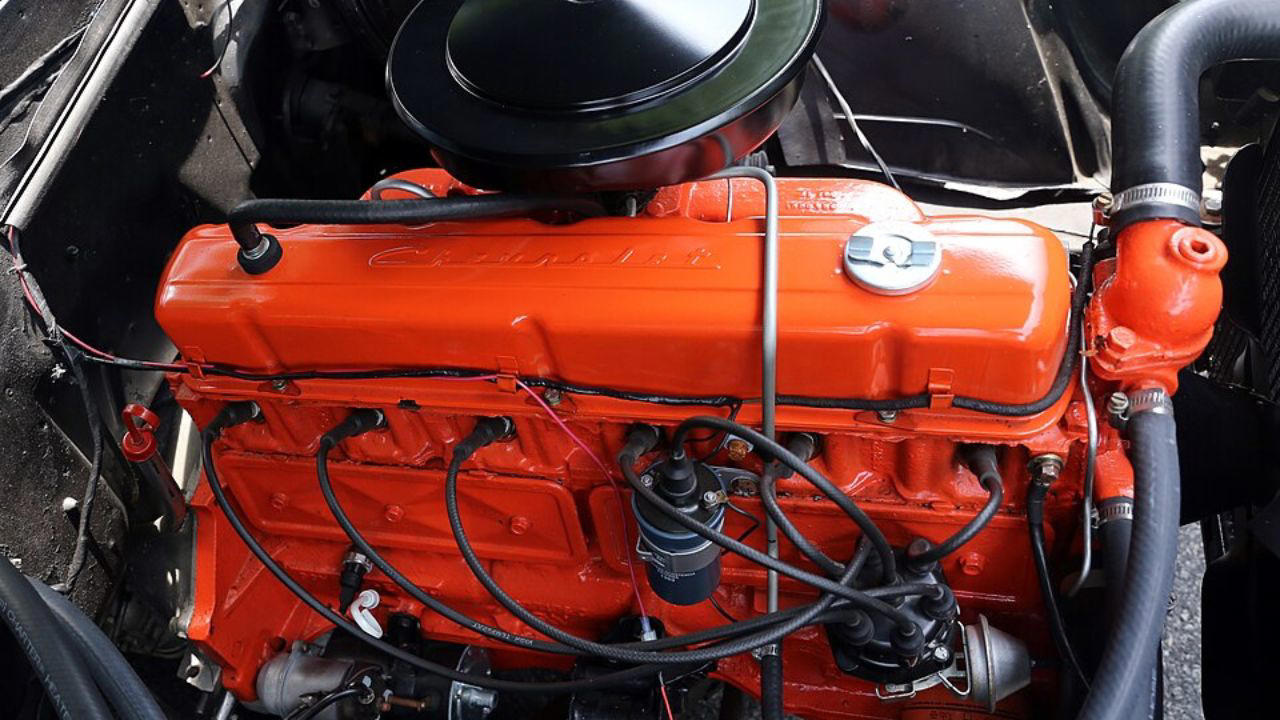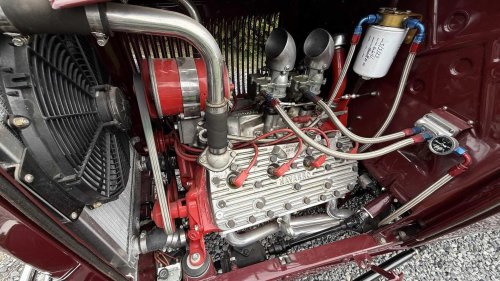
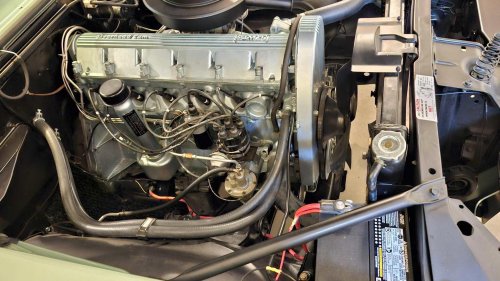
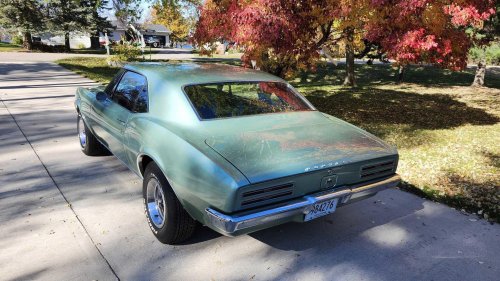
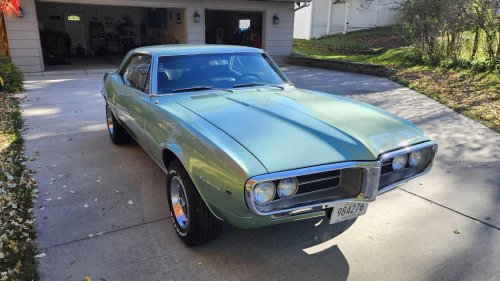
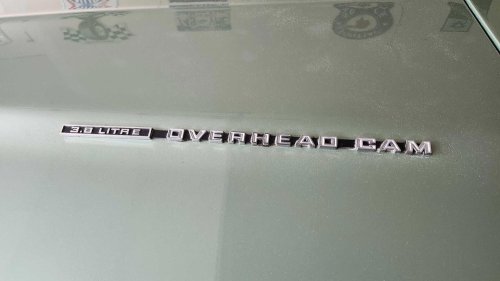



















For decades, Detroit was already struggling with a reputation for being stuck in the past. But one muscle car nearly weaned the U.S. off its V8 addiction with an advanced, powerful, and beautiful-sounding inline six cylinder. In the 1960s!You can’t help but imagine a world in which Detroit continued to lead the world in engine development for decades, and to picture the high-performance supercars that could have been built in Michigan in the 1970s, 80s, and 90s. But alas, 1960s drivers weren’t ready to buy the future. How Detroit Fell Behind Bring a TrailerWhen Ford introduced the first mass-produced V8 in 1932, there really was no replacement for displacement. The Ford Model A’s four-cylinder made 40 bhp at 2,200 rpm and 128 lb-ft of torque at 1,000 rpm. When Chevrolet introduced an inline six-cylinder in an entry-level 1929 car, it upped the ante with 46 horsepower at 2,600 rpm and about 124-125 lb-ft of torque at 1,000 rpm. It even advertised “a six at the price of a four.” Ford knew it would need to do better.Henry Ford cleared several engineering hurdles to build the first mass-produced V8, even pouring its entire iron block as a single casting. Ford's 1932 "flathead" V8 made 65 horsepower at 3,400 rpm and 130 lb-ft of torque at 1,250 rpm. By the 1953 model year, Ford had increased the engine’s output to 110 horsepower. The final Mercury version made 124 horses.Fast-forward to the late 1960s and high-tech six-cylinders could rev higher and make more than enough power for most sports cars. But by then Americans were just hooked on the low-end torque and satisfying rumble of a V8. The I6 Is A Superior Engine BMWAn inline six-cylinder offers several benefits over a V8. An I6 engine often has room for a longer stroke, and this gives it a ton of low-end torque. Fewer cylinder banks translates to fewer moving parts. That’s fewer components to wear out or fail.Finally, the additional room in the engine bay, on either side of the engine means it’s easier to work on. There's also more room to install turbos/superchargers. There is one glaring problem with the I6: with limited displacement, it needs to rev to a higher rpm to make the same power as a big V8. Overhead Camshafts Closed The Gap For the first half of the 20th century, most engines (including big American V8s) had a camshaft low in the block which actuated pushrods which in turn opened the exhaust and intake valves. You can see how they work in the video embedded above.The big downside to a pushrod engine is the amount of mass that must move whenever the engine rotates. This throws the entire assembly off balance and limits the engine’s rpm.By 1903, engine builders in Europe and the U.S. were experimenting with an overhead camshaft. These engines have a camshaft atop the cylinder head, driven by a belt or chain. The result is an engine that can spin to much higher rpm.This advance dovetails perfectly with an inline engine, because it only has one cylinder head, and thus a single overhead cam assembly. An OHC also allows those smaller inline engines to spin faster, producing similar power to a larger V-shaped engine.In mid-1962, Jeep introduced the “Tornado” I6 engine to replace its old “Willy Super Hurricane.” The Tornado was an overhead cam I6 with a 230.5 cu in (3.78) liter displacement that made 140 horsepower at 4,000 rpm.It was designed for durability, not output. So, while the Tornado was a preview of the OHC world to come, it was certainly not a muscle car engine. The 1966 Pontiac SOHC Inline-Six A Tempest That Out-Sang Every American V8 By the mid-1960s, a General Motors exec named John DeLorean knew Detroit was falling behind. Yes, he was the DeLorean who would later leave to found DMC.Bring a TrailerHe reportedly loved the Jaguar XKE of the day and wanted GM to build a big grand touring car to match it. The Jag’s engine was a 3.8-liter or 4.2-liter V12 with dual overhead camshafts. DeLorean could only sell the bean counters on six cylinders and a single overhead camshaft. But the result was light years ahead of anything else from Detroit.DeLorean took Chevrolet’s entry-level straight-six of the day, with its iron block and head castings. Then he began to throw European-level technology at it. He built a new aluminum cam carrier/valve cover for atop the head. He decided a metal chain or a set of gears to drive the cam was too loud, so he settled on a cogged rubber belt reinforced by fiberglass. In addition, he installed an external jackshaft that was spun by the motor and in turn drove the oil pump, distributor, and fuel pump. Reviews Loved The "Almost Musical" I6 Bring a TrailerThe engine did suffer from GM’s hand-me-down iron block. In addition, it wasn’t a crossflow head. Instead, it had exhaust and intake valves on the left side. Still, the engineers coaxed 165 horsepower out of the base engine.The “Sprint” version featured high-compression pistons, a hotter cam, dual valve springs, dual exhaust manifolds, and a Rochester Quadrajet carburetor. At first, it was rated at 207 horsepower. But by 1967, high output versions made 215 horsepower. For 1968, Pontiac increased the displacement to 250 cubic inches, and eventually increased output to 230 horsepower.While V8s rumbled, a high-revving straight six can absolutely sing. The result is a much more balanced sound. Pontiac kept a throaty exhaust on its OHC “Sprint” cars, and I can’t imagine many muscle car fans of the day knew what to think of the Detroit-built grand tourer.In a 1967 review, Car Life concluded, “There is something almost musical about the exhaust note of a highly tuned 6-cyl engine, and the Firebird Sprint exhaust system does little to suppress the sound…the decibel level of the Sprint exhaust adds to the European, sporting nature of the automobile.” You can hear it for yourself in the video above. The Brief Glorious Song Of GM’s OHC I6 Bring a TrailerThe engine was an option in the 1966 Pontiac Tempest and Le Mans. The Sprint was an option in the Pontiac Firebird.The OHC I6’s output may not sound too impressive today. But its high-revving nature was completely unmatched in U.S. automobiles.Ford’s base “Thriftpower” engine in the Mustang was a 250 cubic-inch I6. The 1968 tall deck version pushed output to 144 horsepower. Mopar’s tough “Slant Six” base engine made 145 horsepower. The automaker had briefly built a race version (1960-62), and the 225 cubic inch “Hyper-Pak” had topped out at 200 horsepower.Even though Pontiac’s OHC I6 was far ahead of the competition, Pontiac obviously never sold enough to warrant a second generation of the powerplant. The OHC was cancelled after 1969. The Future Detroit Never Had Bring a TrailerToday, single overhead cam and dual overhead cam (DOHC) engines are the norm. It’s easy to take this technology for granted. And it’s easy to assume it couldn’t have emerged until recent decades. But the Pontiac OHC shows Detroit could have followed a very different path.Imagine if GM had continued developing the OHC I6 engine’s potential, even just to replace its base-level I6. High-revving small displacement engines would have been competing with big V8s throughout the 1970s.Take it a step further: Imagine another generation of mid-engine Corvair powered by another generation of an OHC I6 that made 300+ horsepower. It would have been a mid-engine sports car decades ahead of its time, in many ways more advanced than the Porsche 911 of the day.The V8 looms large in car culture. For decades, even Pontiac fans didn’t know about the Pontiac OHC. But perhaps a new generation of enthusiasts, raised on more modern OHC engines, will finally give the classic Pontiac OHC the recognition it deserved from the start.