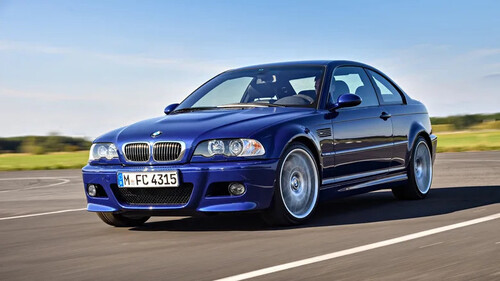
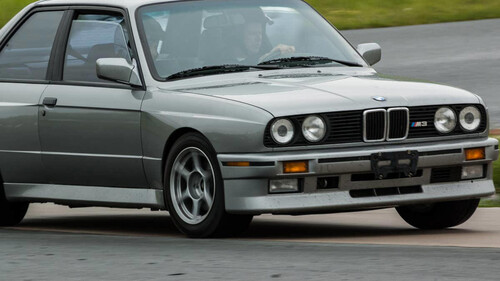
In the 1990s, American roads echoed with the sound of V8s. Cars like the Chevrolet Camaro Z28 and Ford Mustang GT defined the decade with raw torque, bold styling, and the promise of affordable speed. The formula was familiar: big engines up front, rear-wheel drive in the back, and plenty of attitude in between. These cars performed well in a straight line, and then became icons of American car culture.But while the spotlight stayed on Detroit’s heavy-hitters, something quieter arrived from across the Atlantic. It didn’t come with racing stripes or thunderous exhaust notes. It had no V8 under the hood, no aggressive body kit, and no over-the-top persona. Yet when tested on real roads and racetracks, it kept up with a V8 muscle car, and sometimes even pulled ahead.American muscle flexed with 275 to 305 hp and torque numbers north of 300 lb-ft. This German coupe made do with under 200 hp and a curb weight just over 3,100 pounds. It didn’t rely on brute force. It relied on balance, composure, and chassis tuning that bordered on obsessive.This German coupe didn’t need cubic inches to win, just clever engineering. In the hands of the right driver, that was more than enough. The E36 BMW 328is Was A No-Nonsense Coupe That Punched Above Its Weight Via: Cars and BidsThe mid-1990s brought a wave of bold, loud, V8-powered American coupes to the streets. Yet quietly parked in the corner of that performance conversation was a German two-door coupe that didn’t rely on displacement or muscle car theatrics. The BMW E36 3 Series coupe offered the opposite: a lightweight, rear-wheel-drive chassis, near-perfect weight distribution, and handling that made the most of every corner. At a glance, it looked unassuming and didn't even pack a V8. But the design philosophy behind the E36 prioritized driving feel over straight-line aggression.Via: Cars and BidsThe 328is, the most capable non-M version of the E36 coupe, was the clearest expression of BMW’s formula. According to most sources, it clocked a 0 to 60 mph time of roughly 6.4 seconds and ran the quarter mile in 15 seconds at 94 mph with a manual transmission. That’s right on par with the Ford Mustang GT of the same period, which did 0 to 60 in 6.9 seconds and completed the quarter mile in 15.4 seconds at 88.5 mph. Both cars had a top speed of about 140 mph, though the BMW is electronically restricted.The Chevrolet Camaro Z28, equipped with the LT1 V8, certainly delivered quicker acceleration. It reached 60 mph in 5.7 seconds and cleared the quarter mile in 14.2 seconds at nearly 99 mph. It also had a higher top speed of around 150 mph. But raw numbers didn’t tell the whole story. The Z28 achieved those results with significantly more weight and a setup that favored straight-line speed over agility. The BMW, by contrast, delivered confidence and predictability through tight corners, making it more versatile on real-world roads.While American V8s relied on torque and displacement to create drama, the E36 328is focused on execution. It gave the driver just enough power to have fun and the balance to use it well. For many enthusiasts, that made it more rewarding—especially on twisty canyon roads where finesse mattered more than brute force. The E36 328is Packed The M52 Inline Six-Cylinder Engine Via: Cars and BidsAt the heart of the BMW E36 328is sat the M52 engine, one of the most respected inline-six powerplants of the 1990s. Built from 1996 to 1999, the 2.8-liter engine delivered a smooth and consistent powerband that defined the 328is driving experience. With 190 hp and 207 lb-ft of torque, it provided just the right amount of performance for everyday use while staying composed under spirited driving.BMW offered the 328is with either a 5-speed manual or a 4-speed automatic transmission. Most enthusiasts preferred the manual, not just for the added driver engagement but also for slightly better acceleration. The manual version could go from 0 to 60 mph in approximately 6.4 seconds, while the automatic lagged behind slightly at around 7 seconds. Either way, peak torque available at just 3,950 rpm, making it ideal for both city driving and open highways. BMW M52 Inline-Six Engine Specs Via: Cars and BidsThe M52 used an aluminum block with cast iron cylinder liners and an aluminum head. This construction kept weight down while maintaining durability. It featured a single VANOS (variable valve timing) system on the intake cam, which improved low-end torque and fuel efficiency without sacrificing top-end performance. The engine paired well with the E36’s rear-wheel-drive layout and offered a linear throttle response, making the car predictable and enjoyable in a variety of conditions.In terms of reliability, the M52 engine gained a solid reputation over time, according to BMW Blog. It was known for its long-term durability if owners followed routine maintenance schedules. BMW forums cite common issues, which include cooling system failures and oil leaks, especially from the valve cover gasket and oil filter housing. These issues were manageable and well-documented, with plenty of aftermarket support available.Weighing in at around 3,150 pounds, the 328is offered an impressive power-to-weight ratio for its class. Combined with the well-balanced chassis and responsive steering, the M52 engine turned the E36 328is into a compelling package for those who valued real-world performance and mechanical precision without needing M-level power. The BMW E36 M3 Was A Faster, More Potent 240 HP Machine Via: Bring a TrailerThe E36 M3 sold in the United States delivered a refined balance of performance and everyday usability. BMW launched the US-spec M3 in 1995 with the S50B30US engine, a 3.0-liter inline-six producing 240 hp and 225 lb-ft of torque. In 1996, the engine grew to 3.2 liters (S52B32), increasing torque to 236 lb-ft while keeping peak power at 240 hp. Both versions came standard with a 5-speed manual, though a 5-speed automatic became available later.Unlike the European E36 M3, which featured individual throttle bodies and produced up to 321 hp, the US version used a simpler, emissions-friendly single throttle body design. This made it easier to service and more reliable over time, although it sacrificed some peak performance.Via: Bring a TrailerWhen it came to acceleration, the E36 M3 outpaced its American rivals in real-world conditions. Depending on the engines, the E36 M3 reached 60 mph in about 5.4 to 5.6 seconds and completed the quarter mile in 14.0 to 14.2 seconds at nearly 99 mph. The electronically limited top speed was set to 155 mph.The Ford Mustang GT of the same era trailed with a 0 to 60 time of 6.9 seconds and a quarter-mile run of 15.4 seconds at 88.5 mph. The Chevrolet Camaro Z28 came closer, hitting 60 mph in 5.7 seconds and clearing the quarter in 14.2 seconds at 98.8 mph.Despite having less power than the Z28’s LT1 V8, the E36 M3 held its own with a lighter curb weight, responsive chassis, and a rev-happy inline-six that favored balance and driver control. For those who valued road feel and refinement as much as straight-line speed, the M3 offered a compelling edge.