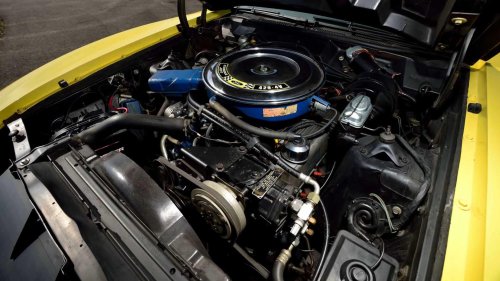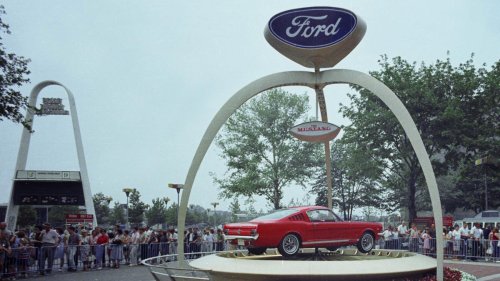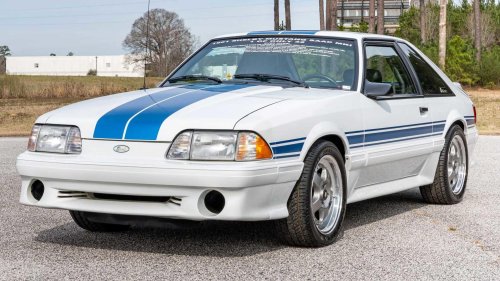
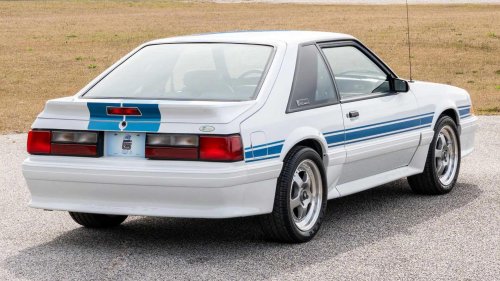
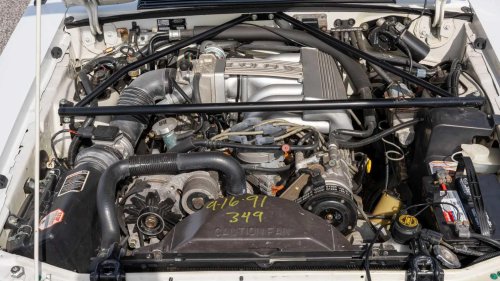
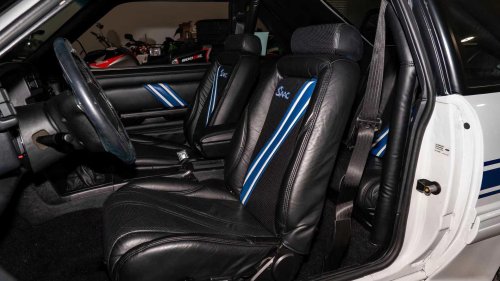
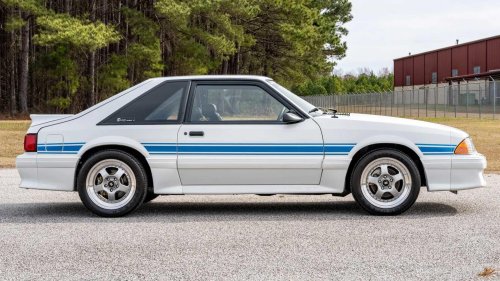



















Ford's venerable Mustang is a survivor. As Ford describes its pony hero, it was 'the perfect car for the perfect time', with the Baby Boom generation quickly turning into the car-buying public, with money to burn on exciting metal. College-educated consumers were eager to spend their hard-earned cash on cars that didn't look like their parents' hand-me-downs, and the number of families owning two or more cars went from one million in 1959 to 13 million by 1963.Ford carried out in-depth market research on its new model, even inviting couples with young kids to view the concept, asking them if they thought the car was practical. Most said 'no', unsurprisingly, but when they were told how affordable it was, they realized it would be a perfect match for their lifestyles after all. Next came stories of dealers having to lock their doors to keep out the crowds of people desperate to get their hands on a Mustang, with 420,000 cars sold in the first calendar year.The Mustang, like many muscle cars, has weathered the oil crisis and the emissions storm of the '70s, often becoming a shadow of its former self, before bouncing back in the 2000s with the retro fifth-generation car. In between, there is one model that attempted to revive the spirit of the '60s – in particular that of the iconic Shelby Mustang GT350 – for the '90s, with a model that to this day remains the rarest of all time. It's just that if you wanted one, you probably wouldn't have been allowed to buy it. Here's the story of a forgotten Mustang hero. Ford Was Keen To Bring Back The Muscle Car Golden Era In The '90s Bring a Trailer The Fox-body all but saved the Mustang. The Mustang II that preceded it would have looked a bit puny on its own, but the fact that the 'Stang models before it had become as flabby and bloated as an aged rock star, made the car look even less muscular than it was. The Mustang II was a result of the oil crisis, but as pumps started to flow again, and it started to become a distant memory, consumers started to recall what made the Mustang great in the first place. Launched in 1979, the successor was built on a new platform called Fox, itself shared with the Fairmont sedan, and while it didn't have the toned-down menace of the original Mustang, this new car was a step in the right direction. The styling and mechanicals were constantly updated, most notably the flush headlights of the 1987 redesign, and the Mustang even got the iconic 5.0 V8. The Fox-Body Mustang Came To The Rescue By the beginning of the '90s, sales were starting to calm down for the Fox-body Mustang, a car that by now had spanned three decades. The 14-year production run would end in 1993 to make way for a new fourth-generation SN95 Mustang, with around 2.6 million Fox models sold. But before this long-running pony car would bow out, having partially revived both the Mustang name and the American performance car scene in general, Ford had an idea to bring back the '60s in a very special model. The SAAC Mark 1 Mustang Looked Suspiciously Like A GT350 Bring a Trailer One of the most iconic Mustangs of them all is the 1965 to 1966 Shelby GT350. Ford was looking to turn the Mustang into a serious fire-breathing sports car that could take on the Corvette in the '60s, so it turned to Carroll Shelby and his team at Shelby American for help. Shelby created the ultra-desirable GT350, packed with suspension upgrades and improved safety equipment, as well as a souped-up engine, with an aluminum high-rise intake manifold, a Holley four-barrel carburetor, and Tri-Y headers. The result was around 35 horsepower over the standard “Hi-Po” 289 V8, with 60 mph arriving in around 6.5 seconds, with a top end of 126 mph.The '60s GT350 was an icon, and when Ford wanted to create a special Fox-body Mustang, it probably wasn't too far from anyone's minds. The problem was, according to Mecum Auctions, Carroll Shelby had a contract with Chrysler at the time, making his involvement in a new car tricky. Ford went instead to the Shelby American Automobile Club, whose members were interested in a new high-performance version, and asked them to get involved. The result is the SAAC Mark 1, a car that kind of carried the Shelby name, and, thanks to the blue stripes down the white side and hood, looked very similar to an original GT350 if you squinted a bit. The Car Was Given Several High-Performance Upgrades Bring a Trailer The 4.9-liter V8 (and the rest of the car) was treated to a parts bin extravaganza, which, considering what was on offer from Ford at the time, was no bad thing. The engine was upgraded with so-called "GT40" heads, a 65mm throttle body, a stainless steel exhaust system by Borla, and a new intake system. These modifications alone saw a healthy jump in output, with horsepower rising from 225 to 295, and torque increasing from 300 to 348. The chassis was upgraded with enlarged SVO-type disc brakes, along with Koni shocks and higher spring rates. Transmission is a five-speed Hurst shifter. The SAAC Car Hid Its Mustang Roots Mecum The car, in many ways, tried not to be a Mustang. The Ford badges were replaced by ovals from SAAC, and other references were removed or covered up altogether. Inside, there was extra leather trim, a roll cage, and even a custom leather duffel bag. It was almost as if the car would be pegged as something incredibly rare, bespoke, and expensive – and that's exactly what it was. Here's Why You Technically Couldn't Buy A SAAC Mark 1 Bring a Trailer This super 'Stang had plenty of performance, especially for the early '90s. The sprint to 60 mph takes just 5.3 seconds, and the SAAC car will cover a quarter-mile blast in 14.0 seconds at 100 mph. There was, however, one other figure that was eye-opening. The base price of the Mark 1 was $40,995, which was a big chunk of change at the time. This was more than an LT1 Corvette, and almost three times more than a standard Mustang GT. The SAAC Mark 1 Wasn't On Sale To The General Public If you still wanted one of the limited run of 250 Mark 1s, there was another caveat, too. The car would only be available to SAAC club members, so not your average Joe. Interestingly, according to expert Hemmings, just 62 SAAC Mark 1s were made in the end, suggesting that there weren't as many people in the club who wanted one after all. But all of this adds to the myth of the Mark 1, a car that has rarity, famous connections, and attitude all in abundance. These cars are highly collectible now (and anyone can buy one used), with prices settling at an average of $97,800 for the two-year run.Sources: Ford, Hagerty.com; Hemmings.com.