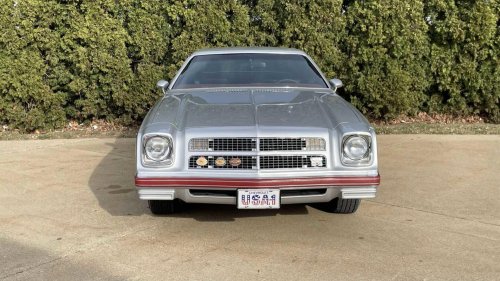
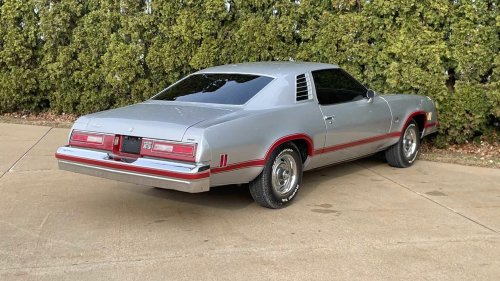
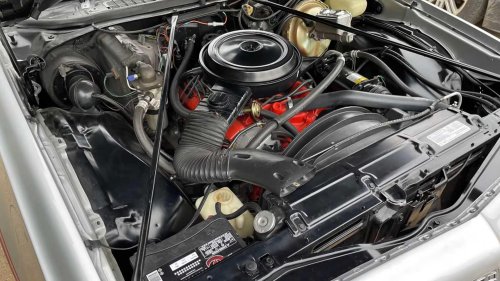
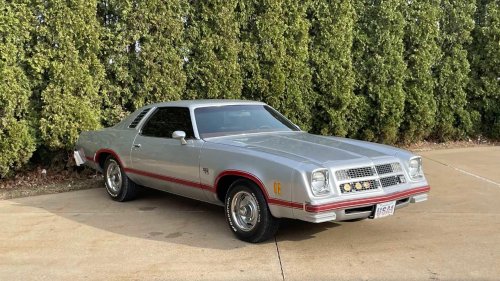
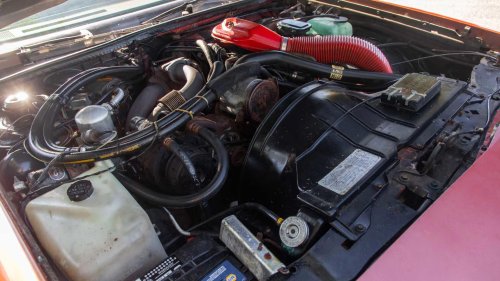
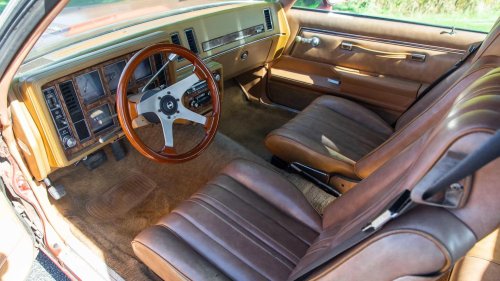
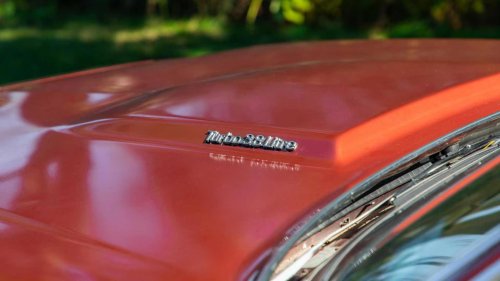
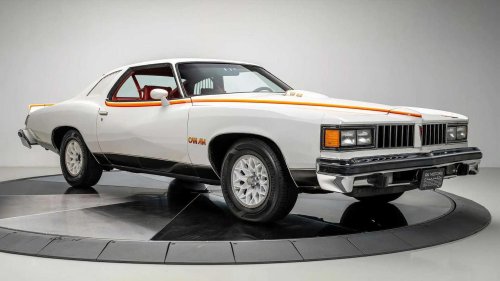
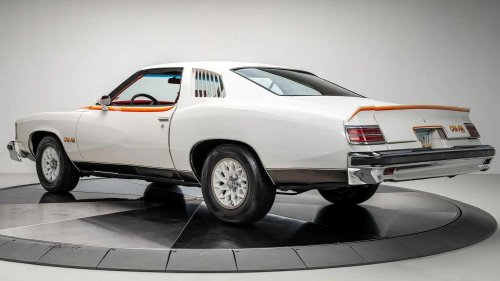
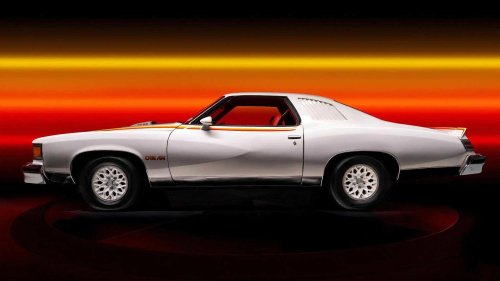
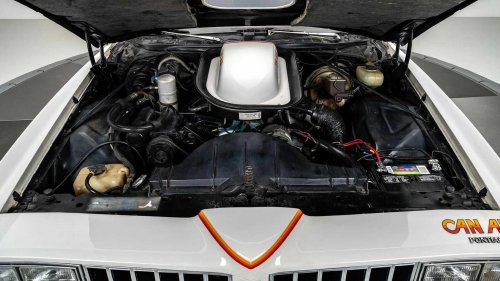
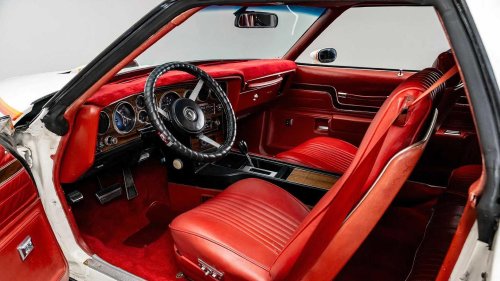
Buying a muscle car in the late '70s must have seemed like a slightly depressing business. Maybe you fancied a vicious-sounding 1978 Ford Mustang II King Cobra? But this Blue Oval had about as much bite as a basking shark. The King Cobra came fitted with an engine capable of a very wheezy 139 horsepower, and a body kit so overwrought that it made the alloys look like casters.The Pontiac GTO, the car that started the muscle car genre in the first place, had been phased out. In short, the golden days of the muscle car had come to an end in a haze of emissions regulations and fuel prices, and a lot of manufacturers were resorting to a few stickers and some plastic trim to entice people into performance cars that were a shadow of their former selves.But there is one ultra-rare muscle car that tried a bit harder than that. Known to some as "The Greatest Muscle Car That Never Was", this last hurrah for American performance was a legit model that stood out amid some very shoddy competition. It should have saved the muscle car, but instead it disappeared after a very short run, and for the most unbelievable reason. This is the story of the muscle car that never had a chance.HotCars used Classic.com for secondhand prices. This article is not designed as investment or buying advice. The 1977 Pontiac Can Am Tried To Save The Muscle Car Bring A Trailer By the late '70s, a lot of the US performance car heavy lifting was being done by the likes of the Corvette (which wasn't even that powerful) and the Dodge Li'l Red Express Pick-Up Truck, which was the fastest US car on the road in 1978. That's to say, there wasn't really that much to get excited about.Pontiac, the company that had started the muscle car craze a decade before, was in the mood to shake things up a bit and bring a bit of old school muscle to the party. The car would be called the Can Am, which was a $1,214 option for the Le Mans Sport Coupe, with Pontiac talking it up in the media with references to the GTO. The Can Am was also the highest trim level a buyer could get with the LeMans. The Can Am Looked Great (In A '70s Way) Bring A Trailer Before anyone even looked into the spec, it was hard to argue that the Can Am didn't look the part. This is a muscle car that embodies the pure '70s aesthetic, featuring orange, red, and yellow graphics on the Cameo White bodywork.There were blacked-out bottom panels and window trim, and a cool ducktail-style rear spoiler sticking out the rear. It may not have had the prowling menace of an early Mustang, but the Can Am was fun and groovy in a way that you would expect a country music wannabe to arrive in one at the Grand Ole Opry in some Sunday afternoon movie you forgot the name of. But this was no sticker job, Pontiac had gone to the trouble of giving the Can Am some decent poke – well, at least for the late '70s. A Closer Look At The 1977 Pontiac Can Am Bring A Trailer Under the hood of a Can Am is a W72 high-performance 400ci 6.6-liter V8 engine, mated to an automatic transmission. This is a cast iron block with a 4.12 x 3.75-inch bore and stroke, and a 7.6:1 compression ratio. A Rochester M4MC four-barrel carburetor fed the engine.Despite all this, performance wasn't exactly breathtaking – if it was sold new in 2025, the Can Am would literally be the second-slowest car in America. But in the late '70s, performance in general for the US automotive sector was pretty glacial, so the Can Am's 180 horsepower and 325 lb-ft of torque were actually exciting figures. The Performance Wasn't That Bad For The Time Hitting 60 mph in 10 seconds and with a quarter-mile time of 17 seconds at 84 mph, made the Can Am a respectable performance car during these times. For California, residents got an Oldsmobile 403 ci V8 in their Can Ams, good for 185 horsepower and 320 lb-ft of torque. The only transmission option is a Turbo Hydra-Matic 400 automatic. Most cars were hard tops, although there were a very small number supplied with Hurst hatch T-Tops courtesy of the American Sunroof Corp. It probably didn't take much to be a hero during the Malaise era, but the Can Am went above and beyond the call of duty by offering something with a relatively exotic spec sheet and macho good looks. What could possibly go wrong? Here's Why The '77 Can Am Was Only Built In Tiny Numbers Bring A TrailerWhen the Can Ams started being sent to dealers, the plan was to sell 2,500 units, keeping it rare and special, but soon Pontiac found the public was crying out for a well-thought-out muscle car, and that number doubled in orders. Then disaster struck. The cars were being sent to Motortown to receive a lot of the upgrades, including the stripes on the hood, front fenders, and the large rear spoiler. The story goes that the mold for the fiberglass spoiler broke, bringing production to a halt, and then Pontiac's top brass decided to scrap the project altogether.This is the muscle car equivalent of the Sasquatch or Loch Ness Monster – there are plenty of versions of the story, but nothing definitive. It seems that the mold did indeed break, but we will never know whether this was enough to nudge Pontiac out of the project, or whether it really did kill off the car right there and then. The production run was limited to just 1,377 units, says Hemmings, making the Can Am both incredibly rare and something of a poignant reminder of the last-ditch attempts to save the muscle car in the '70s. It is also one of the rarest Pontiac muscle cars of the era. Buying A 1977 Pontiac Can Am In 2025 Bring A TrailerIf you're interested in getting your hands on a 1977 Can Am, then no one will blame you. They look great, and are definitely of their era, and experts say that parts are available through multiple options, and it's also possible to get the V8s pumping out a few more than just 180 horses. The great news for anyone wanting to get the keys is the fact that they won't cost the earth to buy in 2025, despite their rarity and infamy.The only year they were made was 1977, and the average price of cars now sits at an affordable $37,376, according to Classic.com. Most of the Can Ams on the market appear to be well looked after too, with not too many astronomical mileages and are kept in original condition. Expect to pay less than $30,000 for a decent running example, but make sure you do your homework before buying. By comparison, a 1977 Pontiac Trans Am costs on average $39,058.Sources: Classic.com; Hemmings.com.



















 +26 others