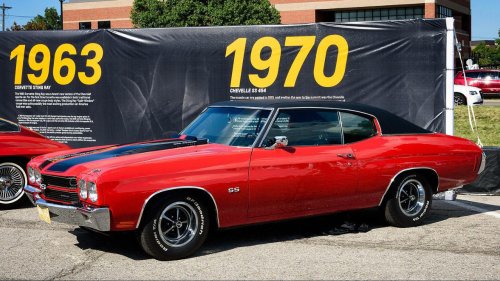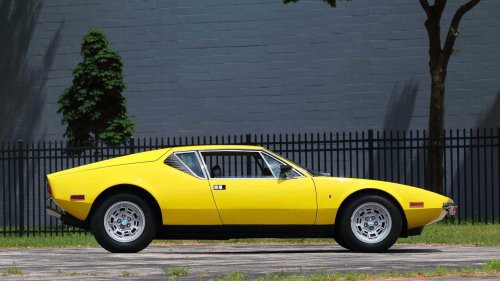
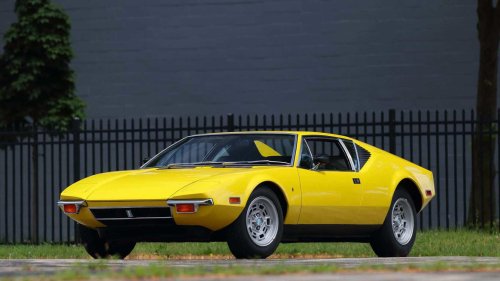
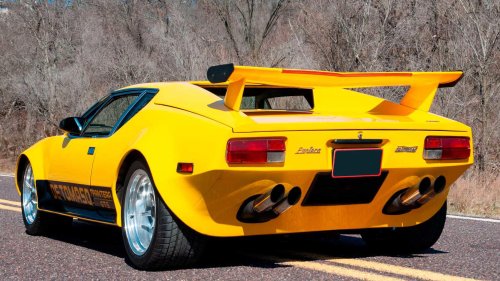
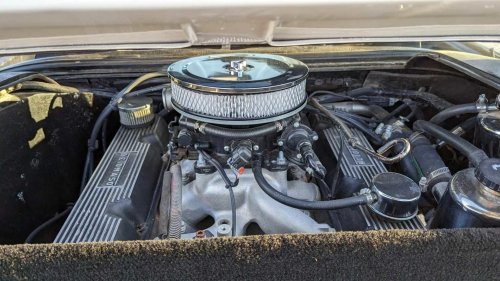
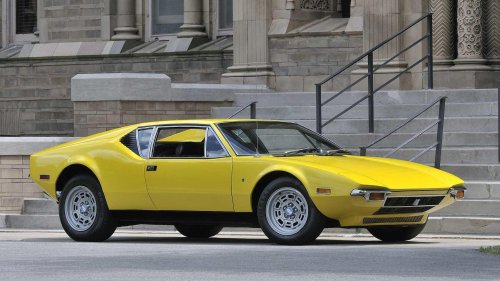
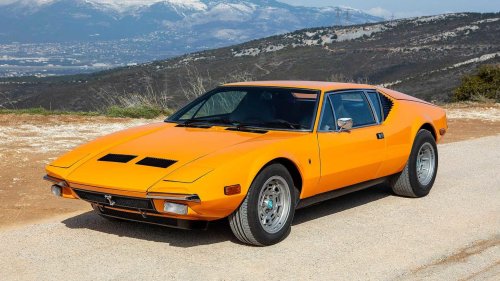
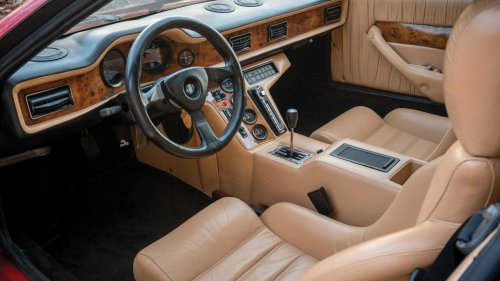
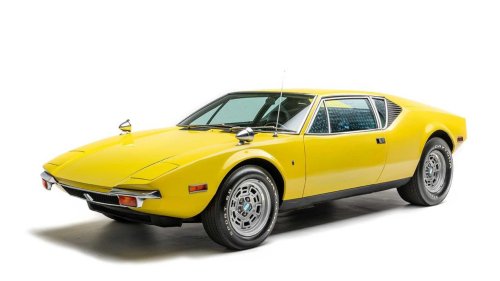
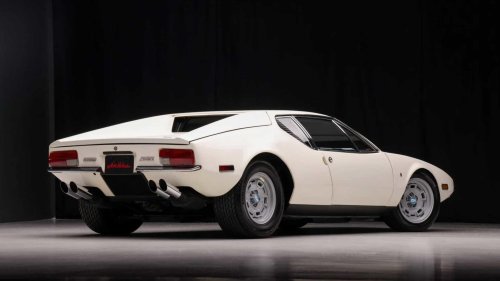




















American sports cars and muscle cars were some of the fastest vehicles on the planet in the '60s and '70s. However, aside from the Corvette and the Shelby Cobra, they weren't nearly as exotic as something like a Ferrari or Lamborghini. This is something the legendary businessman Lee Iacocca, serving as Vice President for Ford in the late '60s, saw the opportunity to capitalize on. See, with the Shelby Cobra out of production since 1967, Iacocca knew Ford needed a new and even more unique sports car to go against not only the legendary Corvette but also exotic brands such as Ferrari and Lamborghini – at a fraction of the price. A car like this, with gorgeous Italian lines, would overshadow its competition and prove Ford's dominance in all areas automotive.What resulted is an unlikely partnership that birthed a rebellious fusion of American muscle and Italian style that turned heads wherever it went and featured one of Detroit's finest V8s under the hood. Yet, despite its promise, it never became a household name like Ford envisioned. A forgotten icon or a missed opportunity? Let’s take a closer look at the greatest Italian-American muscle car ever. The De Tomaso Pantera Is An American Muscle Car With An Italian Connection Via Mecum Auctions Despite being one of the greatest automotive collaborations between Italy and America, the De Tomaso Pantera is not the first Italian car sold with an American engine. That honor belongs to the 1962 Iso Rivolta IR 300. However, it's the first and most important automotive partnership between the two countries to date.Alejandro de Tomaso founded his small boutique car brand in 1959 in Modena, Italy, and had been sourcing the engines for his unique early sports cars from Ford since 1963. His first car was called the Vallelunga – a lightweight mid-engined sports car with a Ford Cortina inline-four under the hood.De Tomaso also worked with Shelby in the early '60s to create a new race car for the Can-Am series, but the partnership ultimately fell through after Shelby backed out due to production delays. He then developed his second sports car – the notoriously unreliable Mangusta(meaning Mongoose), allegedly named in protest to Shelby and his Cobra and featuring a Ford 289 V8 under the hood.Via Mecum Auctions Up until 1967, De Tomaso simply sourced the engines independently, and it wasn't until Ford Vice President Lee Iacocca recognized the need to sell an exotic Italian sports car with American underpinnings in the States that the two brands officially teamed up. With the Shelby Cobra off the market, the sports car Iacocca wanted would go directly after both Ferrari and the Corvette, and so the Pantera was born.The design of the Pantera is attributed to American designer Tom Tjaarda, who worked at the famous Italian coachbuilder Carrozzeria Ghia. De Tomaso convinced ex-Lamborghini engineer Gianpaolo Dallara to create the engineering for the car. The Pantera was built in Italy under the project codename "Tipe 874." When it finally hit the American market in 1971, the Pantera was extremely well-received, with journalists touting its design as more impressive than even the Corvette.The Pantera got its oomph from a true, red-blooded American Ford 351 Cleveland V8 sending power to the rear wheels. It looked like a Ferrari, sounded like a Mustang, and was sold by Lincoln-Mercury dealers. De Tomaso also completely sold the rights to market the Pantera in America to Ford, but despite being an exotic sports car meant to go up against Ferraris, the Pantera even came with Ford's regular vehicle warranty. A True American Muscle Car Underneath via mecum.com1971 De Tomaso Pantera Performance Specs The Pantera was based on De Tomaso's second sports car – the problematic Mangusta. It was a warning Ford seems to have chosen to ignore.Designed by Ghia and assembled by De Tomaso, the Pantera featured a fiberglass body with a full steel monocoque chassis underneath. It also got a true independent suspension with unequal length A-arms, coilovers and stabilizer bars with rack-and-pinion steering. All the power went to the rear wheels.Bring a Trailer Despite its exotic Italian design, though, the Pantera is all Ford under the sheet metal. The 351 Cleveland V8 fitted into the back of these cars pushed roughly 330 hp and 344 lb-ft (SAE gross rating) to the wheels as standard through a beautiful 5-speed gated manual. But, with a mid-engined configuration and a 0-60 in mid-5s, they were as quick and capable as some of the best muscle cars of the '70s, such as the 1970 Chevy Chevelle SS 454.The Pantera also took the Mangusta's ZF transaxle, which also featured in the beautiful but problematic Maserati Bora. In 1972, the car received a more powerful trim dubbed the GTS, developed for Group 3 racing and rated at 350 hp. The Pantera Was A Bargain Exotic Supercar De Tomaso The Pantera hit the market with an MSRP of under $10,000 – about half of what you'd pay for a Ferrari or a Lamborghini. For example, in 1971, the had an MSRP of close to $19,700 (J.D. Power). To add to the impression, the Pantera also came with a plush leather interior and plenty of standard luxury features, such as power windows, that made it fancy even by European standards. On paper, it should have been a smashing success, but things didn't really go according to plan. The Pantera Went Out With A Whimper Collecting CarsDespite its gorgeous design and impressive performance for the era, the Pantera also had a myriad of engineering issues that made it a nightmare to own. De Tomaso Panteras were notorious for overheating and structural weaknesses. According to one owner, they had more power than the chassis could really handle, so the rear quarter-panel would collapse under hard acceleration if full throttle was applied.The first batch of roughly 300 Panteras was rushed into production, and it quickly became apparent that more refinement was necessary. Apparently, Lincoln-Mercury dealers who were made to sell these cars didn't really know what to do with a car like that and were left scratching their heads once buyers started bringing in their Panteras for repairs. Not knowing really how to handle all the issues that started popping up with these cars, they provided limited support to Pantera buyers, which eventually gave the cars a bad rap. Moreover, Panteras are true sports cars, and taller people will have trouble getting in and out of them, which further narrowed down the appropriate audience for these cars.Via Classic DriverDespite being one of the greatest collaborations between Italy and America since the Spaghetti Western, the Pantera never quite got the Hollywood ending it deserved.In 1973, the new emissions regulations and oil crisis sapped much of the Pantera's power, reducing its claimed 335 hp to just 250. Moreover, the cars were inexplicably designed without America's safety regulations in mind, so they also had to be fitted with ugly rubber rear and front bumper guards to meet regulations. With all of this in mind, in 1974 Ford completely lost interest in continuing to invest in the Pantera – by then 6,091 Panteras had already been brought to the U.S. and sold to buyers (De Tomaso).By this time, Ford had already managed to update the Pantera and fix most of its issues, and it was a much more well-sorted-out and reliable sports car compared to initial models (sorry, early adopters). De Tomaso actually continued to build Panteras in limited numbers even after the partnership ended, all the way until 1992, and their prices continued to massively undercut Italian exotics such as the Lamborghini Countach. The Pantera Carries A Bold Legacy Petersen Automotive Museum Despite its short and unfortunate stint on the American market, the De Tomaso Pantera was permanently etched into the hearts of enthusiasts and has plenty of pop culture lore, too. Among its famous owners was rock legend Elvis Presley, who bought a bright yellow Pantera in 1974 for his girlfriend Linda Thompson, whom he was dating at the time. Long story short, one day, when the Pantera didn't start, Elvis pulled out his revolver and shot the car through the door. His yellow Pantera, complete with the visible bullet hole, is now on display at the Petersen Automotive Museum in Los Angeles.The Pantera also made several notable appearances in Hollywood movies, such as The Cannonball Run (1981) and even the fifth Fast and Furious sequel, Fast Five (2011). Getting A Pantera Today Bring a Trailer Despite all of their issues, Panteras are still held in high esteem by gearheads who love them for their combination of unique history, good looks, and impressive power. Gearheads in the know are now willing to pay a pretty penny to get behind the wheel of a Pantera, but there are still some examples out there selling for bargains.According to Classic.com, which collates car auction information, the average price paid for a Pantera in the last five years is a surprisingly steep $102,845. The lowest you'll pay for one in an auction and in good condition seems to be right around 40 grand. Here's one kept in original condition with just 43,000 miles on the clock that sold for $53,500 in 2022. What a deal!