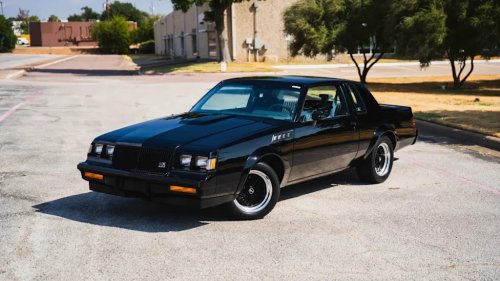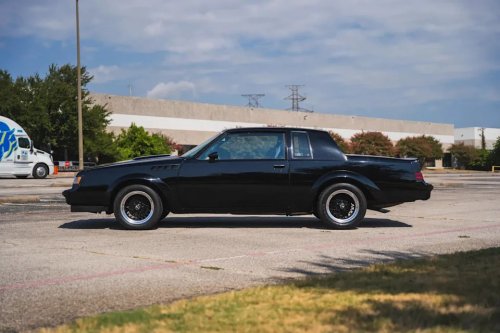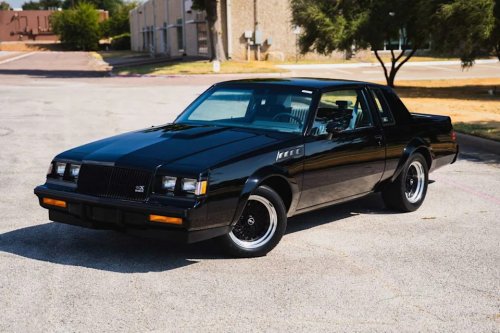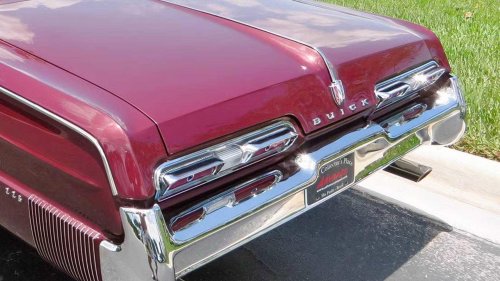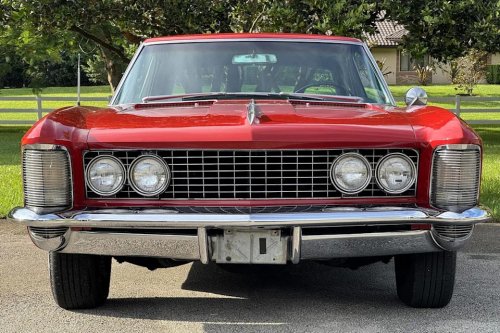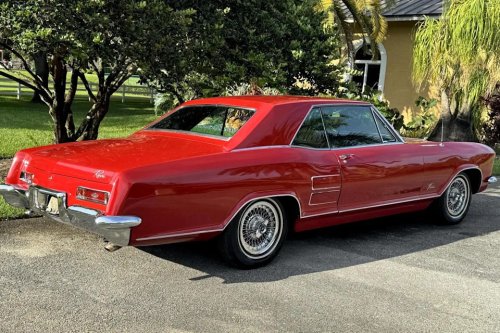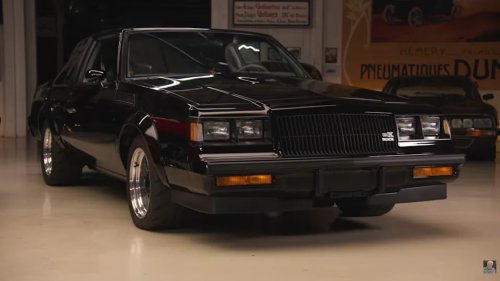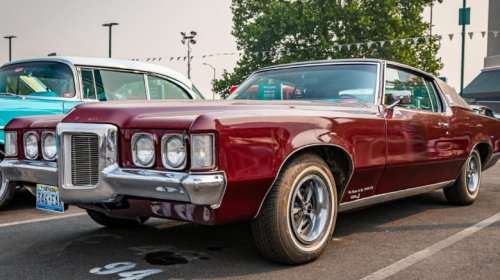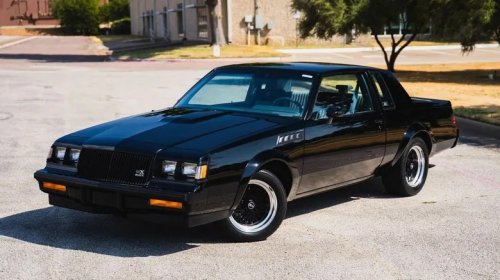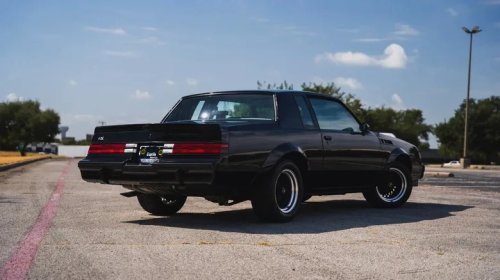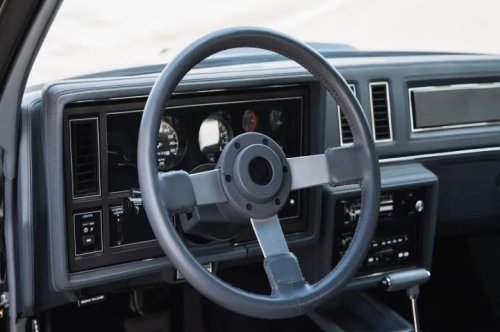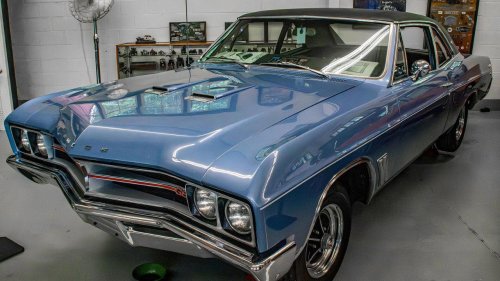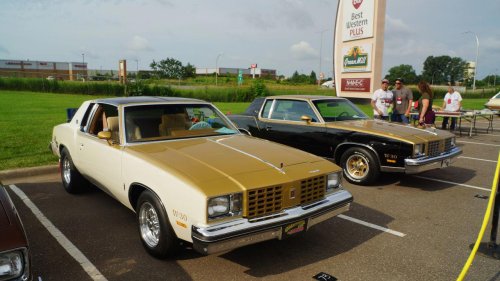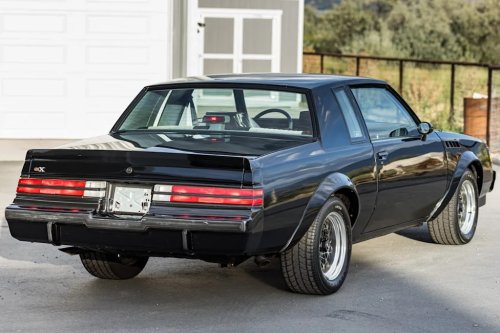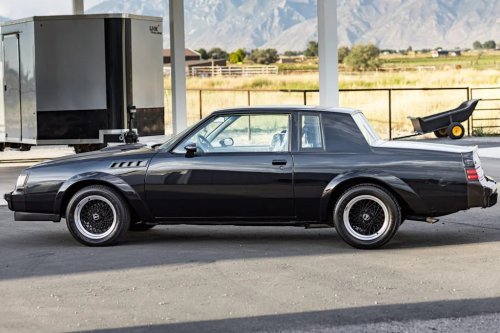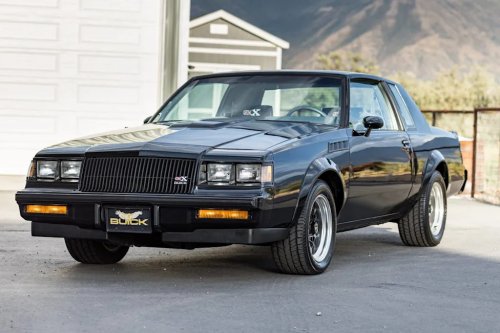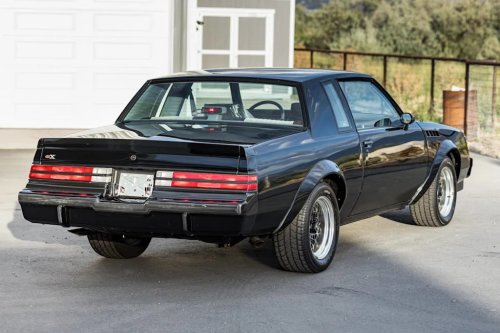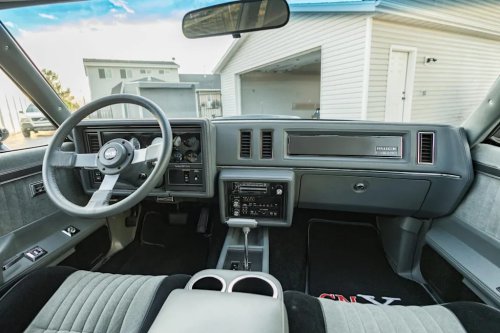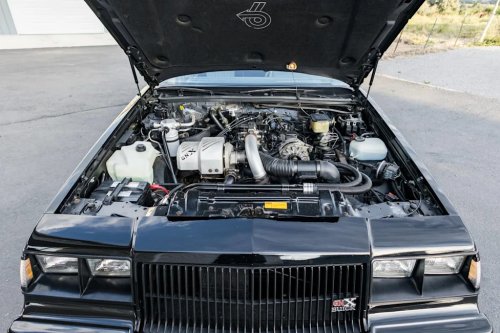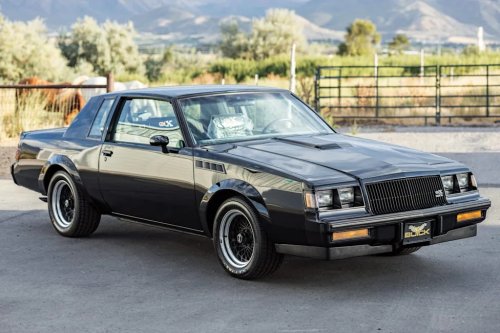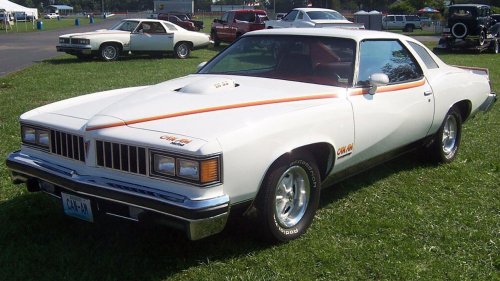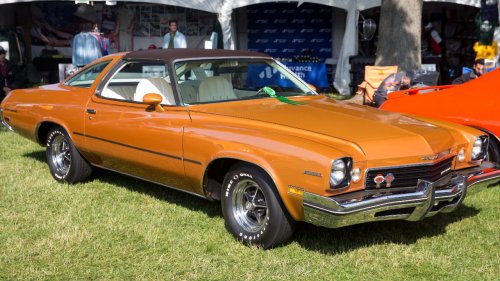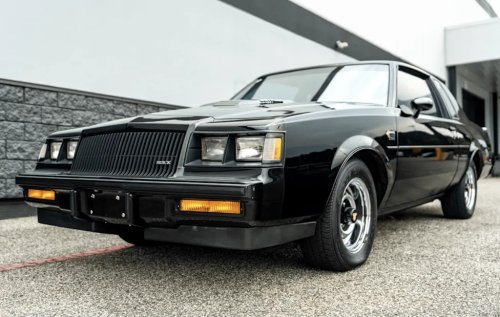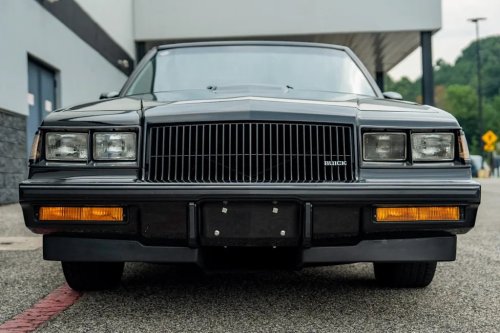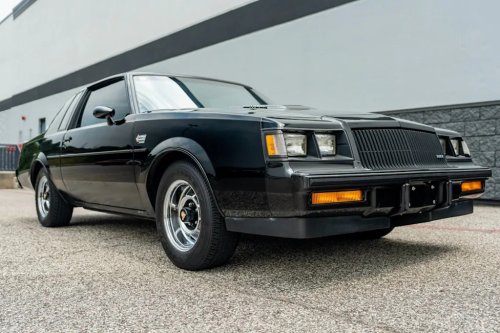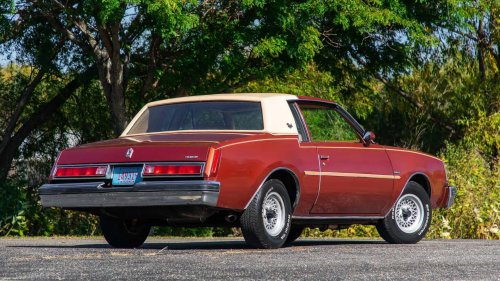
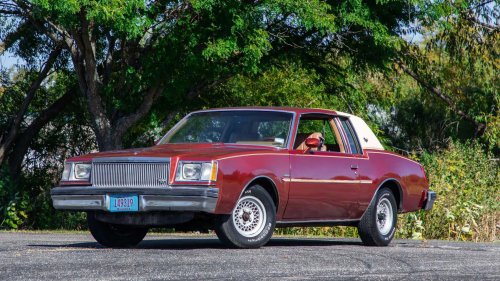
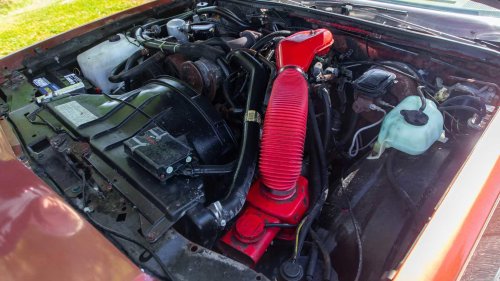
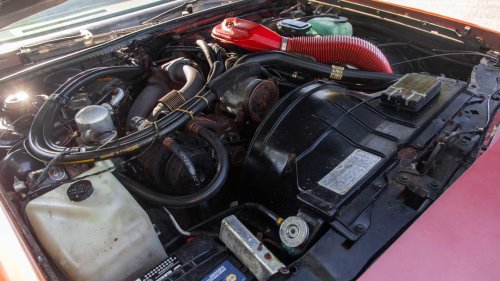
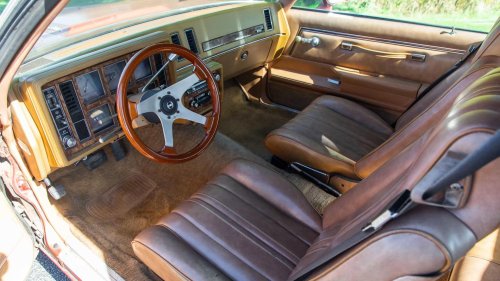
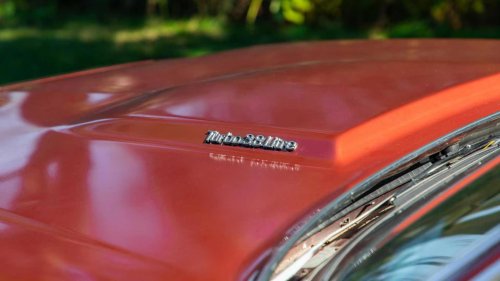
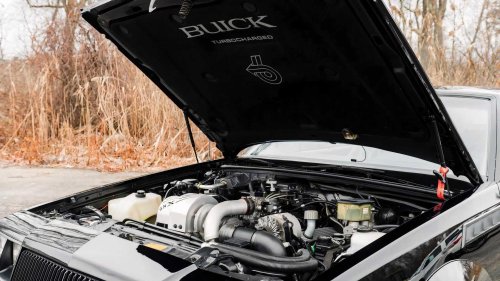



















Turbocharging was not exactly an entirely new technology by the second half of the 1970s, but it was certainly an evolving approach that had not seen truly mainstream use until then. For domestic automakers, forced induction made its first major appearance in the 1962 Oldsmobile Jetfire - long before what we usually think of as the turbo era arrived - and well ahead of efforts by European automakers to make the technology mainstream.As the decade of the 1970s progressed, it was Porsche and Saab that turned to forced induction for performance reasons, with the Turbo badge on the 1975 Porsche 911 becoming its own sub-brand of sorts, while the Saab 900 Turbo tried to popularize the technology in upscale but certainly more attainable models starting in 1978.As the turbo age spooled up, so did interest from domestic automakers that by this point were in the depths of malaise and were belatedly experimenting with diesels to squeeze out every last drop of fuel economy amid gas shortages. It was not a pretty time in the domestic auto industry, even with nominally performance models like the Corvette reaching a low point. A Newfound Focus On Turbo Technology Mecum Auctions In the second half of the 1970s, Buick turned its attention to turbocharging as well, seeing it as a promising way out of its performance doldrums that might not require entirely new engines while giving its cars a much-needed boost of performance, while GM's other divisions focused on fuel economy.The engine that was to receive a turbocharger setup was Buick's reliable and popular 3800 V6, which by this point in time made plenty of appearances throughout Buick's expansive lineup. The resulting turbocharged powerplant produced 170 hp and 265 lb-ft of torque, paired with a three-speed automatic. These might not sound like stellar results for the time, or today for that matter, but it is certainly worth noting that V8 engines of the era were producing about the same numbers.Mecum Auctions Buick quickly added the turbo option to its lineup, with the 3800 V6 appearing in the Century, Riviera, and LeSabre by 1979. So, by the standards of the day, the turbocharger went from a technology used mostly in race cars just a few years prior to something one could buy in a variety of Buick models very quickly.And the turbo made a lot of sense on paper: GM could promise buyers V8 performance numbers without the price, weight, and fuel economy of the actual V8 engines of the era, all three of which were painful issues for consumers at the time of the turbo's arrival in the Buick lineup. The Performance In Perspective Mecum AuctionsAt first, the results seemed promising. The V6 turbo engines, in Road & Track's testing of the time in a pair of Le Sabre Sport Coupes - one equipped with the 3800 turbo V6 and the other with the 350 V8 - were actually quicker to 60 mph by a whole second. The sprint to 90 mph took the V8 model a whole 2.5 seconds longer than the turbo V6, even with the turbo lag. So the advantages were pretty evident.Still, the sprint from 0 to 60 mph required 9.1 seconds in the Regal Sport Coupe, which was pretty good for the time, and a quarter mile could be reached in 16.8 seconds. So the turbocharged Regal Sport Coupe seemed quick in relation to other midsize coupes and sedans of the day."To accommodate its 3.8 (231 CID) turbocharged engine, the new Regal Sport Coupe is equipped with an exclusive raised hood. Other standard features include a special ride-and-handling suspension with front and rear stabilizer bars, automatic transmission, and steel-belted radial-ply tires," Buick ad copy of the era promised.But buyers of the time largely shrugged their shoulders at Buick's newfangled turbo technology. Just over 27,000 Buicks equipped with turbos were sold in 1979, spread among several models, making it something of a modestly popular novelty. Lest we forget, it was still Malaise outside, and buyers were more interested in fuel economy, especially in smaller cars from overseas, than they were in achieving smog-choked V8 numbers with a domestic V6. So from that standpoint, the buying public's careful reaction was easy to understand. Problems With The Turbocharged V6 Mecum Auctions The turbocharged 3800 V6 engines also quickly developed a reputation for unreliability, which might seem surprising given the sturdy reputation of the base 3800 V6 itself. The problem was with the draw-through or suck-through system, where the engine's standard Rochester Quadrajet four-barrel carburetor was positioned before the turbocharger. This setup often forced the engine to run rich, while also producing poor fuel economy and poor carburetion, in addition to the infamous turbo lag.Another problem was the early computer control of the turbocharger itself, dubbed Turbo Control Center that part of the Electronic Spark Control (ESC) system, which was meant to prevent knock by listening for detonation, while also controlling ignition timing electronically.However, this early system was inefficient and not always effective, as computer controls for carbureted systems were new in themselves, and did not pair well with carburetors. In hindsight, fuel injection couldn't arrive soon enough to solve all these problems, especially when it came to managing the turbocharger itself.Overall, the engine itself did not handle the stresses of forced induction all that well, with GM having neglected to beef up crucial components to deal with boost, which also resulted in oil leaks and overheating. To this, we can add cold start issues and increased oil consumption, with the latter becoming a recipe for engine failure in cars that were not maintained with these novel issues in mind. Engine failures at just under the 20,000-mile mark could be one of the results. Long-Term Quality Issues 1978 Buick Regal Sport Coupe interiorThese issues, with the benefit of hindsight, perhaps will not seem all that surprising, as this was Buick's first real attempt at turbocharging and involved a carbureted engine. So the first generation of turbocharged engines was forced to deal with technology that would give way to fuel injection soon thereafter, with Buick learning many valuable lessons from its first attempts.But the Regal Sport Coupe suffered from other issues as well, including rust and transmission failures, which dented its short-and long-term reliability. And those intent on keeping their cars running, despite their low values as used cars in the 1980s, have often turned to updating the turbo with later hardware.Combined, all of these factors doomed quite a few examples of the model in the first few years, with surviving examples accumulating only modest mileage. The few survivors we've seen come up for auction are usually time-warp cars that have been very well taken care of, as the lesser examples have long faded. And the number of surviving examples isn't overwhelming, as the Regal Sport Coupe was not especially valued in the years since its debut, and was quickly upstaged by other Buick offerings of the 1980s.And that's why the Regal Sport Coupe is a muscle car that no one really wants to remember. And if they do, it's usually just for the body as part of a custom build with an updated turbo powerplant. An Affordable Turbocharged Pioneer Mecum Auctions Today, the Regal Sport Coupe is very affordable as far as collector cars go, perhaps largely as a novelty, with examples often trading hands for well under $10,000 at auction, data by JD Power and Hagerty shows. But the tougher task could be finding one that's purchase-worthy in the first place, and has no outstanding mechanical or body issues.One well-maintained 1979 example in Michigan with 107,000 miles hammered for $7,702 in 2023, representing one of a relatively small number of recent sales, as well as the level of interest in these cars from collectors when it comes to dollar amounts. Last year another 1979 Regal Sport Coupe with 92,496 miles on the clock was auctioned by Hagerty for $6,250 in Wyoming. But given the low value ceiling and low surviving numbers, any well-kept example, even with close to 100,000 miles, can take some time to locate if you're actually in the market for one of these. Buick's Later Turbocharging Efforts via Bring A Trailer Buick's longer-term turbocharging program, despite the rushed efforts to field the first generation of turbocharged powerplants, ultimately saw quite a bit of success. The legendary GNX used a version of the same basic 3800 V6 engine, this time turbocharged and intercooled, with plenty of modifications, including ported and polished heads, a ceramic turbine wheel in the turbocharger itself, and an all-new computer control system, to name just a few. The result, with plenty more boost, was 245 hp according to Buick's own official estimate for the GNX. But in reality, 300 hp could be glimpsed on the dyno in individual testing.Sources: Hagerty, CarBuzz, Mecum Auctions, Hemmings