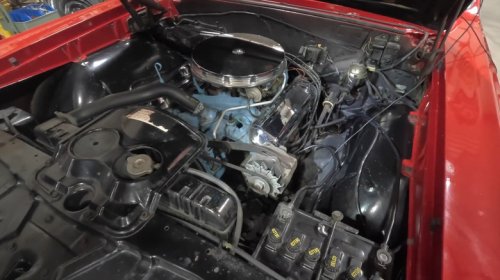
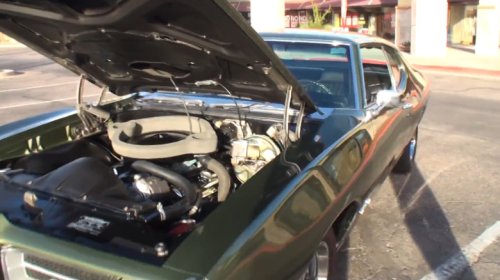
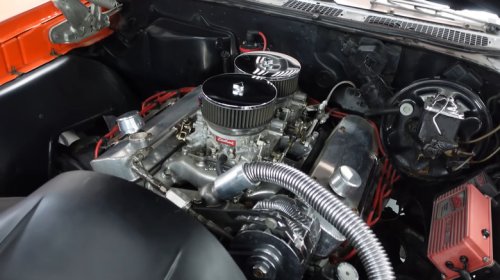
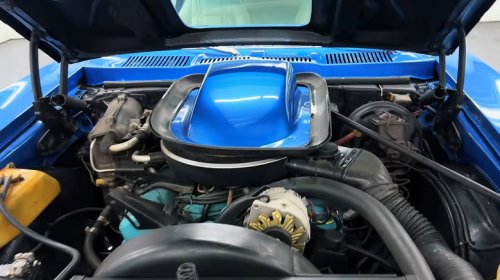
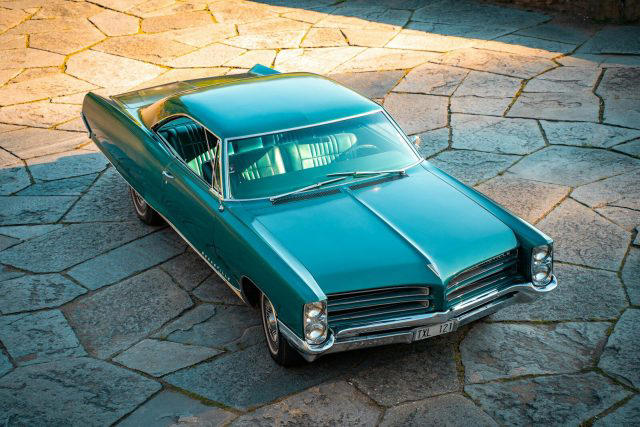
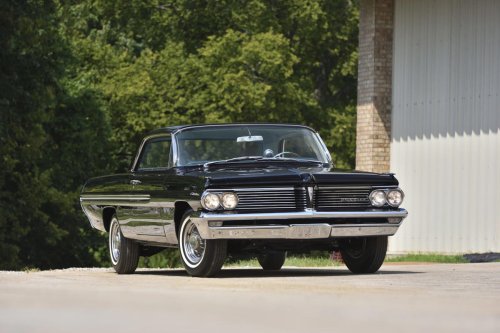
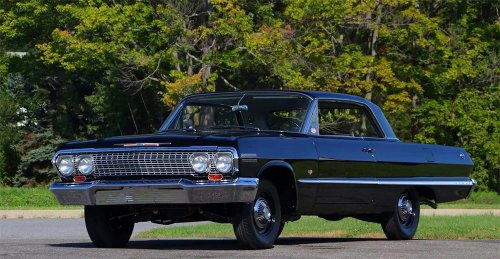
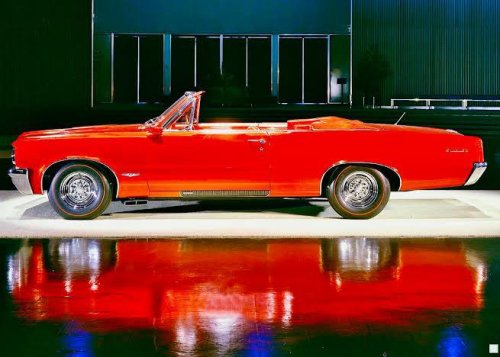
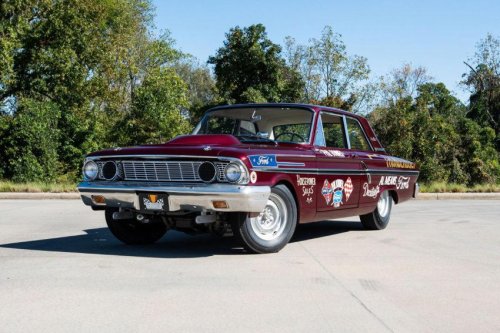
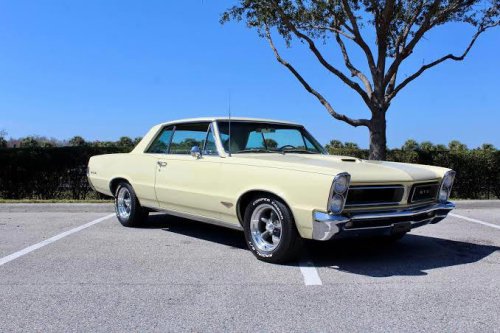
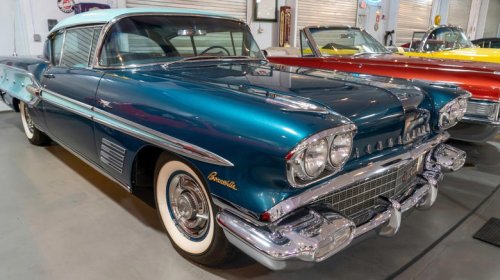
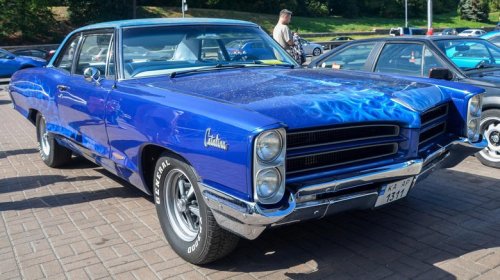
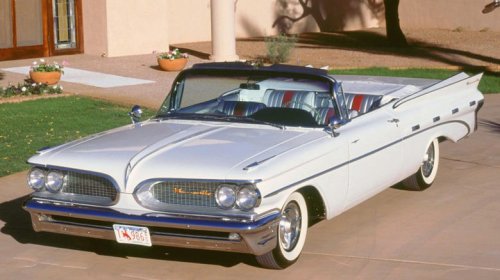
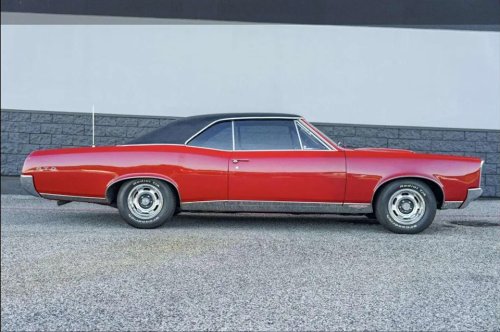
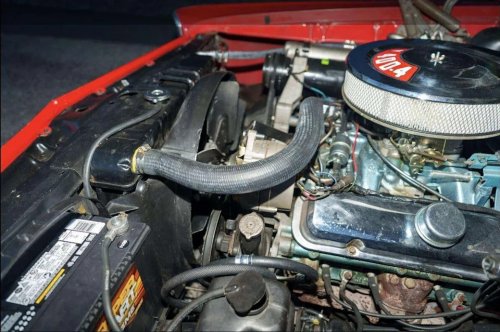
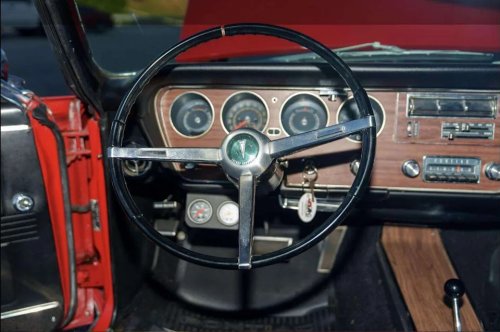
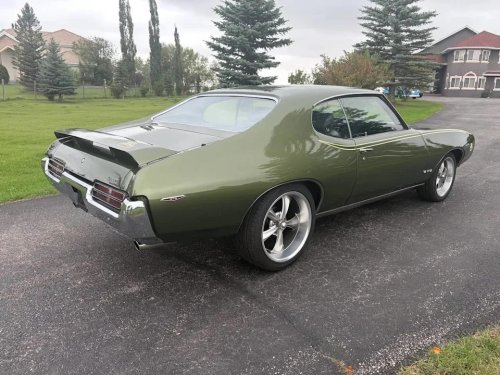
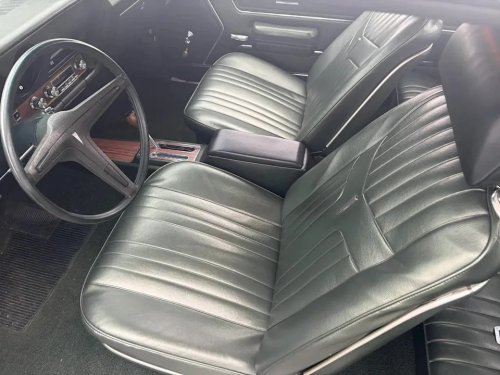
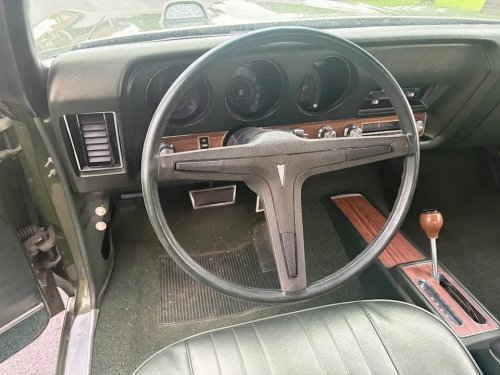
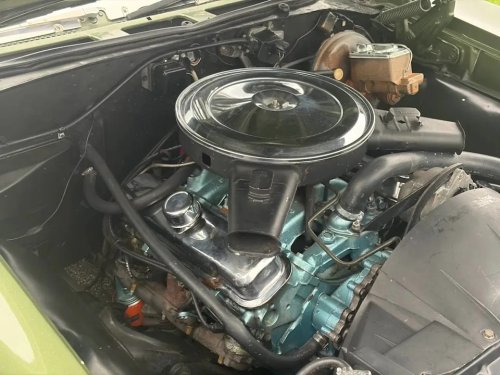
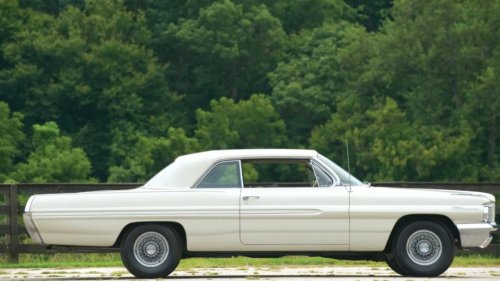
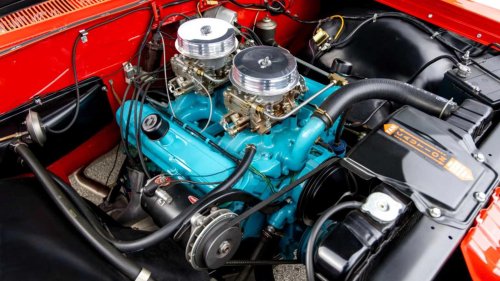
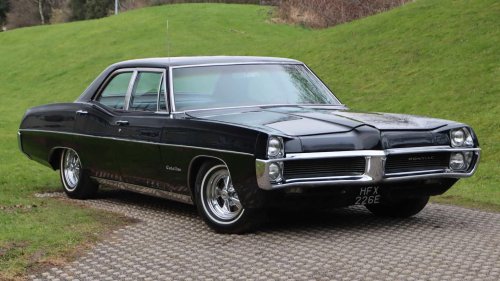
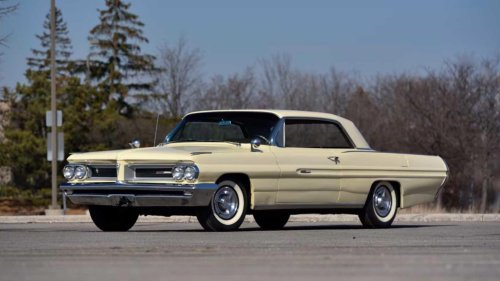
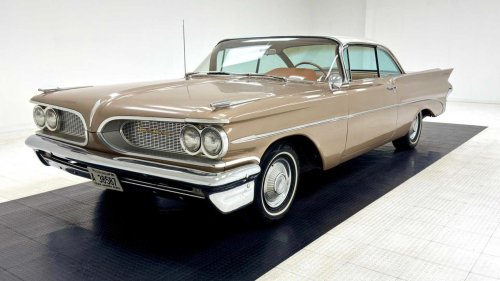
Muscle cars are a fundamental part of American car history; characterized by features such as large V8 engines and sporty, aggressive looks, this automotive category has produced iconic models such as the Ford Mustang and the Chevrolet Camaro. Although the earliest origins of what would become the muscle car lie in models from the late 40s such as the Oldsmobile “Rocket” 88, most people would pinpoint the start of the muscle car era around the mid-1960s.However, only a few years before the Mustang made its grand entrance, another model arrived on the market that ticked all the muscle car boxes, but slipped by without gaining much fame: the 1962 Pontiac Catalina, especially the rare variety that sported the 421 Super Duty engine under the hood. Let’s explore the features of this trailblazing car, the history that surrounds it, and the wider Catalina model. Meet The Second-Gen Pontiac Catalina 1962 Pontiac Catalina Darin Schnabel RM Sotheby'sThe 1962 Catalina was part of the model’s second generation, which lasted between the 1961 and 1964 model years. The second-gen Catalina was given a complete restyle compared to the first-gen model, which had been on sale in 1950 and 1960. While the earlier version had a more distinctly 50s look, with large fins and an older-style silhouette, the second-gen version modernized the car’s lines, bringing it forward from the 50s to the 60s. The 1962 model brought even further cosmetic enhancements, with a new roofline for the hardtop models as well as more gentle, rounded lines. Catalinas with a sedan or coupe body style also increased their wheelbase by one inch.A total of 204,654 Catalinas were produced for the 1962 model year; the 1962 Catalina’s price at launch was around the $2,700 mark (or roughly $28,000 in today’s money). In the present day, prices vary wildly depending on condition and engine. Examples with a higher mileage and in a poorer condition can be found for as little as $10,000, while better-kept cars will fetch as much as $50,000. If you’re looking for one of the rare cars powered by the 421 Super Duty engine, the price will climb accordingly: even an example in “fair” condition will hover around the $50,000 mark, while a concours-level car will exceed the five-figure mark, costing you around $125,000. Anticipating The Muscle Car The '62 Catalina's Powertrain Options And The Legendary 421 Super Duty 1962 Pontiac Catalina MecumThe 1962 Catalina was available with a lineup of 6.4-liter V8 engines, as well as one 6.9-liter V8 called the Super Duty (one of the rarest engines in the Pontiac family). The 6.4-liter V8s varied widely in power output, ranging from 215 hp to 348 hp depending on tuning and type of carburetor (both two-barrel and four-barrel carburetors were available). Most Catalinas built in 1962 were equipped with a 6.4-liter V8; only 162 examples were powered by the 421 Super Duty engine, making it a veritable rarity and a precursor to the “muscle car” category that was about to revolutionize the automotive market.The 421 Super Duty was named after its displacement of 421 cubic inches (6.9 liters); this engine had an official power output of 405 hp, although rumor has it the true output was closer to the 450-hp mark. Cars equipped with the Super Duty engine were street legal, but not by much; with an overall character more like that of drag racers than regular road cars, they were entirely geared towards short-term bursts of performance rather than everyday driveability.Several transmission options were available in the 1962 Catalina: a three-speed manual unit, a three-speed automatic, and a four-speed manual. While the first two were available with the 6.4-liter V8 engines, Super Duty owners could choose between the four-speed manual and the three-speed automatic.Cars equipped with the Super Duty engine paired it with the Borg-Warner T-10 four-speed manual unit as the standard option: this transmission was built for the world of drag racing and geared towards fast launches. It was developed specifically to work well with the 421 engine, and was the most popular choice among customers who opted for this engine.Another transmission option available with the Super Duty was the three-speed automatic. This option was introduced in 1961, to replace the older four-speed Hydramatic unit which was heavier and bulkier. The new transmission was called “Roto-Hydramatic”, sometimes referred to as the “Slim Jim” due to its lightweight nature. This transmission was chosen by drag racers who preferred an automatic option. Pontiac Catalina Pricing In 2026 Manor Park Classics Due to its vintage status, you won't find many Pontiac Catalina examples being sold on your local marketplace. However, looking at various auction houses shows 1962 Catalinas finding new homes for as little as $17,000, or as much as $35,000. Convertible versions tend to sell for a little more, and Catalina models just a year or two older are even more sought after, with one 1964 model being sold at auction for over $60,000 in late 2025. With it's swoopy looks and powerful V8 engine, the 1960s Catalina is a piece of automotive history that you could own for much less than a base model Ford Mustang in 2026. The '62 Catalina's Little Sister: The Introduction Of The Grand Prix 1962 Pontiac Grand Prix Mecum1962 was a notable year for the Catalina, not just because of the 421 Super Duty engine, but because of the introduction of the model’s more affordable sibling: the Grand Prix. The Pontiac Grand Prix was based on the two-door hardtop version of the Catalina, with which it shared a platform; however, the Grand Prix came with some unique cosmetic touches including a reworked grille and tail-lights.Like the Catalina, the Grand Prix was also powered by a lineup of 6.4-liter V8 engines, along with the 6.9-liter Super Duty as a less common option. Transmission choices were also similar, with the three-speed manual, four-speed manual, and three-speed automatic all on offer. The first generation of the Grand Prix lasted until 1964, and marked the start of a model with a very long lifespan: the Grand Prix endured until 2008, just two years before the Pontiac brand was killed off as part of GM’s reorganization efforts. An Overview Of The Pontiac Catalina 1959 Pontiac Catalina Classic Auto MallBefore the Catalina nameplate was used for a standalone model, it was used to designate a trim level for a different Pontiac model, the Chieftain (as well as another model based on the Chieftain, the Star Chief). The name “Catalina” was derived from an island off the coast of Southern California. Pontiac used the Catalina badge on premium trim levels between 1950 and 1958.In 1959, after the Chieftain nameplate had been killed off, the very first generation of the Pontiac Catalina as a standalone model arrived. Four body styles were available: coupe, convertible, sedan and station wagon. This generation was very short-lived, only being on sale for the 1959 and 1960 model years before the second-gen model came along to replace it.The second generation was on the market for four years, before being replaced by the third in 1964. The third-gen Catalina underwent some design changes, with a completely reworked front end and more dynamic, flowing lines. The size of the car increased slightly, too, with the wheelbase going up to 121 inches for all body styles. A few additional options joined the engine lineup, such as a 6.6-liter, 7.0-liter, and 7.5-liter V8.In 1971, the fourth generation arrived: this time, the design changes were more radical, with the car completely reworked cosmetically. Engine options included a 5.7-liter, 6.6-liter, and 7.5-liter V8; the only transmission available was a three-speed automatic. This generation was on the market for six model years; in 1977, it was replaced by the fifth and last generation of the Catalina, which arrived in the middle of a downsizing effort on the part of Pontiac and the wider GM family. New engine choices, such as a 3.8-liter V6 (now the standard option), a 4.1-liter inline-six, and a wide variety of V8s including a diesel, were added to the lineup.Eventually, however, Pontiac decided to abandon the full-size car segment as a whole; the Catalina was discontinued after the 1981 model year, bringing a model with a 22-year history (and a nameplate with a 31-year history) to its end. While other muscle cars from the early 60s, like the Ford Mustang, adapted to the modern automotive world, the Catalina failed to find a place in it, but remains as an example of an early model that introduced muscle cars to the world.Sources: General Motors, HowStuffWorks, Hagerty



















 +55 others