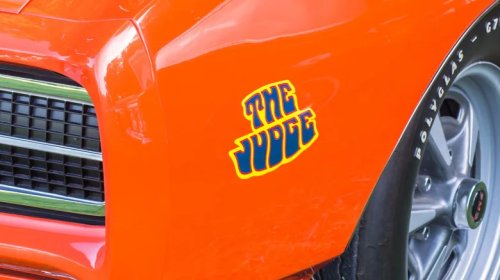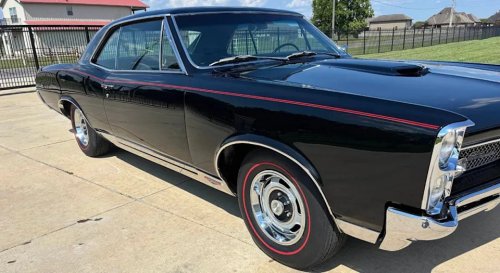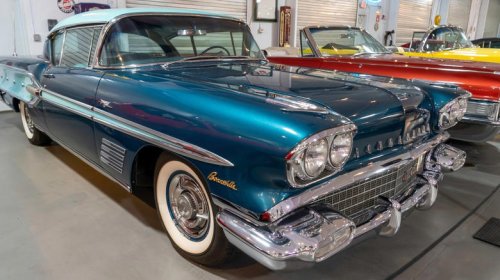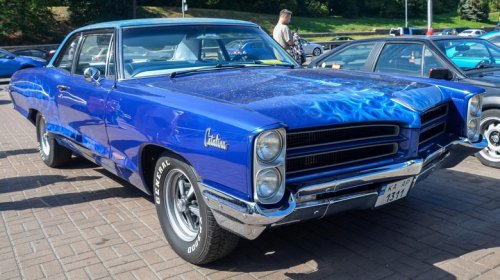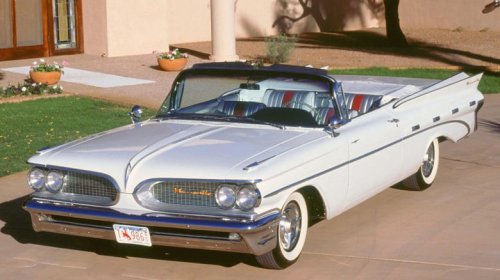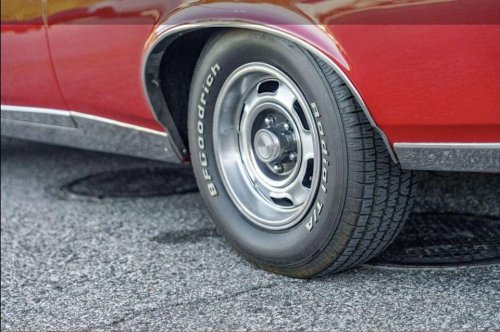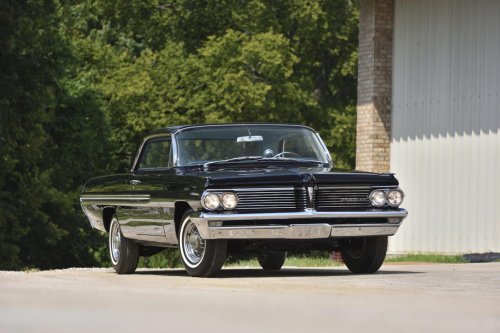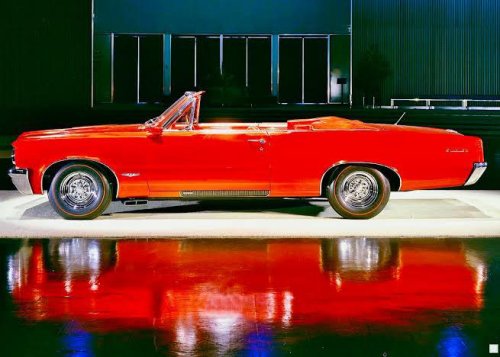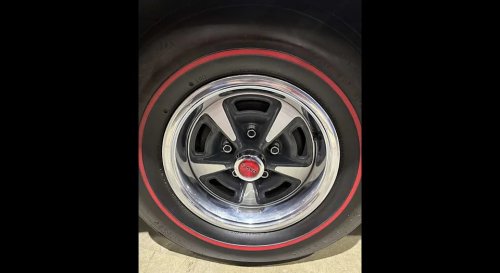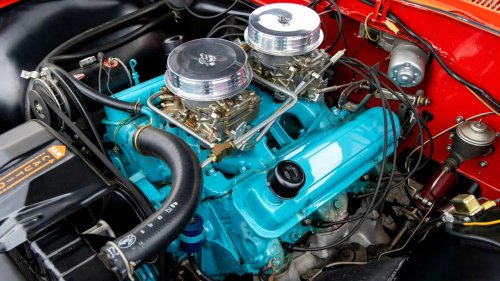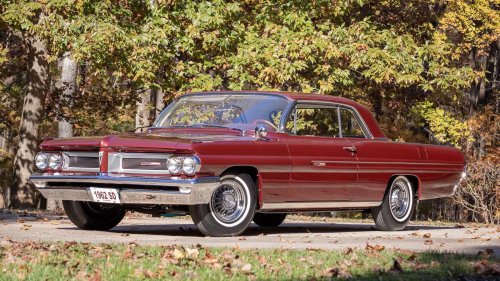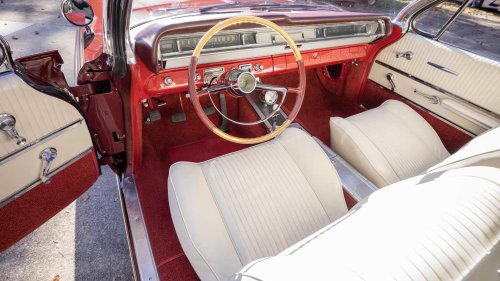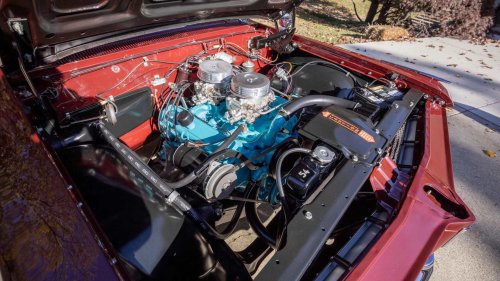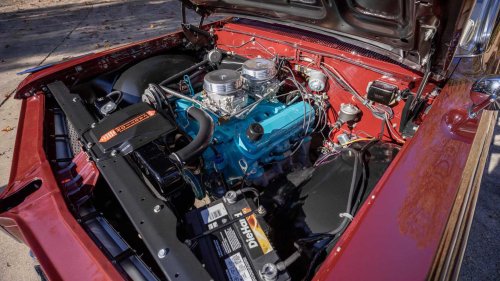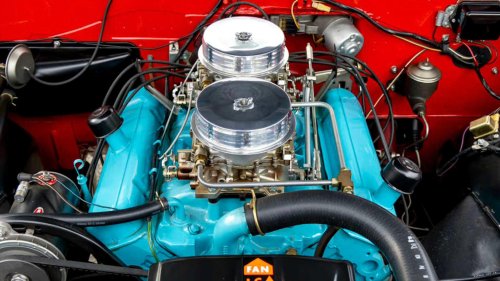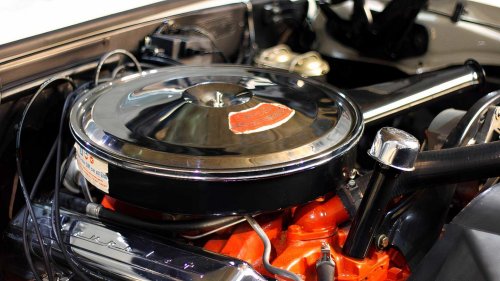

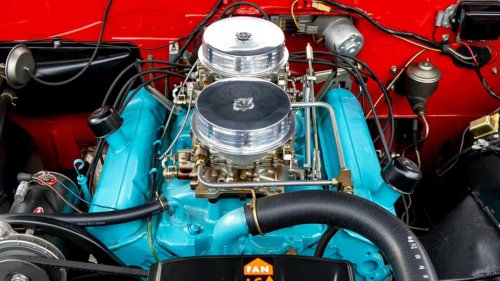
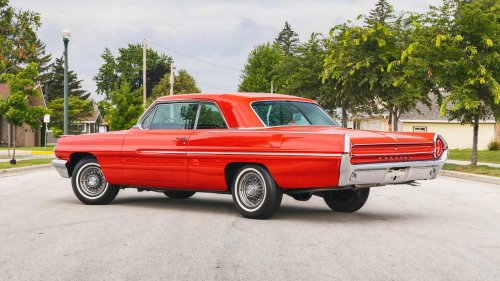



















If you think Pontiac was out of control in the 1960s, you’d be right. Several amazing muscle cars came out of the Pontiac brand, making it one of the top brands for drag racers during the Muscle Car Era. This was easily the heyday of Pontiac performance, dominance, and glory.Nearly everyone knows about the 1964 Tempest GTO, which was the first official muscle car and eventually became the GTO Judge, which struck fear in the hearts of the competition, but few people know about the fastest Pontiac muscle car of the decade – and it was neither a Judge nor a Trans Am. The 1962 Pontiac Super Duty Brought Drag Strip Performance To The Street 1962 Pontiac Catalina Super Duty WhiteHow would you describe a car that humiliates a 406 Ford, a 413 Dodge, and a 409 Impala? Those three cars were regularly left in the dust by the 1962 Pontiac Catalina Super Duty. The adjectives used might be speculation, but the performance of the Pontiac was not. It was made for the drag strip and dominated there with incredible quarter-mile times of 12.6 and 12.5 seconds at 115 MPH by some of the most capable drivers of the era. Stock Car Success Led To Drag Racing During the 1950s and 1960s, stock car racing was popular in the East and South, but drag racing dominated the West Coast market. Pontiac’s success in stock car racing led them to focus on drag racing to capture more of this market. This resulted in the Super Duty package for the Catalina. Pontiac swept the podium at the 1961 Daytona 500 with Marvin Panch at the wheel of a Pontiac Smokey Yunick. The lower and trimmer look of this car rolled over to the Catalina, which received a new roofline for 1962. There Was a “Real Car Guy” Leading Pontiac In The 1960s Hemmings Youthful Exuberance Creates Aggressive Speed Some of the most well-known names in American automotive development had to start somewhere. Both Semon Emil “Bunkie” Knudsen and Lee Iacocca were much younger than their predecessors and headed up Pontiac and Ford, respectively. Knudsen developed the package that would become the fastest muscle car from Pontiac during the decade. What Did Bunkie Knudsen Drive? Knudsen was a “Real Car Guy” driving a Tri-Power Bonneville and racing it at Daytona, where he set a 131.747 MPH lap record in 1957. As the head of the Pontiac brand, it was easy to make the connection between his desire to drive fast and prove the brand’s worthiness, and developing a car that would leave others in the dust. The Bonneville he drove had mechanical fuel injection, which came about in 1957, and that allowed the car to achieve 300 horsepower.The Tri-Power option with three two-barrel carburetors was offered across the Pontiac range in 1958. This increased horsepower to 330 for the 370 cu-in V8 engine, allowing Pontiac to dominate Daytona with speeds as high as 137.693 MPH in the flying mile. This incredible speed set the stage for Knudsen to take things further and create lower and wider cars for the track. The Super Duty 421 Engine Seemed Almost Unfair Via: Mecum Auctions Big Numbers For Serious Power The development of the Super Duty 421 engine gave Pontiac an incredible advantage over other automakers. This engine was offered in 1962 and 1963 in the Catalina, Tempest, and Grand Prix, with the Catalina being the most common. Despite that, the 421 Super Duty engine was the rarest engine ever produced, with only 155 Catalina models, 16 Grand Prix versions, and 14 Tempest cars.The engine was 421 cui-in, which translates to 6.9 liters in today’s displacement measurements. This big-block V8 was listed at 405 horsepower and 425 lb-ft of torque, but some experts estimate the car actually made 450 horsepower. A 1962 Motor Trend road test calculated the engine made 465 horsepower at the crankshaft and 505 lb-ft of torque. This shouldn’t come as a surprise, considering many automakers’ penchant for under-listing power figures during this time.This engine was attached to either a four-speed manual or three-speed automatic transmission, sending power to the rear wheels to rocket this car down the drag strip. Some racing versions received modifications to increase power to more than 500 horsepower. Why Didn’t This Engine Live On? The 421 Super Duty package was rare for the time and didn’t live on for two reasons. The first was that it was designed and developed specifically for the drag strip, which meant it wasn’t great on the road or during other types of racing. The second issue was the increasing racing restrictions, which meant it wouldn’t be allowed in some racing classes. A Fortified Racing Machine Meant For The Drag Strip Mecum Auctions It’s A Race-Ready Stock Car Upon initial inspection, there isn’t anything that stands out to show the Super Duty model is any different from the other Catalinas. The only external distinguishing characteristic are the finned aluminum eight-lug wheels. Do you think you would notice this subtle difference?Once you start the car, it's apparent that this is a racing machine and not a regular car. It's loud and proud, thanks to some of the incredible modifications made to the engine. The sound comes from a No. 10 McKellar cam with solid lifters, the block has forged Mickey Thompson pistons, and the engine has dual Carter 500cfm carburetors with manual chokes.Additional fortification to the engine comes in the form of a heavy-duty high-pressure oil pump and eight-quart sump pump, a high-speed propeller shaft, forged connecting rods, four-bolt main bearing caps, and Morain aluminum bearings.The Super Duty package included a lightweight flywheel and heavy-duty clutch, which allowed the car to take off extremely fast, making it much easier for this car to dominate the drag strip. The Cabin Continues The Muscular Feel Without making the cabin look like it was part of a drag-ready racer, the 1962 Pontiac Catalina Super Duty had an elegant and attractive style. It wasn’t distinguished as a muscle car based on the interior, which had red accents and lots of chrome, which was consistent for the time. Only the 8,000-rpm Sun tachometer suggests performance and serious redline speed in the cabin. 1962 Pontiac Catalina Super Duty Cool Facts NetCarShow Lightweight Components Were Key to Speed To compete with Chrysler’s Max Wedge cars, Pontiac engineers developed lightweight versions of the Catalina Super Duty. These versions included aluminum front fenders, hood, inner fenders, and bumpers, as well as thin-gauge steel panels and special glass. This allowed the car to weigh around 3,300 pounds, which was about 500 pounds lighter than the standard versions. Factory Blueprinted for Performance These cars weren’t just high-powered; they were blueprinted and hand-assembled with racing tolerances in mind. That meant exacting engine balancing, polished ports, and precision-fitted components, which were a rarity for a production vehicle. It Was a Sleeper; Until It Launched With its full-size body, steel wheels, and basic trim, the Catalina SD looked almost like any other Catalina on the outside. But at the strip, it could run seriously fast quarter miles at 12.5 seconds at nearly 115 MPH, which was blisteringly fast for its time. It was also capable of reaching 60 MPH in 5.5 seconds, which would still rank respectively today. NHRA Banned Aluminum Parts in 1963 The Pontiac Catalina Super Duty was so dominant that by 1963, the NHRA banned aluminum body panels in stock classes, effectively ending the Super Duty’s reign and forcing manufacturers to seek new methods to stay competitive.Source: Hemmings, GM.