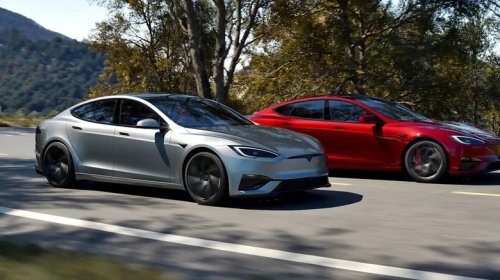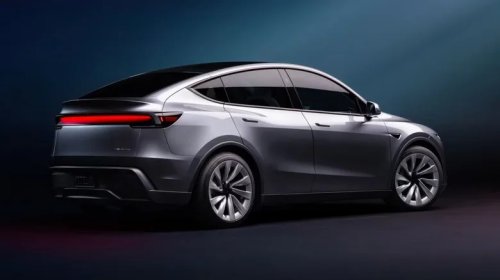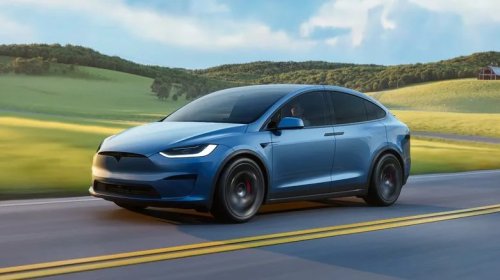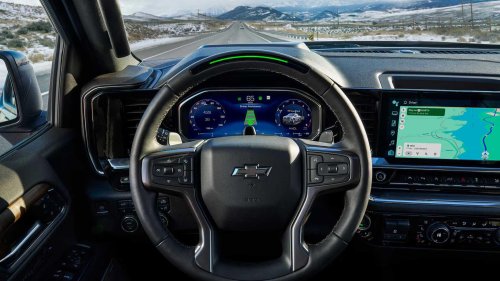
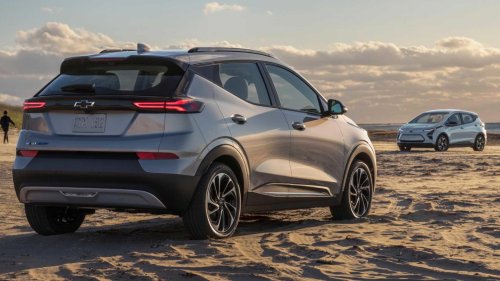
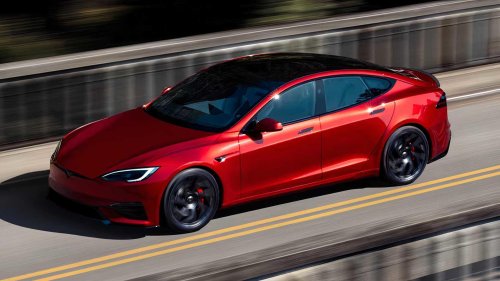
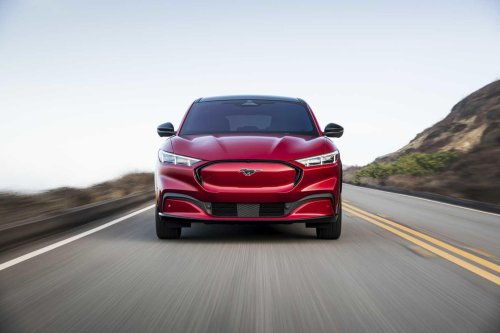
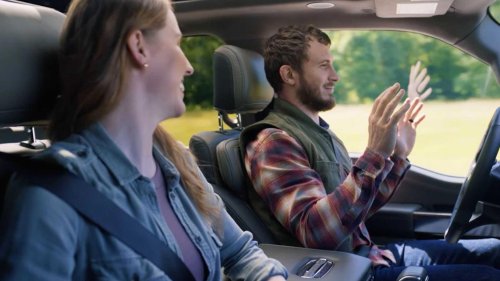


















Much has been made about the promise of autonomous driving, with some enthusiastic experts claiming it will be the status quo within a decade. And for some motorists that moment can't come too soon, as the technology will surely make it so much easier to get from A to B to C than it is today. But until then, people can still focus on some existing hands-free driver assistance systems that are a nod towards autonomy, and you can find some of those systems aboard used cars today.While none of them will turn a privately owned used car into the equivalent of a robotaxi, they could yet make driving easier for the used car buyer. Although it's definitely important to look carefully at the entire package before buying one of these suitably-equipped cars. The Journey Starts On The Highway Chevrolet Most people who have tried a hands-free system tend to be quite impressed at first exposure. When the system is working properly, the car will settle into its lane, keep pace with traffic, monitor the driver's eyes, and handle those small corrections that can sometimes make long highway drives so tiring. These systems certainly don't take the driver out of the picture at all, but they can make a 300-mile interstate run feel a lot less demanding than it might with just cruise control.As these systems are essentially meant for highway consumption only, it stands to reason that the best candidate cars will likely be those that their manufacturers have designed for highway comfort rather than back-road thrills. When such cars have the correct equipment on board, they can feel meaningfully more relaxed on the average main road. And while they won't solve every driving scenario, they can reduce fatigue in the most predictable part of driving, especially when crossing those wide-open spaces.When looking for used car candidates, buyers must clearly understand the vocabulary rather than get carried away with the concept. The NHTSA describes currently available consumer-facing technologies as “driver-assistance systems”, and they are clearly not fully autonomous replacements for humans. The categorized SAE Level 2 systems combine steering and speed control, but the driver is always responsible for the driving itself. So, rather than helping you to actually stop driving in the literal sense, they can help you drive less actively in certain situations. The Used Cars Worth Shopping First ChevroletIn the used car market, Ford and GM are probably the best places to turn for vehicles with this technology. Both big guys have installed genuine hands-free highway driving in some of their vehicles that work on approved road networks with full driver monitoring. For example, GM has Super Cruise, which uses cameras, sensors, GPS data, and LiDAR-scanned map data, and will certainly support hands-free driving on compatible roads. And GM claims that this system will work on up to 750,000 miles of roads across the country. Meanwhile, Ford and Lincoln have BlueCruise as their proprietary solution and this operates in what they call “designated hands-free Blue Zones”.At a model level, the 2022-2023 Chevrolet Bolt EUV may be the most interesting used car play. Premier and LT have compatibility with the right equipment, and they do represent quite an affordable EV package today. The Bolt isn't luxurious by any means, but this should be one of the least costly ways to experience hands-free highway assistance on the used market.Moving up a few notches, the Cadillac CT6 was available with Super Cruise on some 2018 models and was one of the earliest used luxury cars with a credible hands-free highway system. Cadillac extended the technology to its Escalade, CT4, and CT5 models, and then Chevrolet took the idea into the broader truck market with the Silverado. GMC added it to its Sierra and Hummer EV models too.Turning to the Blue Oval, the most obvious used choices may be the Mustang Mach-E or F-150, while Lincoln has suitably equipped Navigator versions. If you look carefully, the Mach-E may be attractive because it was one of the earlier models to include BlueCruise, as the company started to push aggressively towards electrification. Tesla Is The Tempting Wildcard TeslaTesla should be an important part of the conversation, and this company is perhaps more bullish than the others in describing its self-driving capability, with its “Full Self-Driving (Supervised)” options. But Tesla’s documentation still says that the driver must pay attention to the road surroundings and other road users. There's a cabin camera to monitor a driver’s attention when the system is turned on, but this is still more of an advanced Super Cruise-style driver assistance system and nowhere near true autonomy.In the used market, Tesla offers a range of options, and you can choose between a Model 3, Model Y, Model S, or Model X. The system does tend to work in more varied environments than just strictly mapped highways, and Tesla does operate a different philosophy here, as compared to Super Cruise or BlueCruise.While the Tesla Full Self-Driving approach may have met with some controversy in the past, it's still worthy of consideration. Just make sure that the vehicle you're looking at does offer active, paid Full Self-Driving (FSD) access. A used car may be listed as FSD-capable, but that doesn't necessarily translate to the full package.Some Teslas may have Basic Autopilot, others Enhanced Autopilot and a more attractive solution might have a paid-up package that links to the vehicle, so it's important to verify the exact details before making any decision. The relevant information will appear on the vehicle's Tesla screen and if there's an active account, transfer it over before FSD becomes a proper part of the car's value. Also, check the vehicle's hardware suite carefully, as FSD performance will vary significantly based on whether it has the AI4 system rather than the Hardware3 suite. Reliability Is Really About Readiness Ford A hands-free system like this requires a full technology stack to work correctly, and it should be updated, calibrated, and unobstructed. Remember that these systems depend on cameras, radar and sensors, as well as GPS maps, data connectivity, and driver monitoring hardware. And you'll need to check that the feature works correctly to avoid problems such as a windshield camera that could be out of calibration, or a driver monitoring camera that can't recognize the driver.Make sure you also review the vehicle’s prior history to avoid calibration or other issues. For example, if a vehicle ever needed a new windshield, technicians would have had to properly recalibrate the front-view windshield camera or sensor for everything to work correctly. Ford notes that lane-keeping problems can arise from a poorly calibrated camera, and such a camera can also be affected by dirt or grime as well.The trick here is to check whether the windshield is still original or if the replacement is OEM quality. You should also check for warning lights, stored ADAS faults, or missing software updates. The risk is that unresolved ADAS faults or other challenges could turn your cheap used car into something more problematic instead.From an ownership perspective, you'll typically also need to account for subscriptions. GM originally equipped every new Super Cruise vehicle with three years of access to the data connectivity you'll need for full functionality. But after that, you'd need to buy a Super Cruise plan to continue using it, often linked to the OnStar system. And this means that if the vehicle you're looking at is more than three years old, you'll probably need to add subscriptions to your overall running costs.Ford has a slightly different approach. BlueCruise-equipped vehicles got a complimentary trial but after that, owners did need to pay monthly or annually. And Ford has now reduced the BlueCruise subscription pricing to $495 per year or $49.99 per month after the trial period, so take that into account when building your used ownership costs. The Best Buy Is The Honest One Ford Super Cruise and BlueCruise work best on long, divided highways where the system can take care of the steering at speed while the human observes progress. And while that's really the extent of their self-driving capability, you can still enjoy some of that technology when you choose carefully and stay realistic.A sleeper choice could be that 2022 to 2023 Chevrolet Bolt EUV with Super Cruise, since it will have a relatively attainable used price and low running costs as well. If you want more range, space, or mainstream appeal, a Ford Mustang Mach-E with BlueCruise could be the way to go. And in the truck world, Escalade, Sierra, Silverado, or F-150 models with the proper equipment bring this idea into a larger or more expensive vehicle. You should probably view a Tesla as a separate supervised driver assistance choice, and it's not clearly a hands-free highway equivalent.In summary, full autonomy is a long way into the future yet, but there's definitely a way to sample some of its early features in the used car market. It's just important to verify that the exact equipment is present and to look at factors like subscription status, compatible road coverage, sensor health, windshield history, and software condition. But if you're happy post-inspection, you could end up with a good, used hands-free car that helps with your everyday driving chores, but without ever pretending to replace you.