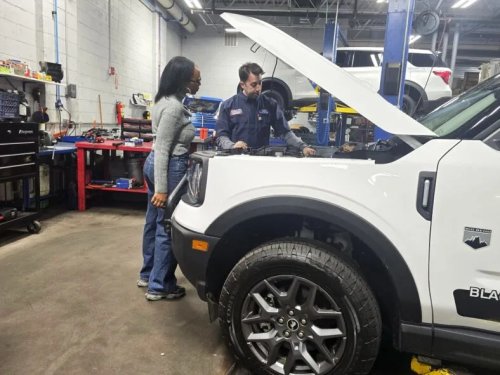
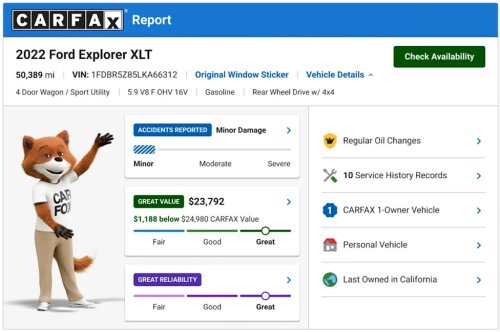



















Want to Buy a Used Car, but Not Sure How? We've Got Youjetcityimage - Getty Images (jetcityimage - Getty Images)Does buying a used car give you a feeling of dread that lasts longer than an IRS audit? Don’t stress it. Really. Buying a used car doesn’t have to be scary. As a dealer with thirty years of experience, I’ve bought over 5000 used cars and sold well over 150,000 used cars as an auto auctioneer.Buying one great car? You can do it provided you know a few of the tricks of the trade. Here are a dozen or so that will make buying your next used car far easier than you can imagine.The used-car world has plenty of bad options, so consider consulting Carfax, the website that allows shoppers to buy a vehicle’s history, from how many people owned it and where they lived, to maintenance records, to accident reports. Carfax is a great tool to uncover the worst cars. Carfax doesn’t really point out the best used cars. Just the worst.AdvertisementAdvertisementShop New Cars | Shop Used CarsLook At 3 Things on a Carfax ReportBefore reading the Carfax, please forget about the conventional wisdom you may have read about using these reports. The number of owners? It doesn’t matter. Any car out there can have one bad owner and several great ones. Accidents? You won’t know the extent of the damage or the quality of the repair until it’s inspected by a professional mechanic. And many cars have accidents that slip by Carfax and therefore have clean Carfax histories. Tons of records? It can still be a rolling money pit. I’ve seen cars with over 50 service records that had a blown engine and a bad transmission.An example of a Carfax report.Carfax (Carfax)The key is to figure out why the prior owner got rid of it, and that can be gleaned by researching the car’s history. What were the owner’s maintenance habits? There are three things that are important on a Carfax:1. Oil change intervals.2. Transmission fluid services: should be at no more than 60,000 miles if it has a continuously variable transmission (CVT).3. Where the vehicle was registered if it's eight years or older.Not every oil change is going to land on a Carfax report. But if you see that each registered owner changed the oil at a short interval at some point in their history (every 3000 to 5000 miles), then it’s generally one that does not deserve a quick rejection. Evidence of a transmission fluid change at around 60,000 miles (or sooner if the vehicle has a CVT) is another good sign.AdvertisementAdvertisementDo drop the rusty relics! Check the registration history on the Carfax to avoid older used cars that came from the Rust Belt or near the beach. The heavier the sand or snowfall, the quicker you should kick it to the curb.Do a Psychological Profile of Previous OwnersThe history will also reveal if a car was owned for a short amount of time. Avoid cars that were owned for less than a year because a lot of car owners like to kick the car of expensive problems to the next owner. If you see a car that has recently been sold to the current owner that had to get some work done recently, just skip it.If they owned it for a while, though, take the next big step. Call the shop that worked on it to find out what was done, “I’m thinking about buying a car that was recently serviced at your place. If I gave you the full VIN or the last six, could you possibly look at what repairs it needed when it came in?”Nine times out of ten they will share not only what was done, but what needed to be done which is a better indicator of the vehicle’s condition. Be sure to ask if the previous owner had every item repaired and if they didn’t, how much it would cost to fix it. Thank them and return the favor by leaving them a good review online. Always pay it forward!What to Say to Get the Truth from the OwnerIf you’re dealing directly with the owner, manners matter. Be nice. Most people open up when you’re genuinely kind. Some will even tell you more than you ever imagined. So don’t spam a stranger to death with six straight questions right off the bat. Instead, have a genuine conversation. See if they really do know the car’s history because sometimes, the person on the phone doesn’t own the car. Used-car listings can be full of scammers.AdvertisementAdvertisementFor example, I always ask, “I like to catch up on maintenance on any car I buy. Could you let me know when it was serviced and what was done to it?”If the owner can’t answer that simple question or flat-out lies based on the Carfax history, scratch that one right off your list.Conversations should be all about listening. Use conditional words and phrases: Would you recommend? Is it possible? Have you found? That way the conversation remains non-threatening and polite, but probing. Remember you’re not just gathering information. You’re also making the seller more comfortable with you for the test drive.Westend61 - Getty Images (Westend61 - Getty Images)A Good Test Drive, and the Surprising Way You Should Start ItWhen you are ready for the test drive, start by not moving at all; sit with the car parked first. No test drive should be less than 20 minutes, and you should stay parked with the car running for at least five minutes. Even if you can’t tell the difference between a dipstick and a battery cable, you should at least hit every button and turn every knob. Test the windows and locks and adjust the side mirrors. Gradually test all the stalks, the lights, buttons on the steering wheel and around the instrument cluster. With one exception.AdvertisementAdvertisementAlways ask the owner if it’s okay to open the sunroof if it has one. A lot of older vehicles have leaky sunroofs which need repairs and replacement parts that can range from expensive to unobtainium. If the owner says no without an explanation, thank them for their time.Switch on the air conditioning and wait about a minute for cold air to come through the vents. If it takes longer or isn’t frosty, it likely has an issue. Slowly turn the temperature to heat. It should heat up within 30 seconds. If the air has a pungent sweet smell or there’s no hot air, the car may have a heater core issue. Repairs to the A/C and heating systems can be expensive. So, take all the time you need.Turn the radio off. Let the owner know you won’t be talking much because you want to listen to the car. Any clunks? Feel for hard or slurred shifting. Look for any wandering as you drive. If you find any of those maladies, give the keys back.The brake pedal should feel firm, not squishy. If you smell something burning it’s likely an oil leak. Not fatal. But often expensive. Old cars may be noisy and even a little smelly, but they should be safe and easy to drive. One thing to watch during the drive is the coolant temp. If it bounces around a lot after the car warms up, or hits three-quarters on the temp gauge, the engine has a cooling issue.Luis Alvarez - Getty Images (Luis Alvarez - Getty Images)Finding the Right InspectorIf you’re investing a lot of money into a car, it’s always a good idea to hire an expert. Where should you get a car inspected? If it’s less than five years old, it makes sense to go to the dealer. Older cars? Here’s a shocker. A lot of new car dealerships refuse to repair cars that are more than 10 years old. If your car is older than that, skip the dealer.AdvertisementAdvertisementSeek out independent repair shops that have been around for a long time and have fewer than 500 Google reviews. Fake reviews are more common, and the worst places often have tons of bogus positive reviews. Read the five-star reviews to see if they’re cheesy and phony, but also look at the one-star reviews to see if and how the owner responded. If the owner made a good-faith effort instead of spam posting the same exact response, then usually they care about what they do.Tell them what concerns you have about the car and let the mechanic do their work. When you get the results back, don’t be afraid to ask questions. But there’s one person I always want to speak with above anyone else: the mechanic who inspected it. Ask to talk to them one on one, and then straight on ask them if they think it’s a good car. Point blank. Would they let their friend or family use it as their daily driver?The real-world answer of whether to buy a car or not will always come from the person who did the deeper dive and explored its inner beauty.If you decide to pull the trigger, be sure to plan on investing in it. If you’re buying a $5000 to $10,000 car, don’t be surprised if it needs about $1000 in repairs. If you do everything I mentioned? You’ll be ahead of over 95 percent of used-car shoppers. That isn’t an exaggeration. Good research and finding those who knew the car, or can figure it out, makes all the difference.AdvertisementAdvertisement➡️ Skip the lot. Let Car and Driver help you find your next car.Shop New Cars Shop Used CarsYou Might Also LikeGift Guide: Best Ride-On Electric Cars for KidsFuture Cars Worth Waiting For: 2025–2029