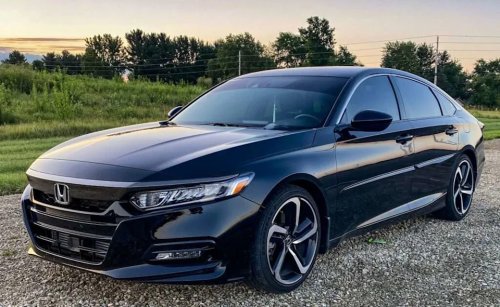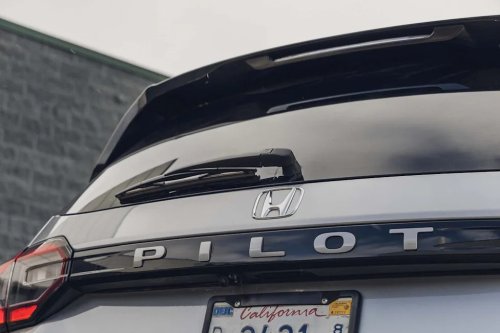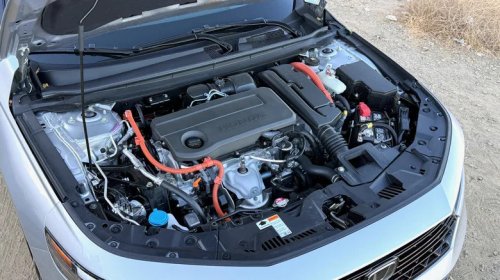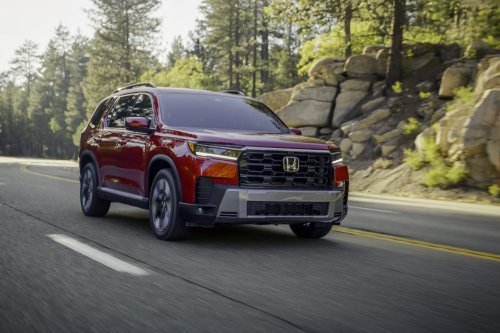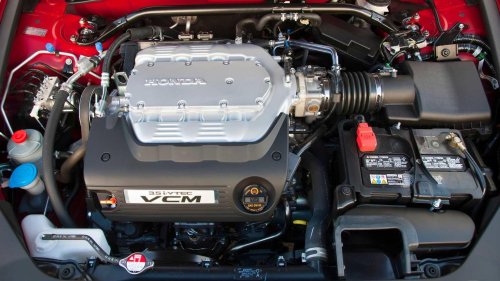
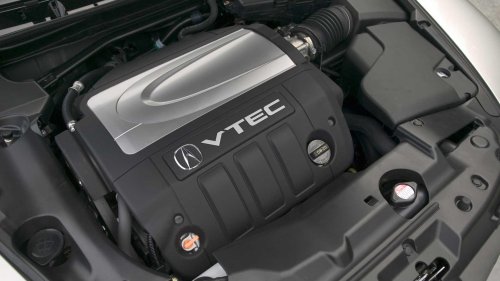
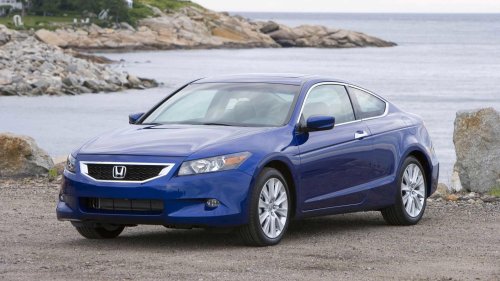
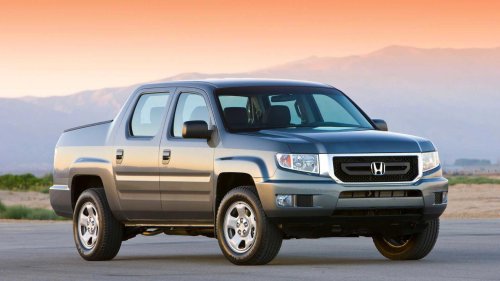
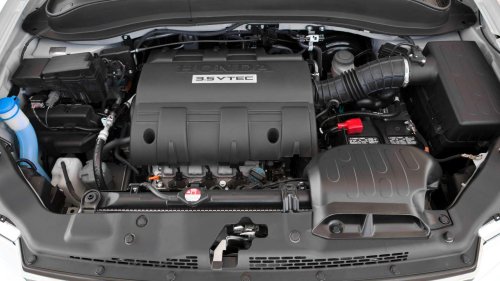
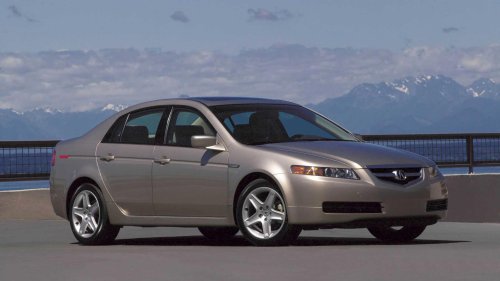
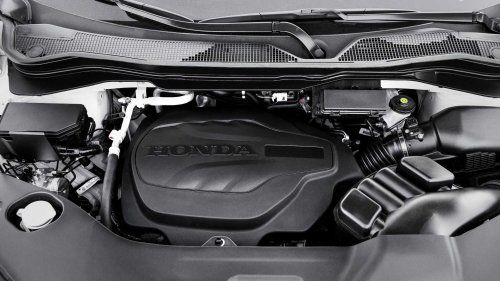



















It's no secret that many Honda engines carry excellent reputations for various reasons. Some, like the K-Series, are known for their inherent ability to accept bolt-on modifications without becoming unreliable in any way. Others, like the D-Series, are regarded for their extreme levels of reliability. There's also the newer L-Series, which has shown itself to be incredibly versatile. It's not just these few Honda engines that deserve attention, either.That's because you also have to include the J-Series in that list. More specifically, the J35A. Unlike the three listed above, the J-Series J35A is a V6 engine. It's been around for nearly three decades and has seen use in loads of Honda models. These days, the older J-Series motors are beginning to garner quite a lot of attention within some gearhead circles. There are a few reasons for this, but there's a larger picture at play, too. Here's why it's getting noticed. It's Got Power And Tuning Potential HondaOne of the hallmarks of the J35A is its ability to accept most bolt-on modifications. For example, a couple of popular modifications folks typically install are intake and exhaust upgrades. The J35A is incredibly responsive to higher airflow, and equipping it with a high-flow intake and exhaust system allows it to unlock quite a few ponies right off the bat. It's also capable of accepting the intake and throttle body from the larger, 3.7-liter Honda J37 V6 engine family.If you want to get more specific about your J35A's tuning, you can spring for other, smaller upgrades that help behind the scenes. Intake manifold spacers, for example, are popular additions to a J35A build. In essence, the spacers create a small, sealed gap that lifts the manifold slightly. In doing so, the intake manifold's temperature is reduced, allowing cooler air to be forced into the engine. This has been shown to help with mid-range torque. You can also get things like a lightweight crankshaft pulley and thermal throttle body gaskets, the latter of which further help to reduce heat.Acura One thing that needs to be kept in mind is tuning software. If you go through the trouble of making hardware modifications, such as the ones listed above, your J35A's engine control unit (ECU) should be flashed with a proper tune. While it adds an extra expense, typically a few hundred dollars, a new tune allows the engine to take full advantage of the new mods. It's one thing to install the new kit, it's another to teach the engine to use it properly via a new flash tune. It's Quick In Its Stock Form, Too In its factory state of tune, the J35A still packs a reasonable amount of punch in and of itself. One of its most popular applications is found within the 2008–2012 Honda Accord sedan and coupe models, especially when paired with a six-speed manual transmission.Other J35A-equipped Honda models also boast respectable, even impressive, power figures. For example, the 2010 Honda Accord Crosstour chucks out 271 horsepower using a J35A variant. The 2007 Acura TL Type-S, a performance-oriented version of the standard TL, uses a factory-tuned iteration of the mill coined "J35A8". With it, the model can produce up to 286 hp. The A8 variation was so good, it managed to secure a spot on Ward's 10 Best Engines for the 2005 model year, when it was used as the Acura RL's powerplant. It's Budget-Friendly HondaWhen we mention its budget-conscious personality, we're referring to both the engine itself, along with the models it was used in.The modifications discussed above don't come from the sky, nor do they grow on trees. Instead, they need to be purchased. Luckily, the J35A aftermarket isn't all that difficult to dive into financially. Of course, certain aftermarket components are going to be more expensive than others depending on the brand. But, by and large, modding a J35A engine won't break the bank, and it can also provide a great deal of bang-for-your-buck.We'll take a look at a few popular aftermarket bolt-on parts below: P2R J-Series CNC Ported Lower Intake Manifold Runners: $379.99 Injen SP Cold Air Intake System: $448.28 E-Tuning – HLP Products Remote / Email / Local Dyno Custom Tuning Service – Hondata or Ktuner Tuning: $575.00 In total, the three components listed above will run you about $1,403 before tax or shipping. When it comes to power increase, the intake runners are slated to provide roughly an extra 5–15 hp above stock. Add the Injen cold air intake's approximate horsepower gain of 12 ponies and the tuner's supposed 23-horse gain, and you've managed to add an extra 50 hp to your J35A for less than $1,500. To put it in perspective, a 2012 Accord running all three mods could produce up to 318 horses. Here's How Much A J35-Equipped Honda Will Cost You Honda There are loads of Hondas using a J35A engine out there, all of which were produced anywhere from the late 1990s to the present. However, most of you will probably steer clear of things like a Honda Odyssey or Pilot, seeing as they're not exactly fit for performance. What most enthusiasts are interested in are the Accords, Acura TLs, and, for the truck guys, the Honda Ridgeline. We'll break down some current pricing trends for a few of them. We'll also use the 2009 model year for this purpose:Luckily, for the budget-minded, getting yourself into a J35A-equipped Honda product from the late 2000s isn't hard to do at all. All three models above sport average prices sitting under $10k, and you'll probably need just shy of $13k all-in to afford the car itself, any and all taxes and registration fees, along with the $1,500-worth of mods. All About The J35's Inner Workings HondaThe entirety of the Honda J-Series engine family spans five total sub types, ranging from the J25, J30, J32, J35, and J37. However, our J35 is, by far, the most popular of the bunch. Honda created the engine with longevity in mind, and took advantage of some offbeat engineering, such as a 60-degree V-angle to keep its footprint narrow in transverse applications. It was also built with compactness in mind, using a shortened crankshaft and a piston stroke that's longer than the cylinder bores are wide.The first iteration of the J35 engine, the J35A1, debuted in 1999 underneath the hood of the Honda Odyssey. Since then, there have been well over two dozen variations of the engine, many of which are still produced today. Many J35 variants use Honda's i-VTEC variable valve timing, while others use different combinations of variable valve timing and lift technologies depending on the application. Some versions of the mill also sport variable displacement tech, which can shut down one bank of cylinders when under light load, effectively turning the V6 into an inline-three. Reliability AcuraIf you pop over to RepairPal.com, type in "2012 Honda Accord reliability" and click the search button, you'll be greeted with a stellar reliability score of 4.5 out of five stars, along with an average annual maintenance cost of $412 per year, well below average. Not to mention, the Accord is the most dependable mid-size car reviewed by the site, and since the J35A is grouped into this rating, we can deduce that it's a pretty reliable mill.However, there are one or two downsides to the motor. Recently, it's come to light that some J35A engines consume an excessive amount of oil, and also suffer from timing belt failures. Both issues can be chalked up to simple aging. So, it's best to get your prospective J35A-equipped Honda or Acura professionally inspected before you buy. The Future Of The J35 Honda Since its introduction in 1999, the J35 has evolved through multiple revisions, including the J35A, J35Y, J35Z, and J35S. These days, the only J35 variation still in production is the J35Y, which sees use in the Honda Ridgeline, Odyssey, Passport, and Pilot, as well as the Acura MDX. At press time, Honda hasn't stated any plans to get rid of the J35 for any reason.Here's hoping the cheap, modifiable, and reliable V6 sticks around for a while yet.