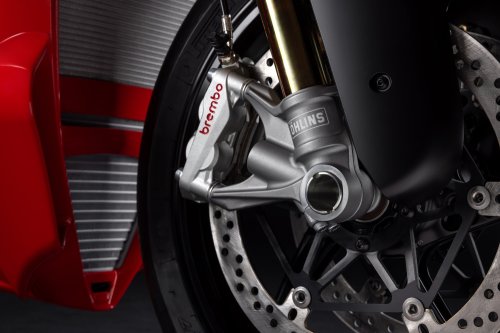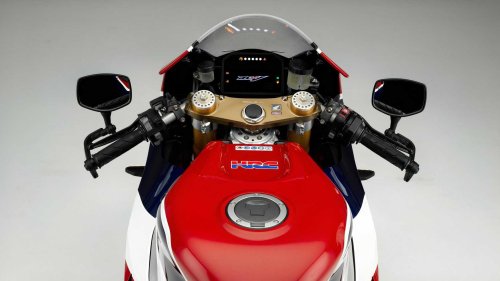
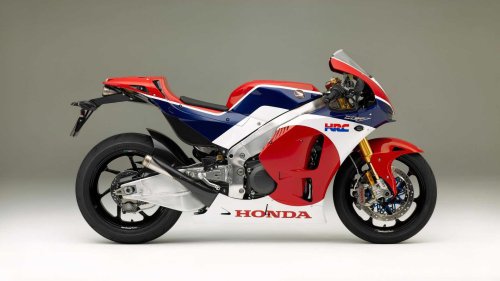
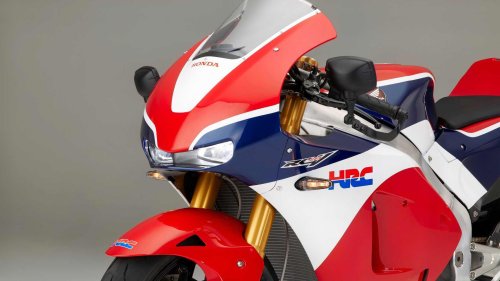
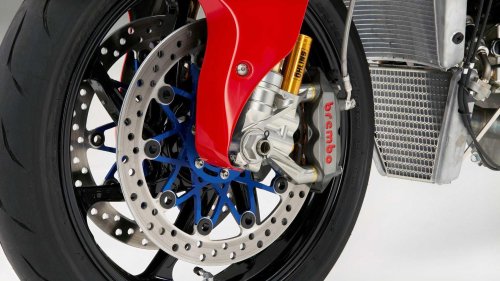
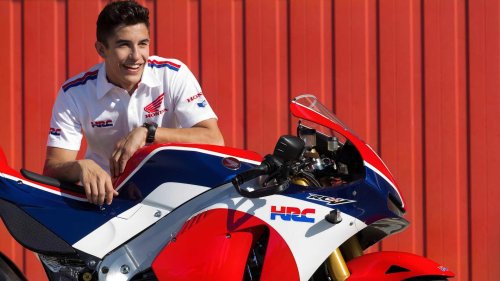


















Honda’s rich history with homologation specials goes back nearly four decades, and its starting point is marked by the release of the legendary RC30 in the late eighties. Officially known as the VFR750R, it was produced in limited quantities for World Superbike homologation purposes, becoming a cherished collector’s item almost instantly. Other iconic models like the RC45 and RC51 continued Honda's efforts in the years that followed, joined by the equally fascinating NR750 race replica along the way. The Japanese manufacturer didn’t shy away from flexing its technological muscle through these two-wheeled masterpieces, and other companies followed suit to capitalize on the whole road-legal race bike trend. The Homologation Tradition HondaDucati was the one to really embrace the idea during the nineties, essentially making those race-derived machines an integral part of its brand identity over time. Meanwhile, Yamaha came up with its own OW01 and OW02 homologation bikes, Kawasaki gave us gems like the ZX-7RR, and Suzuki had several homologation Gixxers unleashed onto public roads. Besides those, you had Ducati’s brutal Desmosedici RR race replica and the aforementioned NR750 from Honda — not homologation models per se, but still packed full of racing technology from top to bottom and with price tags to match. Honda dialed things up to eleven in 2015, though, and that’s what we’re here to focus on today. Enter The MotoGP Machine HondaThe great Marc Marquez was absolutely dominating in MotoGP at the time, having just won his first title in 2013 and yet again the following season. He achieved these victories riding the fabled Honda RC213V, powered by a powerful V4 powerplant and capable of hitting speeds in excess of 224 mph. In order to capitalize on Marquez’s spectacular wins, Honda decided to create a street-legal version of its GP track weapon in very limited numbers, simply naming it the RC213V-S. The bike debuted in July 2015 with a price tag of $184,000, which instantly placed it way out of most people’s reach. The Numbers That Shock HondaAnd aside from its nauseating six-digit price, the model’s exclusivity was further enhanced by the fact that Honda made fewer than 250 copies. Of course, the RC213V-S delivered exceptional performance to bring that MotoGP experience as close to public roads as possible. At its core, it came equipped with a 999cc V4 engine featuring a 360-degree crank phase angle and 13:1 compression. The four-cylinder engine produced 159 horsepower, but that figure could jump all the way up to 212 hp with the optional factory race kit. However, U.S. models were restricted to a rather tame 101 horses to meet strict emissions and noise regulations.Peak torque was rated at 75 lb-ft in standard form, 66 lb-ft for U.S. variants, and a much healthier 87 lb-ft with the race kit installed. All that power traveled to the rear wheel by way of a six-speed gearbox, enabling the Japanese crotch rocket to hit a top speed of around 200 mph in its standard configuration. The chassis employed an aluminum twin-spar frame with excellent torsional rigidity, alongside premium Ohlins suspension front and back. Said equipment comprised gas-charged TTX25 inverted forks and a fully-adjustable TTX36 shock absorber. Sure enough, ample stopping power was on the menu, too. Honda RC213V-S Technical Specifications It came from dual 12.6-inch discs at the front, a single 8.7-inch rotor at the rear, and high-end Brembo calipers all-round. Full carbon fiber bodywork kept the motorcycle’s weight as low as possible, so it tipped the scales at a modest 375 pounds without fluids. The race kit reduced its dry weight even further to just 353 pounds, giving the RC213V-S a truly mind-blowing power-to-weight ratio. Honda went to great lengths to channel the RC213V’s racing spirit into something regular riders could throw a leg over, so long as they had nearly 200 grand to spare. And, realistically speaking, you’re unlikely to put any serious miles on a rare motorcycle you’ve spent that sort of money on. Why Almost Nobody Rides Them Honda Given its rarity and astronomical price tag, the Honda RC213V-S presents a bit of a paradox. On the one hand, it's one of the most impressive street-legal superbikes ever created, sharing a significant amount of DNA with its MotoGP counterpart. But those who can afford it are sure to treat it as more of an investment rather than something you’d regularly take for a spin, so it’s not uncommon to see unridden examples popping up at auction. Unsurprisingly, they’ll cost even more than that initial sticker price set by Honda, exceeding what you’d pay for some brand-new supercars.For instance, let’s go back to December 2022, when an RC213V-S in its factory crate went for a whopping $265,000 on Iconic Motorbike Auctions. And a bit earlier in 2021, a low-mileage specimen went under the hammer at nearly $238,000, becoming the most expensive Japanese bike sold at auction back then. That record has since been snatched by another Honda, a pre-production CB750 prototype which raked in $313,500 earlier this year. Figures like those are difficult to grasp, clearly placing Honda’s GP race replica in a league of its own. The Legacy And The Hunt Honda NewsroomWith a mere 200–250 units in existence, the RC213V-S is borderline impossible to come by even if you’ve got all the money in the world. Its MotoGP sibling took Marquez to four more consecutive championship victories between 2016 and 2019, while also securing the constructors’ title a total of seven times. All that success on the racetrack further solidified the reputation of its commercially-available version, surely contributing to its increasing value in the process. And with Marc Marquez putting out such an impressive performance since his rookie season, the RC213V will always be remembered as one of the greatest machines in MotoGP history.It’s still active on the racetrack with the factory HRC Castrol team as of today, though it doesn’t quite hit as hard as it did before. Honda will likely have to freshen things up a little in the near future, but legendary race bikes like the RC213V or the much earlier to will remain two of its crowning achievements in public consciousness. And having an RC213V-S in your collection means owning a small part of that racing legacy, which is a very appealing prospect to say the least. Few motorcycles could ever call themselves a MotoGP machine for the street, so this gem’s desirability has every right to be off the charts.