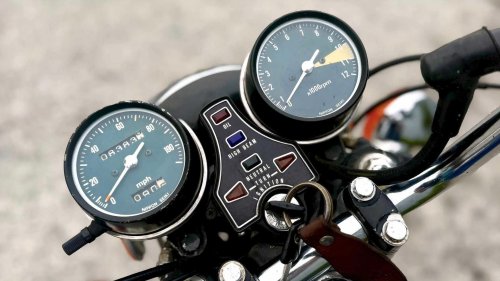
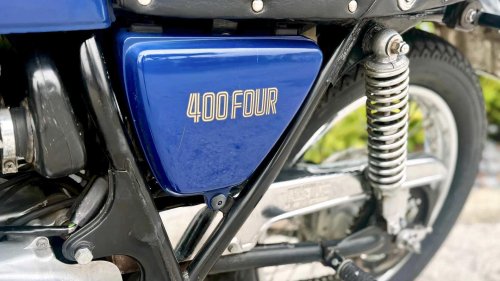
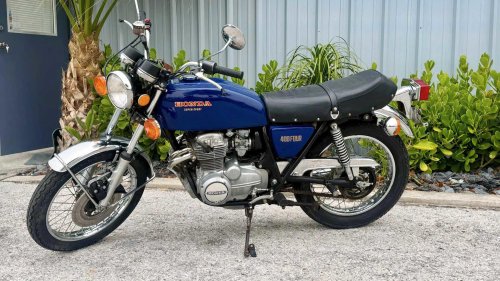
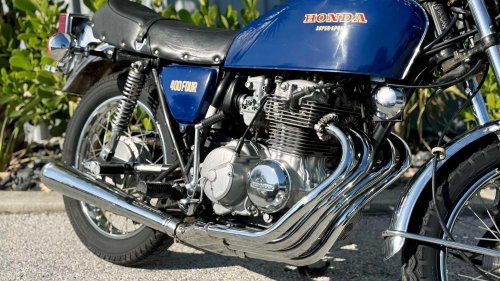
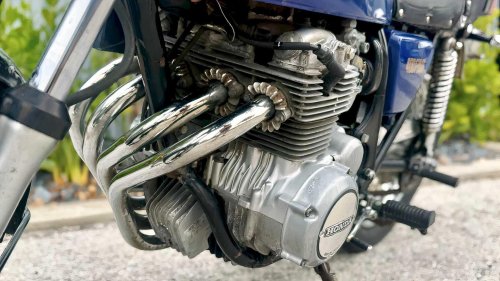
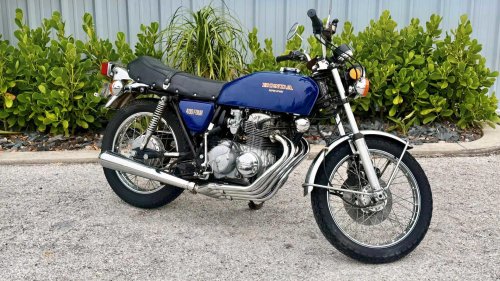
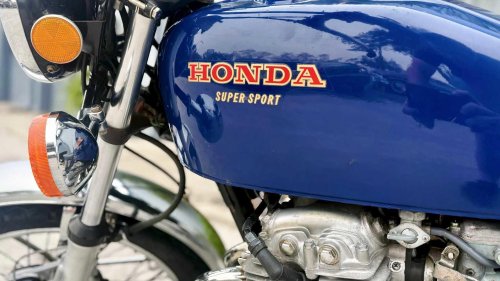

















In the mid-'70s, the sportbike hadn't quite figured itself out. The ingredients were scattered everywhere, like somebody had dumped a toolbox on the garage floor and then gone inside for a beer. Generally speaking, big four-strokes had speed and smoothness, two-strokes had bite and bad manners, and European machines had posture and cornering attitude. Riders who wanted all of that in one tidy package usually had to build it themselves, which is a fun idea until you're the one trying to make rear-set foot controls, low handlebars, and an exhaust system behave on a normal street bike.Then a small Japanese four arrived with the kind of spec sheet that looked modest until you read it like an engineer. It didn’t have the most displacement, the most horsepower, or the kind of straight-line punch that made people tell exaggerated pub stories. What it had was the shape of the future: a rev-happy four-cylinder engine, a six-speed gearbox, lower handlebars, rear-set foot pegs, compact proportions, and a single collector exhaust that looked like sculpture but worked like hardware. The Middleweight Sportbike Was Still Waiting To Be Invented Bring a TrailerBy the middle of the '70s, motorcycles had plenty of speed, but the factory-built middleweight sportbike still felt unfinished. If you wanted power, you could find it. If you wanted style, that was available too. If you wanted a compact, high-revving machine with proper sporting ergonomics and a chassis that liked corners, the choices narrowed quickly.The big Japanese fours had already changed the market. They were smooth, dependable, and quick enough to make older performance bikes feel dated. But they were also shaped by standard-bike thinking, with upright riding positions and enough size to remind you that mass still has opinions. Smaller two-strokes had the snap and mischief, but they often traded refinement for drama.The missing piece was balance. A proper middleweight sportbike, aside from acceleration, needed a riding position that pulled the rider into the job, gearing that kept a small engine singing, and proportions that made corners feel like the main event. The bike that first assembled that pattern, however, arrived as a compact Honda four that looked almost too polite to be revolutionary. Honda’s Small Four Looked Like A Styling Exercise And Rode Like Something Else Bring a TrailerAt first glance, Honda’s small four looked like a beautiful styling project. The tank was clean, the stance was tidy, and the whole thing had that old Honda confidence where every part seemed to know exactly why it was there. The low handlebar and rear-set pegs gave it a café-racer posture without turning the riding position into a punishment.But the styling only told half the story; the layout changed how the rider used the bike. The rider sat in a more purposeful position, with the controls pulled into a sporting layout and the compact chassis encouraging a quicker, more involved rhythm. In modern terms, it was closer to a friendly sportbike than a commuter wearing a leather jacket.The six-speed gearbox was another clue. That was rare for a production street bike of the time, especially in this class, and it suited the engine perfectly. A small four-cylinder engine needs revs and gearing the way a good joke needs timing. Give it wide ratios and it feels flat. Give it close steps and room to spin, and suddenly the whole thing wakes up. The CB400F Super Sport Put The Supersport Formula On The Street Bring a TrailerThe motorcycle in question was the 1975 Honda CB400F Super Sport, and once you get to know the ins and outs, the whole argument clicks. Here was a 408cc air-cooled, single-overhead-cam inline-four with four carburetors, a claimed 37 horsepower, and a 10,000-rpm redline. The numbers didn't sound outrageous, but the way they worked together mattered more than the size of the figures.The CB400F wasn’t a tiny superbike in the modern sense because that category hadn’t properly arrived yet. It carried the shape of the idea before the market had agreed on the vocabulary. Small inline-four engine, high redline, six-speed transmission, compact size, forward riding posture, sporty enough for back roads and club racing, and civilized enough for daily use. That’s the 600cc supersport brief before the showroom signs caught up.It also arrived as a correction. Honda’s earlier small four-cylinder idea had been clever but soft, more proof of miniaturization than a proper sporting statement. The 400F sharpened the concept with more displacement, closer gearing, and a more focused stance. It still wasn’t the quickest thing in its class, especially against angry two-strokes, but it offered a smoother, more precise kind of fun.Performance figures from the time vary, which is why they’re best treated as a range. Top speed sits somewhere between 100 MPH and 103.8 MPH, while quarter-mile times land in the low-to-high-14-second zone depending on test conditions. That makes it quick enough to be important without pretending it was a pint-sized drag-strip bully. The CB400F’s case rests on feel, engineering, and timing. The Exhaust Was The Whole Argument Bring a TrailerThe exhaust is the part everyone remembers, and fair enough, it’s absolutely gorgeous. The four header pipes sweep down from the front of the engine, curve together, and gather into a single muffler with the kind of visual drama that makes photographers happy and restorers slightly nervous.But treating it only as jewelry misses the point. That four-into-one system was an engineering decision hiding inside a design moment. Larger Hondas of the time often used multiple pipes and mufflers, which looked grand but added complexity and cost. The CB400F’s collector system followed the kind of thinking tuners were already using, routing four pipes into one collector and one muffler. Keeping The Whole Bike Together Bring a TrailerIt helped define the bike's sound as well. Small four-cylinder engines can feel anonymous when muffled into politeness, but this one reportedly had a sharper voice as the revs climbed. That was worth noting because the later supersport formula wasn’t only about speed, but also about using a small inline-four properly, keeping it on the boil, and feeling just a little smug when the bigger-bike crowd had to brake earlier for the next bend.The pipe became the bike’s most famous visual feature, but its real importance was how much work it did. It looked fantastic, reduced complexity, supported the engine’s character, and tied the whole motorcycle together. Most parts are lucky if they manage two jobs before lunch. Honda Built The Blueprint, Then Let Everyone Else Find It Later Bring a TrailerThe strangest thing about the CB400F is how briefly Honda let the idea breathe. It ran for the 1975 through 1977 model years, then Honda moved on as the market kept leaning toward larger displacement and broader appeal. The CB750 stayed the giant in vintage Honda conversations, which makes sense. It changed the world loudly, whereas the 400F did its work quietly.That legacy is everything now. The CB400F rewards the rider and reader who enjoy spotting the blueprint before the building goes up. No doubt later 600cc machines would bring more power, better brakes, stiffer frames, full fairings, and the kind of performance that made tire budgets look like a monthly subscription. But the basic idea was already here: a compact four-cylinder sport machine that asked the rider to use revs, gears, posture, and corner speed as one connected system. The Silent Game Changer Bring a TrailerIf you think about it, it also feels like a lost alternate future. Honda proved a small, sophisticated four-stroke could be entertaining without leaning on brute force, then stepped away before that path became the dominant sportbike grammar. A decade later, the 600cc class turned that grammar into a whole language, complete with racetrack credibility, magazine shootouts, and riders pretending every commute had apexes.All in, the CB400F deserves more than the usual pretty-classic treatment. The swooping pipe, cafe stance, and jewel-like engine were the working parts of a formula that later became the norm. The CB400F did everyone else a favor by writing the outline, leaving it on the desk, and waiting for everyone else to hurriedly start taking notes.Sources: MotoUnion, Ultimate Motorcycling, Motorcycle Classics.