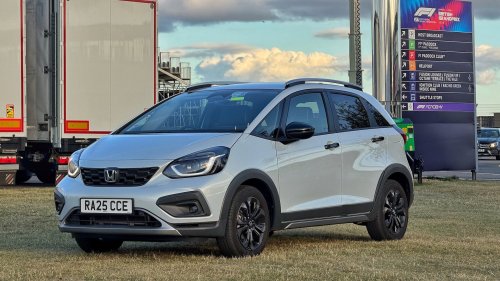
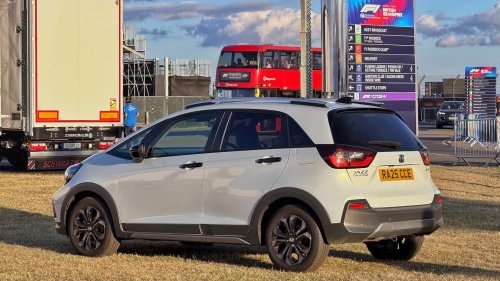
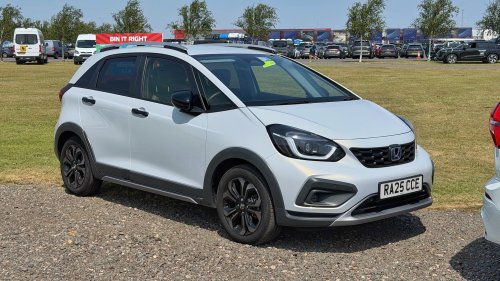
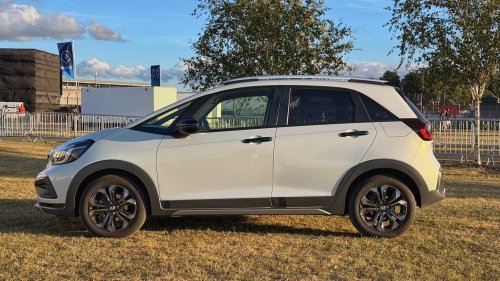
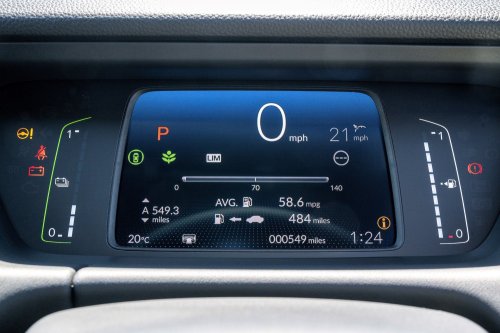
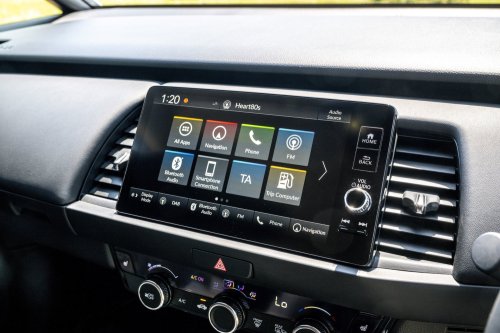
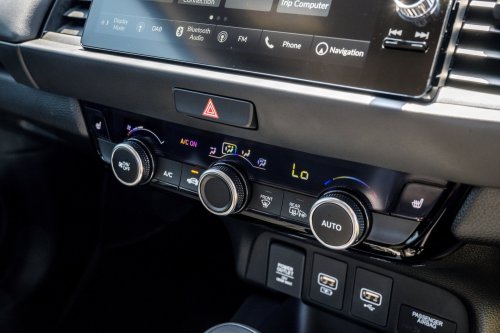
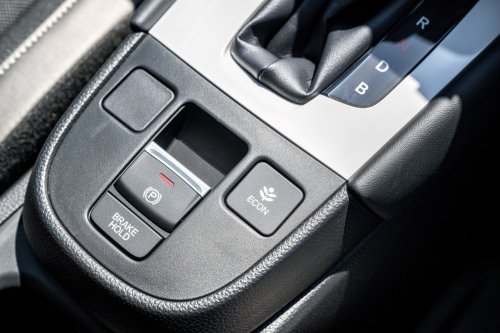
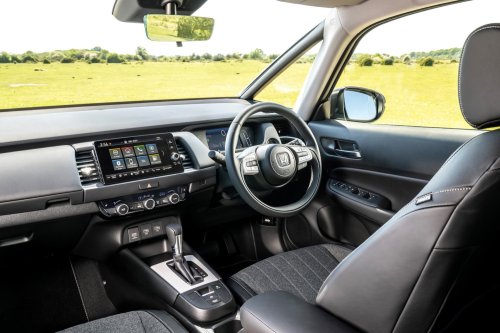
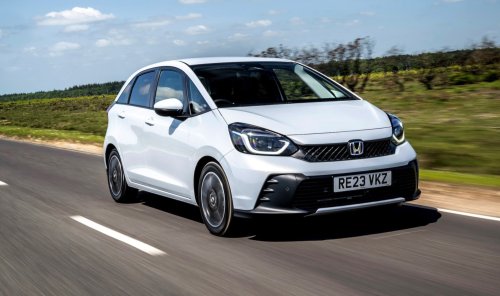
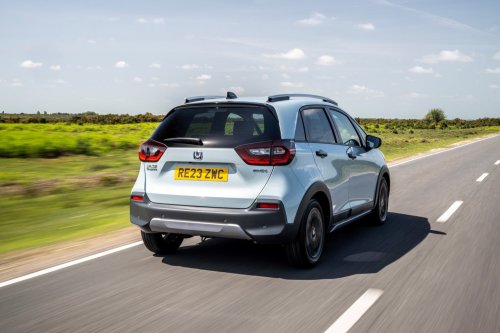
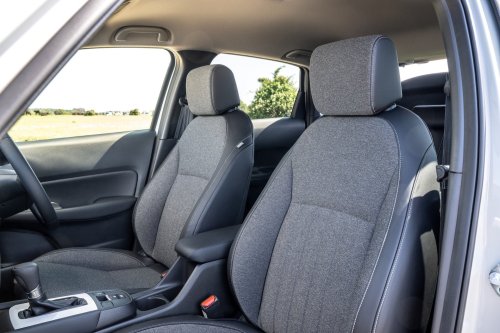
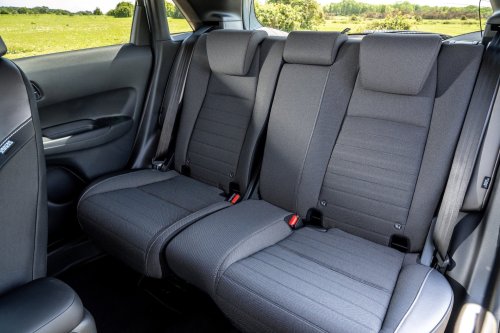
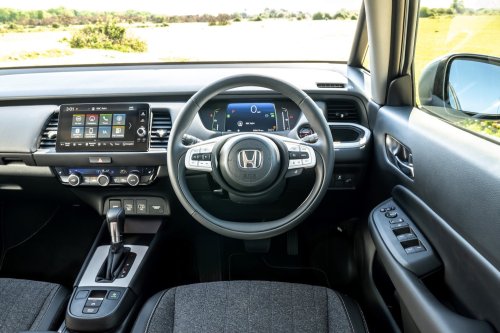
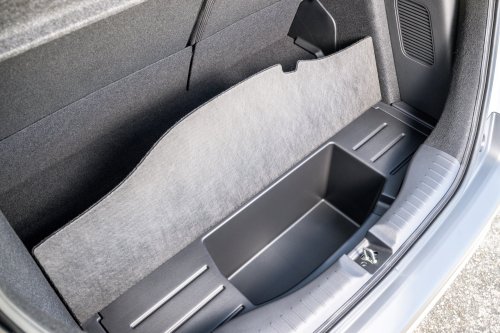
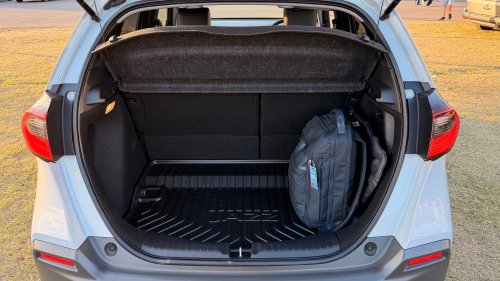
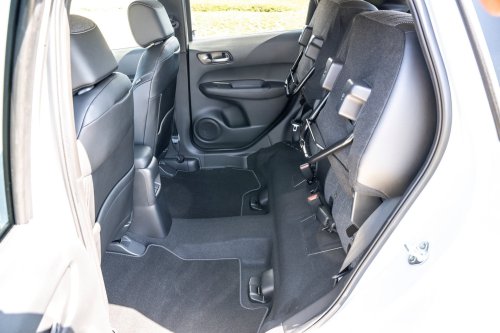
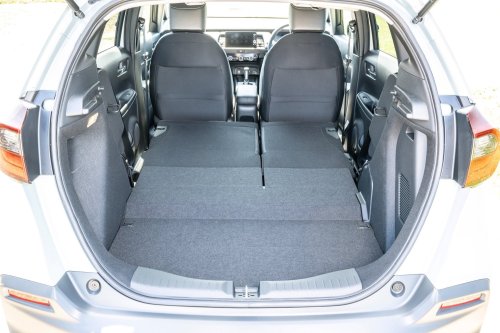
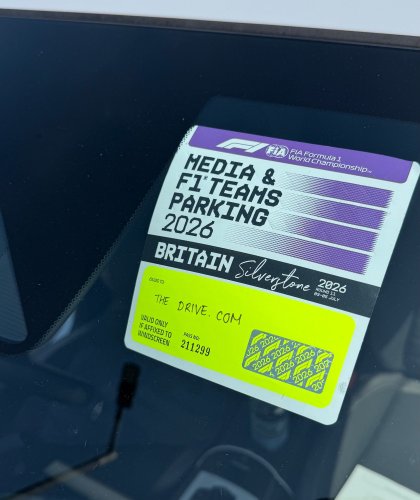
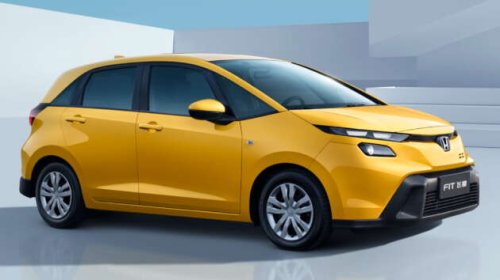
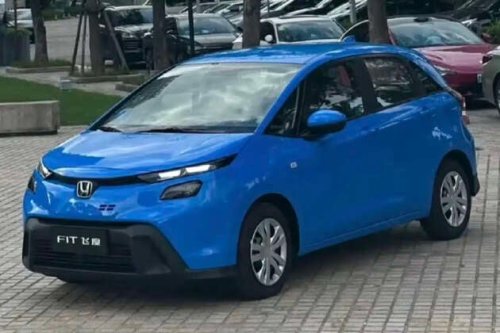
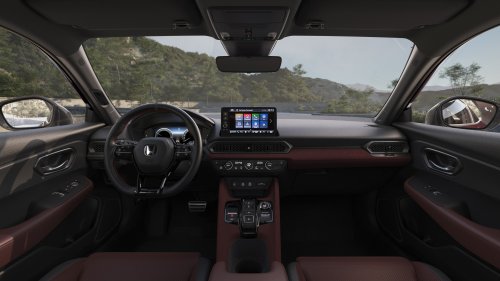
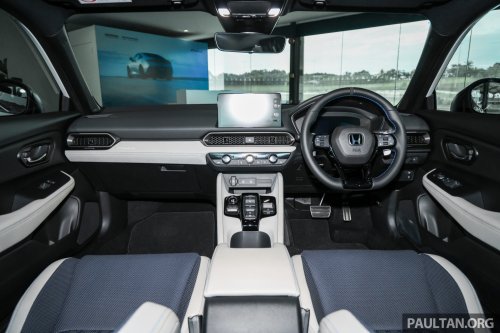
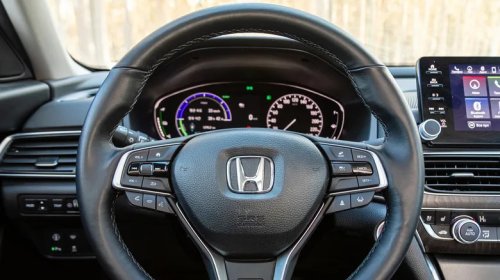
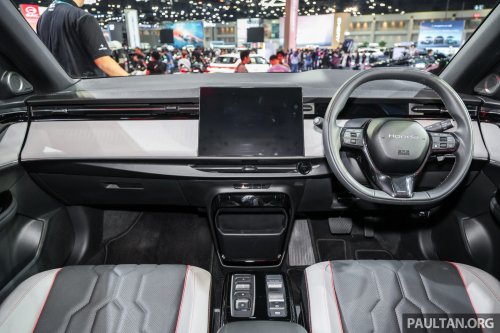
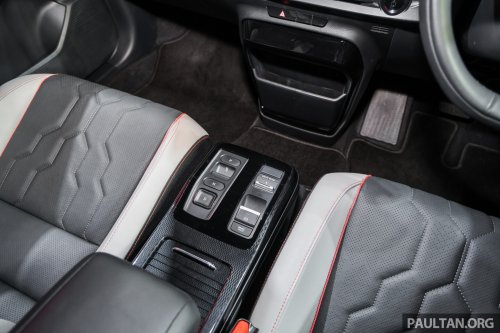
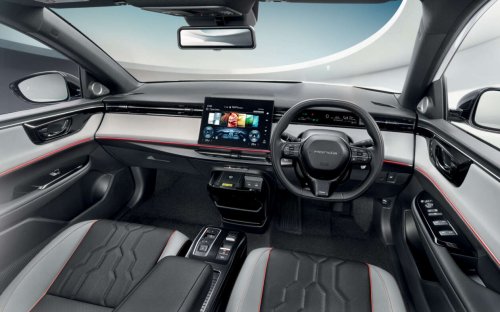
Jerry Perez A moment of silence for all the neat (and even the lame) sedans and hatchbacks we used to have in America before SUVs took over. The Honda Fit was one of them, and it bravely stuck around during the downfall of its fuel-sipping subcompact friends, but ultimately, its funky, bubbly, non-American-friendly shape forced a visit from the Grim Reaper in 2020. In Europe, however, the Fit (or Jazz as it’s known in some markets) and many of these little guys are still alive and well, and I recently got to experience one for several days. Say hello to the adorable, practical, and super fuel-efficient Honda Jazz e:HEV. It’s the Honda Fit that got away. As the proud owner of a 2007 Honda Fit Sport, I was pumped to drive the modern version of my almost 20-year-old car, even though it was a right-hand-drive oddball. Close enough. I’d often see the newer Jazz (Jazzes?) on the road during trips across the pond, but had never been able to check one out up close, let alone drive one. When Honda kindly offered me one to get around town during the Formula 1 British Grand Prix, I didn’t pass up the opportunity. Jerry Perez The Basics In the metal, the new Jazz is very different than the old Jazz, but its do-it-all spirit and rear Magic Seat remain untouched. It’s wider, longer, heavier, and certainly taller. The 1.5-liter four-cylinder engine and two-motor hybrid system hiding beneath the body are partly to blame for the bloat, but they’re also what keeps the Jazz alive today. The Jazz e:HEV, which stands for Hybrid Electric Vehicle, puts out a respectable 122 horsepower and 187 lb-ft of torque. In my tester’s range-topping Crosstar Advance trim, it weighs 2,760 pounds. For comparison, my 2007 Fit also rocks a naturally aspirated 1.5-liter four-cylinder engine, though it produces 107 hp and 105 lb-ft of torque while weighing 2,551 pounds. Frankly, I was ready to cringe as I was researching these weight figures, and I was quite shocked to realize there’s only a 209-pound (and 20-year) difference between these two iterations. Meaning that, without doing the horsepower-to-weight calculation, the extra ponies, wider track, 16-inch wheels, and electric torque should make the new one handle similarly well. More on this later. Jerry Perez Inside, the Jazz e:HEV Crosstar Advance is pretty basic. It’s definitely a function-over-form kind of cockpit, with a center touchscreen and buttons around it for key media functions and climate controls. There’s a physical volume knob and hard buttons or dials for the most frequently used features, and the center touchscreen is just 9 inches, so it doesn’t look overpowering, nor so small that it makes the interior feel like a bare-bones economy car. The digital gauge cluster is super basic and reminds me of something on a motorcycle. Not pretty, but it works. The seats remain cloth with a bit of faux leather trim, are heated, and feature manual adjustments, including lumbar support. I’ll say this: they’re a heck of a lot more comfortable and supportive than the ones in my Fit, which feel like generic office chairs. Here comes the kicker. In the U.K., my test car carries an all-inclusive price of 31,795 British Pounds, which translates into $42,752. That sounds extremely silly, but price comparisons aren’t apples-to-apples between the U.K. and North American markets. For reference, a Honda Civic Sport e:HEV there costs the equivalent of $48,300. Honda Driving the 2026 Honda Jazz e:HEV My first impression of “wow, look how adorable this thing is” quickly faded away as I got settled behind the wheel. After a long day of traveling to London, I looked forward to getting to my hotel and getting some rest ahead of what would be an extremely busy weekend at the F1 race. My iPhone’s battery was pretty low, and I still needed to run Google Maps via Apple CarPlay for the nearly two-hour drive from Gatwick to near Silverstone. However, the Jazz was only equipped with an old-school USB port, rather than the now-standard USB-C. I could run CarPlay wirelessly, but I couldn’t charge my phone. Shit. After turning my backpack inside out to find an adapter, I was finally heading north on the wrong side of the road and getting accustomed to the Jazz’s controls and driving characteristics. I was impressed by just how massive the cabin felt. It’s so airy, it’s like being in one of those spherical carnival rides, and you have excellent vision regardless of where you look. Later on, I told someone that the Jazz almost feels like a miniature Odyssey; it’s so spacious inside, and the windshield is huge. Honda Unlike my Fit, this Jazz had no issues merging onto the highway or passing slower traffic. Acceleration is brisk, considering its credentials, and there’s plenty of it to keep you going well past the posted speed limit. It’s not a sports car, obviously, but it’s far from anemic. On the highway or “motorway,” it was smooth and quiet while cruising at 70 mph. After the first 45 minutes or so, I set the adaptive cruise control and tailored the ADAS settings to my environment, and was surprised by how much more accurate the lane-keeping assist was than on any other North American Honda model I’d driven. No ping-ponging between lanes, and it was much quicker to react to cars merging in and out in front of me, though I did find it a bit too touchy with its brake applications. The commute between my hotel and Silverstone was entirely on twisty country roads, and if you’ve ever experienced these, then you know how narrow they can be. However, they’re also a lot of fun to drive speedily, while the RHD aspect adds another layer of excitement because things feel so different and you have to concentrate a bit more to make sure you don’t clip a hedge on the passenger side—and certainly not an incoming car on the driver’s side. Honda Here’s where the Jazz’s handling really shone through, and it was surprisingly good. It’s not as darty and engaging as my Fit, but then again, very few cars are 20 years later. The good Lord knows I’m not as sharp and certainly not as agile today as I was back in 2007. Power feels even more adequate on these roads, as you get that light kick of electric torque when you accelerate out of a corner. Modulating the throttle while stringing corners together is a lot of fun and is more akin to an EV than a gas car. It feels quick on its feet, but you get the feeling that the Jazz never takes itself seriously. After all, it’s got a CVT and, unlike my Fit, no paddle shifters (which is actually refreshing). The suspension isn’t overly plush, so you can most certainly tackle corners with speed without being overly fearful that the front end will wash away at turn-in. As it sits, the package isn’t designed to handle like a driver’s car, so don’t expect that, but it’s adequate, and most importantly, fun. It’s the right amount of entertainment while keeping comfort and fuel efficiency as its main mission. I’d argue that with a different wheel-and-tire package, handling could be drastically improved without incurring a huge mpg penalty. Jerry Perez, Honda Verdict After driving close to 400 miles during my time with the 2026 Honda Jazz e:HEV, I still had a hair under half a tank left, meaning that, in theory, someone with similar driving habits (70-30% highway/city split) could hit that claimed 62 mpg figure under the WLTP criteria. That’s somewhere around 700 miles per tank. That’s light-years better than my car. I reached out to Honda to be reminded of the official reason for the Fit’s demise in the States back in 2020, and a spokesperson had this to say: “Since Honda introduced the first-generation Fit in 2006, the market has evolved. HR-V and Civic Hatchback have become the new gateway models, offering significant utility, performance, and value. Today [in 2020], Civic Hatchback outsells Fit almost 2-to-1, while HR-V also has experienced substantial organic growth.” Jerry Perez So there you have it—there simply wasn’t a good business case for it here anymore. And frankly, as it currently sits, the Jazz just wouldn’t be a good fit (pun intended) in the States. There’s something about funky hatchbacks and wagons that Americans despise. God save the King, errr, Jazz. Honda provided The Drive with a five-day loan of this vehicle for the purpose of writing this review. 2026 Honda Jazz e:HEV Crosstar Advance Specs Powertrain1.5-liter inline-four two-motor hybrid system | eCVT | front-wheel driveHorsepower122Torque187 lb-ftSeating Capacity5Curb Weight2,760 poundsCargo Volume11 cubic feet behind second row | 30 cubic feet behind first row Email the author at jerry@thedrive.com