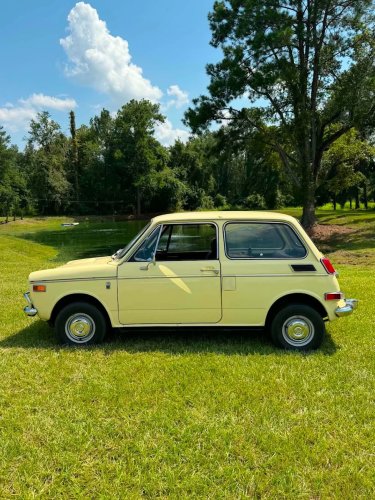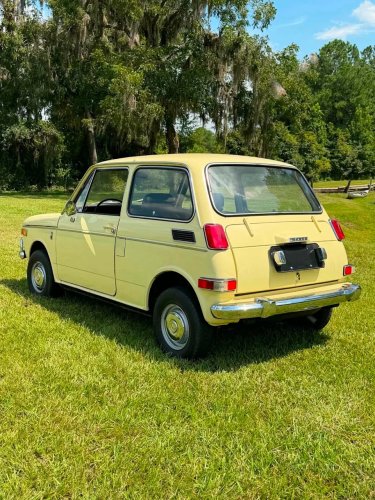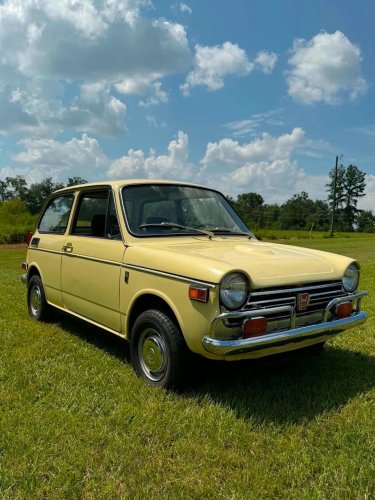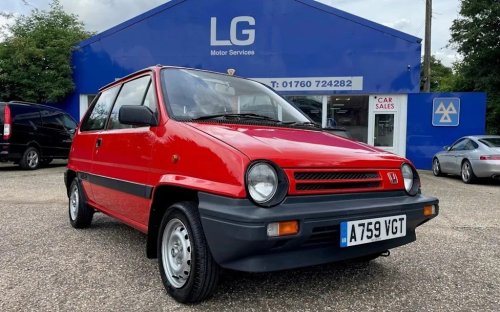
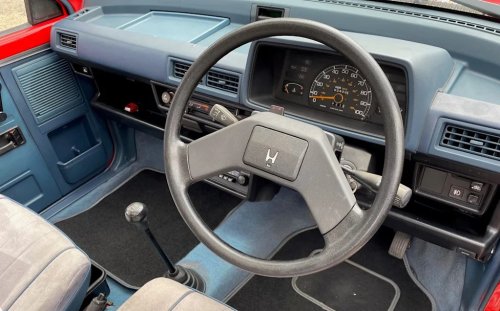
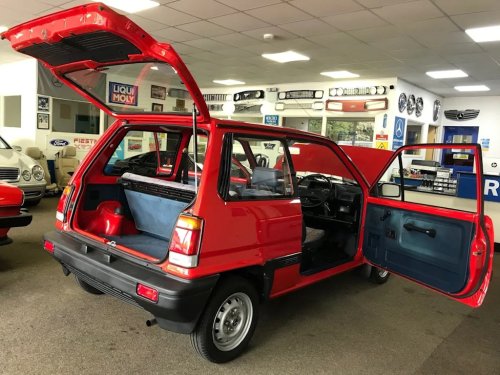

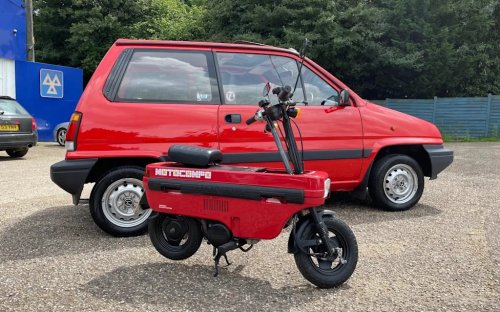





















1984 Honda Jazz: 'a tremendously nippy little car'The year is 1984; you have invested in five gallons of hair gel and a new Filofax and your car of choice is a Flame Red Honda Jazz. No other small hatchback had quite the same air of urban chic – or an association with one of the country's finest bands of the era.The City, as the Jazz was originally known in Japan, debuted in November 1981. Honda's engineers working on the project were said to have an average age of 27 and their aim was to create smart urban transport, representing "the ultimate fuel economy car for the 1980s". A 67bhp, 1.2-litre engine delivered a top speed of 88mph with economy of 35mpg, while its most distinctive aspect was the "Tall Boy" bodywork, with a windscreen raked 55 degrees from vertical.Honda's theory was that the greater headroom than normal would allow a more upright posture for the front occupants, who would therefore require less fore-and-aft seat adjustment. In addition, the engine location, suspension and rear wheel arches were designed to intrude on the interior space as little as possible. Honda aimed to sell 8,000 units per month.AdvertisementAdvertisementThe first examples were reserved for the home market, where renowned pop and ska band Madness appeared in City sales promotions. Honda wanted it to appeal to younger drivers and the group recorded some highly entertaining television advertisements during a four-day tour of Japan.In January 1984, Honda displayed the car at the Brussels motor show as the Jazz; Opel had already registered the City name for a version of its Kadett. UK sales began in March and Honda GB extolled the virtues of the car's "Inner Space" design concept: "short in overall length but not short on interior space". The Jazz was certainly distinctive, being an inch shorter and four inches taller than an Austin Metro.The equipment included a five-speed gearbox, a lift-out glass sunroof that could be stored in the boot, a clock, a cigarette lighter and a push-button radio. The Telegraph thought the Jazz was "spacious and lively", while Autocar found it "a tremendously nippy little car" with the "excellent performance and class-beating economy", before concluding that it was an "interesting and eye-catching approach to the concept of a town car".The Jazz came with a five-speed gearbox, lift-out glass sunroof that could be stored in the boot, a clock and a cigarette lighterHowever, Motor thought the Jazz would make little impact in the UK. The quota restricting Japanese-built cars to 11 per cent of total sales dictated that Honda would import the Jazz in limited numbers, while its £4,315 list price in 1984 made it nearly £1,000 more expensive than a Fiat Panda Super. A five-door Fiat Uno 55 Comfort cost £4,195 and the Nissan Micra 1.0 GL was only slightly more expensive than the Jazz at £4,418.Distinctive by design, the Jazz was an inch shorter and four inches taller than an Austin MetroYet Honda GB could claim that the Jazz was cheaper than its nearest Japanese rival, the £4,849 Daihatsu Charade CX "High Roof", as well as being more than £500 cheaper than the entry-level Civic. That £4,315 was surely a reasonable price for a car that brought a sense of style to any provincial high street, as well as looking far more up to date than the antediluvian £3,883 Mini Mayfair.AdvertisementAdvertisementHonda imported only one version of the Jazz, denying British motorists the chance to sample the Turbo and the Cabriolet. Nor was the remarkable Manhattan Hi-Fi model, which literally had a boom box attached to the ceiling, available in this country (Honda even thoughtfully provided an FM transmitter, in case the City Manhattan Hi-Fi driver wanted to add their own vocals).Nor was the Jazz available with the most notable home-market option – a 49cc Honda NCZ50 Motocompo with folding handlebars. The motor scooter fitted into a box in the City's boot and allowed the owner to ride from the parking bay to the office. Sadly, Honda discontinued the Motocompo option in 1983 after limited sales.In Japan, the City as it was called there, briefly came with its own motor scooter that fitted into a box in the bootProduction of the original AA-Series Jazz/City ended in 1986 after 311,800 units and only three are believed to remain on the road in the UK. This example was ordered from Elite Motors of Tooting in south London and is a fascinating reminder of early 1980s automotive culture, not to mention innovation.Or, as The Fast Show's Louis Balfour might have put it: "The Honda Jazz – Nice..."AdvertisementAdvertisementThe Jazz is currently for sale at LG Motors of Norfolk.We use the fascinating.howmanyleft.co.uk for figures of surviving examples but some cars present more of a challenge than others, so the figures are rarely authoritative. Some pre-1974 records were lost before the DVLA centralised the process, while some cars have their model type misnamed on the V5 registration documents. A further issue is the omission of the exact model name or generation, or distinction between saloon and estate bodystyles.Try full access to The Telegraph free today. Unlock their award-winning website and essential news app, plus useful tools and expert guides for your money, health and holidays.