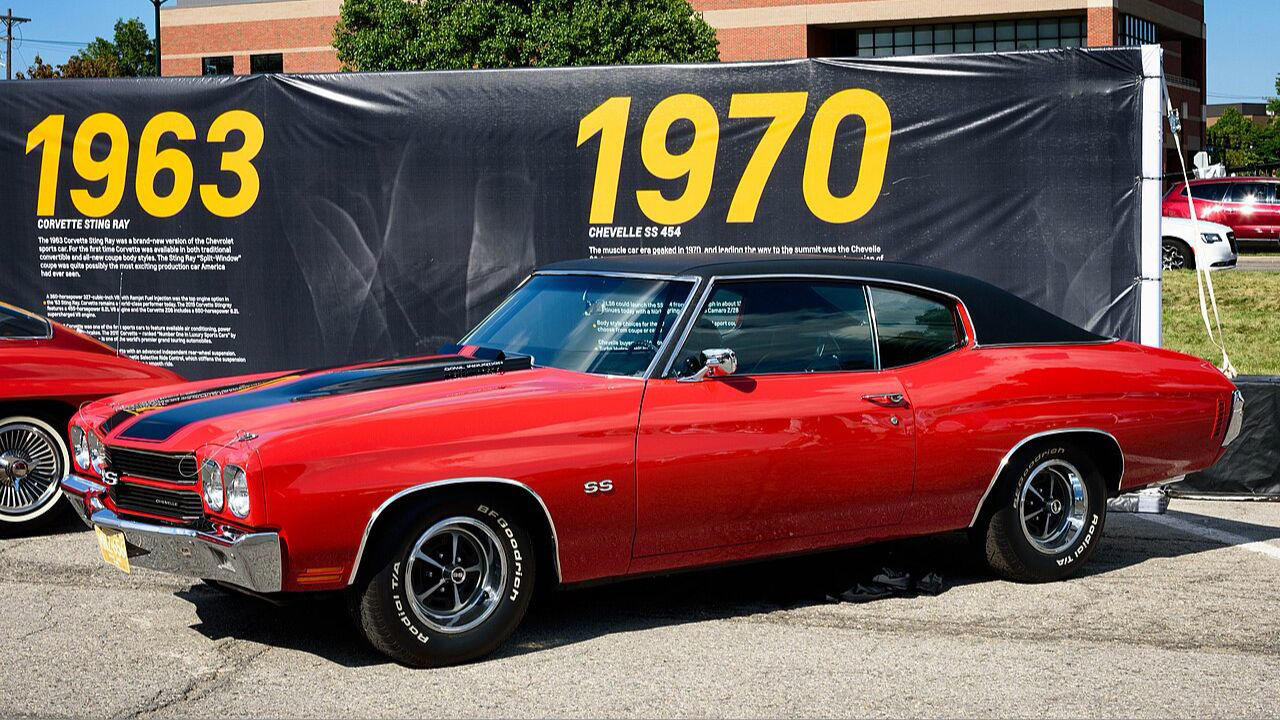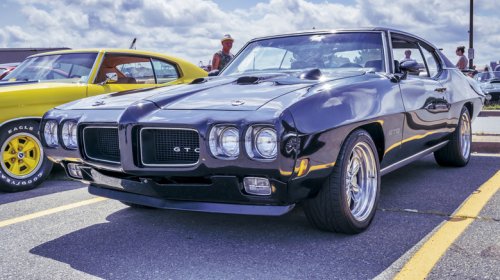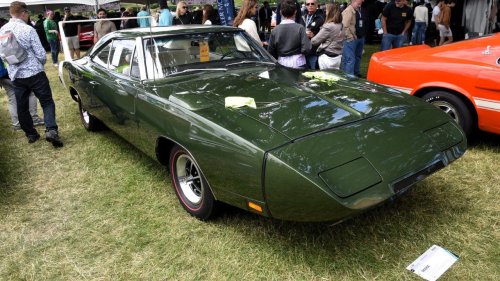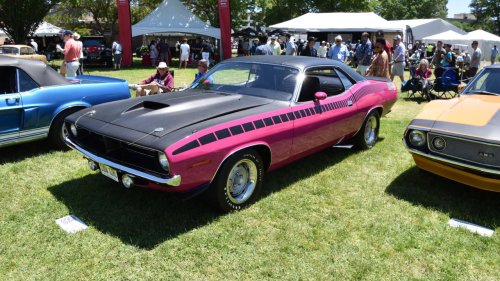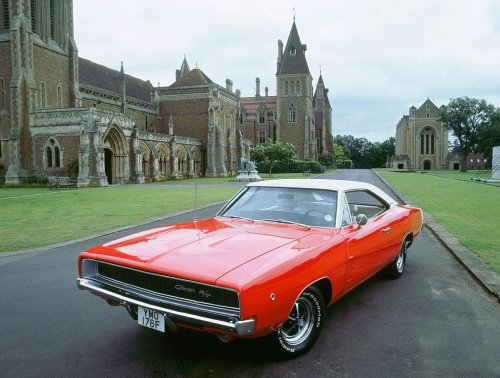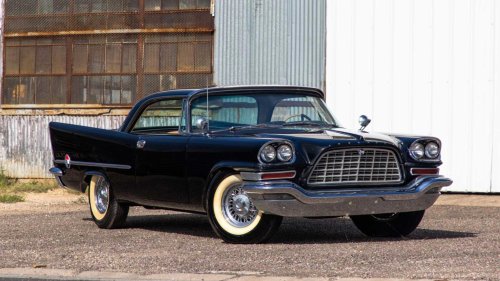
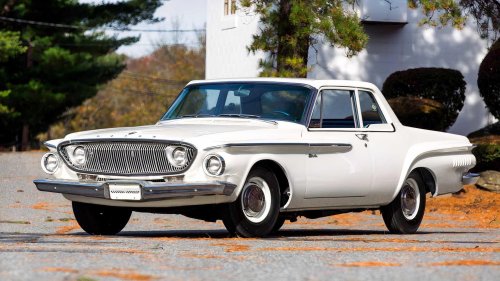
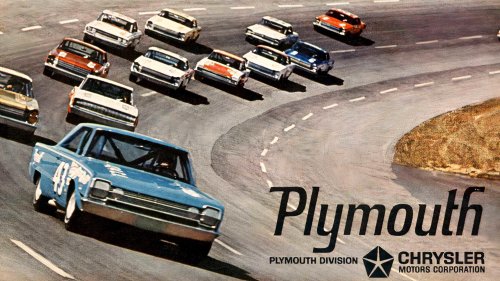
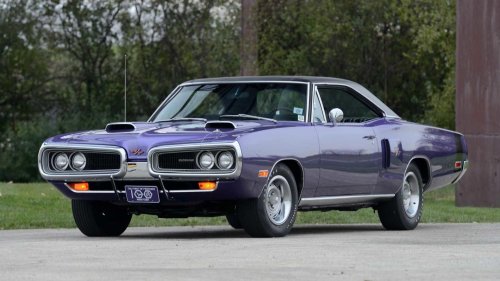



















The Golden Age of American Muscle produced some of the most iconic V8s of all time and their inclusion under the hood of a classic guarantees a big payday at auction. A Chevy Chevelle SS is always going to be an attractive buy, but a '70 with a 454 LS6 is a six-figure ride for even a project car. The same is true for a Pontiac with a 400-cubic-inch Ram Air IV which, depending on the application, can literally be a million-dollar gavel drop. A big-block Ford Cobra Jet can be the difference between a mediocre score across the block and an early retirement fund.All of those legendary engines were kind of a one-and-done type of deal and never really impacted the future of performance vehicles. There was, however, a super-badass V8 that, not only dominated the classic era but also continues its influence decades later into modern times. This wondermill that ruled the Golden Age was the V8 that all other automakers were chasing, but could never catch. It's also the engine that laid the foundation for American performance, that continues to be the benchmark today. Chrysler 392 FirePower War Machine MecumChrysler had developed a 2,500-horsepower V-12 engine with hemispherical combustion chambers for the Republic P-47 Thunderbolt fighter plane in late 1945, but thankfully, WWII was won decisively by the allies, and it never got pressed into service. It seemed like a shame to waste this radical technology. So, Pentastar adapted it for civilian use with the FirePower series of engines for passenger cars. The best of the best was the 375-horsepower 392ci V8 that made the 1957 Chrysler 300C literally the fastest car in the world. While never marketed as Hemi engines, the FirePowers were the first Chrysler Hemi V8s and began a legacy of performance and dominance that continues to this day. Max Wedge: ‘Vette Hunter Esq. Mecum For whatever reason, the Hemispherical 392 FirePower V8 was discontinued after only two years, replaced by the Chrysler RB engines with a wedge-shaped combustion chamber. The most famous of these engines was the 420-horsepower 413 Max Wedge with a dual-quad carb setup that made the 1962 Dodge Dart 330 the baddest thing to ever hit the streets. Though it's been over 60 years, Mopar fans still have a bone to pick with the Beach Boy's who released a song in 1963 called "Shut Down," which tells a fictitious story about an underpowered Corvette that beats a Dart Max Wedge 413. In the song, the 'Vette gets a sloppy tire-squealing launch, while the Dart sticks it and there's simply no way a 360-horsepower 327 could ever recover. Richard Petty’s Hemi Belvedere Chrysler Chrysler decided to revisit the hemispherical-chambered V8 in the early '60s, mostly because they wanted a killer engine for their hot young driver, Richard Petty. They came up with a dual-quad 426ci V8 that was virtually unbeatable under the hood of Petty's Plymouth Belvedere. Known as the Race Hemi, the 426 powered Petty to his first NASCAR Grand National championship with nine wins, 30 top-five finishes, and another 35 top-tens. This miracle Hemi V8 was intended to only be used for the track, but fate intervened, and it would soon head to the streets where it became the most iconic engine of the Golden Age. 426 Hemi Finally Hits The Streets Mecum Because Petty's Hemi-powered Belvedere was so dominant, Ford went crying to NASCAR, which temporarily banned the 426 until it could be homologated, which is a funny way of saying it needed to be sold in certain numbers to the public to qualify for competition. Homologation requirements are usually around 500–1,000 units, but Chrysler decided to make the 426 Street Hemi an engine option for all 1966 Dodge and Plymouth intermediate rides, which was the single most important thing to happen in the classic era of muscle cars. Mopar, which was already Ruler of the Streets pro-tem, was now officially the Blacktop Emperor with the Hemi engine.Coinciding with the 426 Street Hemi's '66 emancipation came the debut of the Dodge Charger, and it was a match made in Heaven but forged in Hell. The Hemi-equipped Charger, especially the '68-'70 second-gen, was the defining ride of the Golden Age, and pretty much what everyone identifies as the baddest muscle car of the era. The 426 Street Hemi hit the scene in '66, and it was a free-for-all that had the potential for super-powered station wagons, though that never happened, so in 1968 Chrysler limited its use to designated muscle cars only. For Dodge, that meant the Charger and Coronet R/Ts, as well as the Super Bee, while at Plymouth, the Road Runner and GTX were the anointed ones. Nerd Out on the 426 Hemi Specs MecumThe advantage of the hemispherical combustion chambers is that they allowed for larger valves, which means more airflow and more efficient combustion. More airflow, cleaner burns, and better exhaust leads to more fuel consumption, which equals more horsepower, but also better performance at high RPMs. The 426 Street Hemi was rated at 425 horsepower and 490 pound-feet of torque, but it was most certainly way more powerful than that, like maybe 500+. The Street and Race Hemis were both underrated at the same power, but the track version had a higher compression ratio, hotter cam, and other high-performance components, so it was probably a 600 or more horsepower beast. Rare Hemi Mopars Were Instant Unicorns Mecum Nowadays, Hemi-equipped Mopars are the most in-demand classic muscle cars, as well as the most famous, so people tend to think they were abundant, but in reality, were quite rare. Only 9,137 Hemi cars were built between 1966-1971, which created insta-unicorns and a few Holy Grails. There were 4,475 Chevy Chevelle SS 454 LS6s and 1,358 Ford Mustang Boss 429s built, but just 14 Dodge Cornet Hemi R/Ts in 1970.The 426 Hemi option was rather expensive, about $900 or $3,100 in today's bucks. The 383 or 440 Magnum V8s were good enough to smoke just about anything on the streets for much less. That cost seems like nothing to us today, especially considering how much more kickass and valuable a Hemi car is, but folks back then were a lot thriftier. 426 Hemi Totally Owns The Streets Dodge In 1966, when the 426 Street Hemi was unleashed, it turned every Mopar equipped with it into a 13-second ride, straight from the factory and established that quarter-mile acceleration as the gold standard for the classic era. Meanwhile, the best a Ford or GM muscle car could muster was an ET in the 14s and even 15s, which was family wagon territory compared to a Hemi. As was mentioned, Hemi-equipped cars weren't exactly common back in the day and the chances of lining up next to one at a red light were slim, but when it happened it was an automatic loss, as well as a lesson in humility for anyone who dared. Ford and GM Battle For Second Place Mecum Ford never unlocked their big-block engines for their muscle cars until 1968 and even then, the 428/429 Cobra Jet V8's weren't terribly competitive, still keeping the Mustang and Torino in the 14s. By 1969, Pontiac got the 400ci Ram Air IV V8 dialed in, giving the GTO Judge a 13.9-second ET, but that wasn't good enough to beat any Hemi-powered Mopar or even a 440 Six-Pack car. In 1970, GM mercifully lifted its big-engine ban and the Chevy Chevelle SS 454 LS6 became a 13.4-second car, which was good enough to beat some Mopars, but not all. Unfortunately for Chevy, 1970 was also the year the E-body Dodge Charger Hemi R/T and Plymouth Hemi 'Cuda set loose, both of which could whoop an LS6. The Hemi 'Cuda, with a 13.1-second quarter-mile, was the quickest factory ride of the entire classic era. Lasting Legacy of the 426 Hemi Mecum Most of the legendary Golden big-blocks had a very limited existence and didn't have an impact on future performance engines, but the Hemi has a legacy that stretches from the 1957 392 FirePower to the modern supercharged Hellcat V8s. When Dodge relaunched the Charger in 2006, the SRT8 came with a 425-horsepower 6.1-liter Hemi V8, marking the first time that nameplate was paired with that power since 1971. In 2011, the rebooted Challenger had a 6.4-liter Hemi V8 option that translated into 392 cubic inches in homage of the original FirePower engine. The OG Hemi engines set the path for American performance and by Dodge following it faithfully has led to the baddest rides of the modern age. Insane Value Of Hemi-Equipped Mopars Mecum Because 426 Street Hemis are so rare and classic Mopar muscle cars so damn cool-looking, they are top collectibles and finding one for under $100,000 is a delusional fantasy. Even a total beater with a family of raccoons living in the trunk is going to go in the six-figures if it's a numbers-matching Hemi. The 1968 Plymouth Road Runner was the most Hemified model with 1,019 units, so it's, for lack of a better term, the most common Hemi Mopar. Hagerty sets the value for a '68 Hemi Road Runner between $54,000 for a project car to $176,000 for a Concours condition show car. While the low value seems encouraging, no car that cheap has been sold at auction in recent memory.On the top end of things, the Hemi cars are completely bonkers, selling in the millions, which is amazing for rides that originally cost between $3,000-$4,000. A '69 Charger Daytona sold not long ago for a staggering $3.3 million, but that's not even the record for a classic Mopar muscle car. A few years ago, a 1971 Hemi 'Cuda convertible blew up the auction block for $3.5 million, becoming the all-time most expensive regular production Golden Age car. But wait, there's more because another '71 Hemi 'Cuda drop-top (pictured above) was bid up to $4.8 million at Mecum Indy 2021, but failed to hit the reserve and didn't sell. If someone was willing to drop that kind of coin on a set of wheels, that's what it's worth.Sources: Chrysler, Hagerty, Mecum