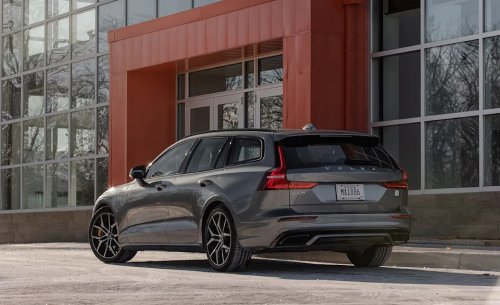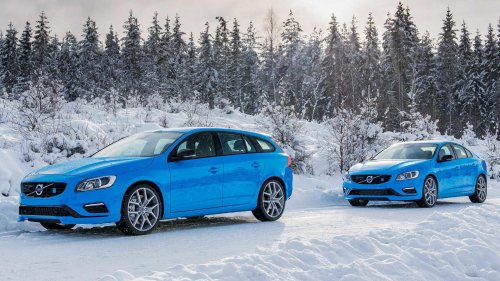
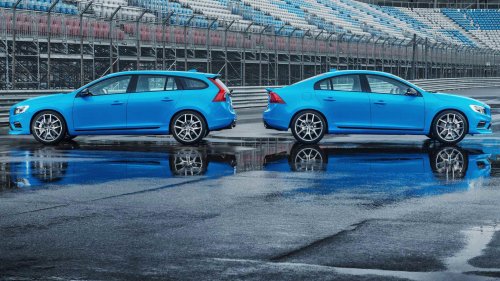
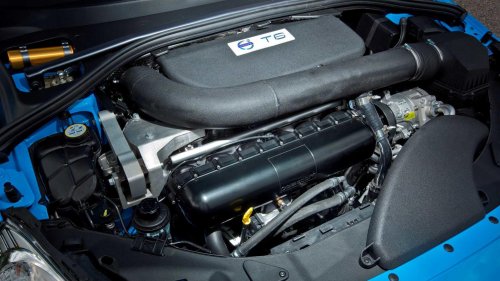
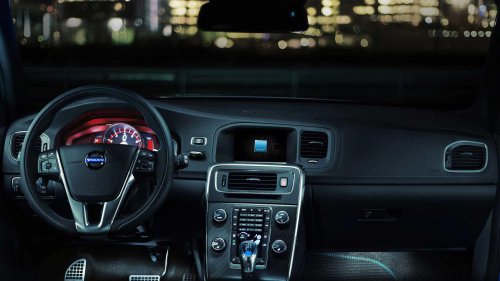
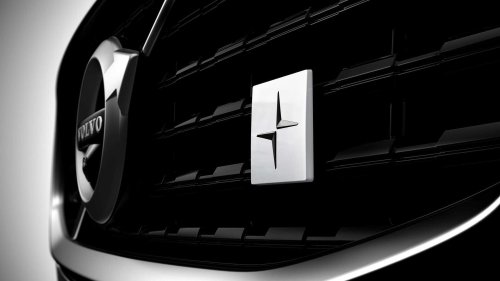
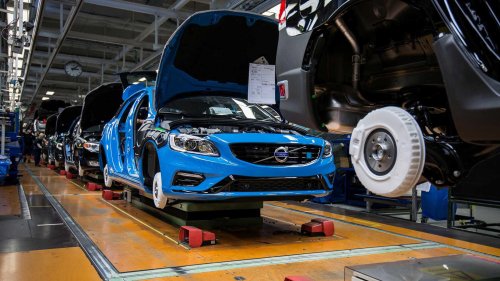
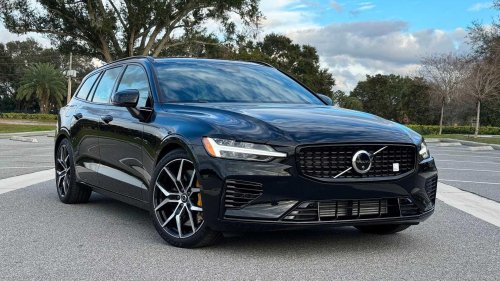
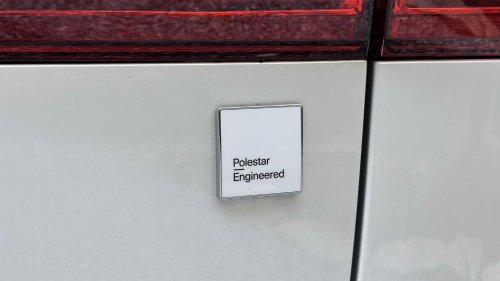
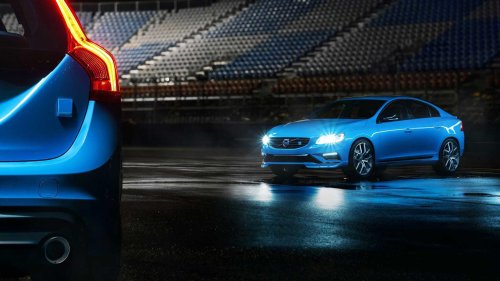



















For many of us, Volvos were the default family chariot. If your parents didn't own one, chances are at least one of your friend's parents had one parked in their driveway. That wasn’t an accident. Volvos have long ranked among the safest vehicles on the road, and when it comes to hauling family, safety tends to trump everything else.Volvo But last decade, the Swedish automaker flirted with something far less sensible. It quietly unleashed a handful of genuinely serious performance machines developed alongside a motorsports partner it was closely tied to at the time. True to form, though, it resisted the usual formula of stuffing a powerful V8 under the hood and instead extracted surprising muscle from an inline-six, blending restraint with real aggression – culminating in the first S60 and V60 Polestar. From Racing Roots To Road Rage Polestar today is known as a performance EV brand closely tied to Volvo but with a distinct lineup and a sharper performance focus. It didn’t start there, though. The name traces back to an independent Swedish motorsports and engineering outfit that built and ran Volvo-based race cars in series like the Swedish Touring Car Championship, earning its stripes the hard way. Key Facts To Know Launched at the 2014 Chicago Auto Show Only several hundred were brought to the US Downsized to an inline-four with the 2017 model year Early last decade, Volvo and Polestar began experimenting with high-performance road cars. That effort trickled down to dealer-installed Polestar-tuning software and eventually the first limited-production Volvo S60 Polestar in 2013, which packed a turbocharged 3.0-liter inline-six.It was launched exclusively in Australia to gauge whether it would appeal to performance fans. That question got an answer, and Volvo and Polestar followed up with new S60 and V60 Polestar models based on facelifted versions of the standard Volvo S60 and Volvo V60, and this time more markets would be included, the US being among them.VolvoThe pair made their local debut at the 2014 Chicago Auto Show and went on sale here later that year as 2015 models. But the timing was bittersweet. Volvo ditched its inline-six shortly after, switching entirely to inline-four engines. The Polestar models followed suit for the 2017 model year, meaning the 2015 and 2016 S60 and V60 Polestar were the only examples with the inline-six.The numbers were never high to begin, with just 750–1,000 units per year globally, and that kind of limited production means finding one today is close to impossible. A quick search of popular classifieds yields just one example up for sale, a 2016 S60 Polestar with almost 98,000 miles on the clock and a list price of $24,995. A Family Car With A Secret Weapon Volvo When the S60 and V60 Polestars arrived, Volvo wasn’t exactly synonymous with performance, even if there had been flashes of it before – think the Volvo S60 R and Volvo V70 R era. The Polestar models, however, pushed far beyond those R-badged experiments. They blended Volvo’s trademark safety and long-haul comfort with a serious dose of speed, becoming the fastest factory Volvos ever built.The heart of the package was the engine, based on the turbocharged 3.0-liter inline-six from the standard S60 and V60 T6 models. Polestar turned the wick up with its own ECU calibration, a high-flow exhaust system, revised turbocharging and intercooling, and a series of smaller supporting tweaks. The result was 345 horsepower, or 20 more than Volvo ever pulled from the unit, along with notably more torque spread across the rev range, giving the cars a much stronger midrange punch and greater flexibility in everyday driving.Polestar The drivetrain got just as much attention. The six-speed automatic received quicker shifts, launch control, and a gear-hold function designed to prevent unwanted upshifts mid-corner. Polestar also recalibrated the Haldex all-wheel-drive system to allow a more rear-biased character, while the stability control was relaxed to let the driver push a little closer to the limit before stepping in.Underneath, the chassis was thoroughly reworked with a more rigid structure that included reinforced bushings, revised mounts, upgraded stabilizer bars, and a carbon-fiber strut brace. Manually adjustable Öhlins dampers and 20-inch wheels sharpened the dynamics, while larger Brembo brakes provided the stopping power to match. The result was a cohesive, well-sorted package that elevated Volvo’s familiar comfort into something far more focused without abandoning it entirely. A Short-Lived Rebellion VolvoVolvo Cars acquired Polestar in mid-2015 with a goal of tapping its engineering know-how to sharpen the way Volvos drive, expand performance upgrades across the lineup, and build dedicated halo cars like the S60 and V60 Polestar, essentially positioning it as a Swedish alternative to BMW M and Mercedes-AMG, albeit on a much smaller scale at first.Volvo had no interest in Polestar's racing arm, so it was split from the deal and remained under the control of Polestar founder Christian Dahl, who renamed it Cyan Racing and continued competing using race cars based on other brands within Geely’s portfolio, while also developing a striking restomod based on the iconic Volvo P1800.VolvoJust two years after the acquisition, Volvo shifted course, spinning Polestar off into a standalone EV brand and tasking then design chief Thomas Ingenlath with leading it. The move brought an end to S60 and V60 Polestar production, with inline-six production ending after 2016 and full S60/V60 Polestar models wrapping up with the 2018 model year.Polestar would continue to offer performance upgrades for Volvo models under the Polestar Engineered label, though these are currently mild, software-based upgrades only, enhancing things like throttle response, shift speeds, and the rear bias of all-wheel-drive systems. The New Normal: Smaller, Smarter, Electrified Jared Rosenholtz/CarBuzz/Valnet Volvo embarked on a new strategy mid-last decade with the introduction of the second-generation Volvo XC90 based on a new modular platform known as SPA. That strategy was a move exclusively to 2.0-liter inline-four engines, which relied on turbocharging – and in some cases both turbocharging and supercharging – to match the output of the brand’s former inline-five and inline-six units. For maximum performance, Volvo layered in plug-in hybrid tech as well, ultimately delivering horsepower figures that put its former Yamaha-sourced V8 engine to shame.CarsAndBidsThe S60 and V60 Polestar Engineered models also benefited from chassis upgrades similar to the previous S60 and V60 Polestar cars, including lightweight wheels, uprated Brembo brakes, an adjustable front strut brace, and Öhlins dampers with dual-flow valves that allow stiffer spring and damper settings without sacrificing comfort. An XC60 Polestar Engineered model followed, while other Volvos made do with Polestar Engineered software optimization like what’s still offered today. A Bit Of Lightning In A Bottle Volvo In the end, the inline-six S60 and V60 Polestar feel like a perfectly timed anomaly – a bit of old-school muscle meeting modern precision just before the window slammed shut. It’s the kind of engineering magic that happens once, briefly, and disappears. Volvo has moved on, and nothing from the automaker since has quite captured that same spark.Sources: Volvo