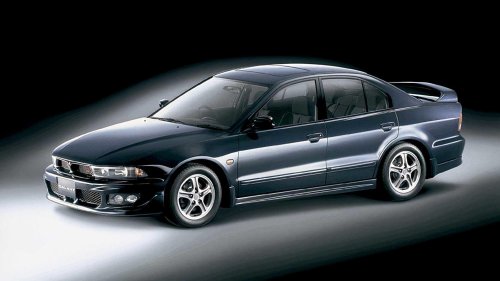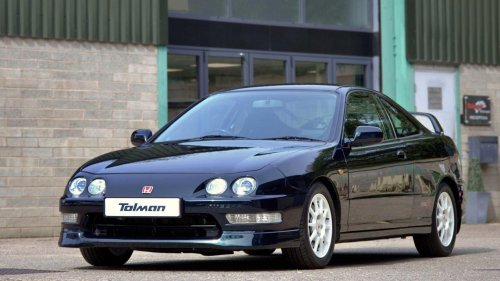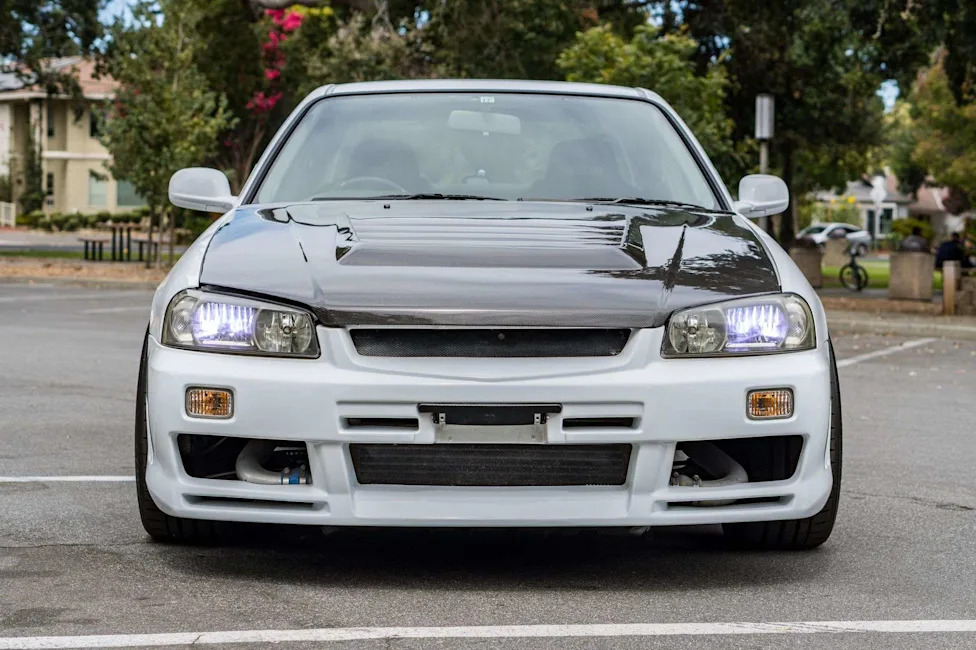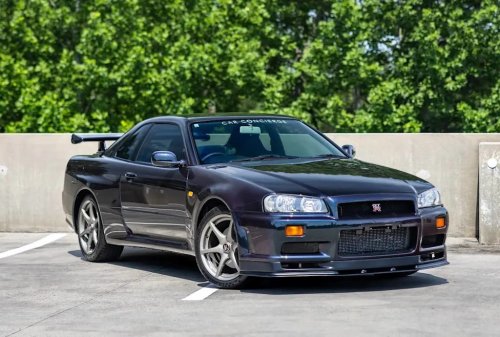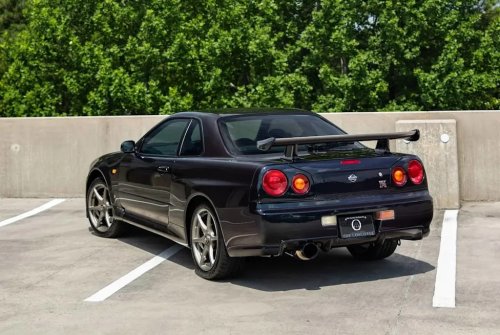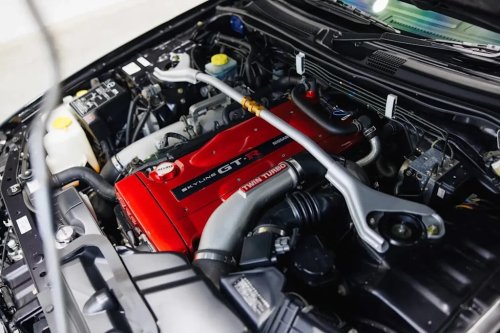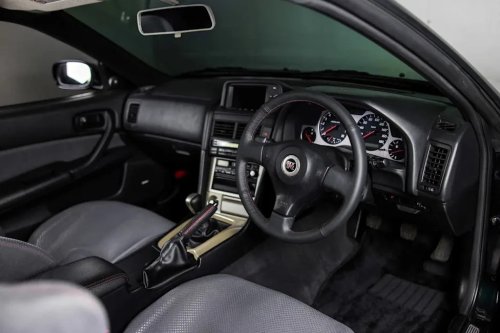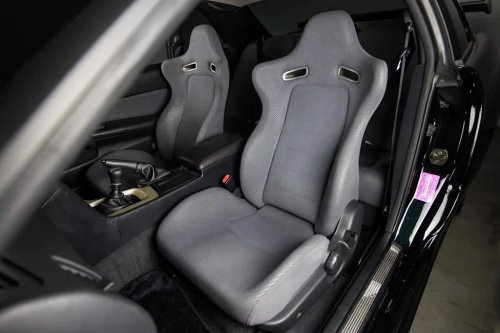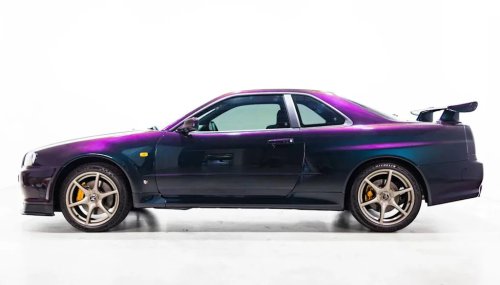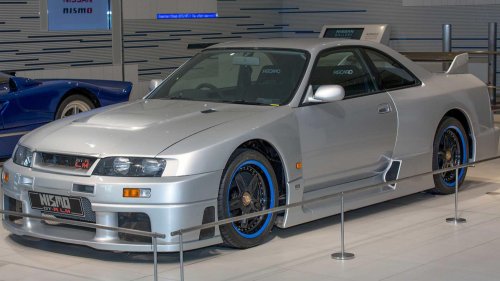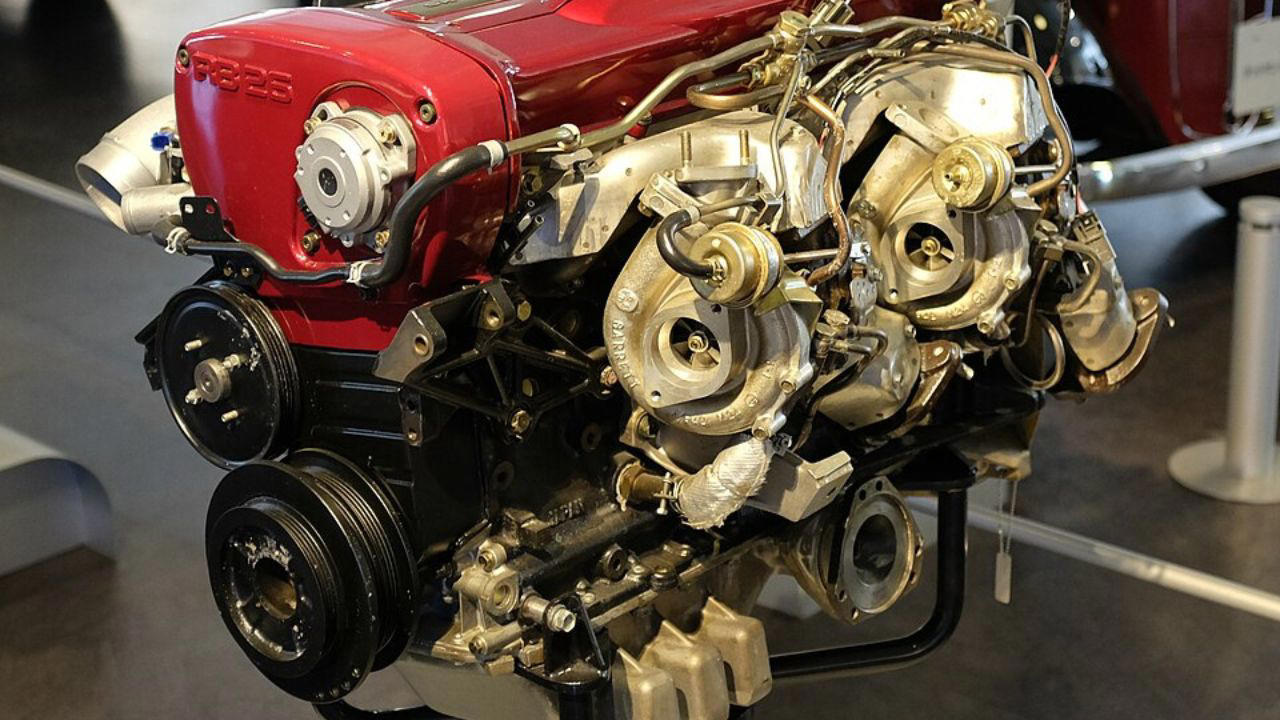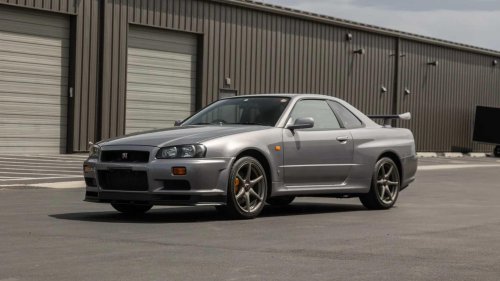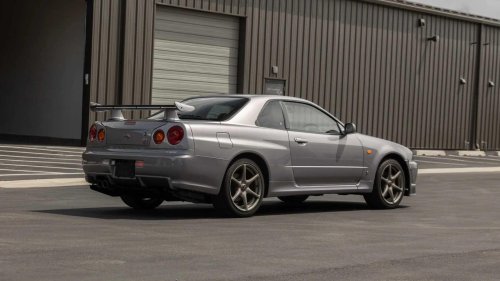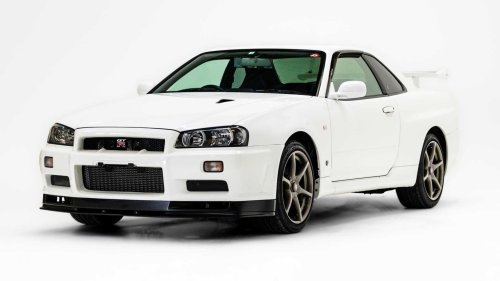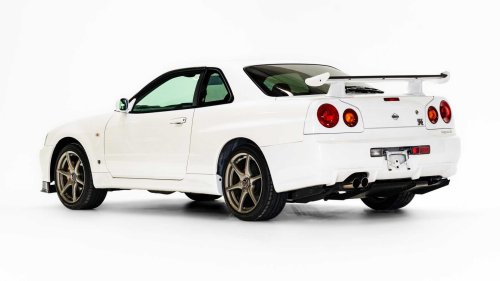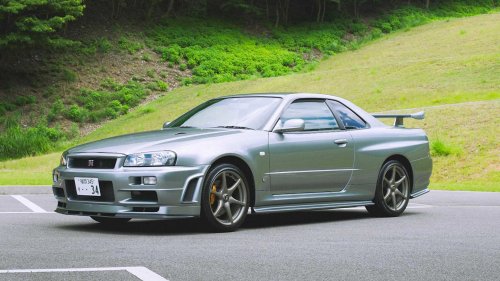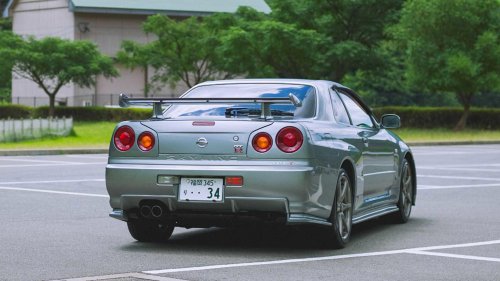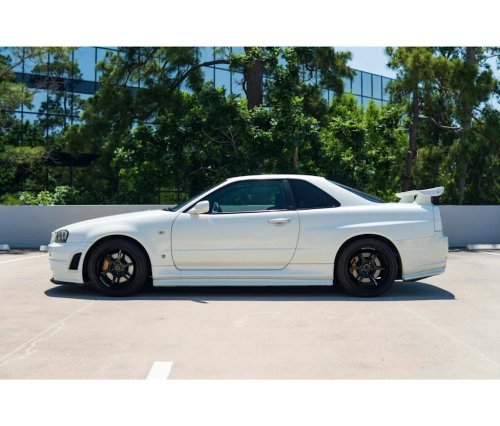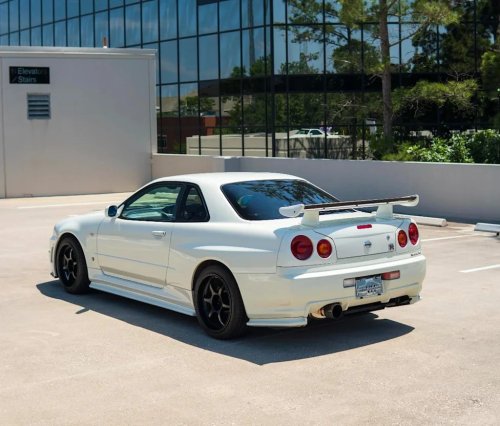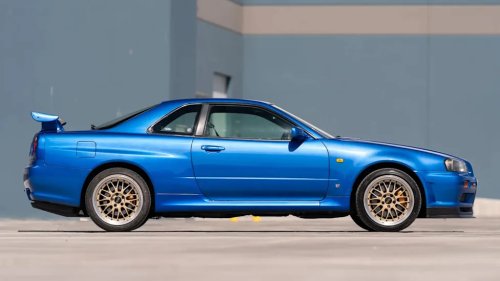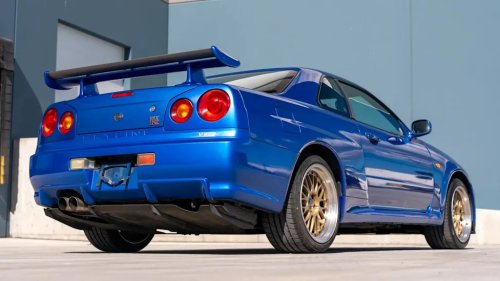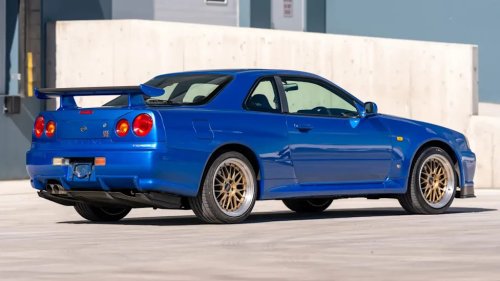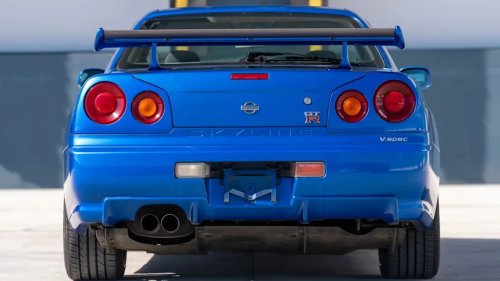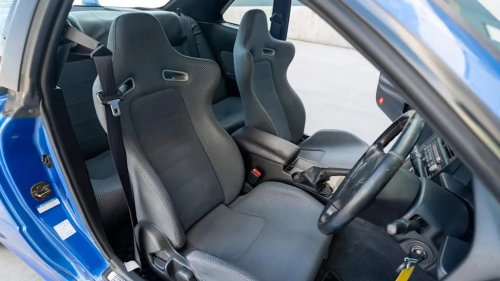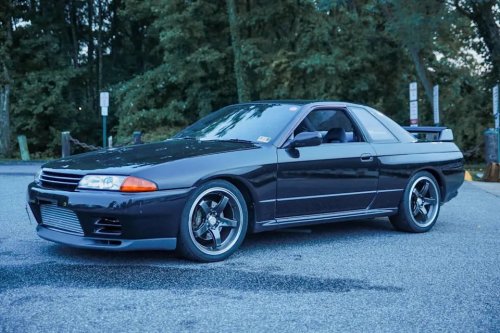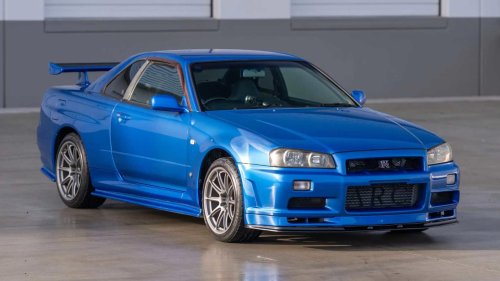
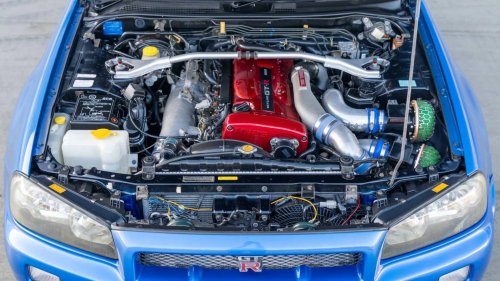
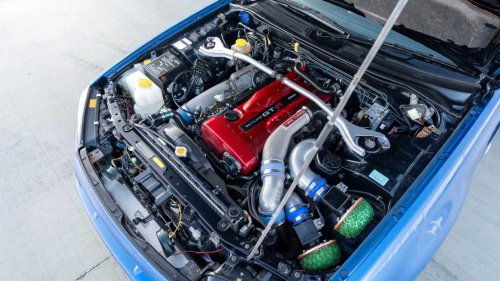
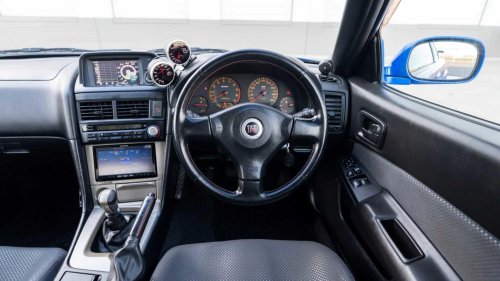
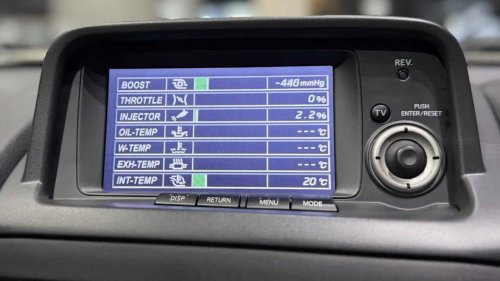
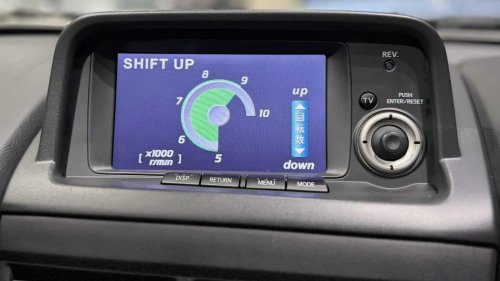
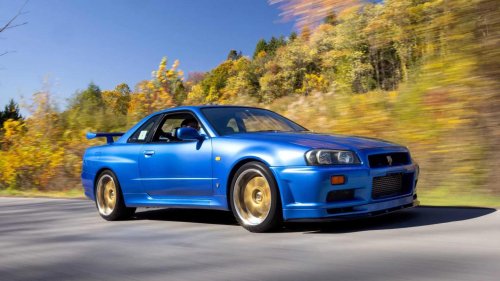
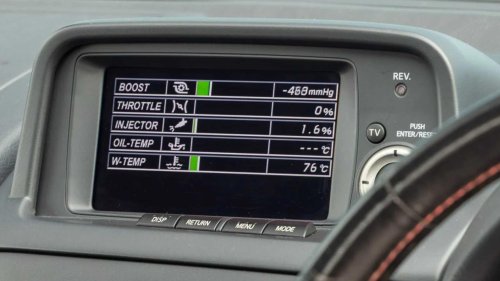
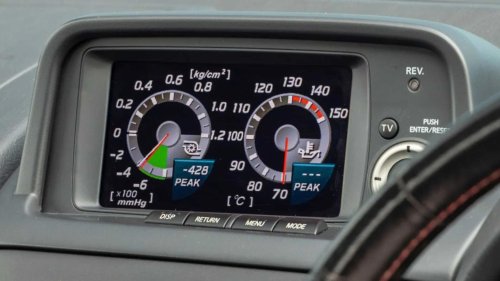
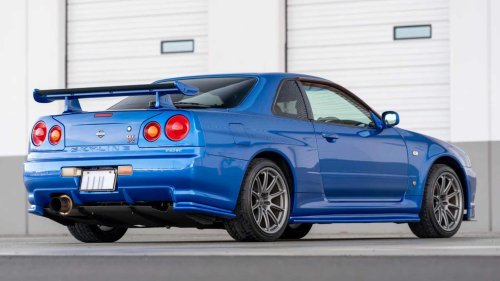
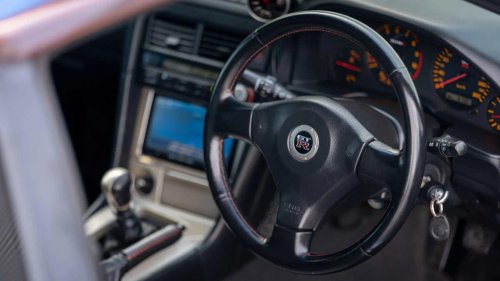
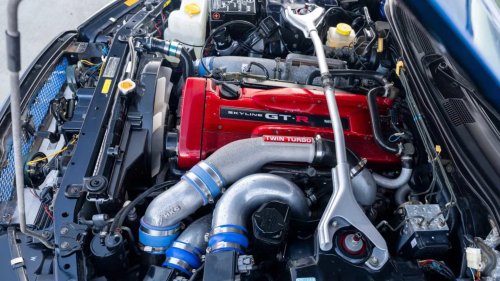
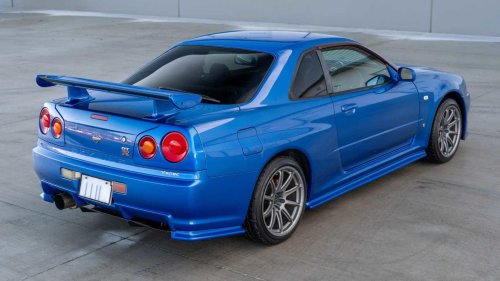


















The year 2026 marks a massive shift in American car culture as the Class of 2001 finally becomes legal for import. JDM legends like the Mitsubishi Evo VII and the DC5 Integra Type R are finally crossing the 25-year threshold.The undisputed king of this wave is the Nissan Skyline R34 GT-R. Most fans obsess over the RB26DETT twin-turbo engine and high-tech all-wheel drive system. But the car's most revolutionary feature was something else entirely — a crystal ball that predicted exactly how we would drive today. The RB26DETT: The Engine That Was Already Too Good to Be Legal Via: Bring A TrailerUnder the hood of the R34 Skyline GT-R is the iconic RB26DETT, a marvel of engineering. This 2.6-liter twin-turbocharged inline-six with a cast-iron block and an aluminum alloy cylinder head running a DOHC, four-valves-per-cylinder setup (24 valve). Where most performance engines used a single throttle body, the RB26DETT featured six individual throttle bodies, a configuration borrowed directly from race car engineering.Via: Bring A Trailer The factory-rated 276 horsepower figure was a product of Japan's informal gentlemen's agreement among automakers, but dyno tests consistently show the stock engine producing closer to 310–330 wheel horsepower, suggesting actual crank output well above 350 hp. Nissan deliberately understated the car to keep the peace. The engine had more power than it was allowed to admit.What made the RB26DETT genuinely legendary wasn't the stock output, but the overbuilt internals. Forged steel crankshafts, forged connecting rods, and high-strength pistons were components typically reserved for race engines, not street cars. The result was a platform that could reliably reach 500 to 600 horsepower with basic modifications, and well beyond 800 hp with serious work — all while remaining driveable on public roads.Via: Bring A Trailer For the R34 specifically, Nissan upgraded to ball-bearing turbochargers with ceramic exhaust turbine wheels reducing lag and improving throttle response compared to earlier generations. The engine was already a decade-long racing pedigree distilled into a production block.By every measure, the RB26DETT was the star of the show. It was exotic engineering dressed up as a road car. So when Nissan chose to pair this engine with something no one had ever seen before in an automobile, it sent a clear message. Inside the R34's Multi-Function Display: The Screen That Changed Everything Via: Bring A TrailerIn 2001, the average sports car interior was a sea of plastic and analog needles. Drivers relied on basic physical gauges to monitor their engine health, and trip computers rarely showed more than fuel range. The R34 GT-R shattered this simplicity by mounting a 5.8-inch liquid crystal display right in the driver's line of sight.Via: Bring A Trailer This Multi-Function Display, or MFD, was far more than a digital clock. It acted as a live telemetry suite, pulling raw data directly from the car's engine control unit. While a standard car might have a coolant temperature needle, the R34 showed boost pressure, oil temperature, and water temperature with digital precision.The system even tracked advanced metrics like injector duty cycles and intercooler efficiency. Having this level of detail in a production street car felt like science fiction at the turn of the millennium.Nissan also included pro-level customization tools. Drivers could set their own redline warnings for specific temperatures or pressures. If the exhaust gas temperature got too high, the screen would alert the driver before mechanical failure occurred.For those hitting the track, the MFD featured a built-in lap timer triggered by a button on the center console. Owners who opted for the Nismo upgrade package received even more data. This version increased the boost scale and added a lateral G-force meter to measure cornering intensity.Via: Bring A Trailer Perhaps the most forward-thinking feature was the serial port hidden under a flap. Using a physical cable, a driver could export their performance data to a laptop for analysis. In 2001, this level of data logging was unheard of for a vehicle you could buy at a local dealership. It turned every owner into a data scientist, allowing them to study their driving habits and engine performance with surgical accuracy. Gran Turismo, Godzilla, and the Blurring of Pixels and Reality Bring a Trailer A common legend among car enthusiasts claims that Polyphony Digital, the creators of Gran Turismo, designed the R34's digital interface. The truth is more specific. Polyphony was contracted by Nissan in 2007 to design the multifunction display for the R35 — a full generation later.Nissan chose the game studio precisely because of the intuitive menu logic behind Gran Turismo: they wanted the system easy to read at speed, applying the same logic that made video game interfaces legible to anyone.The R34's MFD was an entirely internal Nissan project. The screens even changed between production runs — early cars used a Sharp unit, while Series 2 cars built from late 2000 onward received a Toshiba replacement.Via: Bring A Trailer Even though Polyphony didn’t build the hardware, the two companies shared a deep cultural DNA. The R34 arrived just as racing simulators were becoming a global phenomenon. The interface of the MFD looked and felt exactly like the heads-up display in a video game, blurring the line between pixels and reality.For the PlayStation generation, this screen was the ultimate status symbol. It proved that a car could be more than just metal, rubber, and gasoline. It was a digital device that spoke the same language as the consoles in their living rooms.Via: Bring A Trailer They could see exactly how much stress the turbos were under or how heat soak was affecting the intercooler in real-time. This shifted the driver's role from a simple pilot to a systems manager.This data-heavy approach created a new kind of enthusiast who valued technical transparency. The GT-R wasn't just a machine to be tamed; it was a system to be monitored and optimized. This philosophy paved the way for the modern era of performance cars, where screens and software are just as important as the horsepower under the hood. It turned the act of driving into a high-tech feedback loop that rewarded precision over raw aggression. Why 2026 Is the Year Every R34 GT-R Finally Becomes Legal in America Via: Bring A Trailer The arrival of 2026 is a landmark moment for American car collectors. Under the 25-year import rule, vehicles become legal for import based on their exact month of manufacture. This means the final, most refined versions of the R34 built in 2001 are finally crossing the threshold.This specific year is considered the holy grail for enthusiasts. It includes the rare M-Spec and late-model V-Spec II variants that represent the pinnacle of the chassis, These cars are no longer just used imports; they are blue-chip assets with prices often soaring toward $241,843 or more at auction.Base R34 GT-Rs are valued around $152,883 on average on Classic.com. While the rarer M-Spec Nür & V-Spec Nür are valued at an average of $442,000 today.When you compare the R34 to its 2001 rivals, the technological gap is staggering. The Mitsubishi Lancer Evolution VII was a mechanical masterpiece, focusing on its new Active Center Differential. It was built for gravel and grit, prioritizing raw grip over digital feedback.Via: Bring A Trailer Similarly, the DC5 Honda Integra Type R was a celebration of analog purity. Its K20A engine was a high-revving marvel, but the interior was stripped down to save weight.The Skyline was doing something entirely different by looking toward the future. The Multi-Function Display makes the R34 the forgotten ancestor of the modern digital cockpit. You can see its DNA in every Audi Virtual Cockpit or Porsche Track Precision app on the market today.Modern supercars now use high-resolution screens to show tire temperature and aero settings. Nissan was already doing this with 2.6 liters of displacement and a small LCD decades ago. It proved that a performance car could be defined by its data as much as its horsepower.As these 2001 models hit American shores, they serve as a bridge between two eras. They possess the mechanical soul of the nineties but the digital brain of the future. Today, collectors are looking to buy the blueprint for the ultimate modern driving experience. The MFD's Legacy: Every Modern Supercar Screen Owes This Little LCD Via: Bring A Trailer Decades after its debut, the R34’s digital legacy has aged surprisingly well. While a 5.8-inch screen with low resolution might seem dated in the era of giant tablets, its logic remains superior. Many modern infotainment systems bury important performance data under layers of complicated touch menus.In contrast, the MFD was designed for a driver doing 150 mph. The information is clear, immediate, and focused entirely on the health of the machine. It offers a level of utility that modern cars often sacrifice for the sake of sleek aesthetics and smartphone integration.This functional design has turned the MFD into a high-value item in the restoration world. Because the screens can dim or fail over time, original and functioning units are now treated like precious wear items. Collectors spend thousands of dollars to keep these early computers running perfectly.Via: Bring A Trailer Ultimately, the twin-turbo RB26 engine gave this car its incredible speed. Officially rated at 276 hp, it was a car that was faster than it was legally allowed to say. The sophisticated all-wheel drive system gave it the ability to conquer any corner. But the Multi-Function Display is what gave the R34 its unique identity as a high-tech icon.As the final 2001 models finally become legal in the United States, we are seeing the return of a pioneer. We aren't just importing a fast JDM legend or a movie car. We are welcoming the origin story of the data-driven enthusiast experience.The R34 taught us that knowing exactly what your car is doing is just as exciting as how fast it goes. It turned every drive into a technical mission, and that philosophy continues to define every great sports car built today.Sources: Nissan, Bring a Trailer, Classic,