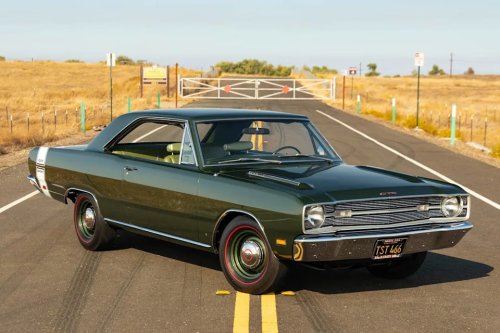
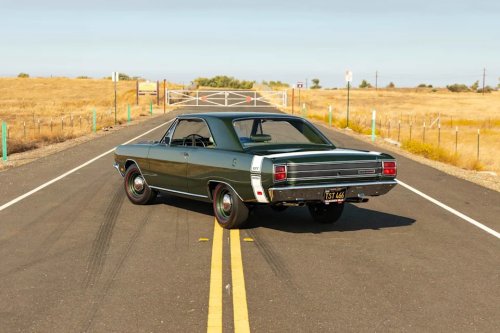
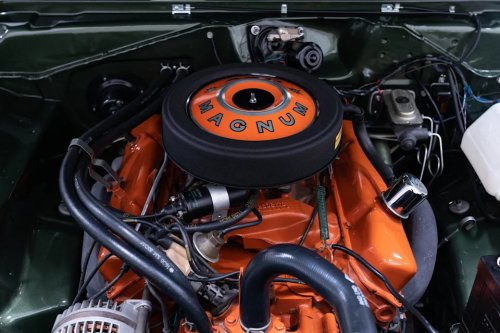
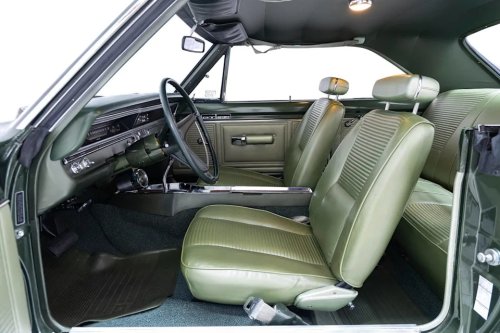
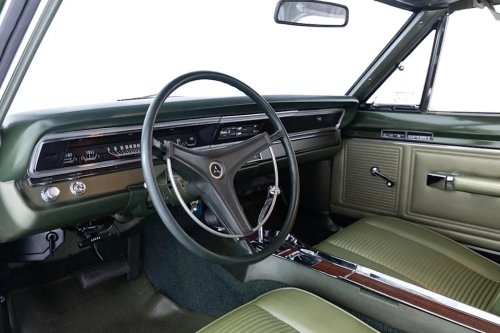
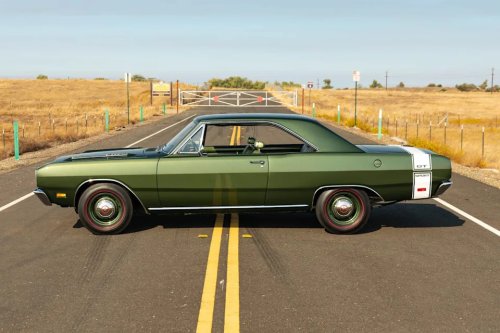
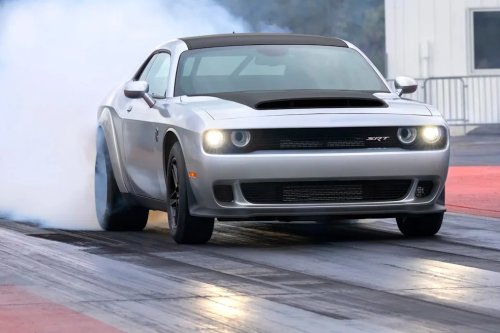
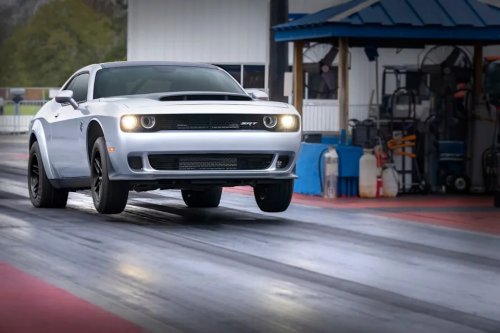
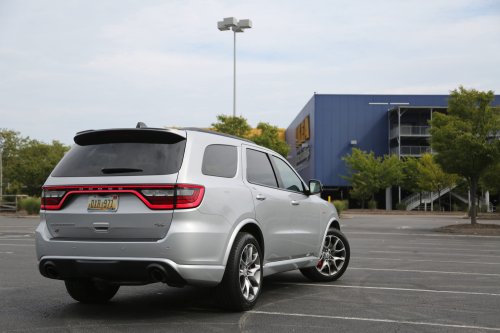
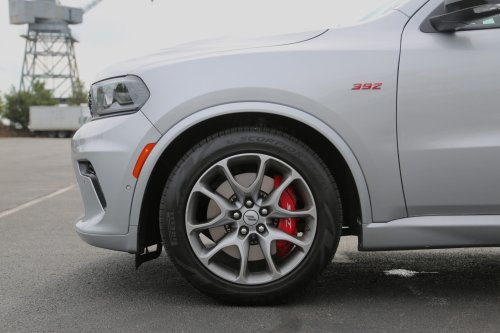
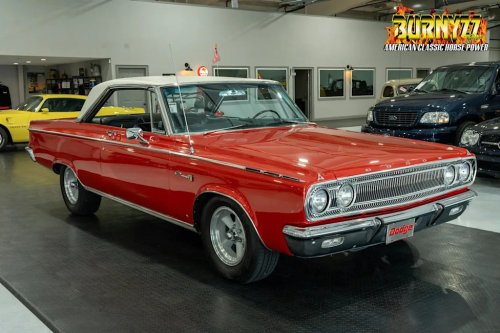
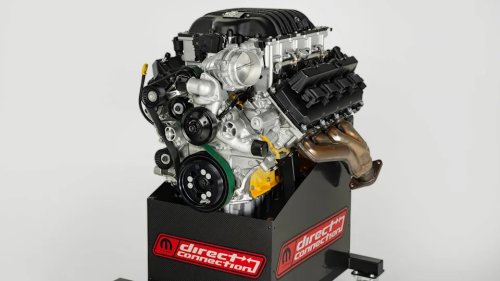
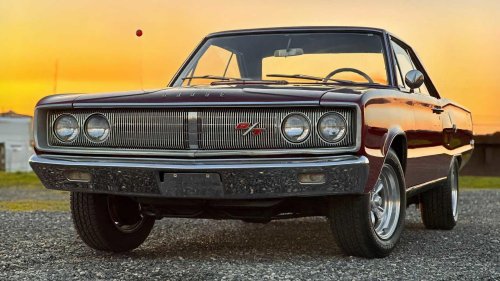
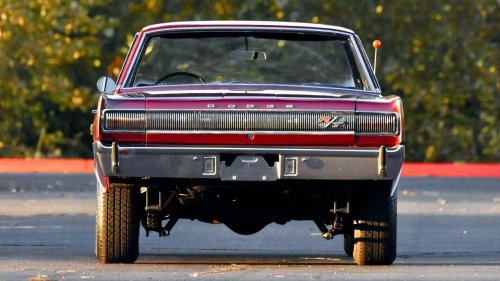
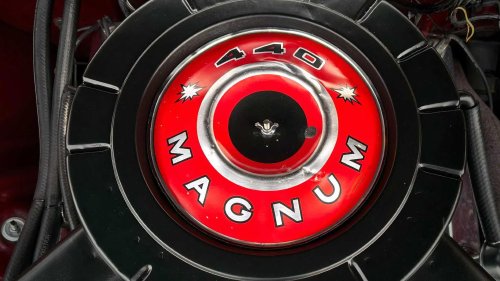
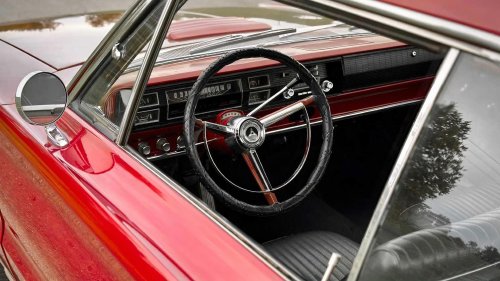
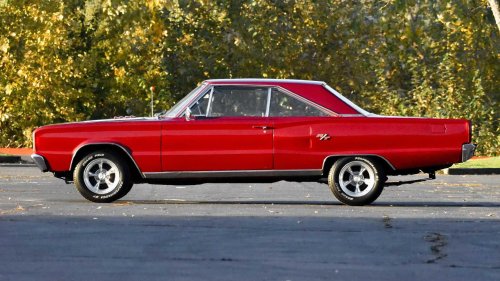
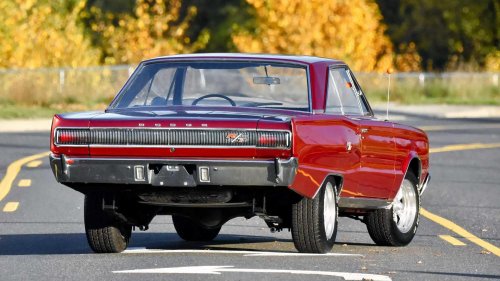
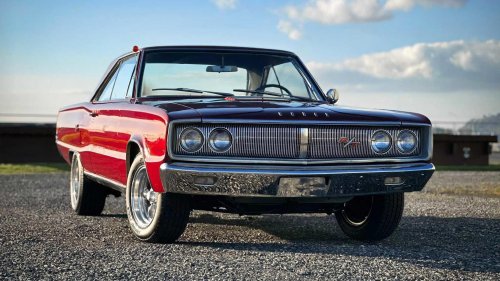
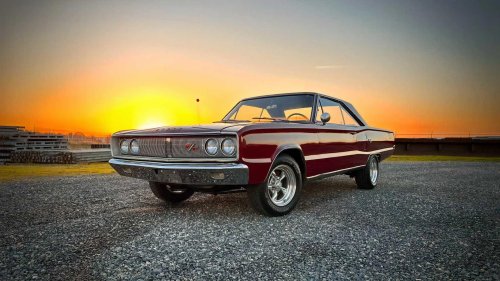
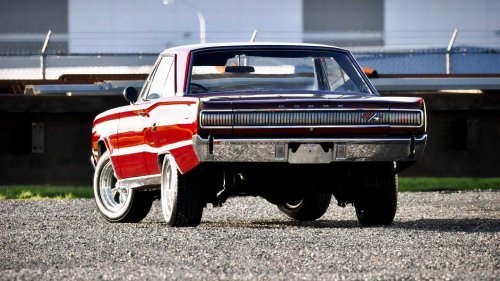
Mention the Dodge R/T badge today, and most people immediately picture a Charger or Challenger, engines shaking, exhaust barking, and rear tires fighting for grip. The badge has become shorthand for straight-line muscle and all-around, factory-backed goodness.However, that image came later. When Dodge first rolled out an R/T-badged car, the thinking was far more restrained. The first car to wear those two letters focused less on straight-line theater and more on being genuinely fast, comfortable, and composed on real roads. It laid down the blueprint quietly, long before R/T became a cultural shortcut for big power. The '67 Dodge Coronet R/T Quietly Debuted Dodge’s New Performance Identity Bring A TrailerWhen Dodge introduced the R/T badge for 1967, it didn’t arrive on a flashy new model or a dramatic redesign. Instead, it appeared on the familiar Coronet, a mid-size platform that already sat comfortably between Dodge’s compact and full-size cars. That decision alone says a lot about what the company had in mind for Road/Track.Keep in mind that the Coronet R/T arrived before the Charger R/T existed, making it the first production Dodge to officially wear the R/T name. At that point, Dodge was still figuring out how to define its performance image in a rapidly escalating muscle car market. Rather than chase extremes right away, the company used the Coronet as a testbed for a more rounded idea of performance.Visually, the car didn’t shout about what it was. The styling stayed clean and conservative, with subtle badging doing most of the talking. That restraint helped the R/T badge feel credible rather than gimmicky. Dodge was signaling that Road/Track meant something specific, and it was confident enough to let the hardware back it up without relying on the aesthetics lending out a helping hand. The R/T Badge Was Meant To Be About Balance 'Road/Track' was meant to be so much more than a vague slogan. Dodge engineers intended it to describe a car that could handle sustained high speeds, corner predictably, and remain comfortable enough for daily use. That philosophy shaped the Coronet R/T in ways that went beyond simply dropping a big engine into an existing chassis.Suspension tuning played a central role. The Coronet R/T received heavier-duty components designed to control body motion and improve stability at speed. The goal wasn’t to create a stiff, unforgiving ride, but to deliver confidence when the car was pushed harder than a standard family sedan ever would be. On highways and sweeping roads, that paid dividends. The Quick Everyday Car Bring A TrailerBraking was treated with the same seriousness. Front disc brakes were available, which was still a meaningful upgrade in the late 1960s. The goal here was consistency under repeated use. Dodge expected R/T buyers to drive these cars hard and often, so the stopping power needed to hold up. The Coronet R/T's aim was to offer a version of speed that fit naturally into regular use, which was exactly what Dodge wanted Road/Track to represent. Big-Block Power Defined The Coronet R/T From Day One Bring A TrailerOf course, balance alone wouldn’t have earned the R/T badge any respect without serious power. Dodge made sure the Coronet R/T delivered where it counted. Standard power came from the 440 cubic-inch Magnum V8, rated at 375 horsepower. In 1967, that put the car firmly in the upper tier of factory performance offerings. Easy Power Bring A TrailerFor buyers who wanted no compromise, Dodge also offered the 426 Hemi. That option elevated the Coronet R/T into an entirely different category. Hemi-equipped examples were built in very limited numbers, and period accounts make it clear that these cars were brutally fast for their time.The 426 Hemi could do the 0-60 sprint in 6.1 seconds, with the quarter-mile run coming up in 14.5 seconds. Convertibles with the Hemi sit among the rarest R/T-badged Dodges ever produced, with Hemmings' reporting only 628 examples being built in 1967.Transmission choices reinforced the dual-purpose mission. Buyers could choose a four-speed manual for engagement or Dodge’s TorqueFlite automatic. Either option worked with the car’s overall character, making sure that performance was on offer without forcing owners into a single use case. How Much The Coronet R/T Is Worth Today Bring A TrailerFast-forward to the present, and the market has developed strong opinions on this quiet trailblazer. Cars with the more common 440 V8 are arguably the most approachable. A good 440-powered Coronet R/T today will run around $20,000 on average (as per Hemmings). That makes them one of the more attainable classic muscle cars with a real performance pedigree.The Hemi-equipped Coronet R/T sits in a completely different value bracket. Hagerty’s valuation tools peg a well-sorted Hemi version significantly higher, with a 'Concours Condition' example in convertible form being valued at a crazy $289,000. That gap shows just how much collectors prize the rarest and most potent versions of Dodge’s first R/T.For perspective, that Hemi price range places these cars among the top tier of classic Mopars, especially considering how few survive in original form. Whether you’re looking at a daily-driver 440 car or a concours-ready Hemi convertible, there’s value and history baked into both. Why The Coronet R/T Didn’t Become The R/T Poster Car Bring A TrailerGiven its credentials, it’s fair to wonder why the Coronet R/T never became the face of the R/T badge. A big part of the answer comes down to styling and timing. The Coronet’s design was clean and purposeful, but it lacked the drama that would soon define Dodge’s muscle car image.Just a year later, the Charger R/T arrived with a long hood, those iconic body lines, and an unmistakable presence. That car looked fast standing still, and popular culture responded immediately. Compared to the Charger, the Coronet R/T felt understated, even though its performance credentials were just as serious. All In The Eye Of The Beholder Bring A TrailerUnderstandably, marketing priorities shifted quickly. Dodge leaned heavily into the Charger as its performance flagship, and the Coronet R/T was no longer front and center in advertising or media coverage. As muscle car culture became more about image and spectacle, the Coronet’s balanced approach worked against it.There’s also the matter of reputation at the drag strip. The Coronet R/T was quick, but its road-focused tuning meant it didn’t dominate quarter-mile headlines in the same way some rivals did. That further limited its visibility among enthusiasts who measured greatness primarily in elapsed times. How The ’67 Coronet R/T Set The Template For Everything That Followed Bring A TrailerDespite being overshadowed, the Coronet R/T quietly accomplished something more important than becoming a poster car. It defined what the R/T badge was supposed to mean. The idea that a performance car could be fast, comfortable, and capable across different driving scenarios started here.That foundation carried forward as Dodge’s lineup evolved. Later R/T models became louder, more aggressive, and more visually dramatic, but the underlying concept remained. Even as horsepower climbed and styling became crazier, the Road/Track idea still implied a complete performance package. In The Shadow Of Legends To Follow Bring A TrailerThe Coronet R/T also helped separate Dodge’s performance offerings from its standard lineup in a clear, repeatable way. The badge became shorthand for a specific level of engineering intent, something buyers could recognize instantly. That consistency is part of why R/T survived as a performance designation long after many similar badges disappeared.Today, the 1967 Coronet R/T is increasingly appreciated for its historical importance rather than shock value. It represents the moment Dodge formalized its performance identity and did so with confidence rather than excess. In hindsight, that was probably a good call. That quiet debut makes it one of the most meaningful R/T cars ever built.Sources: Hagerty, HotRod, Curbside Classic, Dodge Garage, Hemmings.



















 +3 others