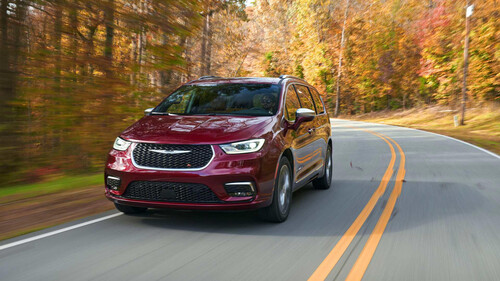
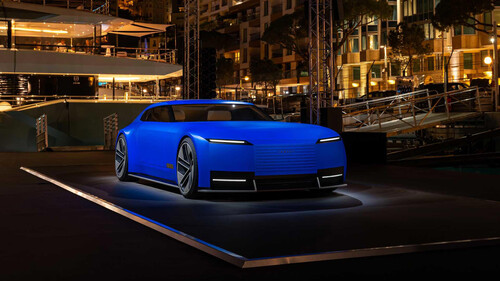
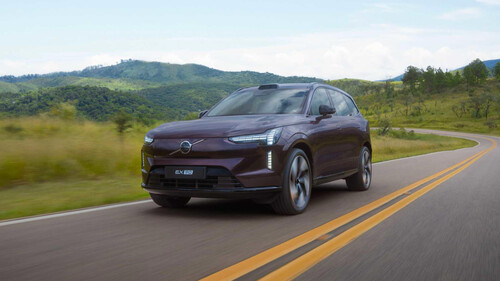
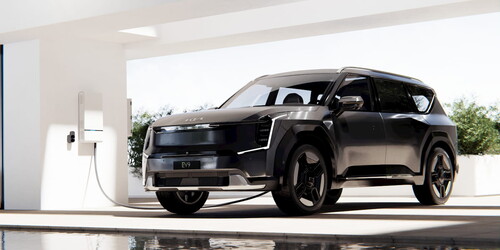
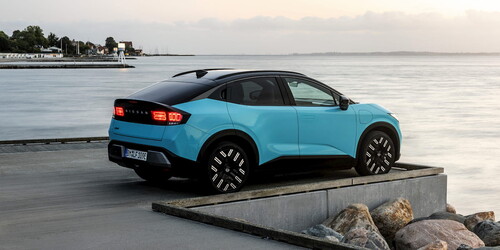
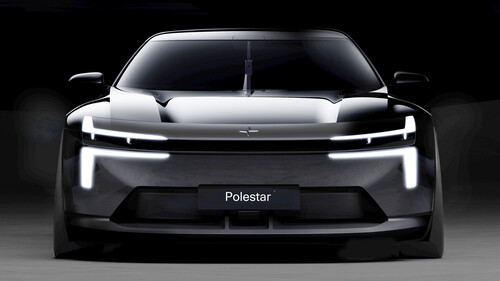
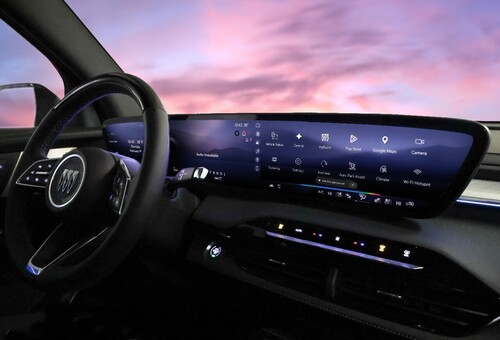
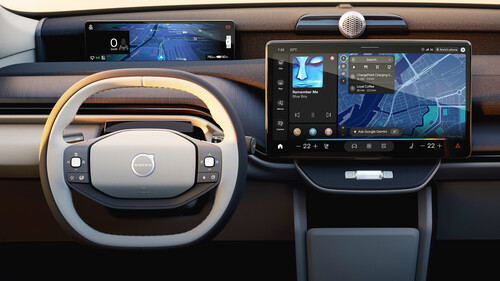
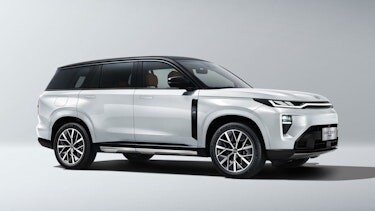
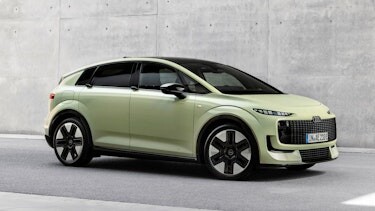
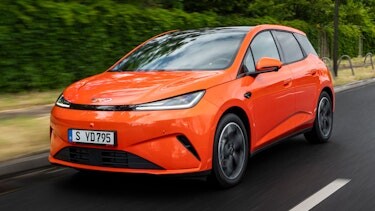
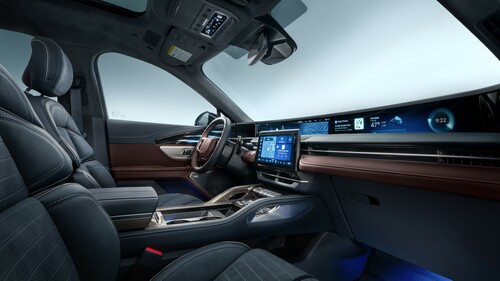
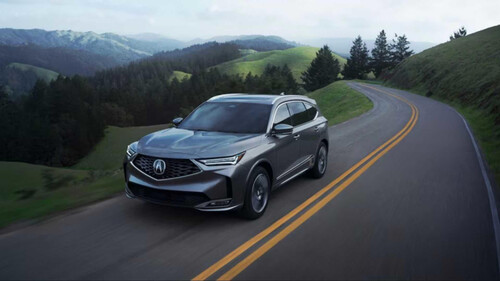
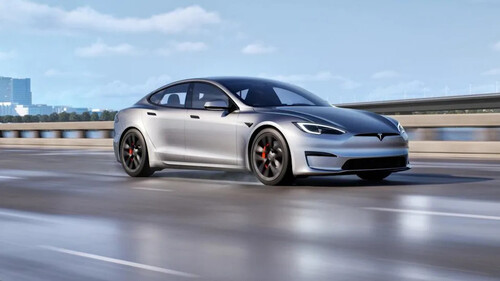
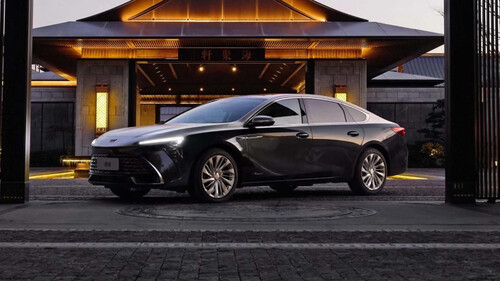
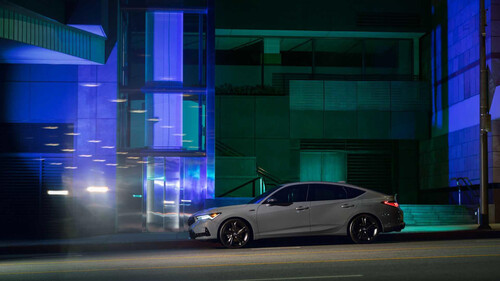
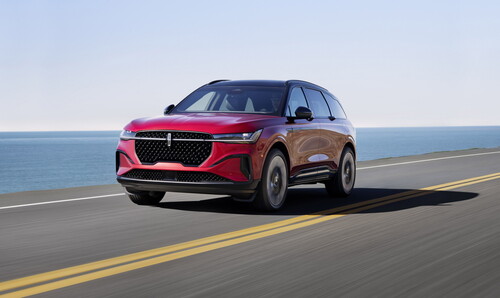
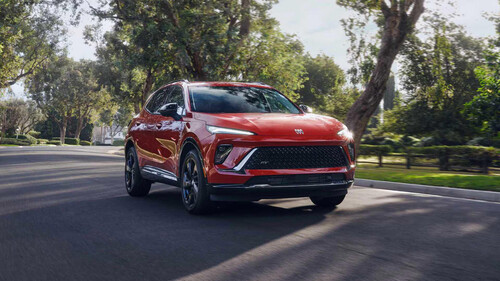
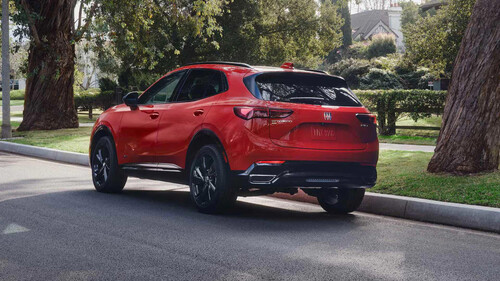
Unlike many other advanced Western economies, Chinese car manufacturers have been unable to crack open the US market and put vehicles like the BYD Seal on American roads. But despite the absence of Chinese dealer networks and bold marketing campaigns, the US already features a surprisingly large number of vehicles with strong connections to China. These include models wearing Buick, Lincoln, Volvo, and Polestar badges, and together, they reveal that China's role in the US auto market has been much larger than many buyers realize. The Chinese Car Story In America Arrived Almost Invisibly BuickThrough the decades, Japanese and Korean cars have made a sizable impression on US consumers, even though those OEMs had to fight for their positioning and endure a long battle for credibility. Some thought that the new wave of Chinese cars would eventually follow, but they're mostly locked out of the American retail market today, due to tariffs and other regulations. But while Chinese-built vehicles haven't entered the US through the front door, you could argue they've done so in disguise through the back. As one example, Lincoln Nautilus buyers may not have realized they were effectively getting an import from a Chinese joint venture plant. And those buying a Polestar 2 were far more likely to see a Scandinavian-style EV with Volvo roots than a vehicle whose origin story is rooted in China.Manufacturers like Lincoln and Polestar, as well as Buick and Volvo, were not selling these vehicles based on any Chinese identity but were leaning heavily on their brand trust, design, technology, and pricing. And most buyers, truth be told, didn't care where those products were assembled. In fact, many of them would have been blissfully unaware of the Chinese angle as the sticker price and the badge might have been the primary motivators. And this means that many Americans have already bought Chinese-built or influenced vehicles because, on their face, the product, price or badge made perfect sense. The Total Gets Big Once You Add Everything Up Polestar If you combine recent sales of the Buick Envision, Lincoln Nautilus, Polestar 2, and Volvo EX30 and look at 2024 to 2025 US sales, those four nameplates account for around 178,000 vehicles. The Buick Envision and Lincoln Nautilus do most of the heavy lifting, with GM reporting 21,860 Envision sales in the first half of 2024. Ford sold 17,504 Nautilus vehicles in the first half of 2024.Polestar initially sold 3,301 versions of the Polestar 2 in the first half of 2024 as US availability faded due to tariff pressures. And Volvo initially sold a small number of its EX30 vehicles in 2024 as a China-built global model. However, Volvo moved quickly to Belgian production for US-bound cars due to Chinese EV tariffs, and that pushed sales of the EX30 up to 5,409 in 2025. Buick Proved Americans Would Accept A China-Built Crossover Buick's Envision fills a practical gap in the company's SUV lineup, sitting below the larger Enclave and above the smaller Encore family. It's a compact premium crossover and became a critical part of Buick's marketing plan as that part of the market was expanding so rapidly. Many buyers did not realize that the Envision was Chinese in terms of its production market origin and business logic, and the SUV had already been quite successful domestically in China in 2014, through SAIC-GM, a GM-Chinese joint venture.Buick sold almost 147,000 of these vehicles in China in 2015 before it started putting them on car carriers for their trip to US ports, making the Envision the first Chinese-built GM vehicle sold in the US market. And if you look more closely at the sales story for the Envision since it arrived on US shores, you can see that the assembly country issue doesn't seem to have made much of a difference.Annual sales of the vehicle have managed to exceed 40,000 units for the last several years, even after tariff pressures and prices started to become a major industry concern. But GM is nevertheless reacting to growing trade pressures and has said that it will move future Envision production to the USA, at its Fairfax assembly plant in Kansas. Lincoln And Polestar Made China Part Of The Premium Car Supply Chain Lincoln The Lincoln Nautilus is a premium midsize SUV featuring one of the most dramatic cabins in the company's modern history. And the second-generation Nautilus also sailed across the Pacific for the North American market, showing that China was not just a place for cost-sensitive entry models. Ford was able to import well over 30,000 examples in both 2024 and 2025, and as such, the Nautilus was one of the brand's most important vehicles.Polestar tells the same story from the EV side as it started to build its Polestar 2 in Luqiao, China, with North America on the list of launch market destinations. Volvo already had a strong association with Chinese manufacturer Geely, and this premium electric fastback had strong Scandinavian design language. While the P2 was never a huge US seller by some standards, its sales did get up to almost 13,000 in 2024.However, Polestar began to concentrate on other models that were not dependent on the same China-built route, and this was reflected in a sharp drop for 2025 U.S. Polestar 2 sales. But there's no doubt that for a while, the Polestar 2 was able to show that Chinese-built premium EVs could appeal to some U.S. buyers. The EX30 Shows Why A Quiet Pipeline May Not Stay Quiet Volvo The Volvo EX30 could have been one of the clearest examples of Chinese manufacturing advantage reaching American buyers. For the US market, the China-built EX30 Twin Motor Performance was exactly the type of product that EV buyers seemed to be looking for. It was effectively priced, compact, quick, and premium, and for Volvo, represented a key step towards its broader electrification future.However, Volvo announced that it would shift its EX30 production to Belgium in 2025 as part of a proclaimed push to build its vehicles closer to their markets. This was undoubtedly partly to do with tariff pressures that were making the Chinese build route increasingly difficult. But in any case, Volvo was only able to sell 5,409 examples of its EX30 in 2025, which was hardly the type of mass-market breakthrough it was hoping for.Volvo eventually announced that it would end sales of the EX30 in the US altogether after the 2026 model year, even though the model would continue in other markets. Even though Chinese-built cars have already sold in meaningful numbers across the United States, the conditions that allowed that to happen are certainly tightening. Those challenges are forcing manufacturers to make significant decisions, such as Buick moving the Envision toward U.S. production and the Lincoln Nautilus becoming increasingly exposed to trade pressures.The Polestar 2 has quickly faded from the U.S. market scene, and the future of the EX30 in the country has been dramatically cut short. And this means that China's role in the American car market is looking more politically fragile than it did a few years ago, even though it's already had a much bigger say across the board than many people realize.In summary, the real story is not that Chinese-branded cars have conquered America, as they clearly have not. But it’s still interesting to see that Chinese-built and Chinese-linked vehicles have managed to permeate the US market through trusted Western brands, doing so in quite large numbers as well. Starting with the Envision, and with additional help from the Nautilus, Polestar 2 and the EX30, this shows just how deeply Chinese-linked vehicles have been embedded in premium and electric vehicle supply chains over recent years.While most buyers care more about the badge on the back than the origin factory, that factory location clearly matters most for the automaker in the current era. And this means that fewer China-built or influenced vehicles will find their way into US showrooms now, simply because the politics and economics surrounding them are just too difficult to ignore.Sources: Volvo, Buick, Ford, Polestar