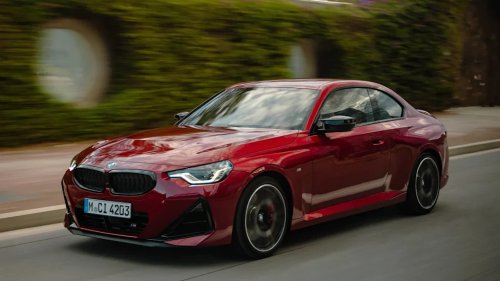
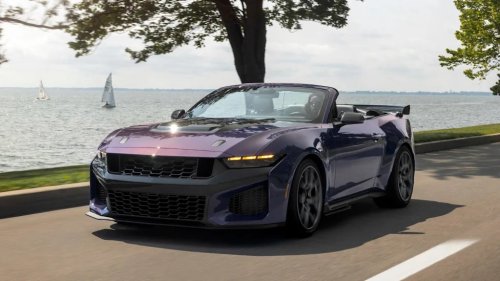
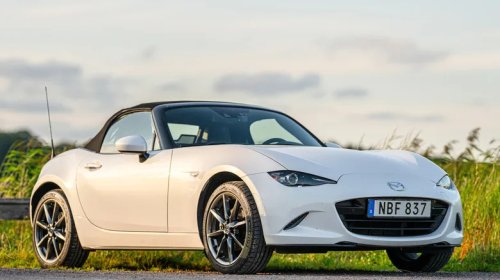
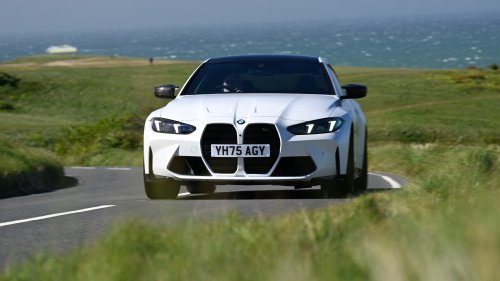
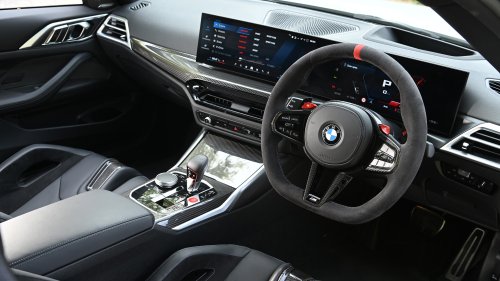
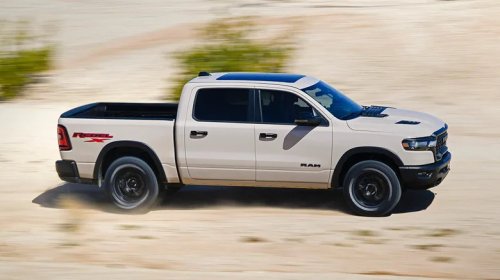
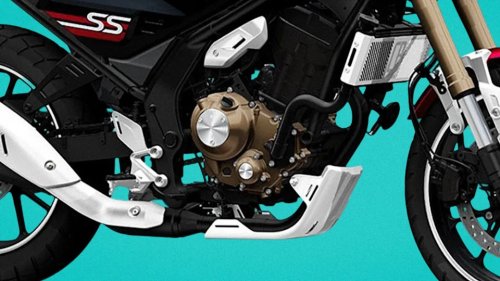
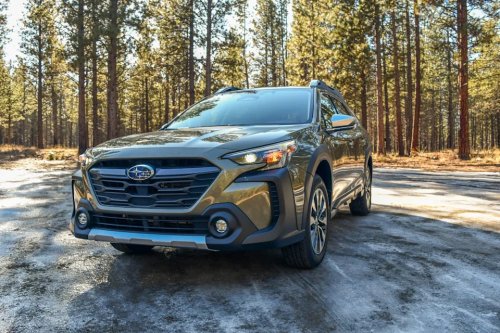
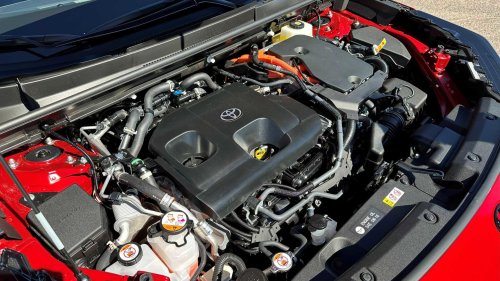
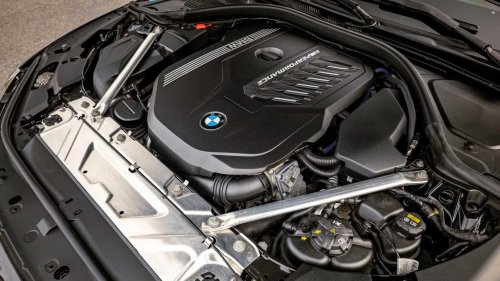
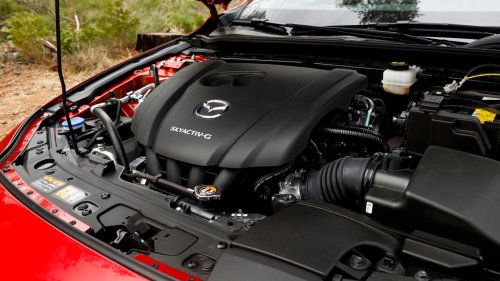
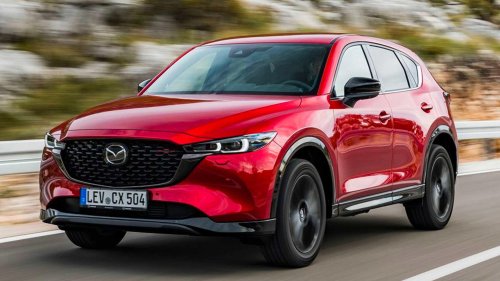
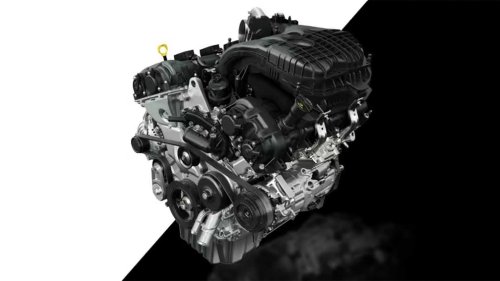
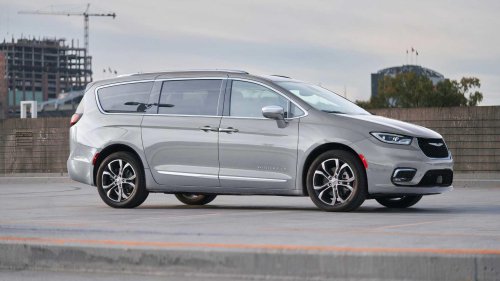
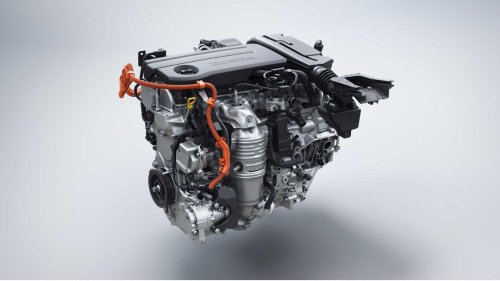
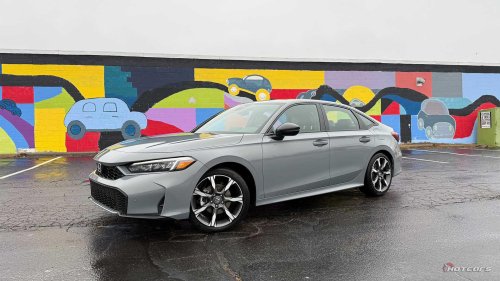
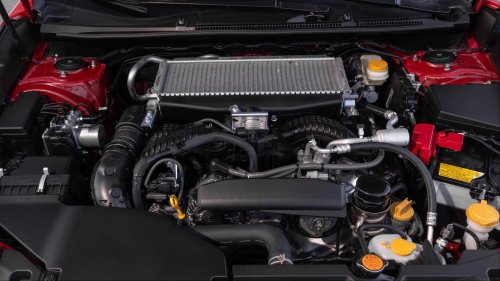
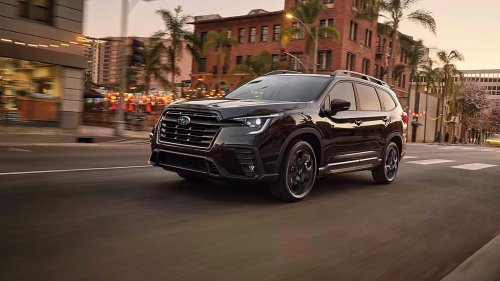
Modern engines get blamed for everything now. Turbocharger? Must be fragile. Hybrid? Must cost a house to fix. Direct injection? Better start a support group. The truth looks less dramatic, though – a lot of today’s “scary” engines live in vehicles that stack up well in owner surveys, long-mileage studies, and dependability rankings. We've rounded up a batch of six of the most reliable engines that, somehow, have earned poor reputations. They command your respect.For this list, each entry uses the J.D. Power Quality & Reliability score for a current or recent vehicle strongly associated with that engine, since public reliability data usually tracks complete vehicles rather than standalone engines. That means the score does not rate the engine alone. It reflects owner-reported problems across the whole vehicle, including the powertrain, electronics, interior systems, and design issues. To keep the picks fair, the list also considers how widely each engine has been used, its known recall history, common owner complaints, long-term mileage data where available, and whether the engine appears in models with a strong reputation for durability. Toyota A25A-FXS 2.5L Hybrid Reliability Rating: 80/100 Craig Cole/ValnetToyota’s A25A-FXS is not an enthusiast engine at first. It sounds like something an accountant would name after a spreadsheet crash. Yet this 2.5-liter hybrid four-cylinder deserves more respect because it does the hard work quietly, often in cars and SUVs that rack up miles like rideshare drivers with a mortgage. Toyota designed its Dynamic Force 2.5-liter family around high efficiency, with the hybrid version reaching 41 percent thermal efficiency, a number that still looks nerdy and impressive at the same time.Craig Cole/ValnetThe trick is that this engine rarely works alone. In models like the Camry Hybrid, RAV4 Hybrid, Highlander Hybrid, and Avalon Hybrid, electric motors handle a lot of low-speed grunt while the gas engine runs in its happy zone. That reduces the abuse drivers often give small engines in stop-and-go traffic.In iSeeCars’ 2025 longevity study, the Toyota Highlander Hybrid had a 31.0 percent chance of reaching 250,000 miles, while the Camry Hybrid and Avalon Hybrid also made the top 25 overall. Toyota also covers hybrid batteries for 10 years or 150,000 miles, which says the company expects these systems to do more than survive the warranty. BMW B58 3.0L Turbo Reliability Rating: 81/100 Bring A Trailer The BMW B58 might be the engine that made internet commenters put down their pitchforks, at least for a minute. It is still a modern turbo BMW engine, so nobody should treat it like a lawn mower from 1978. But the B58 has earned a reputation that feels odd for a brand many people still associate with coolant leaks and wallet pain. BMW built it with a closed-deck aluminum block, direct injection, a twin-scroll turbocharger, variable valve timing, variable valve lift, and an integrated water-to-air intercooler. That sounds complex.Ironically, the biggest vote of confidence came from... Toyota. The GR Supra’s 3.0-liter turbo inline-six makes 382 horsepower and 368 lb-ft of torque, and Toyota does not usually slap its sports-car badge on an engine it thinks will fold like a lawn chair.Bring a Trailer Mazda Skyactiv-G 2.5L Naturally Aspirated Reliability Rating: 82/100 MazdaMazda’s naturally aspirated Skyactiv-G 2.5 is reliable in a very Mazda way. It wins by feeling sharp, simple, and just clever enough. In a market full of tiny turbo engines trying to bench-press SUVs, Mazda kept this four-cylinder mostly old-school where it counts. No turbocharger, no intercooler plumbing, no boost control drama. It still uses modern direct injection and a high 13.0:1 compression ratio, but the basic recipe is pretty straightforward.The best case for this engine comes from the CX-5, where it has carried a lot of Mazda’s reputation. iSeeCars gives the CX-5 a 7.9 out of 10 reliability score, ranks it third among 66 crossover SUVs, and says the 2017-2025 generation scores 8.7 for reliability. It also estimates the CX-5 has a 22.9 percent chance of reaching at least 200,000 miles.MazdaOf course, owners still need oil changes, spark plugs, and carbon-aware maintenance because direct injection loves intake valves the way toddlers love sticky candy. Still, the naturally aspirated 2.5 proves that a modern engine can feel lively without turning every commute into a turbo heat-management seminar. Stellantis 3.6L Pentastar V6 Reliability Rating: 83/100 Dodge The 3.6-liter Pentastar V6 has one major reliability advantage people overlook – practice. Stellantis and FCA built it in huge numbers, put it in everything from minivans to Wranglers to Chargers to Ram trucks, and kept refining it for more than a decade. By 2019, FCA celebrated the 10-millionth Pentastar V6, and the engine had already earned six Wards 10 Best Engines awards. That kind of scale does not guarantee perfection, but it gives engineers a giant feedback loop. Basically, the Pentastar went to public school, got bullied by fleet duty, and came out tougher.This engine also gets blamed for vehicles that have other weak spots. A Pacifica can annoy an owner with electronics or recall work while the V6 keeps humming like it has no idea what the dashboard is mad about. That is why the better way to read the Pentastar is as a proven workhorse, not as a magic shield against every Stellantis quirk.ChryslerJ.D. Power gives the 2025 Dodge Durango, a long-running Pentastar application in V6 trims, an 83/100 quality and reliability score. Its early cylinder-head issues still haunt forum searches, but later versions turned into the V6 equivalent of cargo shorts – not glamorous, always useful. Honda 1.5L Turbo Reliability Rating: 83/100 HondaHonda’s 1.5-liter turbo four-cylinder might be the most misunderstood engine here because it earned its suspicion honestly. Early versions in some Civics and CR-Vs ran into oil dilution and cold-weather drivability concerns, and Honda issued warranty extensions and software updates for certain 2017-2018 CR-V models. Pretending it never happened would be like pretending a Civic owner has never said “VTEC” at a gas station.But the story did not freeze in 2018. Honda kept using and updating the 1.5 turbo across high-volume models, including the CR-V, where it makes 190 hp and 179 lb-ft of torque in 2024 specs. The Civic’s 1.5T made 180 horsepower in higher 2024 trims before Honda shifted the 2025 Civic lineup toward hybrid power.Seyth MiersmaThe model-level data gives the engine a better case than forum panic suggests. J.D. Power lists the 2025 CR-V with an 83/100 quality and reliability score, and iSeeCars ranks the CR-V among the top 25 vehicles most likely to reach 250,000 miles, with a 10.6 percent chance. This engine rewards proper oil changes, warm-up awareness, and stock-ish boost levels. Treat it like a small turbo, not a tiny big-block, and it makes a lot more sense. Subaru FA24F 2.4L Turbo Boxer Reliability Rating: 84/100 Subaru The Subaru FA24F arrived with baggage it did not pack itself. Subaru turbo engines carry decades of WRX myths, head gasket jokes, and “my buddy blew one up at 22 psi” stories. The FA24F deserves a cleaner look. Subaru introduced the 2.4-liter direct-injection turbo boxer in the Ascent with 260 hp, 277 lb-ft of torque from 2,000 to 4,800 rpm, and regular 87-octane fuel capability. The company tuned it like a broad-torque family hauler first, not like a boost-hungry track rat looking for its next vape cloud.Then Subaru put a version of the same basic engine family in the WRX, where the 2025 model makes 271 horsepower. Enthusiasts noticed something important. The FA24F feels less stressed than the old 2.0-liter FA20 under normal driving because it has more displacement and does not need to squeeze as hard for torque.Subaru



















 +11 others