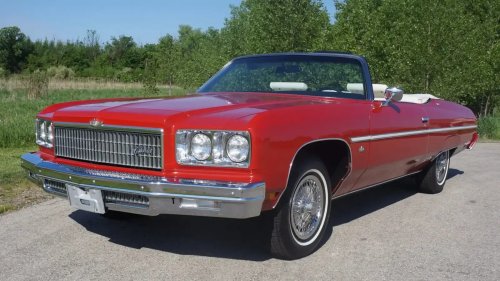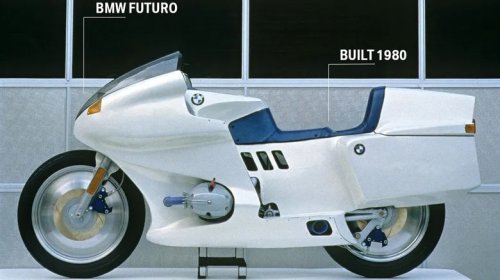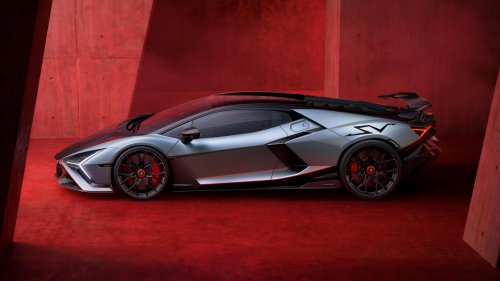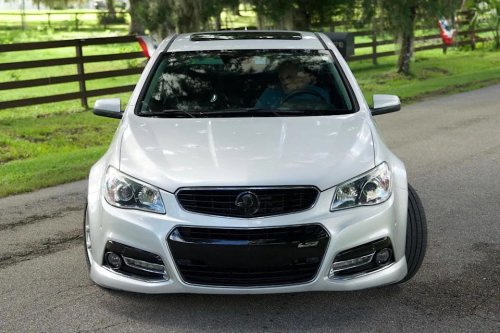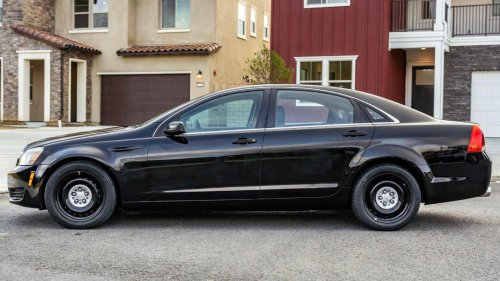
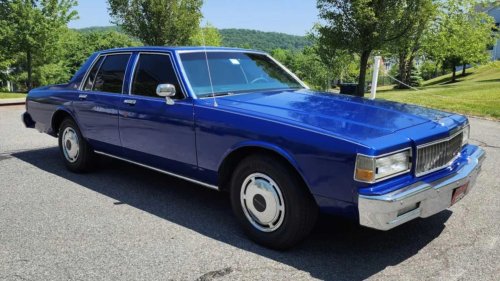
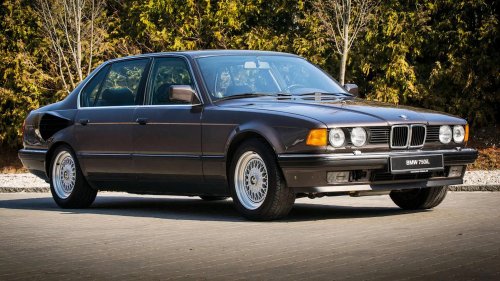
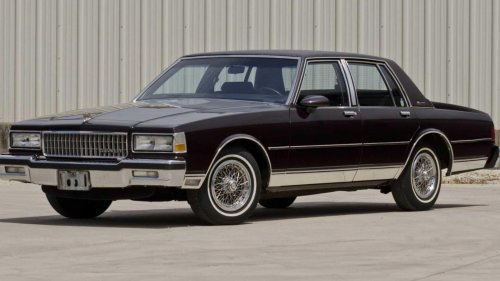
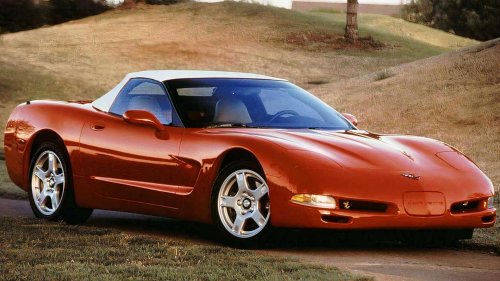



















There’s an old saying in the automotive industry that goes a little something like this: if you want to know what technology will be in cars five years from now, look at what the Mercedes-Benz S-Class has today. While this might not be as true now as it was 30 years ago, the general idea is accurate because the technology that debuts on luxury cars eventually finds its way into mainstream models.In the late 1980s, when cars were quickly moving away from carburetors and towards electronic fuel injection, Chevrolet wanted to experiment with new technology that goes hand in hand with electronic fuel injection. A vehicle's computer was becoming more complicated as new gizmos were added, and traditionally mechanical items were quickly being replaced with electronic systems. As for the Bowtie, it wanted to get its hands on a piece of newfound tech used in top-tier luxury sedans and bring the idea to its more affordable cars. GM Engineering circa 1988: EFI Across the Board BAT A wave of fuel injection washed over GM’s model lineup in 1987 and 1988, with brand-new models like the Beretta getting engines with no carburetors in sight. Fuel injection was nothing new at the time, as the first Chevy to receive this treatment via mechanical fuel injection was the 1957 Corvette. However, electronic fuel injection (EFI) changed the game when it came to performance, efficiency, and emissions.The computer-controlled system could adjust the air-fuel mixture across various scenarios. From there, automakers developed throttle-by-wire systems without mechanical linkages. The benefits of an electronically controlled system stem from areas like throttle response and overall smoothness in acceleration, thanks to a monitored intake system.Throttle-by-wire is common today, but it first appeared on a production car in the 1986 BMW 7 Series. General Motors saw this system and wanted to make it work on one of its cars, quickly getting to work replicating the idea. A Monster Is Born: GM Builds a V12-Powered Caprice Bring a Trailer As the team of engineers soon found out, replicating an electronic throttle system was difficult, especially because there weren't any pieces to the puzzle just lying around from existing projects. The idea didn’t stem from increased performance, as in other stories about GM engineers working on unconventional programs. This undertaking was all about refining one of the company’s sedans to be as smooth and quiet as possible. The Caprice quickly came to mind as a test platform because Chevrolet was gearing up for a new generation and wanted to bring something different to the table for the latest sedan.Rather than building their own throttle-by-wire system from scratch, the engineers had GM purchase a new BMW 750iL to study the system and apply it to a Caprice powertrain. Whispers arose of considering a V12 in a future Chevy, which would have meant BMW’s engine would have allowed the engineers to observe both ideas at the same time.What followed was the team of Chevy engineers cracking the BMW's 5.0-liter V12 out of the luxury sedan and dropping it in the front of a 1989 Caprice. The engine actually had roughly the same displacement as the original 305 cubic-inch V8 that normally sat cradled in the engine bay. However, V12 offered more refinement by virtue of its additional cylinder count and the throttle-by-wire system. 1988 BMW 750iL 1988 BMW 7 Series E32 750iL V16 Goldfisch Brown Front Angled ViewWhen Hot Rod Magazine writers visited GM’s testing facility in the late 1990s, they spotted what appeared to be a normal-looking 1989 Caprice parked in a garage. When the tour guide fired up the engine, they quickly realized what was ringing in their ears was “a distinctly foreign sound.” The silky hum of a V12 at idle was just a precursor to the banshee scream at redline, not to mention the last notch of the speedometer labeled 160 MPH, which one writer keenly spotted. Of course, in a luxury sedan, the goal of the V12 was to create a lush and hush environment, something Chevy wanted for the Caprice, but ultimately couldn’t because of an internal philosophy that prevented anything in one of GM’s brands from potentially beating out something else with the same purpose. Why the V12 Caprice was Forbidden Fruit Flickr You’ve likely heard the stories of why GM limited production of the Buick GNX, the GMC Syclone, and the Typhoon. The tale was not too different from what happened to the V12 Caprice. While the idea was to produce a better Caprice that was quieter and more refined, the resulting product of Chevy’s project was a car that was closer to being a Cadillac than a Chevy. Just like the GNX or GMC’s twisted sisters that boasted Corvette-like performance numbers, the Caprice with four extra cylinders and a drive-by-wire throttle system wasn’t befitting of a Chevy when Cadillac didn’t have something in the stables like it.Another factor going against a production version of the sleeper Caprice was the additional costs of developing this powertrain. The engine actually bolted up directly to GM’s four-speed automatic. However, the company obviously couldn't buy 12-cylinder engines from BMW and install them in new Caprices. GM would have had to develop its own drive-by-wire tech and put the system into production.Granted, the accountants at Bayerische Motoren Werke would go on to pad the bottom line by developing and selling a 6.1-liter V12 to McLaren for use in the F1, but they would likely have said "Nein!” should Chevy have approached them at the time. The Project Bears Fruit with the C5 Corvette ChevroletAlmost ten years after the V12 Caprice project, Chevy was able to create its own drive-by-wire throttle system and incorporated it into the 1997 Corvette. The system delivered the expected improvements in throttle response and engine management that the engineers who tested the BMW engine found years earlier. Journalists liked how competent the powertrain was at low RPMs, while still offering great response when at speed.The idea of scrapping a direct, mechanically connected system for one that employs computers, sensors, and servo motors raises a few questions about dependability. However, airplanes fly using this technology all the time, and that should help tame some of the fears about the wizardry coming to road cars.The vast majority of drivers can't tell the difference between an old-school mechanical throttle and a modern drive-by-wire system. Regardless of how it happens, they push the accelerator pedal and the car's speed increases. Unbeknownst to the driver, the tech is managing the air-fuel mixture even better than before, resulting in improved performance.Today, all cars use this technology, which has transformed efficiency and how and when engines make power. From a Toyota Corolla to a Lamborghini Revuelto, this technology (and many others) started with BMW to refine the 7 Series, and was made available to the masses by the inventive spirit of GM engineers determined to figure it out on their own.