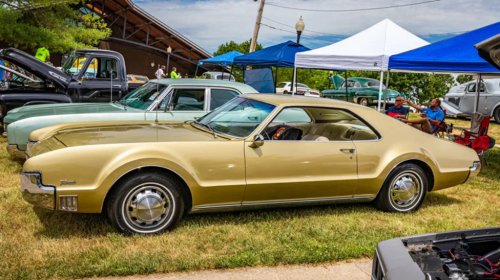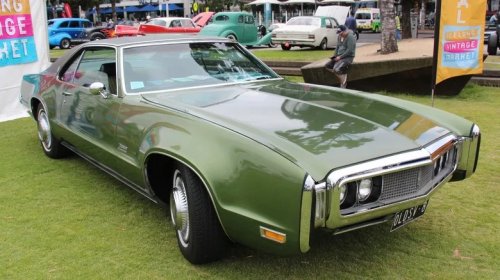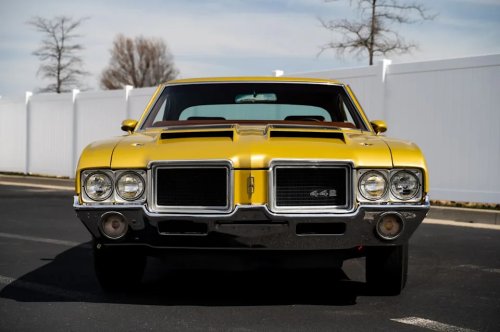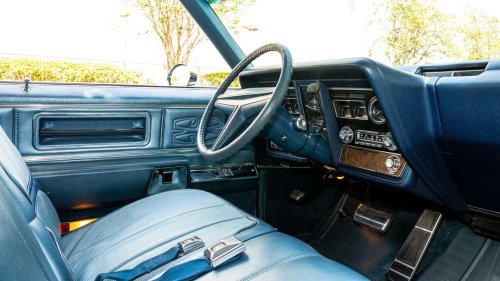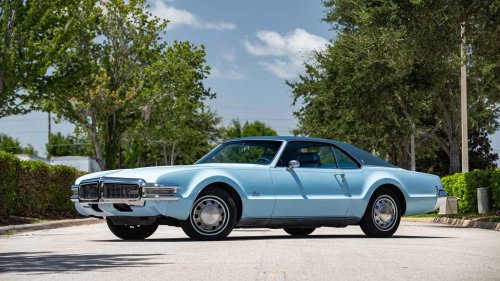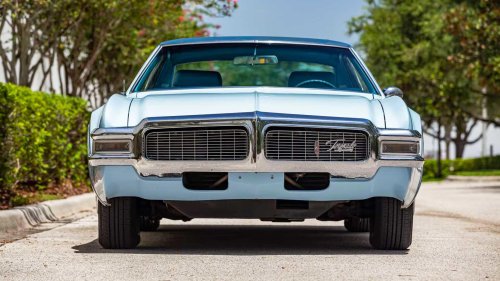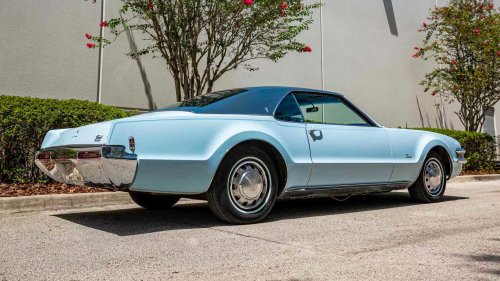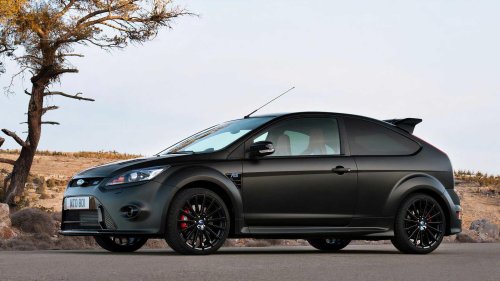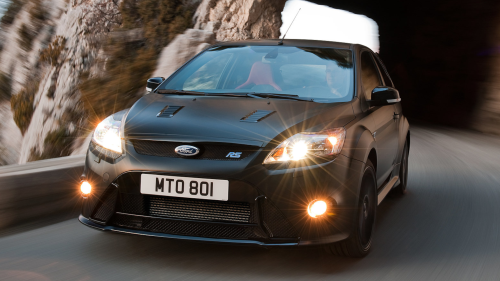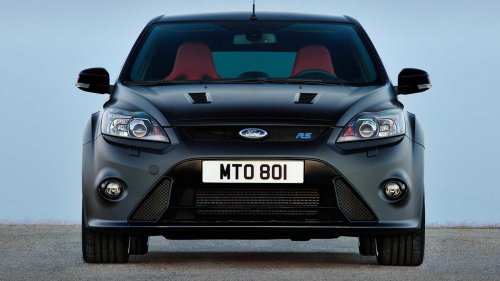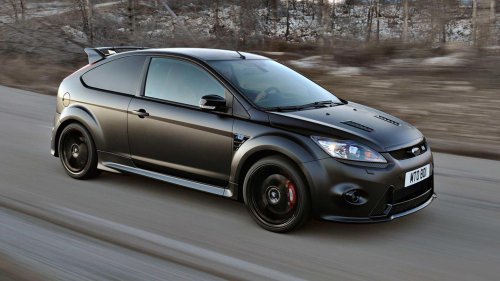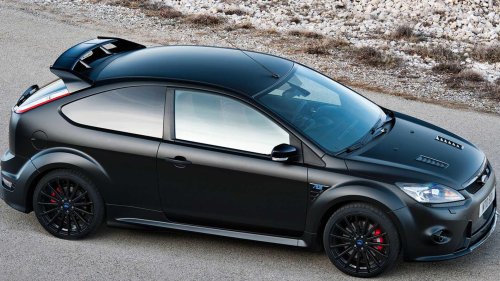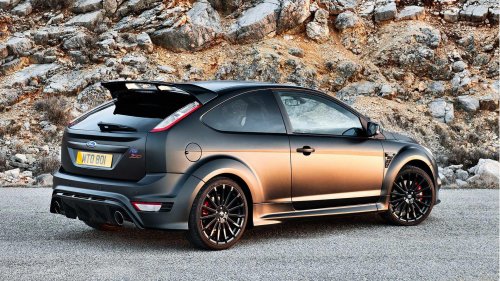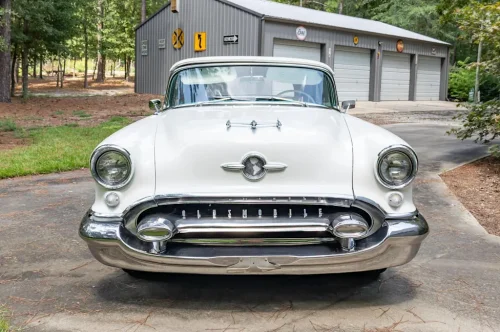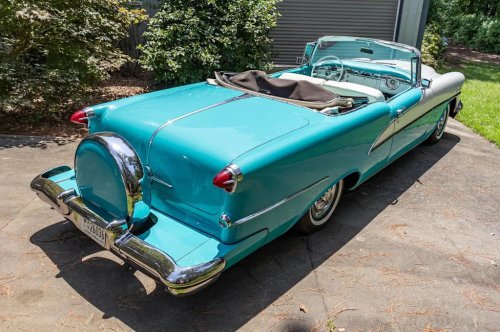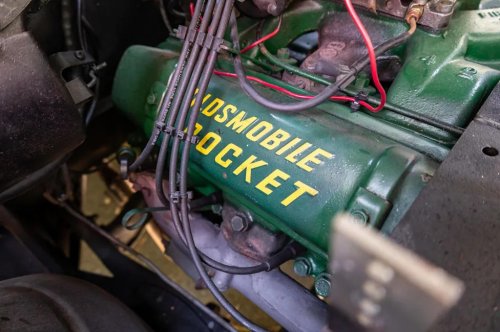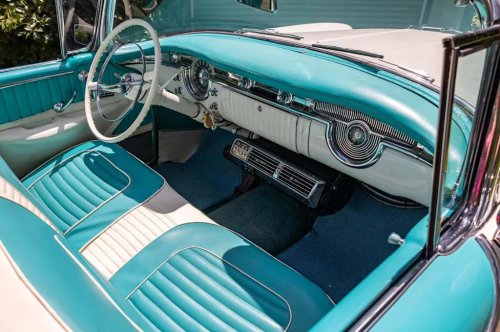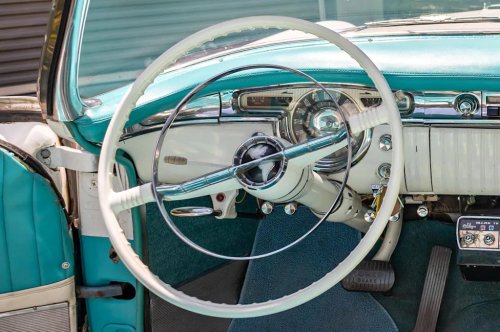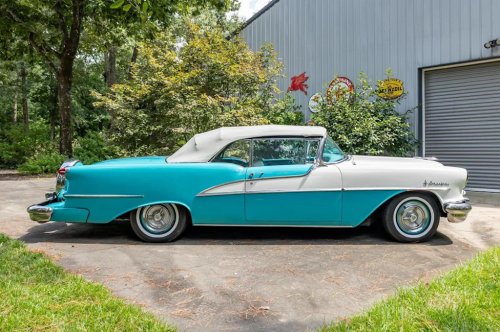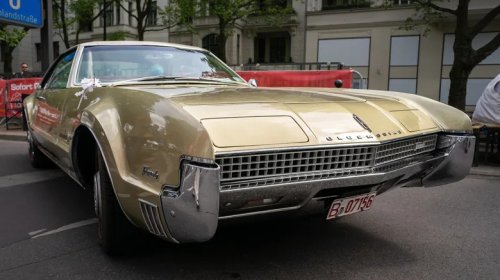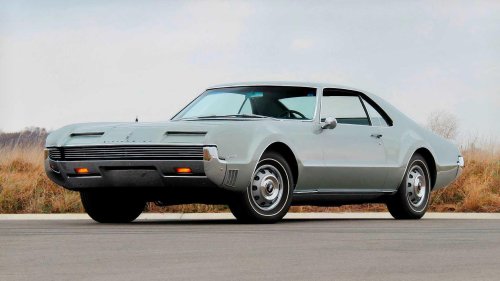
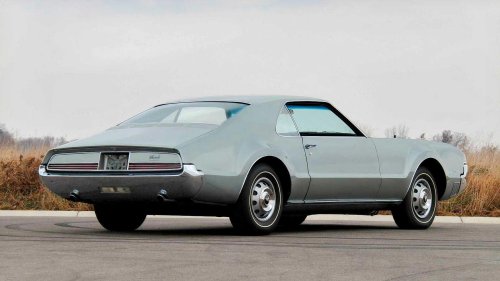
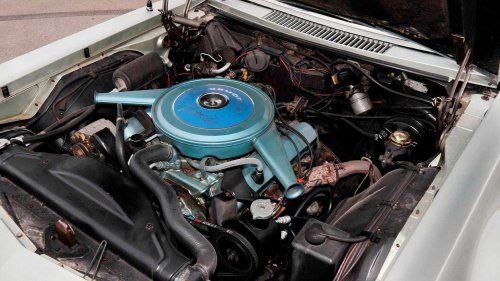
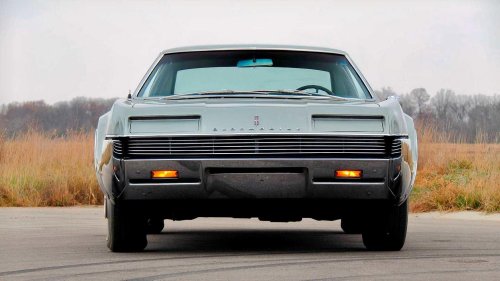
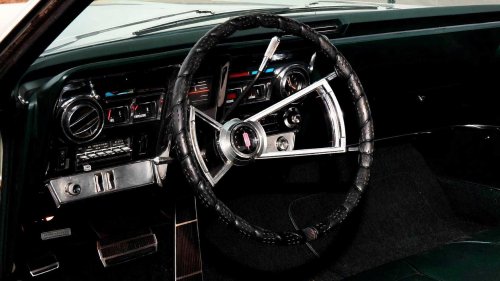
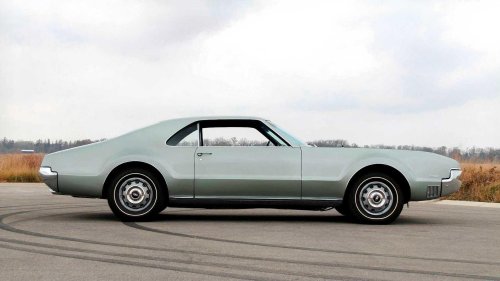
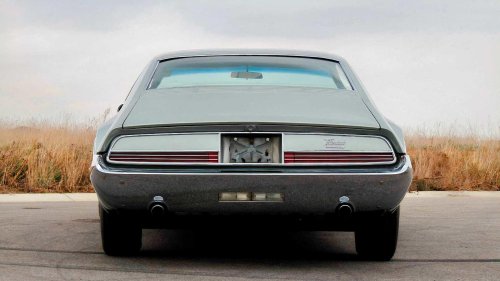
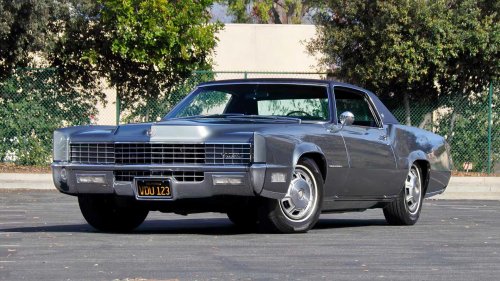



















There are two basic ingredients to a classic muscle car: Big power V8 and rear-wheel-drive. It makes sense, right? Get the power and torque to the rear so when the car's weight shifts backward, the rear tires are jammed into the asphalt for maximum grip. Front-wheel-drive might be good for hot hatchbacks and cars that need to be packaged as small as possible, but everything is bigger in the USA, so carmakers don't need to be messing around with front drive and big engines. Especially in the '60s, which were marked as the golden era of muscle cars and horsepower wars in America. UPDATE: 2026/04/03 12:25 EST BY JARED SOLOMON This article has been updated to include additional context on why the Toronado’s extreme front-wheel-drive performance was never widely replicated.Oldsmobile, on the other hand, didn't get that memo. The result was dramatic: a '60s cruiser with more power than 2000s muscle cars, but channeled through skinny tires at the front. This is a car that was so mad, it was good (kind of). The 1966 Oldsmobile Toronado Broke All The Rules Mecum It's a good-looking beast, the Oldsmobile Toronado. With a Ferrari Daytona-like nose photoshopped onto a macho muscle car front end, wheel arches that look like they have been heat-molded around truck wheels, and a chopped-off rear that wouldn't be out of place on a Euro exotic, it looks every inch like the powerful American sports coupe that could take on the world. But under that eccentrically good-looking skin, that looks like it couldn't decide whether to be the cop car or the getaway ride, the Toronado had a strange secret that means it was unlikely to be picked by either the good or the bad guys.With hindsight, what Oldsmobile pulled off in 1966 was completely unhinged. Front-wheel-drive cars at the time were defined by modest power and efficiency, not brute force. A Citroën DS made do with roughly 130 horsepower, while the Saab 96 produced well under 70 horsepower from its V4. Italy’s Lancia Flavia pushed about 100 horsepower, and even the mighty original Mini was working with less than 60. Against that backdrop, the Toronado’s 385 horsepower was completely off the scale.No front-wheel-drive production car before it came remotely close, and for decades afterward, none would exceed it. Even modern high-performance FWD benchmarks like the Focus RS or Civic Type R would arrive more than forty years later with significantly less output. In sheer power terms, the Toronado still sits alone. Why Oldsmobile Decided to Make the Toronado Front-Wheel Drive Mecum The Toronado, which was launched as the 1966 model, was the first front-driver to come out of America since the 1930s (since the Cord 812, to be precise). It was a nod to the likes of the Citroën DS, which had helped bring front-drive to the luxury segment. The Olds was riding on a wave of innovation that recognized this layout as being safer (especially in bad weather), more practical, and useful for space and packaging. For example, the Toronado would benefit from a flat floor that allowed seating for six.There was a lot of sense to it, with the Fiat 128 bringing front drive to the masses three years later, the VW Golf arriving in the following decade, and most European sedans taking this route by the '80s and '90s. In other words, Olds wanted to take a chance on the future. But there was one very large issue for the Toronado. The Toronado Had Muscle Car Power MecumWhereas front-wheel-drive seemed to work rather well in Europe when joined to a wheezy four-banger that had about as much torque as a cordless screwdriver with a low battery, the Toronado went down a different route. Hooking up a 385-horsepower and 475 lb-ft of torque 425-ci V8 to the front wheels didn't work quite so well, however, with the Olds practically pioneering the term "torque steer."Even in the 2000s, Ford was grappling with tech like the RevoKnuckle to tame the front-drive Focus RS — and that only has 300 horsepower and 324 lb-ft of torque. Suffice to say, a small dab on the go pedal in the Toronado would be enough to make the car cloudier than a vape shop on Black Friday.To underline just how extreme this was, think of it this way: it took until the 21st century for front-wheel-drive performance cars to regularly exceed 300 horsepower, and even then, engineers needed sophisticated limited-slip differentials, torque-vectoring, and complex front suspension geometry to make them usable. The Toronado had none of that. Its 385-horsepower figure remains unmatched by any production FWD car, before or after, making it a statistical outlier even by modern standards. In raw output alone, it still stands as the most powerful front-wheel-drive production car ever built. How The Toronado’s Front-Wheel Drive Actually Worked What made the Toronado viable at all was GM’s brutally overengineered solution to the problem. Power ran through the Turbo Hydra-Matic 425, a unique front-drive transaxle developed specifically for the car. Rather than placing the transmission sideways, GM mounted the massive V8 longitudinally, just like a conventional rear-drive car. From there, a huge Morse Hy-Vo chain transferred torque to the differential mounted alongside the transmission. This chain was nearly silent, incredibly strong, and chosen specifically because no gearset of the era could reliably handle nearly 500 lb-ft of torque. The layout kept the drivetrain compact enough to drive the front wheels while retaining the smoothness and durability expected of a luxury GT. It was expensive, heavy, and massively unconventional, but it worked. Why No One Tried This Again At This Scale What makes the Oldsmobile Toronado so fascinating isn’t just that it worked—it’s that almost nobody seriously attempted to repeat it at this level.Pushing nearly 500 lb-ft of torque through the front wheels exposed fundamental limits in physics and engineering. Torque steer, uneven tire wear, and traction loss weren’t just minor drawbacks—they defined the driving experience. Even decades later, when cars like the Ford Focus RS and Honda Civic Type R crossed the 300-horsepower mark, they required advanced differentials, suspension geometry, and electronic aids to stay controllable.The Toronado had none of that. No torque vectoring, no modern traction control, and no clever front suspension tricks—just brute force.That’s why the industry took a different path. Instead of forcing extreme power through the front wheels, manufacturers either stuck with rear-wheel drive for performance cars or developed all-wheel-drive systems to distribute the load more effectively.In that sense, the Toronado wasn’t just ahead of its time—it was a dead end. A brilliant, over-the-top engineering experiment that proved exactly where the limits were. The 385 HP V8 Was Overkill For The Toronado MecumThe Toronado, which had a huge chain drive between the V8 and the three-speed Turbo Hydra-Matic 425, didn't have any fancy tech to get that power and torque down through the front wheels and into the asphalt. It didn't even have a limited-slip differential. The structure was incredibly stiff, however, and there were a pair of extra rear shocks mounted horizontally to help stability under braking and the front end had chunkier A-arms. Ultimately, with hindsight, the V8 was overkill and unnecessary, but this being the '60s, the premium personal luxury car segment demanded a rumbling, torquey engine, so that's what the Toronado got. The Toronado Mixed The Past, Present, and Future Into One Wild Automobile Mecum It wasn't until the start of the '70s that the oil crisis and emissions regs put paid to the muscle car arms race. During the car's inception in the early '60s, Oldsmobile had convinced GM that a pioneering American front-drive car shouldn't come in the form of a compact model or a city car, like the Mini and lovable Citroën 2CV, but that it would be more of a game changer when applied to a full-size model. Thus, the combination of the totally unique Super Rocket 425 V8 and the layout was almost the accidental outcome of market expectations of a full-size car at the time, and the desire to create a vision of the future. Why The Toronado Was A Failure Mecum Calling the Toronado a failure actually might be a touch harsh and needs context. In 1966, it won the Motor Trend Car of the Year, with judges praising its engineering ambition, ride quality, and willingness to challenge American design norms. Its impact inside General Motors was immediate, directly spawning the front-wheel-drive Cadillac Eldorado a year later. The only issue was that it was too far ahead of what buyers expected a powerful American car to be.Period reviews actually found the Olds to have decent handling, and a sprint to 60 mph in 8.6 seconds wasn't bad either. The top speed of 135 mph was extremely quick for the time. But while the company shifted around 41,000 units in ’66 (Hagerty), sales dropped 50% in 1967. The problem with being a pioneer is that once the hype dies down, customers sometimes go back to what they know, and in the '60s that was rear-drive V8 muscle cars. Olds even took the unexpected step of trying to fix the Toronado's problems by introducing even more torque, in the form of a 375 horsepower and over 500 lb-ft of torque 455 V8, available with 400 horsepower when the W-34 option was ticked. Getting A Toronado For Yourself In 2026 Mecum The Toronado is a genuinely cool-looking American car from the '60s, with a slug of power and torque that is up there with some of the tastiest muscle cars of the time. As long as you don't mind doing front wheel burnouts (possibly) every time you try to exit a damp side road, this could be a genuinely interesting buy. The public never really got on board with the Toronado, leaving it as an anomaly with very affordable pricing.A '66 Oldsmobile Toronado in good condition will cost just $16,800, says Hagerty's valuation tool, with '67 cars costing $15,200. Toronados from the following year, equipped with a 455, cost even less, with prices around $15,000. For the final year '70, when the Toronado had lost its pop-up lights in return for a more marine-animal-like appearance, prices drop to $14,500. Cadillac Offered An Alternative Slice Of Front-Drive Madness Mecum If you are hankering after a big front-drive V8 car from the '60s, but the Toronado doesn't quite fit the bill, then GM had another option too. The Cadillac Eldorado arrived in '67, based closely on the Toronado, but with the base engine being a 340-horsepower 429-ci V8. These cars do fetch a little more money, costing $23,000 in good condition. Ultimately, the front-drive V8 didn't catch on, with only a few oddball cars using the FWD layout, but if you are someone who likes to think outside the box, a bargain-priced Toronado or Eldorado is hard to beat.Sources: Hagerty.com