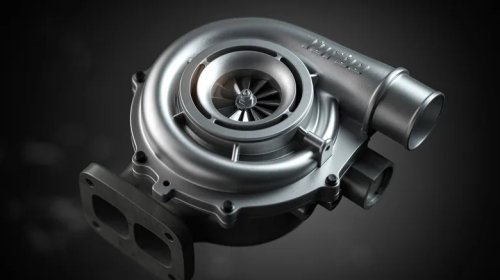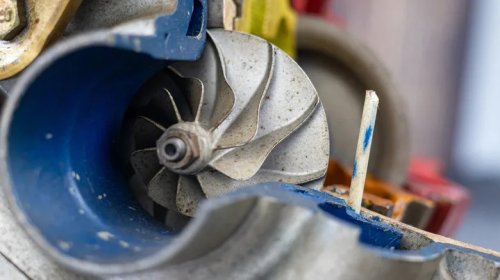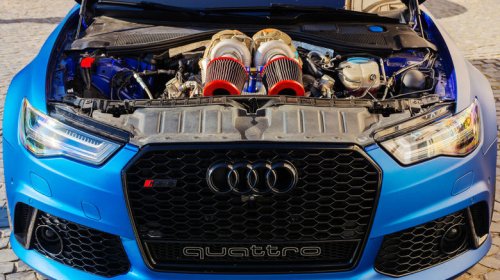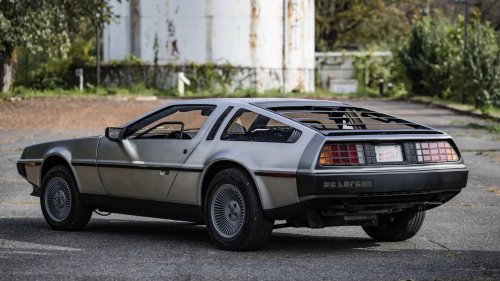
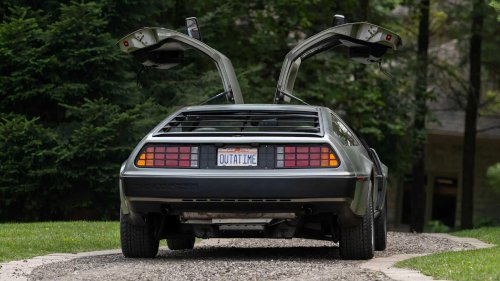
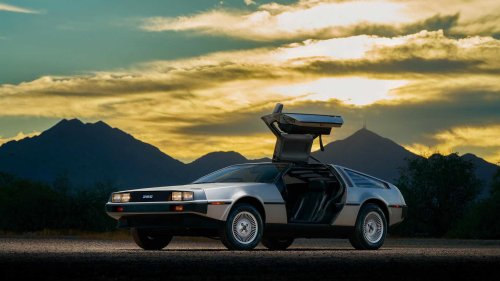
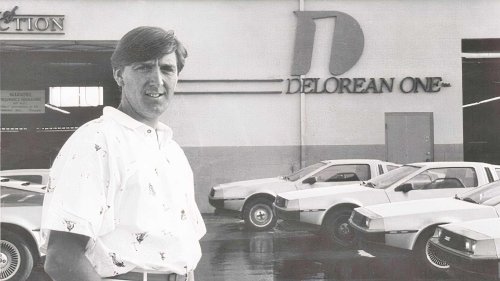
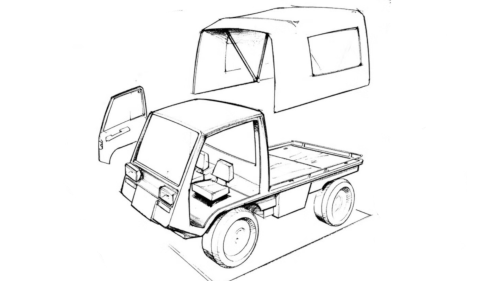



















The DeLorean Motor Company is one of the big "what if" stories in automotive history, and there may not be another automaker that left such a lasting cultural legacy with only a single car to its name. We're not sure what might have saved DMC in the timeline where this sports car is still around to outsell the Tesla Cybertruck. Above-the-board bookkeeping probably would have helped, as would have a more diverse product portfolio. Or, it might have been a turbocharged engine that would have made the difference.That's not random speculation, we're talking about the DeLorean that almost was. DMC was actually in talks with New York's Legend Industries, signing a contract that would produce a handful of turbocharged prototypes intended to overcome the car's modest performance specs. So, what happened? Let's dig in and find out. The Very Cool, Slightly Underwhelming DeLorean Bring A Trailer Wherever your personal tastes take you, the DeLorean always deserves, at the least, a place in the conversation on the coolest-looking cars ever made. The stainless-steel body, the clean, sharp edges, the gull-wing doors, that sleek profile. It still looks futuristic more than 40 years later. It also looks a lot faster than it really is.DMC claimed a top speed of 130 mph. When Road & Track magazine got their hands on the car, they topped out at 110 mph. DMC claimed an 8.8-second takeoff, while actual testing by reviewers saw the car getting there in 9.5 to 10.5 seconds. The DeLorean Was Too Expensive For A Mid-Range Car The DeLorean hit the market at $25,000 in 1981. In 2026 dollars, that's more like $93,463. In 1982, the price was bumped up to $29,825, or $102,870, adjusting for inflation. To put that into perspective, a brand-new 670-hp Chevrolet Corvette Z06 will set you back $117,700. So DeLorean was asking for the early-1980s equivalent of supercar money, without delivering anything close to the early-1980s equivalent of a supercar.There were other issues at play, and we'll get into that. But, the bottom line was that the DeLorean was more of an expensive fashion accessory than it was a cutting-edge sports car. A more powerful engine alone might or might not have saved the car from an early retirement, but we can't imagine a scenario where the DeLorean succeeds without a significant performance boost, and the Legend Industries turbos would have been a big step in the right direction. The Turbocharged DeLoreans Were Just As Fast As They Looked RM Sothebys Early reviews for DMC's flagship car took the wind out of the company's sales, and John DeLorean went on the hunt for something to turn the DeLorean into the high-end sports car it was meant to be. The search took him to Legend Industries, which would build four prototypes, two with a single turbocharger, and two with twin-turbos. The twin-turbos turned out to be the real winners in this experiment, cutting the car's 0-60 time in half, and outpacing some of the quickest cars in the industry.As the story goes, John DeLorean was interested in turbocharging from the very start, but the engineering team was spread a bit thin over all the other projects the company had simmering, so DMC went with outside help to bring the car up to speed.Road & Track gave the DeLorean another shot, and this time they loved it, praising the twin-turbo coupe for its quick takeoffs and comparing it favorably to a Porsche 930 Turbo. Around this time, the Ferrari 308 was hitting 60 mph in a little over six seconds. The Porsche 928 could take as long as seven seconds to hit 60 mph. The twin-turbo DeLorean had them both beat, and the car finally had a powertrain that belonged in such a sweet-looking body.John DeLorean was over the moon with the results of the turbocharging experiment, ordering 5,000 engines from Legend industries with plans to offer a turbocharged option in 1984 as a $7,500 upgrade. The New Engine Was Too Little Too Late Bring A Trailer If you're wondering why you never heard of these turbocharged DeLoreans actually hitting the market, the fact is that the hole DMC had dug for itself was simply too deep at this point. The initial launch had been underwhelming, and you only get one chance to make a first impression.Not only did DMC file for bankruptcy before these cars could make it to production, DMC wound up taking Legend Industries, and several other suppliers, down with it. DMC closed its doors with $175 million in debt and 3,000 unsold cars, leaving behind untold stacks of unpaid bills on behalf of the automaker, and everyone who had a stake in the company.For these twin-turbo DeLoreans to have saved the company, they would have had to be offered as a year-one option. Whether or not this would have given the brand enough juice to go the distance, who can say, but it would have at least established the DeLorean as a prestigious dream car that was worth the price.Of course, an underpowered engine wasn't the only thing that held DMC back from a successful run. 1981 DeLoreans were also noted for build quality issues, with a long list of recalls, especially around the front suspension (the car was notorious for its poor weight distribution and wimpy front suspension).Poorly aligned wheels led to premature tire wear, electrical components were known to malfunction, and repairing these cars was a nightmare because DMC never issued a service manual. What's more, many dealerships were left holding the bill when DMC failed to reimburse them for maintenance covered by manufacturer warranty. In short, the wimpy base engine was just one of many mistakes DMC had made in the launch of the DeLorean. The DeLorean Has Proven To Be A Hit Among Collectors Delorean.com You know what might have saved DMC? If Back to the Future had been released just a few years sooner. At some point after the company's foreclosure, its assets were bought up by a company in Ohio, and the remaining DeLoreans were sold for $21,000 each, and, today, an estimated 4,500 or so DeLoreans are still on the road, driven and maintained by one of the most devoted followings of any 1980s sports car. John DeLorean Had Very Big Dreams For The DMC Brand Had DMC found success with the DeLorean, the brand had some other projects in the works that we think would have been pretty cool to see hit the market. One of our favorites was an off-road-capable pickup that we can only describe as the DeLorean version of a kei truck like the Suzuki Carry. The brand was also working on a city bus, and the DMC-24, a four-seat sedan version of the DeLorean.DeLorean Museum It's easy to look back and say something along the lines of, "What if the company had done this instead of that?" DMC wanted something cool and flashy with which to announce itself to the world, and the two-seat DeLorean fitted the bill just fine. Unfortunately, it wasn't fast enough to establish DMC as a builder of dream cars, like Porsche and Ferrari, and it wasn't practical enough to establish DMC as a mainstream automaker, like Ford and Honda.Would a twin-turbo DeLorean have saved the company? Maybe. We can make that same speculation regarding just about anything in the company's portfolio, though. A government contract to produce city buses could have secured the brand's future. Small work trucks for fleet use might have brought the influx of cash the brand needed. A four-seat family car version of the DeLorean could have been a surprise hit.Ultimately, there's no telling how things might have played out, but this is one of many options that might have kept DeLorean in the game a little longer.