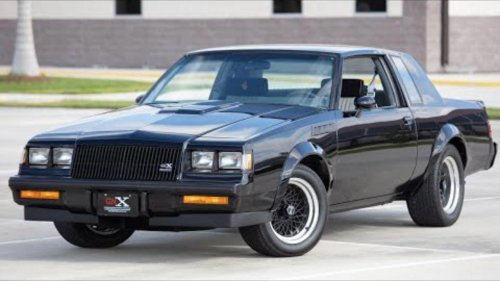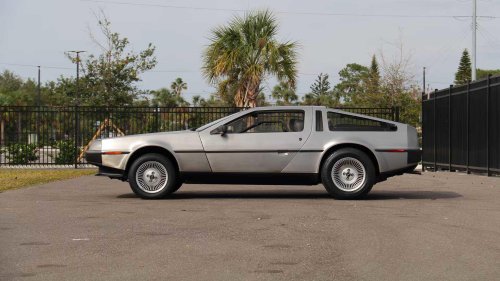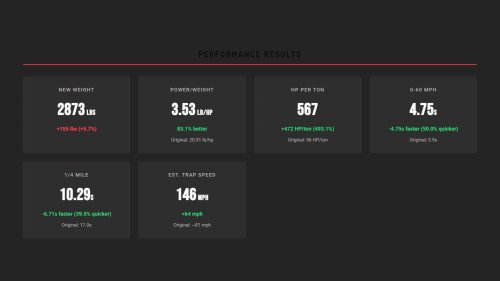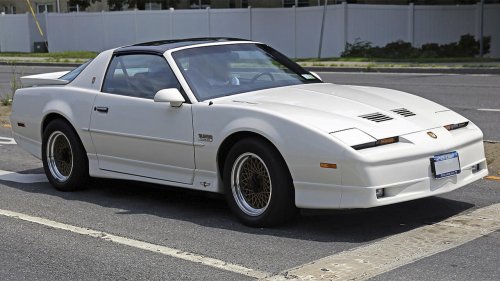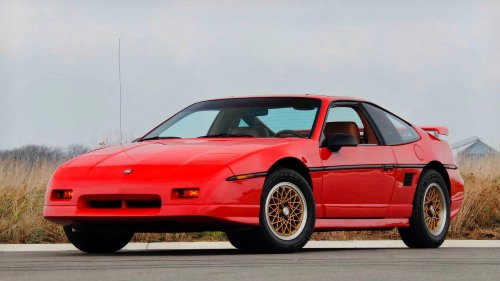
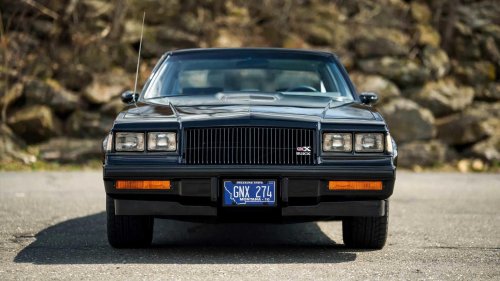
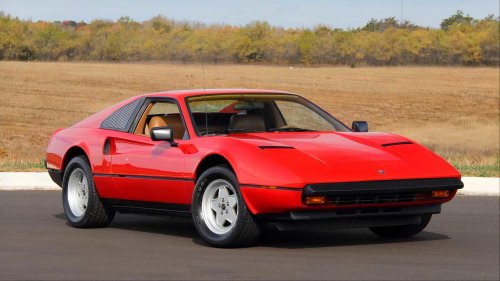
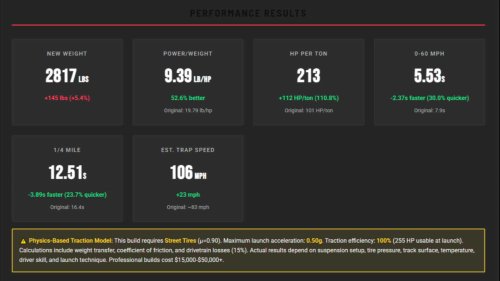
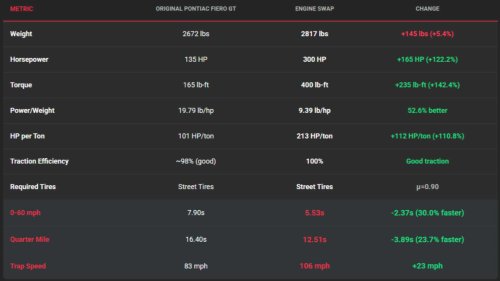
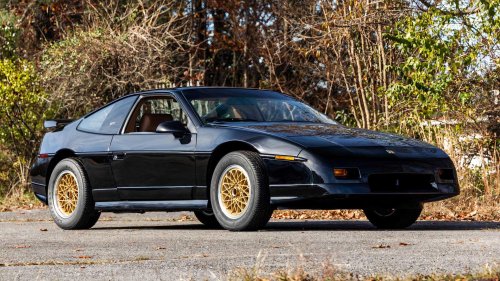
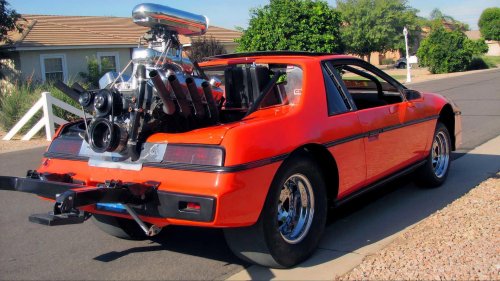
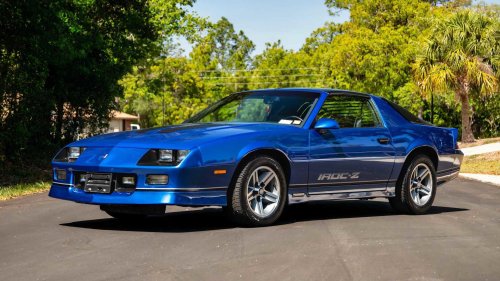
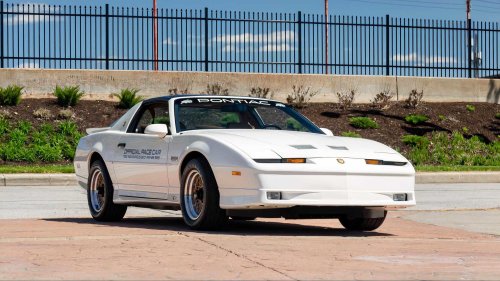
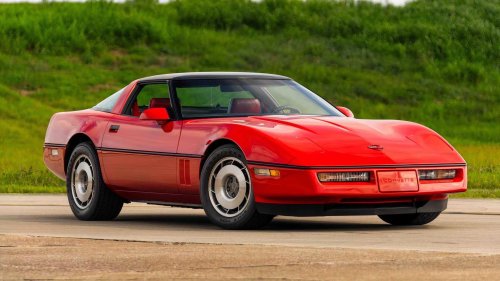

















By the late 1980s, the malaise era that had snuffed out the golden age of muscle cars was coming to a close, and suddenly, performance was cool again. The Ford Mustang's 5.0-liter and Chevy Camaro's 5.7-liter small-block V-8s finally had some bite to go with their bark, and most manufacturers were coming out with sportier designs. There were also some interesting things going on with turbo four and six-cylinder engines among the Japanese imports, as well as American automakers like Buick and Dodge. It really was a Renaissance of Power after the Dark Ages of the 1970s, when the detuned dinosaur big-blocks only weighed cars down.Pontiac came out with a radical mid-engine two-seat sports car in 1984 that really should have handed the scepter back to the division, but there were some issues. Most notably, the Fiero was tragically underpowered, making for a sizzling-looking ride with ice-cold performance. As the decade wore on, Buick developed an insanely powerful turbo V6 that was a literal Ferrari and Porsche killer. If it were possible to go back in time, like maybe in former Pontiac head John DeLorean's DMC-12 Time Machine, and pair the feisty Fiero with the bruising Buick turbo-six, it would have redefined American performance. 1987 Pontiac Fiero GNX Turbo Engine Swap Mecum Introduced for the 1984 model year, the compact Fiero sports car was Pontiac's first two-seater since the 1930s roadster days and the only rear mid-engine car ever from an American manufacturer at that point. As stunningly gorgeous as it looked, it had a few problems, like a tendency to catch on fire, but more importantly, terribly sluggish acceleration. The base 2.5-liter I-4 was never able to crack 100 ponies, and the optional 2.8-liter V-6, while better, maxed out at 135 horsepower and 165 pound-feet of torque. In 1987, the Fiero got a style upgrade, making it even hotter, but the power, or lack thereof, remained the same. Pontiac was promoting the Fiero's fuel economy (33 MPG highway), when they should have been figuring out how to make it go as fast as it looked.via Bring A Trailer Also in '87, Buick sent the Grand National out in style with the GNX, featuring a 3.8-liter turbocharged V-6 that was underrated at 276 horsepower and 360 pound-feet of torque, limited to just 547 units. In reality, period tests revealed this was a 300+ pony/400 pound-feet ride, and we don't even need a dyno to confirm that because it ran in the low 13s, which is something its official rating is incapable of.Gen-Xers will remember the old candy bar ad in which a guy with a chocolate bar bumps into a dude with an open jar of peanut butter, and they accidentally invent the Reese's Peanut Butter Cup. It's a shame something similar didn't happen at GM HQ with a Buick turbo-six inadvertently falling into the back of a Fiero, so we're here to make that happen. Buick GNX's Turbocharged Power Hits Hard In A Fiero Mecum Taking into account the weight of the Fiero and the power of the Buick 3.8-liter turbocharged V-6, it's possible to calculate what kind of ass-kicker an engine-swapped 1987 GT would have been, and it's even more glorious than we expected. Also, since we are playing with "what-ifs" here, we're going to swap this engine into a Fiero Mera using our HotCars engine swap tool we already applied to some other unique swaps, which was a special body kit that made the Pontiac look like a mini version of Magnum PI's Ferrari 308 GTS.The Mera was produced for the 1987 and 1988 model years with just 247 units before Ferrari sued and put a halt to it. Back to our ultimate '80s sports car, packing the power of the Buick GNX, the upgraded '87 Fiero Mera would have been a 12-second car, straight from the factory, and that is by far the fastest thing of the decade, from any manufacturer. Fiero Engine Swap Drag Race HotCarsObviously, this super-powered Fiero would need some serious upgrades in the suspension and brakes, as well as better wheels and tires for some Ferrari-like top speed, so we're leaving that column the same as the original. On the acceleration times, however, the engine-swapped Fiero is completely dominant. So much so, that it would have eaten everything else on the street in 1987 for breakfast, including the Buick GNX donor car.HotCars For the baseline, we used a manual-transmission operated 2.8 V6 Fiero GT, and our calculator showed that, thanks to the mid-engined setup, traction would not be an issue on street tires. The results indicate that the GNX-swapped Fiero with a manual transmission would reach 60 mph in the mid-5s and ramp up to a 12.47-second 1/4 mile time. That means that the Camaro, Corvette, and Mustang of the time would have been no match for the "Fiero GNX Turbo," and even a Ferrari 328 GTS or Testarossa would look like they were standing still next to it. Amazingly, our mighty engine-swapped Fiero would beat a Lamborghini Countach LP5000 S Quattrovalvole, which had a quarter-mile ET of 13.5 seconds! It Could’ve Been The Greatest Pontiac Since The GTO Mecum Seeing as how the 1964 Pontiac GTO started the classic muscle car era, it's impossible to overstate its importance in the history of American performance. It's unlikely that things like a Hemi 'Cuda or Chevelle SS 454 LS6 would even exist had it not been for the G.O.A.T. A 1987 Fiero Turbo would have been just as consequential in influencing street rides from the '80s going forward. This was a time when imported sports cars and tuners were starting to take hold, and a factory 12-second car from Pontiac would have forced everyone to up their game.This mythical American turbo could have also kept the Fiero from being discontinued in 1988, and maybe would have established itself as Pontiac's signature ride heading into the new Millennium. Also, something this awesome may have saved the Pontiac brand from being mothballed in 2010. Had GM used its GNX engine in the Pontiac Fiero, we believe the sports car landscape today may have looked a lot different, with mid-engined turbo Fieros ruling the roads instead of mid-engined Corvettes... And Then There's This Mecum Well, Pontiac never equipped the Fiero with a Buick 3.8-liter turbocharged engine, but that doesn't mean it never got a power upgrade. At this point, you are probably staring at that picture above, mouth agape, with a range of emotions stretching from "what the hell? to "hell yeah!."That, by the way, is a 1984 Fiero with a blown 454ci V-8 barely contained in the rear, that has been tubbed out to accommodate some fat racing slicks. The car was listed at Mecum Dallas 2015 without much commentary as to how or why it came to be, nor are there any performance specs accompanying it. After a little digging, we discovered that this terrifyingly cool thing-that-should-not-be sold for only $10,000, which seems like a lot less than the cost of building it in the first place. A Turbo IROC-Z Would Have Rocked Too Mecum GM has been generous in sharing engines and tech between its divisions, so it would have been pretty sweet had they allowed Chevy to grab some Buick 3.8-liter turbocharged V-6s for a special edition of the Camaro IROC-Z. In 1987, the IROC-Z's 225-horsepower, 330 pound-feet of torque 5.7-liter V-8 was fine for the times and one of the more powerful engines of the decade.With a 300-horsepower Buick turbo-six, on the other hand, the IROC-Z would have been the baddest muscle car of the decade, leaving the Mustang GT 5.0 in the dust. This would definitely have been a 13-second car, of which only the Buick GNX and that car below can lay claim to for the entire 1980s. Maybe Vanilla Ice would have been rapping about rolling in his IROC Turbo instead of his Five-Oh! vert, so it would have had game-changing implications. 1989 Pontiac Firebird Trans Am 20th Anniversary Edition Mecum We don't even have to play the "what-if" game with the potential superiority of an IROC-Z turbo-six, because Pontiac actually built a similar ride to celebrate 20 kick-ass years of the Trans Am. The 1989 Pontiac Firebird Trans Am 20th Anniversary Edition was packing a version of Buick's 3.8-liter turbocharged V-6, that was once again underrated at 250 horsepower and 345 pound-feet of torque. In reality, this was a 300-pony street assassin that could hit 0-60 in 4.6 seconds and burn up the quarter-mile in 13.4 seconds, according to a Car and Driver road test. It was the first 13-second Pontiac muscle car since the Golden Age, and a similarly equipped IROC-Z would have been the quickest Camaro ever built, including classic-era cars, which certainly has some appeal. The Corvette Is Why This Never Happened Mecum It seems silly now that Pontiac built this amazing-looking performance ride but didn't actually bother to give any, you know, performance, but there's a perfectly logical explanation, and it's called the Chevrolet Corvette. From the beginning, GM has protected the halo car from any internal threats, putting the nix on anything that might threaten it. Pontiac came up with a killer two-seat concept sports car retroactively named the Banshee in 1964, and not only did GM cancel it, they took the design and gave it to Chevy, where it eventually became the C3 Corvette in 1968.GM has also ensured that the 'Vette always has the most power engine, relegating lesser versions to the rest of their models. Pontiac actually tested the Fiero with a V-8 engine, but it was denied production by GM. There is a completely unfounded rumor of a 1989/1990 Fiero test mule with a turbo-six, but even if true, never became a reality that would have helped this car truly shine.Sources: GM, Mecum, Pontiac, Car and Driver.