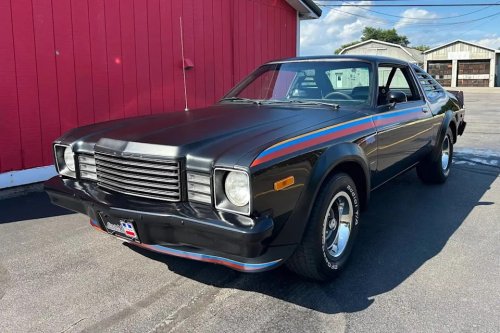
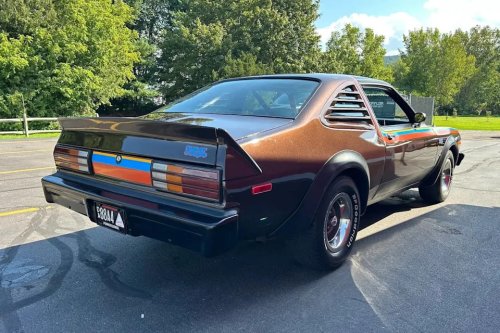
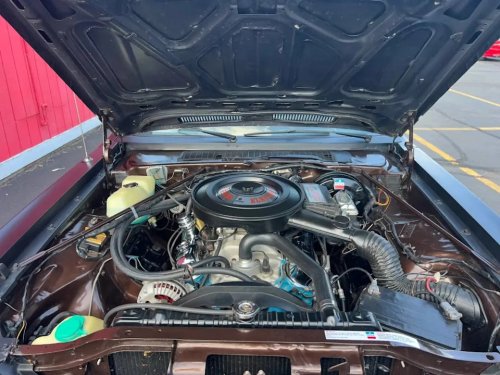
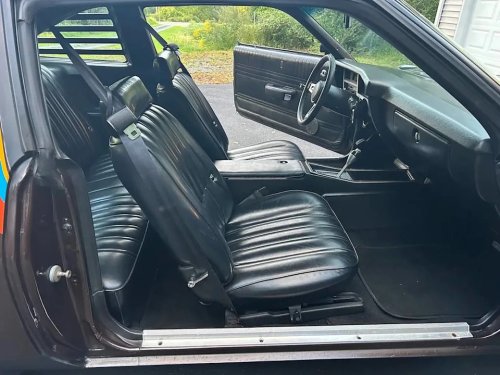
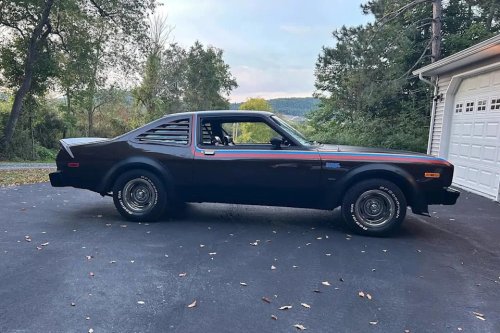
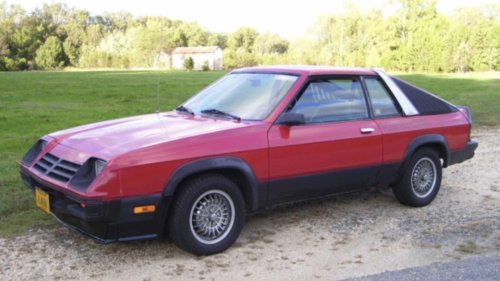
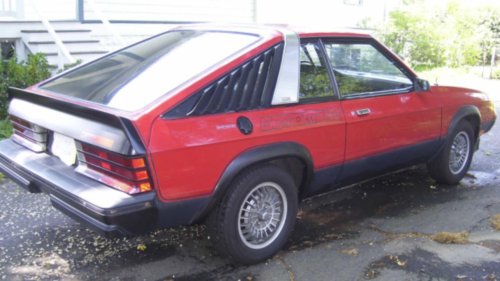
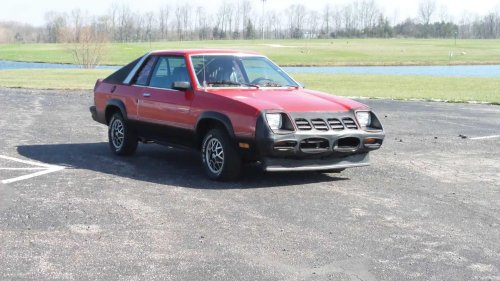
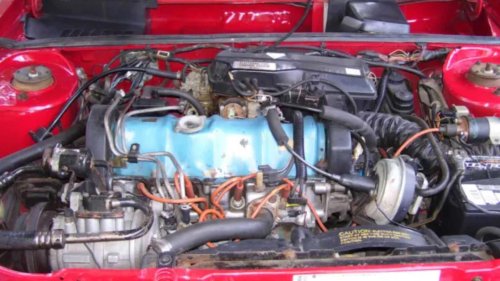
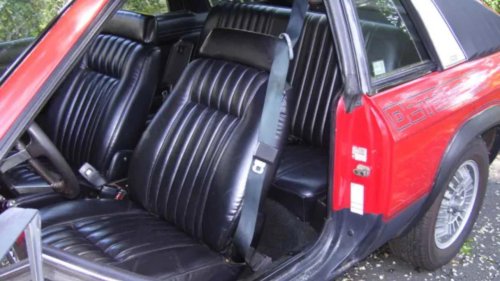
As the 1980s dawned across America, car manufacturers were going through some turbulent times. The fuel crises from the 1970s had forced buyers to think carefully about their vehicle purchases, while federal emissions regulations had started to strangle horsepower figures at their source.Manufacturers were not so sure about those thunderous V8s anymore and were scrambling to try and make front-wheel-drive economy cars hip. Insurance companies were also punishing anything remotely quick and, given the circumstances, OEMs found themselves in a tough place indeed.Beneath that turmoil, missteps were almost inevitable and Dodge certainly stumbled when it dreamed up the Omni 024. This was supposed to be an attractive and sporty compact coupe but, in the end, it just captured how compromised American performance was at that moment. The Omni 024 Proves How Low The Performance Bar Fell In The Early 1980s Bring a TrailerDodge sold its Omni 024 between 1979 and 1982, and it was supposed to be the sportier three-door alternative to the standard Omni hatchback. The company tried to lean into some European styling to create a sleeker shape with a roofline that was supposed to flow more gracefully into the rear hatch.But while the styling may have been moving in the right direction, that was not necessarily the case under the hood. Dodge fitted early examples with a Volkswagen-sourced 1.7-liter inline-four, which only turned out about 70 hp, depending on emissions calibration.Clearly, 70 hp was not going to transform this sleek newcomer into anything resembling a sporty coupe. With that approach, you might need around 15 seconds to get up to 60 mph and would need to be much braver than normal if you wanted to pass a semi on an open highway.So, Dodge introduced its own 2.2 liter inline-four into the Omni lineup, giving a 1981 car around 84 hp. That was surely some progress at the time, but it was more indicative of an OEM in survival mode. A decade earlier you would have laughed at a performance pretender with a puny 84-hp engine, but these were now very different times. The European Economy Car Wearing A Sport Coupe Costume Bring a TrailerChrysler was desperately trying to pivot towards smaller and more efficient vehicles in the brutal early 80s, and the Omni platform itself was part of that push. The vehicle shared its bones with the Chrysler Horizon, which you could trace back to European cars from Simca and Talbot, and, in theory, the company's world car strategy should have been competitive and fiscally sound. Chrysler needed compact front-wheel drive cars quickly, and the European angle should have offered a shortcut.As standard, the Omni and Horizon were upright, practical five-door hatchbacks. They weren't intended to be performance icons and should have competed directly with imports like the Honda Civic or Volkswagen Rabbit. Nevertheless, Dodge did try to extract a more emotional product from that architecture with its 024 effort. It reshaped the rear bodywork into a more coupe-like and longer hatch while lowering the visual stance, so now you had a car that was clearly more dynamic. Marketeers leaned heavily into this “European sophistication” and Dodge was trying to sell you a car with continental flavor as something that was more than just a basic form of transportation.However, there wasn't anything particularly exciting under the surface. You'd still have front-wheel drive with modest torsion beam suspension geometry. You'd also have to rely on a small displacement four-cylinder engine that was more about compliance and economy than excitement. Certainly, the chassis was competent and quite light for its time, but engineers didn't have any serious performance ambitions in mind when they were bolting it all together.The more logical route might have been to add a high-revving engine to such a sleek compact coupe or at least give the vehicle a meaningful suspension overhaul. But in turn-of-the-decade America, that just wasn't feasible as car companies had to navigate brutal fuel economy mandates while also trying to stay afloat.Chrysler in particular was going through intense pressure on all fronts and would soon have to reach out to the federal government for loan guarantees. This means that the story of the Omni 024 is quite nuanced and fascinating. It may have looked like a sporty European hatch from the outside, but its roots were firmly planted in some austere soil, and the 024 was clearly born during the height of Detroit's crisis years. The De Tomaso Edition Is The Strangest Chapter Of All RM Sothebys It's difficult to know why company decision makers turned to De Tomaso to help them market their 024. However, Chrysler did have some association with that company due to its existing corporate entanglements, and this led to a rather absurd De Tomaso edition of this car.Clearly there was nothing wrong with the De Tomaso name, as the company was widely known for producing exotic sports cars like the Pantera. And Alejandro De Tomaso and his team would bring some genuine performance cachet to the table, leading to an Italian-flavored performance edition of this compact American coupe. In practice, the upgrades were largely cosmetic, including bolder two-tone black and silver paint, alloy wheels, distinctive striping, unique badging, and a slightly sportier interior layout. Engineers added some optional sports suspension, and you could choose wider tires for those alloy wheels to make the car look even more purposeful.But this De Tomaso edition was also a sheep in wolf's clothing. Under the hood, the De Tomaso edition relied on the same basic four-cylinder engines as other cars in the lineup. This wasn't a high-compression performance variant, and it didn’t have any turbocharging capability. In short, the De Tomaso version didn't feature any dramatic re-engineering and output figures remained squarely in the same modest territory that seemed to strangle the era.Here was a vehicle that had the name of an Italian exotic manufacturer, with some aggressive graphics and matching marketing, but with horsepower numbers that were practically puny. And this seems to be another indication of automakers trying to sell something exciting in a market where mechanical excitement just wasn't allowed.Perhaps as expected, Dodge didn't sell too many of its De Tomaso-packaged Omnis and surviving examples are very rare today. People didn't seem to be particularly impressed with the cars back then and certainly didn't treat them as future collectibles. Many owners drove them hard or simply threw them away once their economic value had evaporated. Dodge Built A Bridge To Something Better Bring a Trailer Perhaps the Omni 024 and De Tomaso variant were indicators of life during a dismal period, but those cars nevertheless had a role in the broader evolution of American performance. The L-body platform underneath the 024 would become the basis for more serious efforts when times got better and when turbocharging or more aggressive tuning re-entered the picture by the mid-80s. Dodge would go on to produce some quick front-wheel drive compacts leaning on the same architectural roots, so those early experiments may not have been so disastrous after all.The Omni 024 does show that manufacturers can be experimental when they find themselves in a strained regulatory and economic climate. In this case, it shows that they were willing to experiment with European styling cues and strange international partnerships, and if you look at things through that lens, the 024 seems to be less of a failure and more a child of necessity.Designers had to work with limited amounts of horsepower, but their marketing departments worked overtime to try and keep enthusiasm alive. In the end, they were effectively able to bridge an awkward gap and help the manufacturer survive until compact front-wheel drive platforms became the new battleground. Why The 024 Feels So Bizarre Today Bring a Trailer Modern day consumers may turn their nose up at a modern performance car if it doesn't produce more than 400 hp, and even everyday crossovers typically have double or triple the output of the Omni 024’s engine. It certainly seems surreal to consider that a De Tomaso badge could sit on top of a modest four-cylinder economy platform, but that's how things were back in the early 80s. However, performance history is not a straight upward line and over time it has dipped, stalled, and recalibrated. The late 70s and early 80s represented one of those bubbles when small displacement engines, fuel efficiency, and front-wheel drive became the almost compulsory and central themes.The Omni in 024 form – and particularly in the De Tomaso form – represented awkward steps during a rebuilding process. Here, Dodge was trying to make the car look bold at a time when it knew that it couldn't actually be bold, and the result reflects an earnest attempt if not much more.This forgotten Dodge offers some perspective to the story. It suggests that while cars from the early 80s may have been constrained, financially precarious, and mechanically compromised, they did eventually give birth to a new generation of technologically sophisticated performance machines.



















 +76 others