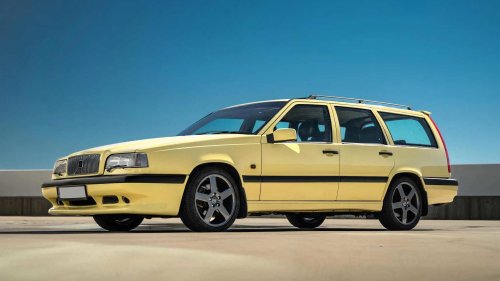
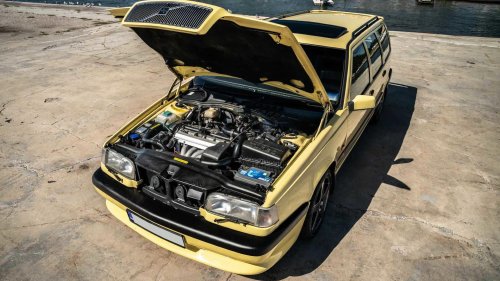
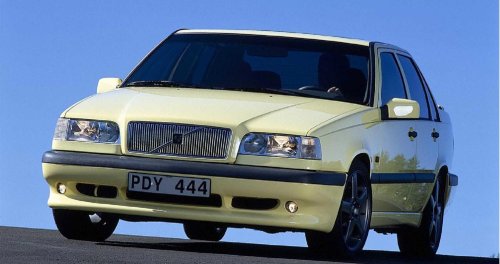
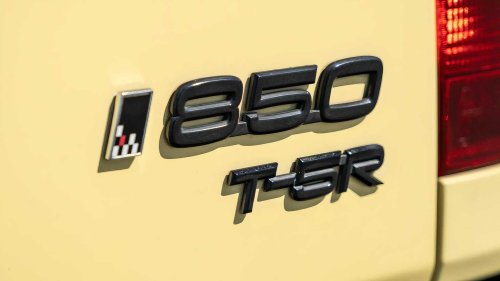
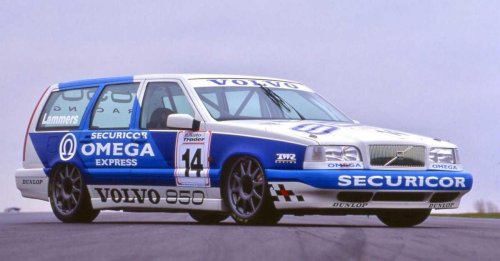
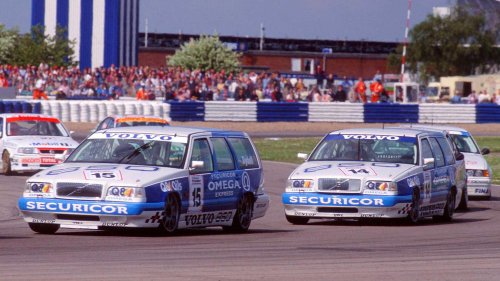
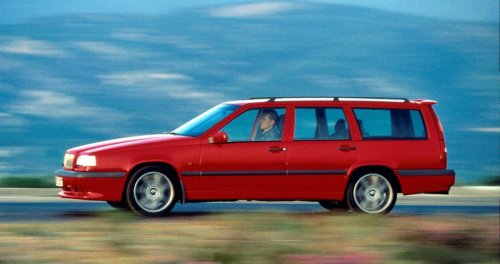
The mid-nineties represent an automotive era in which performance began to trickle down from exotic sports cars to unassuming daily drivers. Bugatti was fitting production cars with quad-turbocharged V12s, Porsche was co-developing Mercedes sedans, and GMC was offering an all-wheel-drive pickup that could embarrass Ferraris at the red light. Heck, you could get a beige Buick Regal with a supercharger. Economy cars were injected with punchy attitudes, while performance cars seemed more like engineering studies than segment competitors with a strong business case. Manufacturers made decisions that were simply unexpected, like in 1994 when a Swedish brand that produced safe family vehicles decided to stuff its brick-shaped wagon with go-fast parts and take it racing. The 850 T-5R Was Volvo's Sports-Car Beating Sleeper Wagon Bring A TrailerVolvo had been building its understated 850 GLT sedan since 1991 and introduced an estate version for its third model year. The model had garnered a reputation for safety and dependability and was presented as such. With new innovations such as the first side-impact airbags fitted to a production car, some even called the 850 the world's safest car. High praise, no doubt, but nothing about the 850 spelled excitement.Shattering expectations at the 1994 Geneva Motor Show, Volvo captured the attention of enthusiasts with a fast new wagon for the whole family. The Volvo 850 T-5r made its debut with a turbocharged 2.3-liter inline-five that could be optioned with a 5-speed manual sending power to the front wheels. Per Volvo, with its special wheel design called Titan and its "distinctive yellow color, the T-5R really stood out like an exclamation mark on wheels." The 850 T5-r presented a perfect mix of Swedish design, practical size, and serious performance. Performance Help From Porsche Bring A TrailerIn the development of the T-5R, Volvo asked its friends in Stuttgart at Porsche to help out in bringing power figures to a mighty 240 horsepower and 243 lb-ft of torque. The collaboration also resulted in a specially calibrated ECU, upgraded turbo tuning, and chassis enhancements. With Porsche influence, the 850 T-5R became a bona fide sleeper car bound for legendary status among enthusiasts.Via Volvo Media With such thrust, the yellow brick could reach 60 miles per hour in less than seven seconds and achieve a top speed of 152 miles per hour. For reference, it would stay even with a Mustang GT of the same vintage. While other souped-up wagons like the Audi RS2 and BMW M5 Touring were on the scene in the nineties, the 850 T5-R was notably more affordable and far less predictable from a brand like Volvo. Plus, both of those German wagons were exclusive to the European market. The 850 T-5R was a Smash-Hit Bring a Trailer Volvo had intended to limit production of the 850 T5-r to just 2,500 units exclusively in Cream Yellow. Those plans didn't last long. Demand for their super wagon far surpassed Volvo's expectations, so production expanded to approximately another 2,500 units finished in Black Stone and 500 units in Dark Olive Pearl. Volvo would go on to offer a tweaked model with a few refinements for the 1996 model year, the 850r, intended for regular production to meet demand.Perhaps the unconventionality of Volvo's new wagon contributed to its immediate sales success. Its warbly, off-beat inline-five was an automotive rarity. Its front-wheel-drive configuration made for controversial dynamics. Its proportions spoke little to its sporting capabilities. The 850 T-5R's oddities amounted to a complete package full of charm. Volvo Proved Its Turbocharged Brick Could Corner via volvo It doesn't seem logical to enter a wagon in the British Touring Car Championship, but that's exactly what Volvo did with two modified 850 T-5r wagons in 1994. This vehicle shape had never been seen before at the starting line, and it captured the attention of amused spectators. It seemed as if Volvo had brought a knife to a gunfight, but in reality, they were worthy rivals. The 850 had spent the last four years developing a reputation that was dependable and understated, if not boring, so seeing the car that your neighbor used to haul groceries and lacrosse gear pull up to the starting line at Thruxton Circuit was rather unexpected.The BTCC, one of the world's longest-running touring car championships, was the perfect series for such a stunt. Races were broadcast on UK television, and manufacturers such as BMW, Alfa Romeo, and Ford raced head-to-head. Plus, the race cars had great marketing value as they closely resembled cars offered on showroom floors. Fans could be converted into buyers, meaning that the real win for Volvo was just showing up. Maybe A Wagon Wasn't Such A Bad Idea Via: VolvoThe 850 T-5R had fleeting moments of promise throughout the series. Surprisingly, the long-roofed Volvos had an actual downforce advantage over their fastback opponents.While the Swede was fit for true circuit racing, that was not enough to earn it a podium finish. While the 850 did have a few positive results in qualifying, it finished 8th overall for the 1994 BTCC season, with its best showing being 5th place at Brands Hatch. Regardless, taking the 850 wagon racing was a success for Volvo in showing the world they could build cars that were as exciting as they were safe. The unconventional shape captivated spectators because it challenged assumptions about family estate cars. The following year, aerodynamic regulations became stricter, and the 850 wagon was replaced by the sedan variant. The 850R Remains Desirable, Yet Affordable Volvo Afraid to research the cost of having a Swedish super wagon of your own? Fear not, they've remained attainable. This 1996 850R Wagon with 116,000 miles recently sold on Bring a Trailer auctions for just $15,500. For the limited production 850 T-5r, prices are less clear, but generally higher. Unless you're seeking rarity and collectibility in the 850 T5-R, we'd recommend going for the later 1996-1997 850 R as it offers more refinement and parts availability. Expect to find most 850 wagons like these in the $10,000 to $15,000 range, but don't be surprised to see a highly original 850 fetching as much as $26,250 like this one-owner example finished in bright red.Even today, the 850 wagon remains a practical, sensible choice while still keeping things fun and fast for the whole family. The only thing we dislike is that we can't buy a new one. In fact, the affordable wagon is nearly extinct in the United States, with players in the game either yielding to sedans or morphing into crossovers—we're looking at you, 2026 Subaru Outback. While Volvo hasn't built a performance-focused wagon for years, we'll keep hoping for a true successor to the 850. If the Germans were able to find a business case for their modern wagons amidst the SUV craze, we think Volvo should enter the fray with a practical performance wagon to rival the BMW M5 Touring and the Audi RS6 Avant.Sources: Volvo, Bring a Trailer



















 +42 others