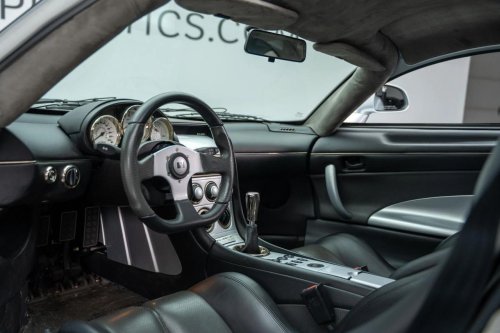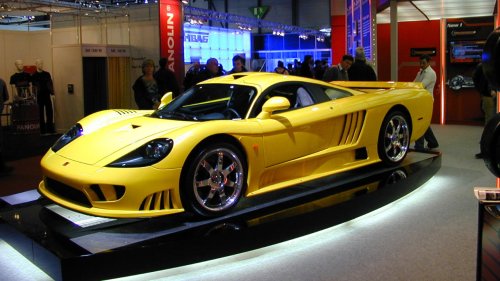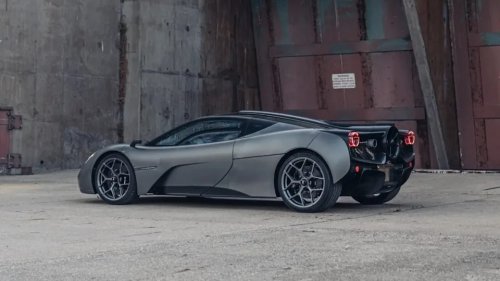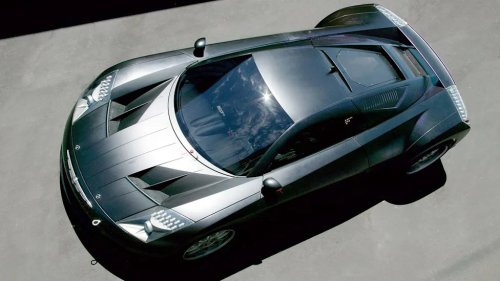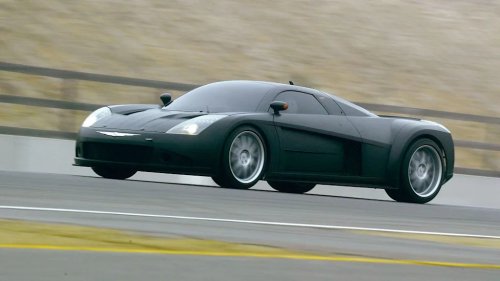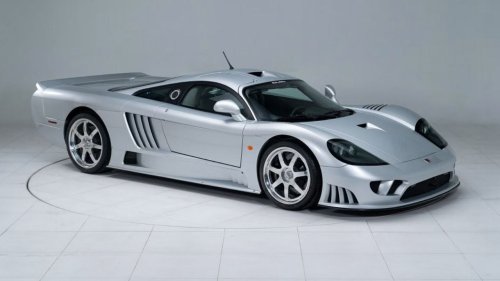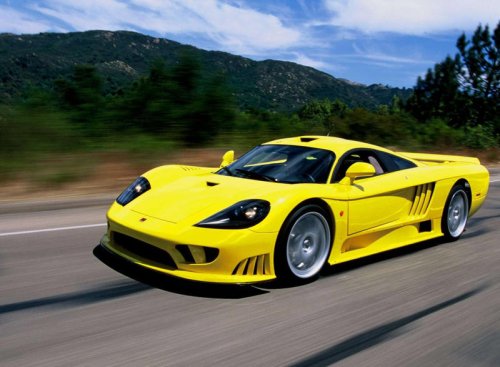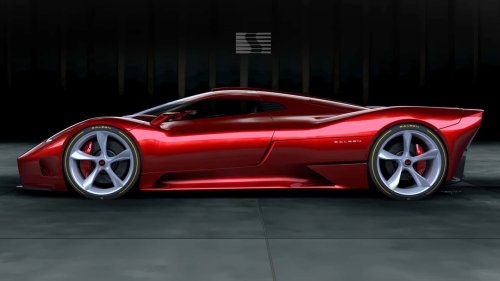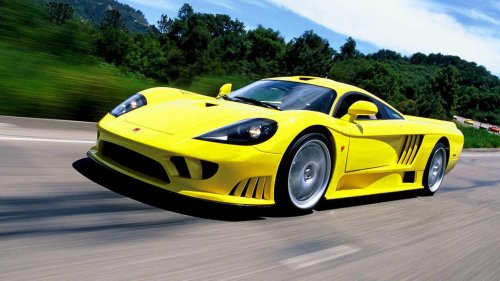
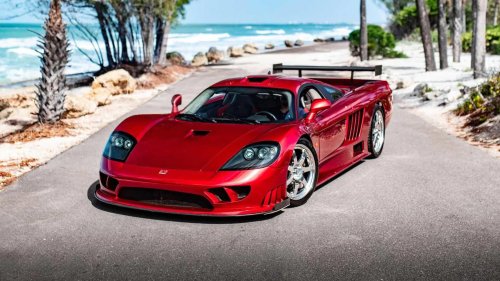
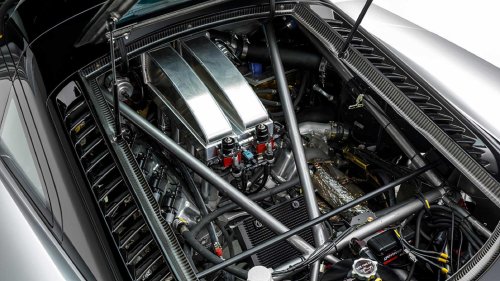
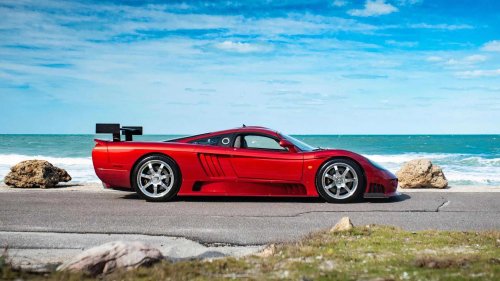
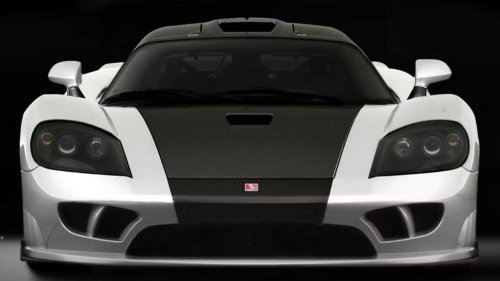
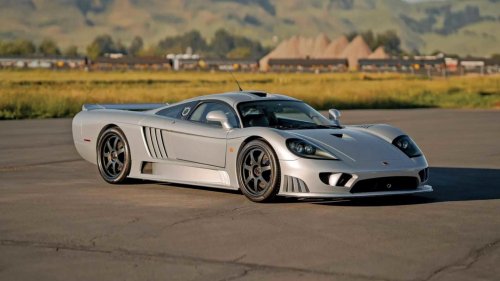
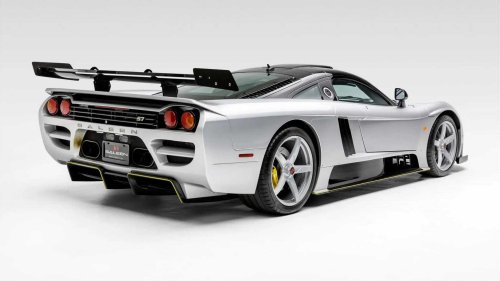



















The world of supercars can be an odd one, sometimes. Among the more established manufacturers, we occasionally get a cool alternative that pops up from a low-volume manufacturer or a region we typically wouldn't associate with the supercar market. This supercar fills both those qualifications. Appearing almost out of nowhere at the turn of the millennium, it could have changed the game. But, it's now a forgotten piece of automotive history. For now, anyway. The Saleen S7 Is America's Forgotten Supercar SaleenThere have been a surprising number of American-made supercars over the years. Those have ranged from abysmal failures like the Vector W8, to the absolutely awesome Chevrolet Corvette ZR1. The one American supercar that everyone seems to forget about, though, is the Saleen S7. First going into production in 2000, this all-American supercar came from one of the least likely companies to dip its toes into that market. Saleen was previously known only for making tuned-up Fords. While those cars were great, they were far from being supercars. They also weren't particularly advanced. The S7 knocked both of those assumptions on their heads. It Was America's Sixth Production Mid-Engined Supercar Ever Bring a TrailerOne of the things that made the Saleen S7 special compared to other American supercars was its mid-engined layout. It was only the sixth mid-engined production American supercar ever made. On top of that headline statistic, the mid-engined layout gave it as close to perfect weight distribution as Saleen's engineers could possibly get. This gave the S7 the driving dynamics it needed to be able to compete with top-of-the-line European supercars in the 2000s. Its Engine Had Surprisingly Humble Origins Bring a TrailerWith the Saleen S7 being a fairly advanced early 2000s supercar, you might have expected its engine to be similarly exotic. While much of the development on it was done in-house by Saleen, the brand's tuner roots definitely came into play. The architecture of the S7's engine is based on the Ford Windsor V8. Saleen would have been incredibly familiar with this engine, thanks to its experience from tuning up Fords. So, it does make sense that it would want to build its own engine around its fundamentals. The History And Evolution Of The Saleen S7 Bring A TrailerAs we've already mentioned, the Saleen S7 was actually developed to be a fairly advanced supercar for its day. That advanced nature centred mainly around its body. This was made entirely out of carbon fibre, in a bid to keep weight down. The chassis was also a racecar-style space frame design, with reinforcing panels made up of a steel and aluminum honeycomb composite. This, again, helped to keep the weight down. What was the result of all that weight saving? A weight of just 2,865 lbs. That made it considerably lighter than a typical Lamborghini Diablo of its era (3,583 lbs). It's also lighter than the Ferrari Enzo, which weighs up to 3,263 lbs.While the engine was seemingly fairly low-tech, Saleen was able to get some fantastic power out of it. The original base model was still good enough for 550 hp. Combined with the S7's light weight, that was enough to outstrip almost any European supercar of its era. Things got even crazier when the twin-turbo version showed up. This added a pair of turbochargers to that original V8, boosting the power up to 750 horsepower and taking the 0-60 mph time down to just 2.8 seconds. That wasn't even the ceiling of what a road-going S7 could achieve either, as Saleen could sell you a "Competition Package" for the twin-turbo. This turned the S7 into a 1,000-horsepower car and could potentially take it up to speeds as high as 256 mph. Those are numbers more like what you'd see in a million-dollar hypercar like the Bugatti Veyron, let alone an all-American supercar built by a company that previously just tuned Fords! It Had A Racing Version That Was Briefly Successful While the road-going version of the S7 was fantastic enough, Saleen wasn't just content with trying to beat European supercars on the street. It also wanted to challenge them on the racetrack. With that in mind, it developed a race version of the car. The S7-R used the naturally aspirated version of the 7-liter V8. But, it was heavily tuned, producing as much as 760 horsepower. That made it more powerful in its unrestricted form than the road-going twin-turbo version!Due to GT1 category rules at the time, it couldn't run in competition without having restrictor plates on. This took the power down to 631 horsepower. While that makes the 'legal' version of the car seem like a bit of a damp squib, it was still very competitive. In fact, it shocked the motorsports establishment when it first started turning laps in anger. The S7-R racked up multiple victories in multiple different racing series all over the world. This included a class win at the 2001 12 Hours of Sebring, and multiple race wins in the 2002 British and Spanish GT championships. This earned the Saleen-running Graham Nash Motorsport team championship titles in those GT championships that year. It Unexpectedly Returned In The Late 2010s SaleenWhen the Saleen S7's production ended in 2009, people thought that was that. We were probably never going to see another American supercar like it again. But, Saleen shocked us all in 2017 when it announced that the S7 was coming back! This new version is called the S7 LM, and it's based on the twin-turbo version of the original S7. Designed to commemorate Saleen's success in racing, the S7 LM looked more like a race car than previous road-going versions. It also had a lot more power. As per Saleen's claims, this car can produce 1,500 horsepower and go all the way to a top speed of 298 mph!Not much is known about how many S7 LMs were built. It's also not known whether it can live up to the lofty claims Saleen has for it. But, at least a couple were built, as some examples have come up for sale over the years. What Should You Look For When You're Buying A Saleen S7? Bring a TrailerWith the Saleen S7 being such a rare and exotic car, it can be a bit difficult to come by information about what you should expect when you look at buying one. Owning an S7 could be a bit of a mixed bag when it comes to maintenance. Its Windsor-derived engine means that it's less of a fuss than other more bespoke supercar engines of the era. But its carbon-fiber panels and race car-style chassis mean that any repairs to those areas will be very expensive. In that sense, it's much like if you damaged the body on a Pagani Zonda or any other kind of million-dollar carbon fiber-constructed car. So if you're looking for one, make sure you get one that doesn't have any damaged body panels or any chassis damage. If you have to put that right immediately, it could cost you the same as buying a decent regular car on the used market. How Much Is A Saleen S7 Worth Now? BonhamsMany rare, older supercars are incredibly expensive to buy on the used market. The Saleen S7 is absolutely no exception to this. If you want a road-going S7, you can expect to pay an average of $782,202 across all its different iterations. In the very rare instance where an S7 LM will show up for sale, you can expect to pay over a million dollars. That really is a huge price to pay, even for the wealthiest collectors out there. But it might be a price that's actually worth paying. It's On Track To Become A Classic Supercar BaTThe Saleen S7 isn't thought of as being a classic right now. But with the way the market is going, it's very likely it will be soon. Even though its body and chassis were very advanced for the time, its powertrain is very old school. A traditional V8 with rear-wheel drive and a six-speed manual transmission is something you'll never really see in a supercar again. As a result, collectors and driving purists will want that old-school feel. When that demand really takes hold, the Saleen S7 could truly become a million-dollar car.Sources: Bring A Trailer, Classic.com, Ferrari, Lamborghini, Saleen