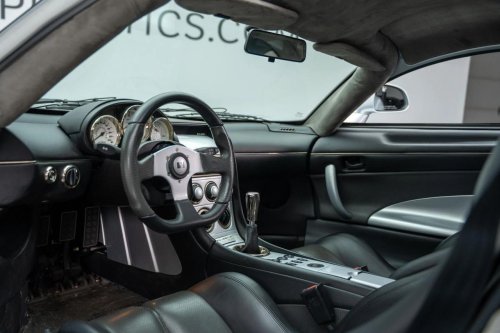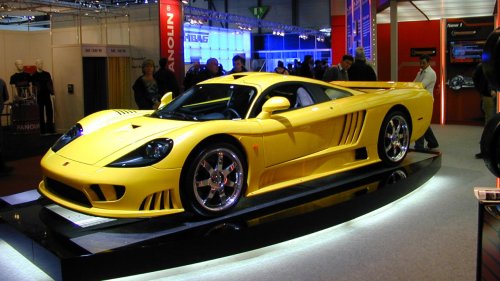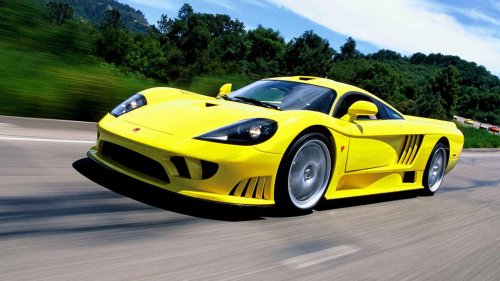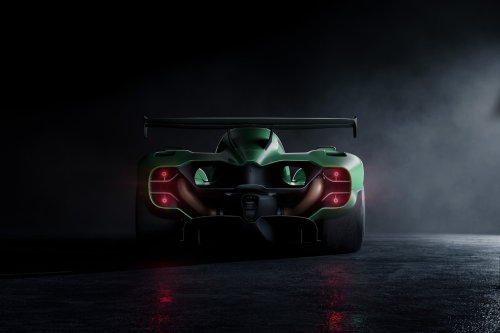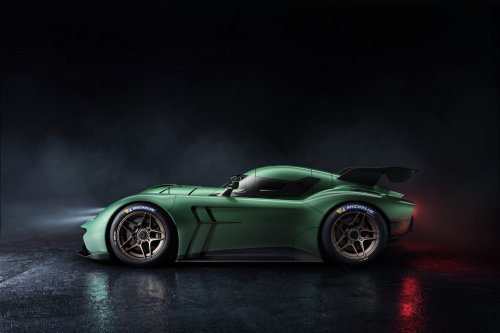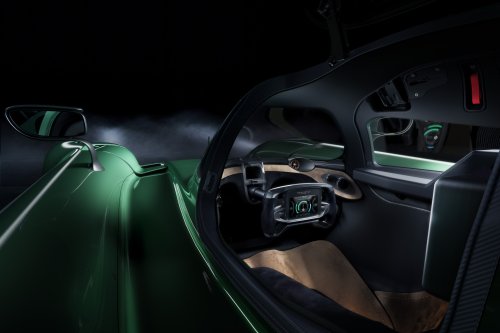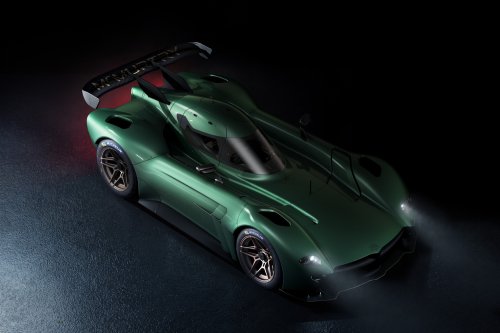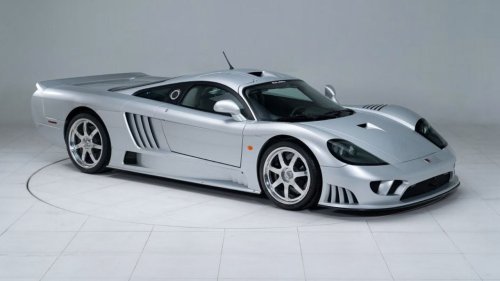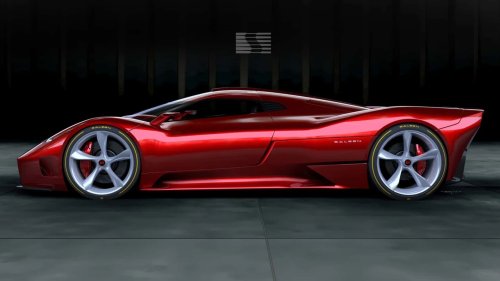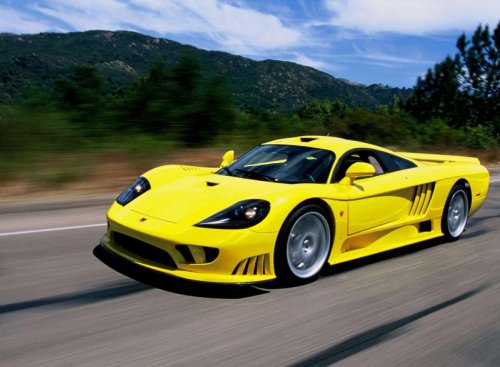
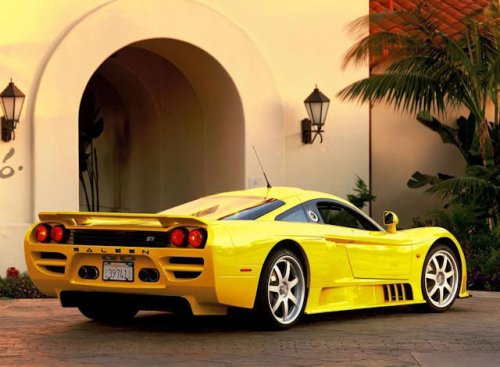
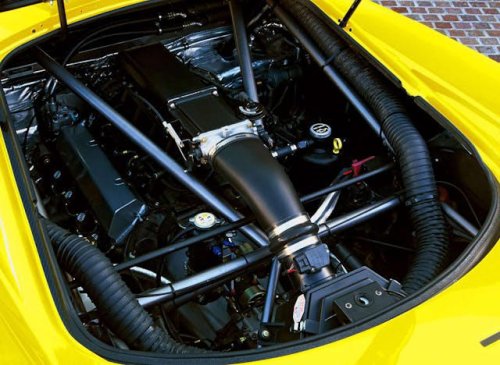
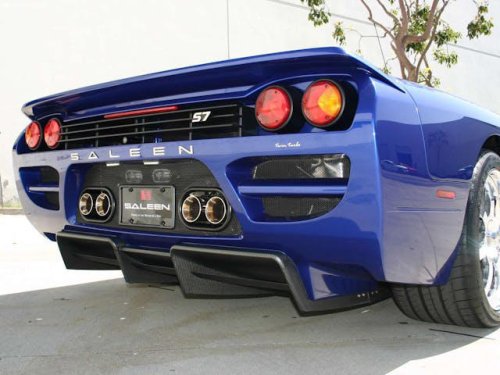
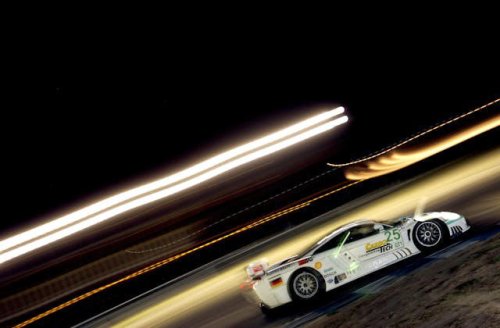
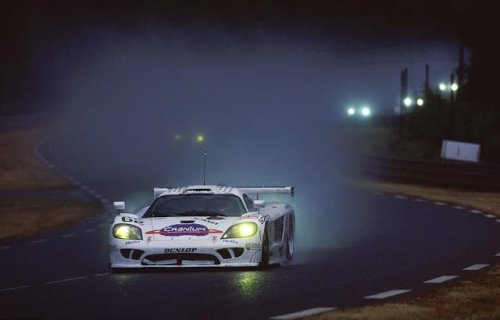
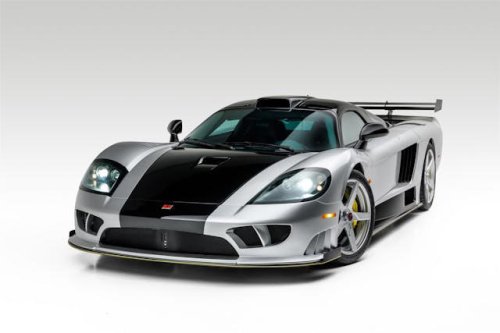
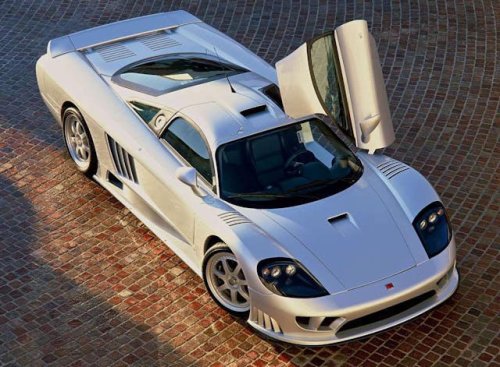
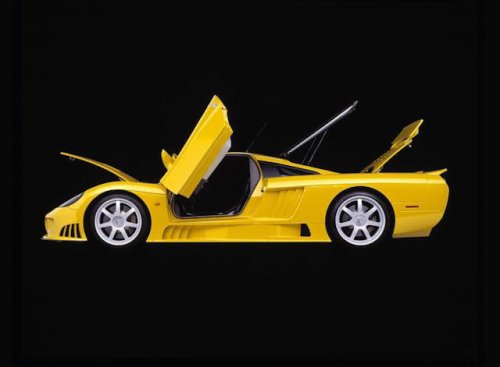

















Raw and Race-Bred, the Saleen S7 Offers Enzo Speed for Far Less Designed and built by Steve Saleen of Mustang fame, the Saleen S7 is an American supercar through and through. At its debut in 2000, the mid-engine S7 was the quickest car sold in the United States. This tube-frame, carbon-bodied coupe can hang with the most illustrious exotics of the era, including the Porsche Carrera GT and Ferrari Enzo, and in the 2000s it raced against—and beat—Europe’s best. Best of all, most variants cost six figures, not seven. If you have a soft spot for rare, race-bred American underdogs, the Saleen S7 deserves your attention. You might expect that the common denominator between Saleen’s Mustangs and his less well-known S7 is Ford mechanicals, but it isn’t. The real throughline is Saleen’s desire to win on an international stage. In the late ’90s, Steve set his sights on one of the most prestigious and grueling events in the endurance-racing calendar, the 24 Hours of Le Mans. Both of Saleen’s widebody “RRR” Mustangs failed to finish in ’97. Their first European racing tour was an “eye-opening” experience, says Steve: “Even though we were more than competitive here in the U.S., we were not competitive with the European cars.” He realized that the company needed to build its own supercar from the ground up. The benchmark: The McLaren F1. “Project Molly” began in December of 1999 (Molly is the name of Steve’s daughter). Development went swiftly, in part because Saleen borrowed a 351cid V-8 from one of its 1998 Mustang race cars to power the prototype. The 427 engine later used in the production car, says Saleen, was derived from that 351. Saleen borrowed “a lot of NASCAR technology” for the engine, especially when designing water jackets and head gaskets, because relying on a design with proven durability saved time. But even though it shares the same bore spacing as the Ford NASCAR mill, the S7’s engine is Saleen’s own casting, and the cylinder heads are a proprietary affair. “A lot of people say, ‘Oh, it’s a Ford engine,'” says Steve. “No, it’s not.” British motorsports engineering shop Ray Mallock Ltd. (RML), meanwhile, helped engineer and build the chassis. He unveiled his supercar in August of 2000, just nine months after design began. Long, low, and wide, the S7 wore carbon-fiber bodywork made by CTS in England, reinforced in places with half-inch aluminum-honeycomb panels. (It was tricky to paint; Saleen commissioned BASF to develop a coating that would stick to both epoxy and paint. Cha-ching!) Underneath the body lay a chrome-moly tube-frame chassis framing that 7.0-liter pushrod V-8. As Steve told Car and Driver in 2003, “What kind of American supercar would it be if it didn’t have a pushrod V-8?” The engine boasts a forged steel crank, Manley rods, and Arias pistons. As if that weren’t enough, the valves—two per cylinder—are made of stainless steel with titanium retainers, and the seats are made of beryllium. Lubricated via dry-sump, the V-8 sits low in the chassis, as Steve intended, inhaling through eight nine-inch-long intake runners that enhance its already torquey character. The tires are 20 inches tall and 13 inches wide. Famously, the 2750-pound car makes enough downforce that it could, theoretically, drive upside down above 160 mph. Output is 550 hp and 525 lb-ft of torque. When Car and Driver tested the S7 on a drag strip in California, the car sprinted to 60 mph in 3.3 seconds and to 100 in 7.6, dispatching the quarter-mile in 11.6 seconds at 126 miles per hour. The magazine pointed out that these figures were right up there with those of the McLaren F1 and the Ferrari Enzo (the latter had debuted in 2002, two years after the Saleen). “The S7,” wrote our own Larry Webster when he drove it, “is simply ridiculously fast.” As of July 1, 2003, it was the quickest production car built in the United States. Then, in 2005, the S7 gained two Garrett turbochargers, creating the S7 Twin Turbo. They generated a relatively tame 6.0 psi of boost, but they helped the 427 make more horsepower than the Enzo. That was the whole point, and the plan from the get-go: “We knew that Ferrari would not stand still,” says Steve. The Twin Turbo made 750 hp and 700 lb-ft of torque, or 200 hp and 175 lb-ft more than the naturally aspirated car. With slightly more compliant coilovers and modified gearing, the monstrously powerful Twin Turbo charmed Car and Driver‘s Csaba Csere: “Terrific grip, fabulous performance, and race-honed control feel make the S7 Twin Turbo one of the most exhilarating rides on the planet.” The next year, Saleen introduced the Twin Turbo Competition, with tweaked aero, revised suspension, and, most importantly, 1000 hp. Take that, Ferrari! The S7 went racing immediately. Four privateer teams ran the car in four series during 2001, a full-force effort that spanned both sides of the pond (IMSA, Grand-Am, ELMS, and a series that bounced between England and Spain). In its debut year, the S7 won championships in all four series. “To say it was a very successful launch would be an understatement,” says Steve. He recounts with satisfaction Saleen’s win at Imola in 2004, when a Vitaphone-run S7 trounced two Maserati MC12s … on their competition debut, for which Ferrari had assembled the European press, and before the immensely powerful Luca di Montezemolo, the man who saved Ferrari in the ’90s and had just become chairman of its parent company, Fiat S.p.A. “That was really a David versus Goliath moment,” says Saleen. The S7, he says, finished 45 seconds ahead of one MC12 and lapped the other. Of the S7’s 105 race wins, the most satisfying had to be its class win at the 24 Hours of Le Mans in 2010 with Team Larbre Compétition. Saleen waited 10 long, frustrating years for that win after a rain-soaked, heartbreaking showing in 2001. Three S7s entered that race, one set a lap record (it still stands today, thanks to tweaks in the circuit), and all DNF’d. But the 2010 win redeemed it all, as the S7 finished four laps ahead of the #72 Corvette C6.R. The final street-going model in the S7 family is the LM, introduced in 2017. With a seven-liter V-8 tuned to 1300 hp (1500 on E85), and an interior trimmed in leather and Alcantara, the LM was initially priced at $1,000,000. Only seven were built, and they are poised to be the most desirable of the range: The first time that an LM went up for auction, it shattered the record for the S7 nameplate by selling for $1,205,000 on Bring a Trailer. RM Sotheby’s sold the same car a year later for $1,022,500, and last year for an undisclosed sum. For context, a Twin Turbo in #2 (excellent) condition currently carries a $682,000 value in the Hagerty Price Guide, and a naturally aspirated car in the same condition comes in at $479,000. As you can see below, the graph of the values for the base and Twin Turbo versions of the S7 is an undramatic one. However, it gets more exciting when you consider that the value for both Ferrari Enzo and Porsche Carrera GT are in the millions. With only 100 S7s made (that includes both road and race cars), the Saleen is more exclusive, too. The only supercar of its period that is comparably priced is the Mercedes-Benz SLR McLaren, and that auto-only, lavishly appointed, front-engine car is a totally different animal than the S7. The premiums carried by the LM and the Twin Turbo underscore the unusual place of the Saleen S7 among the supercar pantheon. The S7 Twin Turbo Competition was an American supercar with four-figure horsepower long before the 2026 Corvette ZR1X and its twin-turbo V-8. Even if we consider the 750-hp Twin Turbo version, no Corvette caught up to the Saleen in terms of output until 2019, when the 2019 ZR1 debuted with 755 supercharged horsepower. Which S7 is right for you? If you have track experience, the most enjoyable version of the S7 is arguably the race car. Long eligible for historic racing, the S7.R’s contemporaries include the Viper GTS-R and the Corvette C5-R. If you’re interested in a road car, you should be aware that the seat does not move; Saleen intended for its customers to be fitted to their car at the factory, and adjusting the pedals in the extremely tiny footbox requires removing bolts. That inconvenience underscores the focus of these cars. With its wide sills and loud interior, not to mention its cramped passenger compartment, this is hardly a car for relaxing coffee runs, let alone road trips. The naturally aspirated cars are especially stiffly sprung; as Larry Webster wrote in 2003, “You do feel everything on the road—cracks, reflectors, possibly cigarette butts.” But if you crave big power and big downforce, complemented by excellent brakes and precise steering, the S7 will deliver. No matter which variant you consider, the S7 is quicker, more powerful, and more raw than almost anything at the time—and it was designed and built by a shop that was a boutique outfit in comparison to Porsche, Ferrari, or Chevrolet. This off-beat supercar is a race car in thin disguise. More than its Enzo-challenging speed, that focus is really the appeal of the Saleen S7.