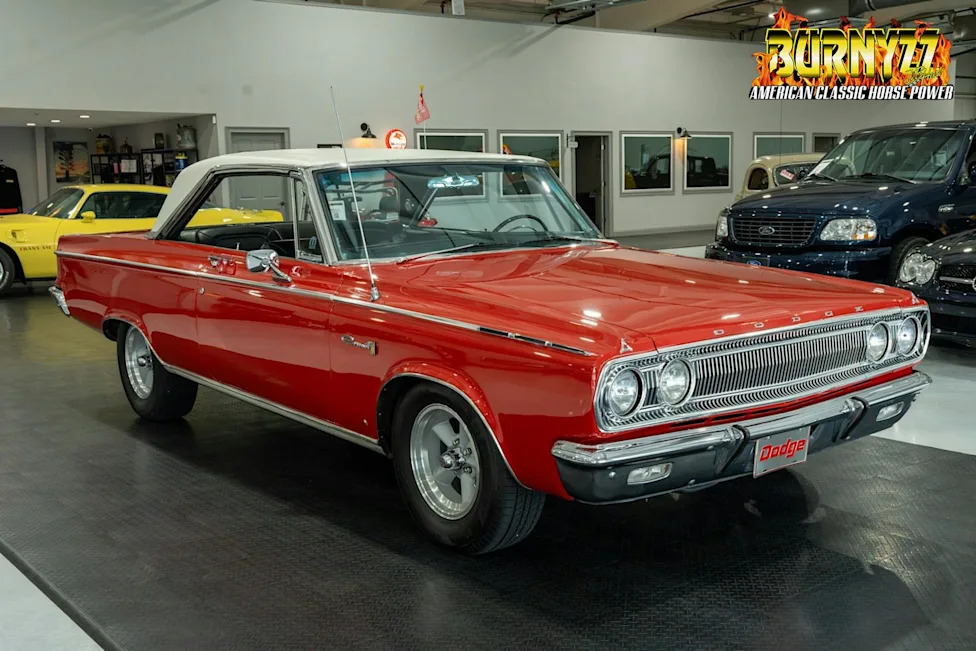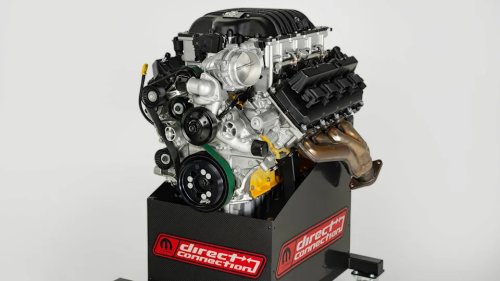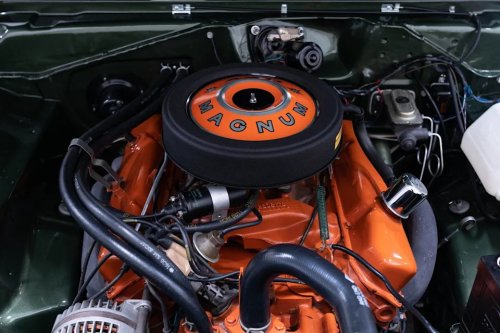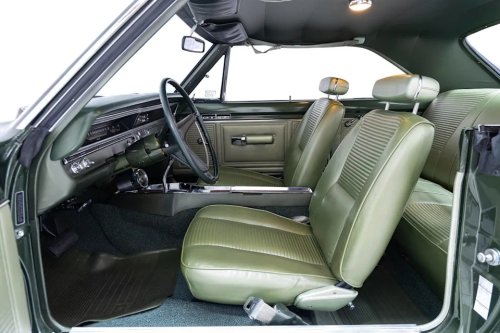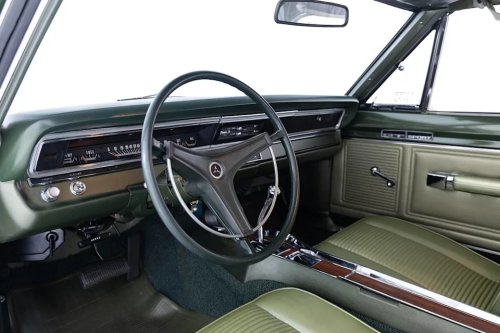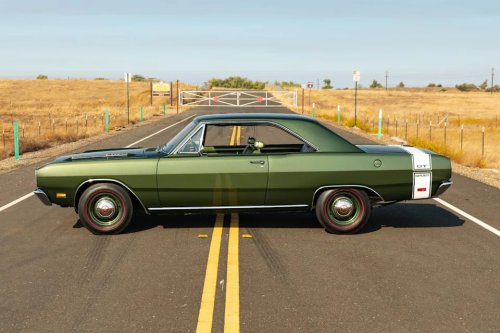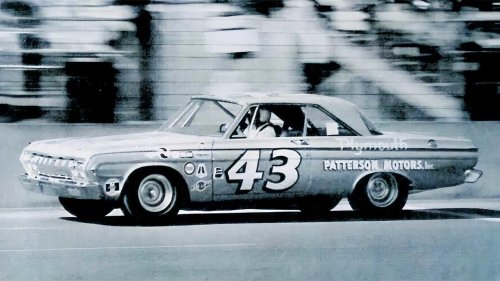
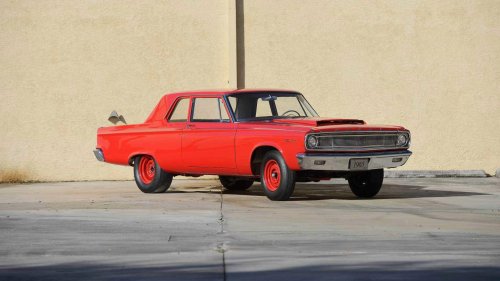
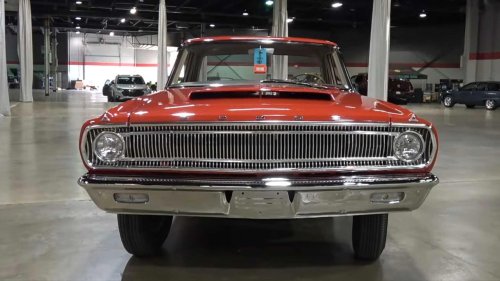
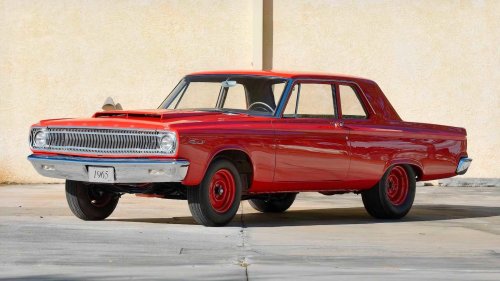



















Nicknamed the “elephant engine" for its size and power, the 426 Hemi became one of Chrysler’s most important and enduring performance engines. Designed for high torque and raw performance, the big-block V8 did just that: it was introduced in NASCAR in 1964 and helped Chrysler secure immediate victory, starting at the 1964 Daytona 500. Yet, in highly competitive motorsports series, sustained dominance can often provoke rule changes, which Chrysler was about to learn the hard way.The 426 Hemi’s victorious start came to a brutal stop when NASCAR changed its rules for 1965, sidelining the engine until Chrysler could make it available in production form. Though the story could have ended there, the opposite happened, and Chrysler doubled down its efforts to keep the engine in competition. What first appeared to halt the glorious engine gave it a new start, leading the American manufacturer to enter a different racing series, and create an exclusive new car out of that, with only 101 units ever made. The NASCAR Ban That Started It All Chrysler Corporation 1964 marked the beginning of a new era for Chrysler, with the launch of their second-generation 426 Hemi engine. The race-tuned 7.0-liter (or 426 cubic-inches) V8 engine was engineered to be a potent weapon on track, and the new engine helped bring Chrysler the top three spots all while setting a new average speed record of 154.33 mph, in its very first major outing at the 1964 Daytona 500 race. Yet Chrysler’s fulgurant success in NASCAR was quickly put to a halt in 1965 with regulation changes from the series.For 1965, NASCAR imposed strict homologation requirements, with a specific production-availability standard that was not met by Chrysler and its track-focused engine. With a small production only limited for racing, the Hemi had to be offered as a regular production option and made available to the public, which effectively pushed the American manufacturer out of NASCAR. And since the production of a street-legal counterpart would take time, Chrysler searched for a different solution where it could compete straightaway.In search of a racing series where the Race Hemi could be put to use with immediate effect, Chrysler turned to the NHRA (National Hot Rod Association) Super Stock, moving away from 500-mile stock-car racing and entering quarter-mile drag racing. How Dodge Stripped a Coronet to its Bones Mecum Though NHRA Super Stock regulations were more lenient than NASCAR’s, the series also imposed certain production requirements for cars to qualify for competition. Committed to building a winning car for the Super Stock series, a new internal program code "A990" emerged under Chrysler.Built on a standard Dodge Coronet body, the Dodge Coronet A990 was re-engineered from the ground up for straight-line speed. Weight saving was a crucial factor for the race car and the A990 version of the Coronet used thinner-gauge steel to comply with new NHRA regulations banning aluminum body panels in Super Stock. Other weight-saving tactics included lightweight glass, and as you’d expect of a race car, a stripped-out interior. All creature comforts from the standard Coronet such as heater, rear seats and radio were removed, and all that was left were bucket seats mounted on drilled aluminum brackets. Engineers optimized the car to the limits of NHRA regulations by only installing a single headlamp setup, moving the rear axle forward and pushing the gear ratio to 4.56.The Coronet A990 was essentially an entirely new car with a much lighter body, an unrecognizable interior, and a powerful engine under its bonnet, only keeping its Coronet silhouette as a disguise. The Coronet A990 was joined on the drag strip by the Plymouth Belvedere RO51 or “Plymouth A990,” giving Chrysler two entries in Super Stock and twice the presence in competition, though the Coronet is the car that has remained the more popular one to this day. Dodge Coronet A990 426 Hemi Engine Specs Lou Costabile/YouTube Channel The Dodge Coronet A990's Powerful HEMI Engine, Limited To 101 Units Under the stripped Dodge Coronet shell sat the hand-built Race Hemi engine allegedly producing 425 horsepower. Even after its spectacular debut in 1964, the Hemi did not stop there and improvements such as new aluminum cylinder heads replacing older iron heads helped the engine shed weight. Other changes such as a new magnesium intake manifold and an aluminum oil pump body helped contribute to shaving off extra weight. The engine’s durability was also enhanced as well, and all these upgrades seem to suggest the Hemi produced a power output that was much closer to the 500 horsepower mark.To meet homologation requirements, the Coronet A990 production was capped at exactly 101 units, and was sold to customers at the price of $4,717 (or about $50,000 today). As a race car first and production car second, buyers could only choose from a very scarce selection of options for their cars, which included color, transmission, tire size, and not much else.A990 owners could either go for the 4-speed A833 manual transmission or the A727B Maximum Performance TorqueFlite automatic. In the automatic transmission, the “Park” gear was completely eliminated in another attempt to save weight —since there was no real use for what was supposed to be first and foremost a race car anyway.What also helped bring the Coronet to long lasting fame are also the famous racers who drove it. Dick Landy, Bud Faubel, and Ronnie Sox are some of the talented drivers who drove A990 cars, proving how the A990 program could bring equally serious talent behind the wheel to match the wild engine under the hood. The Quiet Legacy Of Dodge's Rare Muscle Car Mecum The Dodge Coronet A990 is a car that is revered inside Mopar circles, yet very little known outside of them. Despite its victories in Super Stock, it had a fleeting existence in automotive history. Built to win races, the physical toll of that purpose shows in the surviving examples and some of the A990 units that remain still bear the marks of hard racing. Out of the 101 units ever made, many have been lost, modified or simply wrecked, making the few surviving ones extremely desirable.You’ll rarely find one in auction and even rarer are those in good condition, but some interesting stories remain. Chassis number 49 was one of just 3 examples in “Medium Tan Metallic.” After changing hands from one owner to another, this A990 resurfaced in a barn in eastern Tennessee in 2010 with a mere 843 miles on the odometer. It was fully restored in 2025 by a specialist in Mopar race cars, in New River, Arizona.The A990's story did not end with Super Stock and the A990 program helped push Chrysler toward altered-wheelbase A/FX drag racing, a category that would eventually become Funny Car. The Coronet A990 helped point towards this transition and though often forgotten, it played a pivotal role in the history of drag racing. From being unexpectedly thrown out of NASCAR to building a new racing program, it was times of adversity that helped Chrysler build one of its most iconic Mopar muscle cars. If you ever stumble upon of the Dodge Coronet A990 left in this world, know that you won't be simply looking at another muscle car, but a rare Mopar that had a major impact in America's racing history.Sources: Classic.com, Dodge, The Bridgehamptons