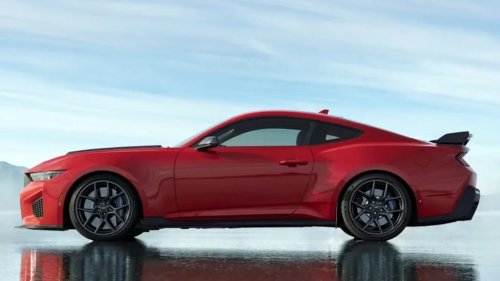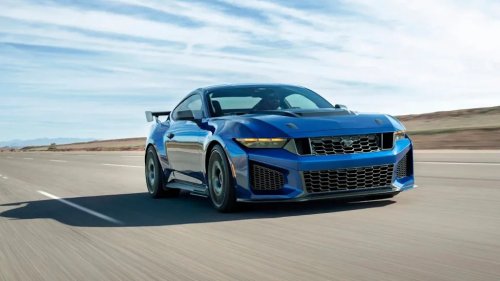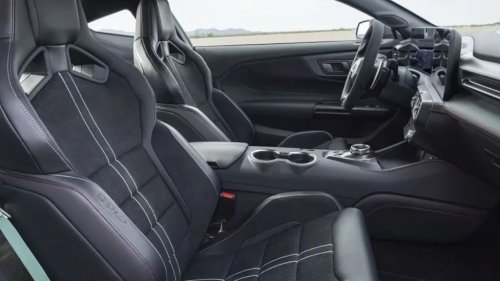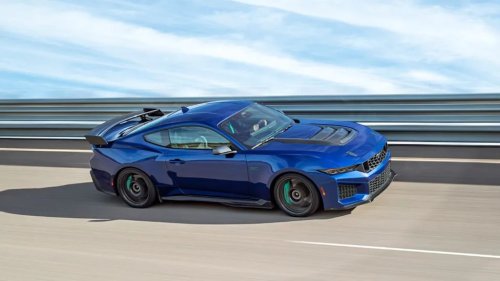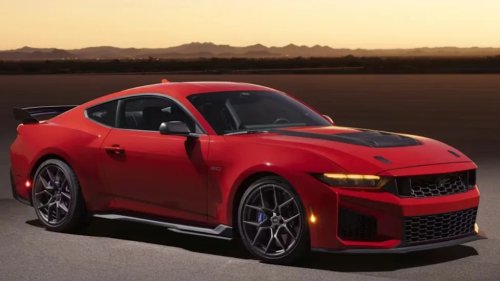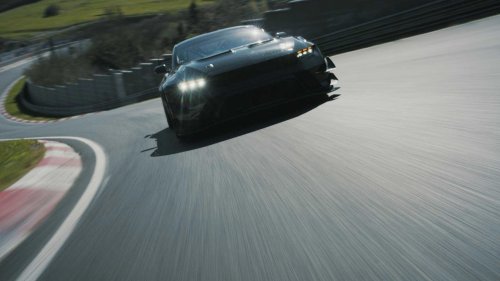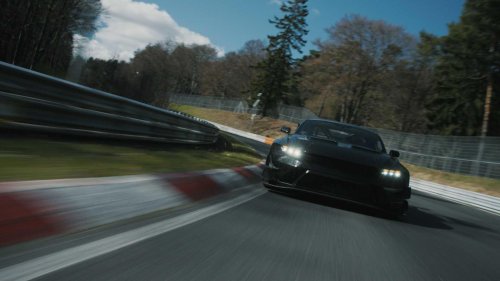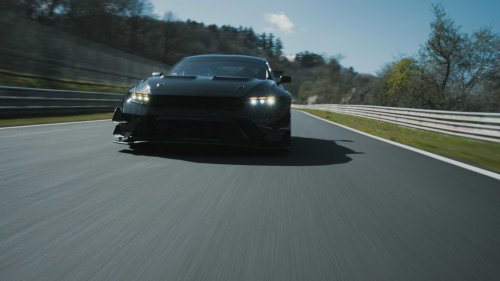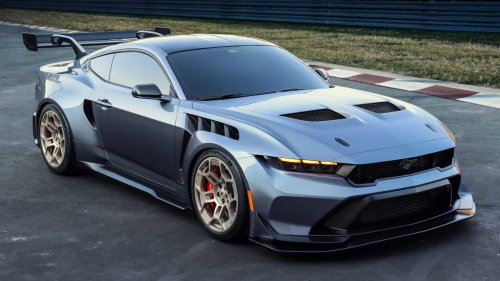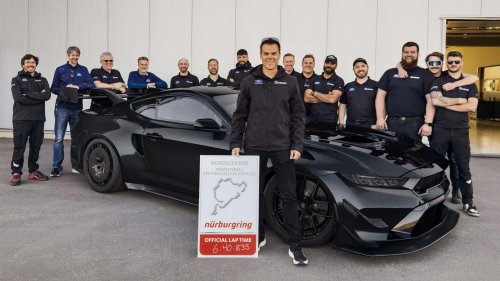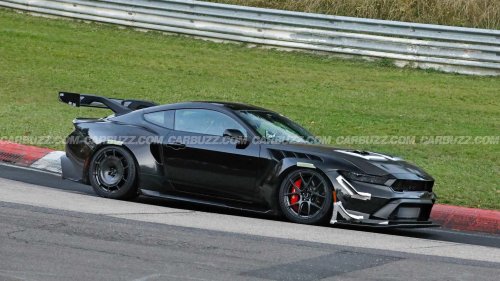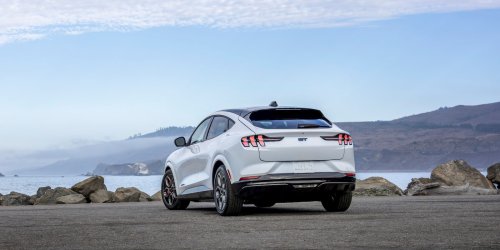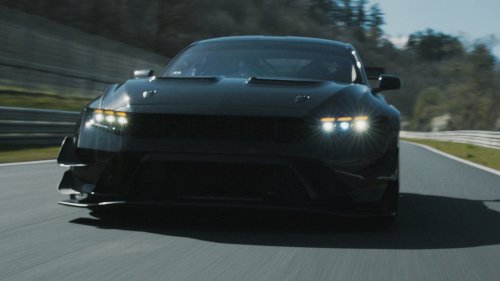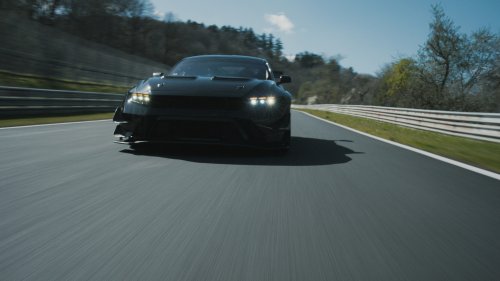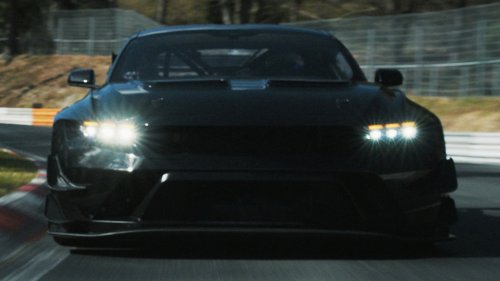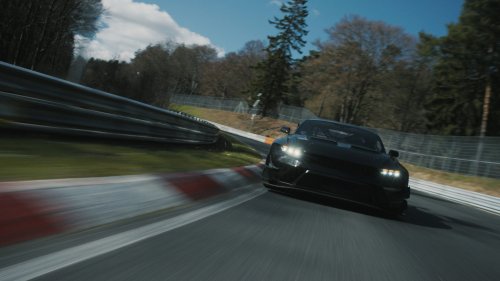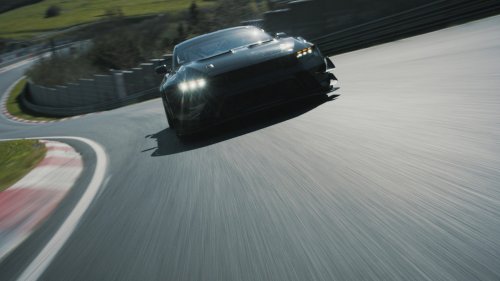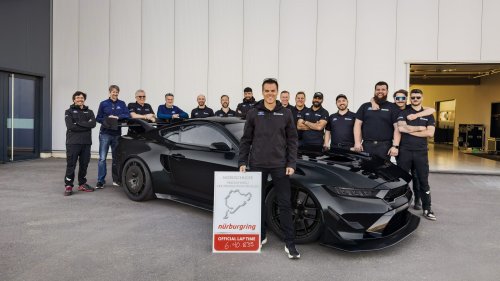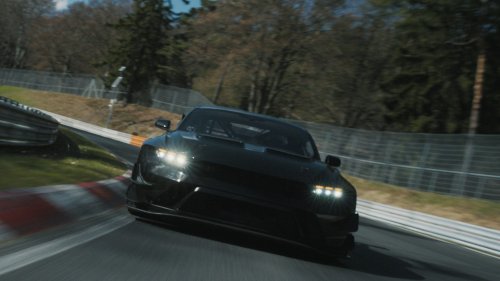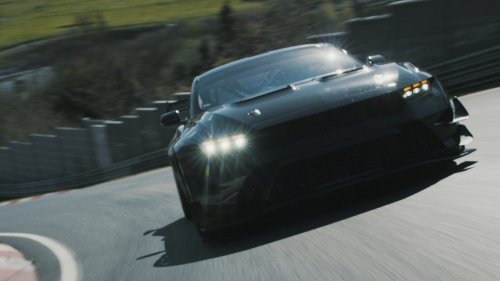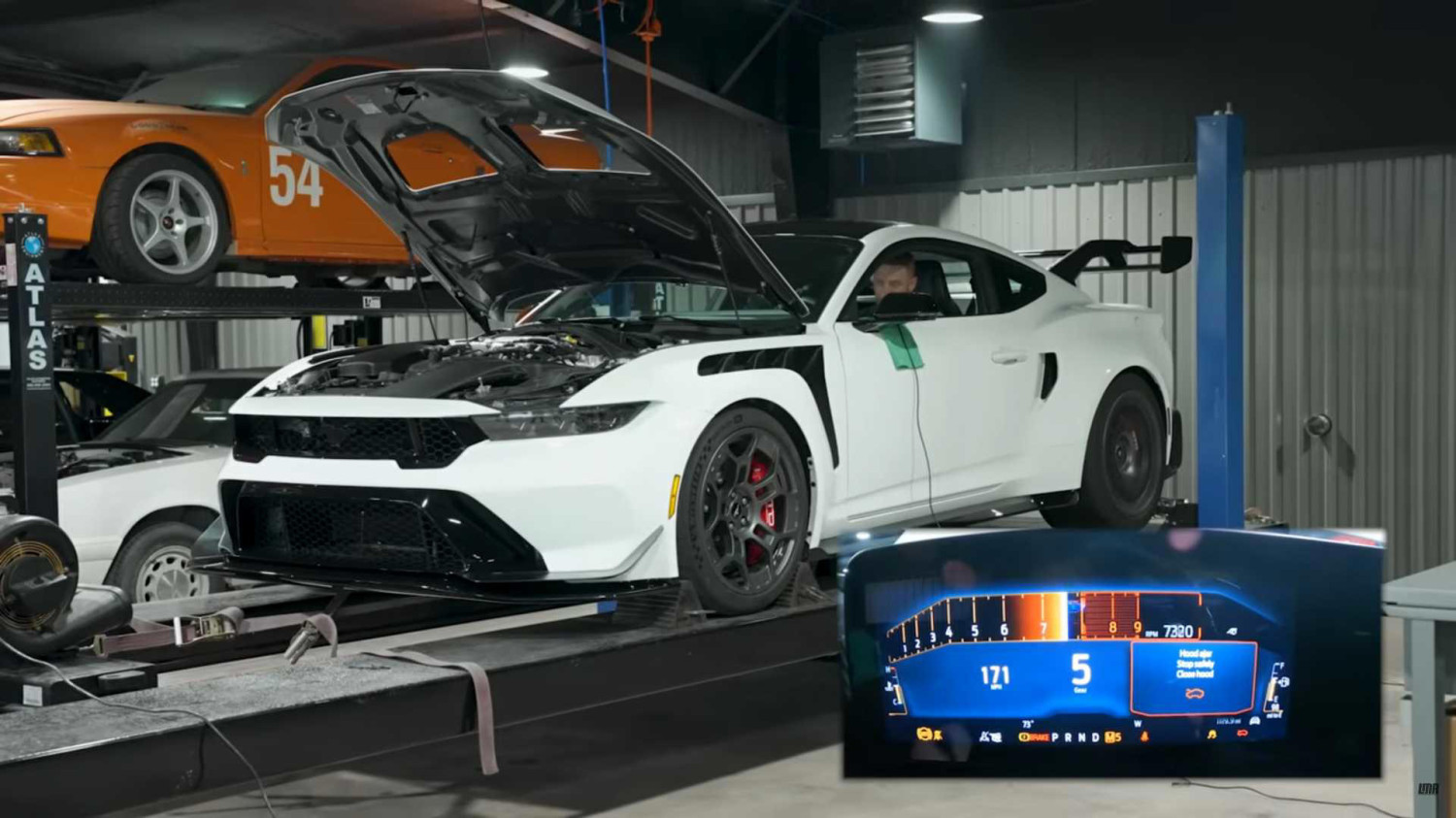
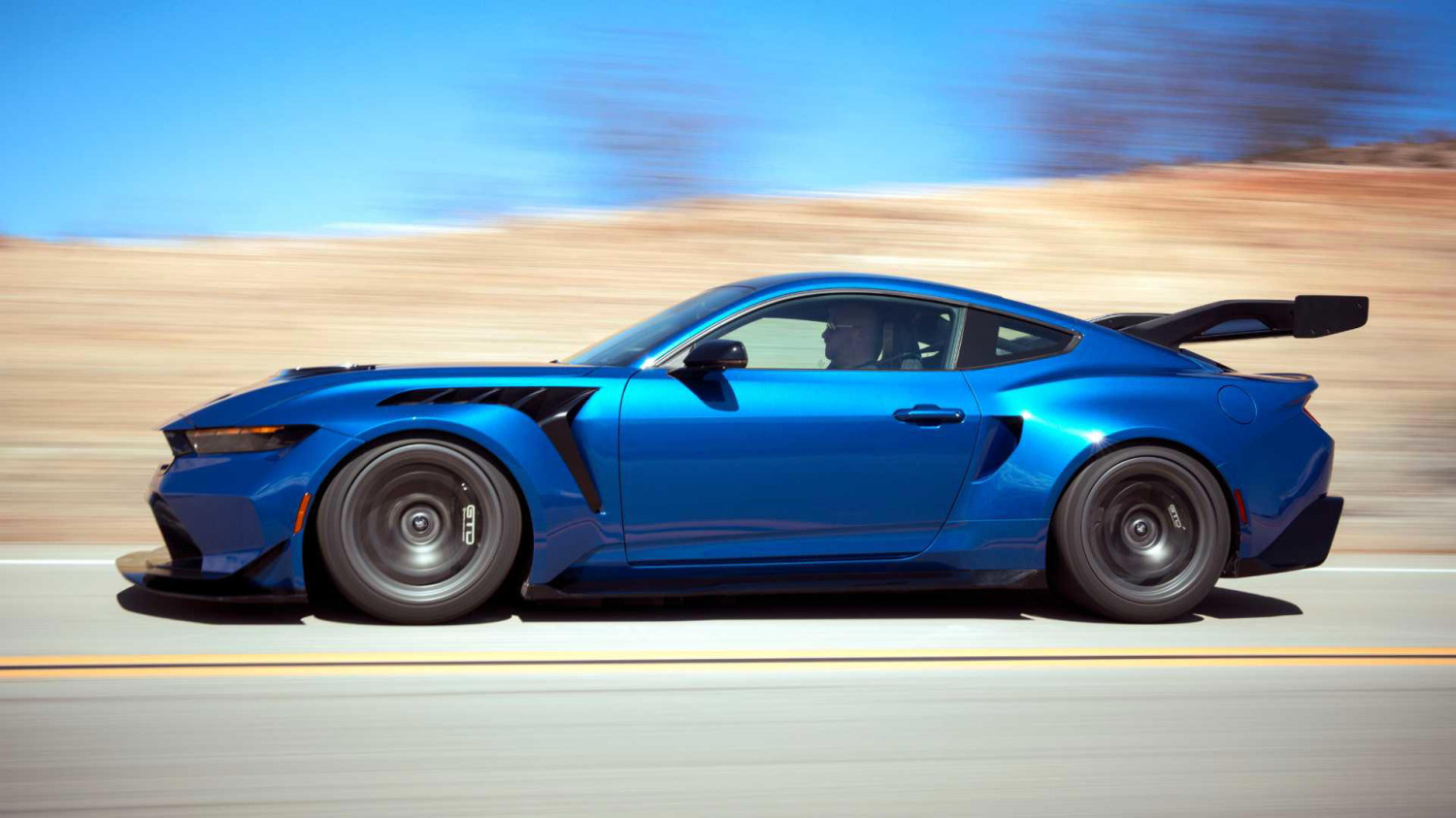
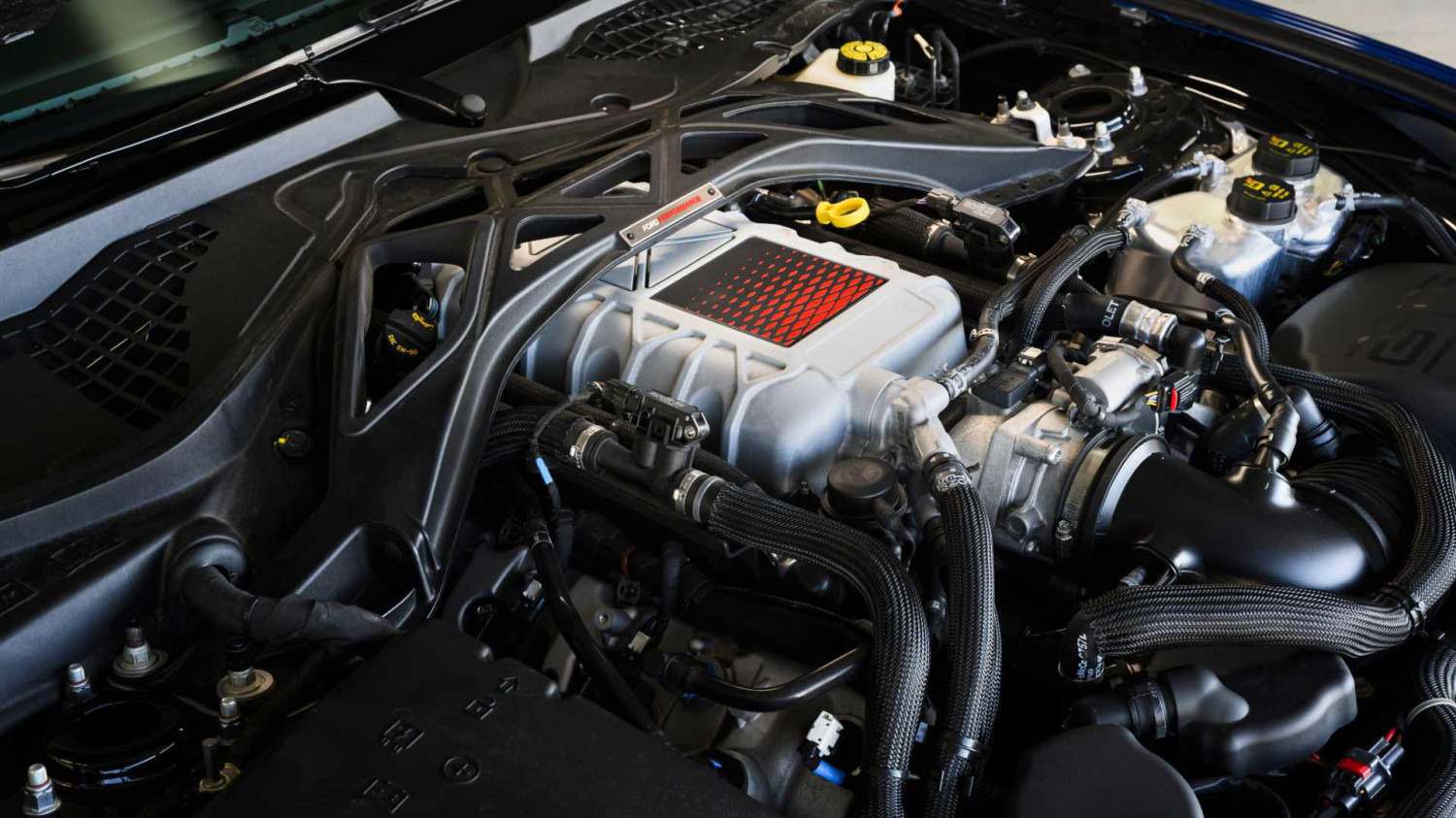



















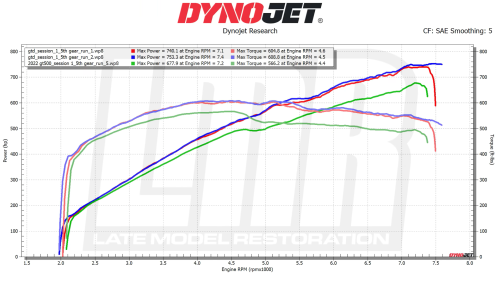

Before we launch too deeply into this latest Mustang saga, a word on chassis dynos. They can vary. A lot. If the parameters aren't set up just right, your stock 50cc moped might lay down 150 horsepower. Conversely, mess up the numbers on your recently built race car, and that V8 with $25,000 worth of parts might be weaker than a $25,000 Kia.And then there are things like ambient temperature, altitude, and all kinds of factors that can affect how the engine runs. You can even have small variations in the assembly process that may change the engine output ever-so-slightly. Point being, numbers posted on a chassis dyno – which measures engine power at the wheels versus right at the crankshaft – can provide a pretty accurate figure for engine health and performance. But it's not an exact science.Keep that in mind, because we're about to see the one Mustang to rule them all – the Nurburgring-slaying GTD – show us what 815 hp looks like in the real world. Not that we had any doubts it actually made that much power. But after seeing a dyno session conducted by Late Model Restoration, we're wondering if it just might make a little bit more than advertised. Or possibly, quite a bit more. Two Dyno Pulls, Each One Impressive Late Model Restoration / YouTubeIf you've seen cars make dyno pulls before, this session doesn't feature anything out of the ordinary. The GTD might be a bit unexpected though, simply because it's not sitting in some collector's garage. It shows just over 1,100 miles on the odometer, and we see it getting washed before it goes up on the rack. It's factory stock, which means the supercharged 5.2-liter V8 should generate 815 horsepower at the flywheel. Two pulls are done, each in fifth gear which is believed to be near a 1:1 ratio, which is what you want for the most accurate results.The first run comes back at 740 hp, which definitely isn't 815. But keep in mind, that's 740 hp measured at the rear wheels. There's power loss to account for, which we will discuss in a bit. After a short break, a second pull comes back even stronger at 753 hp. So with basically the same engine as the previous-generation Shelby GT500, the GTD makes almost as much power at the tire as the Shelby did at the crank. That should give you a taste of what's happening under the hood. Ford Could Have Underrated The GTD FordWith 740 and 753 measured at the wheels, this car could be making more than its advertised 815 hp at the crankshaft. The variables here are whether the dyno is dialed in correctly, and exactly what kind of parasitic power losses the GTD experiences through its driveline. We're going to hedge our bets that Late Model Restoration has their dyno configured correctly – they specialize in Mustangs, they've been around for over 25 years, and they are most decidedly no strangers to dyno-testing Ford's enduring pony car.Has for parasitic power losses, that's always a mystery. For a rear-wheel drive transaxle like you find in the GTD, an estimate of 10% to 15% is quite common. So if we go with the best-case scenario, that would mean the 815-hp engine would lose 81.5 hp getting to the wheels. Basic math tells us 815 - 81.5 is 733.5 hp. That's a little bit under the first pull at 740, but 20 hp over the second. Either way you slice it, that's more than 815 at the crank, and that's the best-case scenario.If we go the other way and figure 15% power loss, that would be 693 hp at the wheels on a stock engine. That's obviously way below 740, never mind 753. Working the percentage in the other direction, a 15% power loss with 753 hp at the wheels would mean ... 885 hp at the crankshaft. Yikes! More Than 815, Less Than 885? FordAgain, it's important to note that there are many variables when it comes to estimating crankshaft horsepower from a chassis dyno. But seeing 753 hp at the wheels does lead us to believe Ford is a tad conservative when it comes to the GTD's power rating. Based on these two pulls, a 10% power loss would suggest somewhere between 825 and 835 hp at the crank. And since we already know Ford has a more powerful GTD in the works, the engine is certainly capable of dishing it out.In any case, the GTD is decidedly not hurting for power. We can't wait to see what the new Competition version has up its sleeves.Source: Late Model Restoration / YouTube