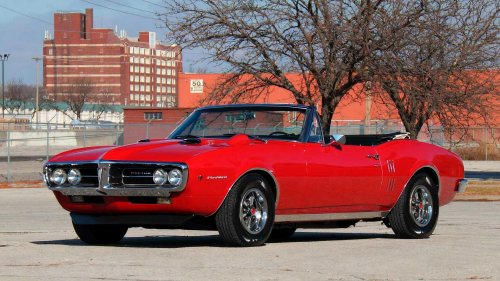
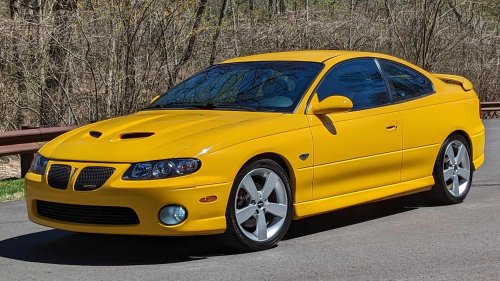
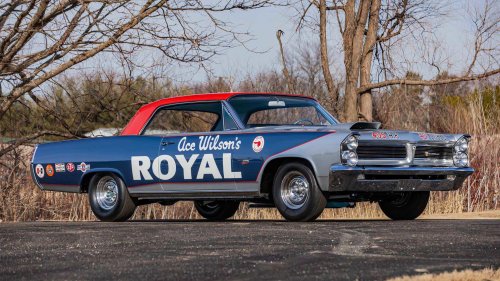
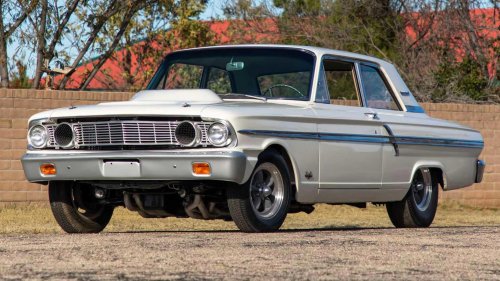
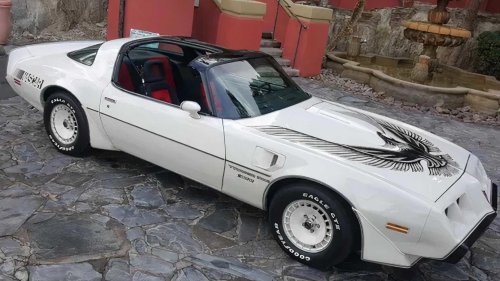
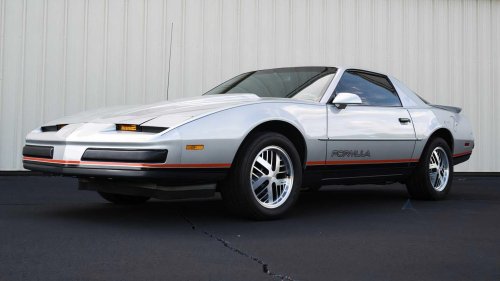
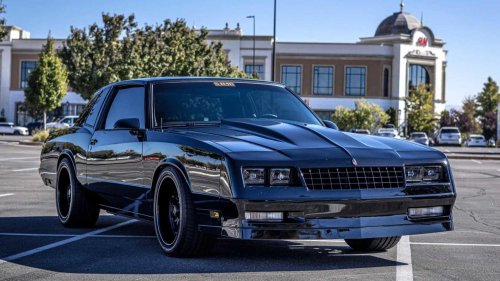
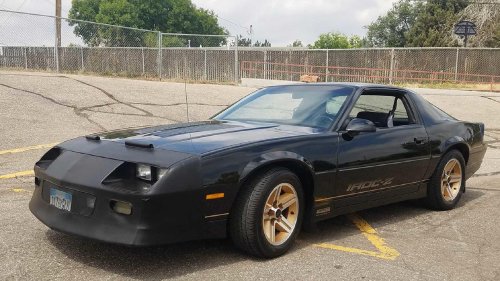
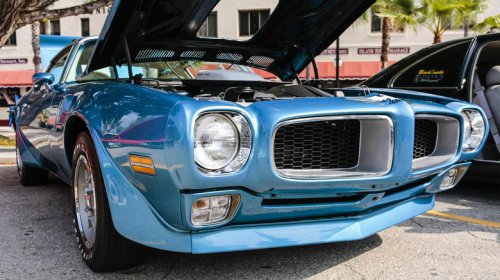
It's only been 15 years since GM discontinued the Pontiac, but it seems much longer than that, and maybe it's because decades have elapsed since they last made a car anyone cared about. The final Firebird rolled off the line in 2002, and nothing particularly interesting or cool came after it. Despite that, people are still crazy about the Pontiac brand, especially the classic muscle cars, but even a few modern models. Even the god-awful Aztek couldn't sully Pontiac's reputation for making some of the baddest rides to ever roam the streets.Back in the day, the GM hierarchy was Cadillac at the top and Chevrolet as the entry-level, with Buick, Oldsmobile, and Pontiac filling in as the loosely-defined "tweener" brands, In 1964, Pontiac established itself as GM's performance division with the introduction of the GTO, and cemented that status with the faster-than-a-Camaro Firebird in 1967. The thing is, Pontiac didn't just make the best GM muscle cars; they were having fun with the appearance packages like the Judge and Trans Am Screaming Chicken. For the hordes of fans who still love Pontiac, here are the most powerful rides they ever blessed us with.To give you the most up-to-date and accurate information possible, the data used to compile this article was sourced from various manufacturer websites and other authoritative sources, including Hemmings. Pontiacs are ranked by horsepower from lowest to highest. 1989 Pontiac 20th Anniversary Firebird Trans Am Power Output: 300 Horsepower 3/4 front view of 1989 Pontiac 20th Anniversary Firebird Trans AmWith the otherwise perfect 1989 Pontiac Firebird Trans Am, 20th Anniversary Edition, there are two nitpicky complaints: 1) they only made it in white, and 2) they didn't make enough of them. To celebrate two decades of Trans Am awesomeness, Pontiac upped the stakes with the quickest version they had built to date. They equipped a third-gen model with a modified version of the Buick GNX's 3.8-liter turbocharged V-6, and it was lights out. This was a Trans Am that could smoke its ancestors and anything else on the streets for the entire 1980s. 20th Anniversary Trans Am Power And Performance The '89 20th Anniversary Edition was laughably rated at 250 horsepower, but that's so far off that we can't bring ourselves to list it in the performance chart above. Most experts estimate the car's power at 300 horsepower, but we're going to have to respectfully disagree with that as well. This was a car that could make a quarter-mile pass in the low 13s, and that's traditionally 400+ pony territory. A 1970 Plymouth Roadrunner with a 425-horsepower 426-cubic-inch Hemi V-8 ran a quarter mile in 13.4 seconds, while having an approximate curb weight of 3,500 pounds. The '89 TA Turbo weighed about the same and had an identical ET, so science says it had more power than advertised. 1967 Pontiac Firebird 400 Power Output: 325 Horsepower 3/4 front view of 1967 Pontiac Firebird 400While Pontiac was technically positioned above Chevy, the Corvette has always been the King of GM, and protected as an endangered species. Pontiac developed an amazing two-seat sports car in the early '60s, retroactively named the Banshee, that would have really made a splash. It did, but not under the Pontiac banner. GM squashed the Banshee and then gave the design to Chevy, where it became the C3 Corvette. Realizing it was kind of a jerk move, GM allowed Pontiac to have their own version of the Camaro, which we now know as the Firebird. 1967 Pontiac Firebird 400 Power And Performance Pontiac could have phoned in their pony car consolation prize, but instead set out to make it better. With some slightly different sheet metal and a distinctive Pontiac grille, the Firebird was a little more badass looking, while the available 400-cubic-inch V-8 made it a little more badass performing. The '67 Camaro SS 396 ran a quarter-mile in 14.8 seconds, while the same-year Firebird 400 blistered a pass that was almost in the 13s. Also, a Firebird is a thing, while a Camaro is a nonsense word, so Pontiac takes it in every category, from style to performance to reality. Chevy did move 220,906 Camaros in 1967, versus the 82,560 Firebirds sold, but just because Domino's sells the most pizza doesn't make them the best. 1971 Pontiac Firebird Trans Am 455 H.O. Power Output: 335 Horsepower 3/4 front view of 1971 Pontiac Firebird Trans Am 455As cool as the first-generation Firebird looked, the second-gen topped it with amazing styling. The second-gen lasted all the way to the 1980s and never once seemed dated, which is a testament to the design. Third-gens are quintessentially '80s, but second-gens are timeless, and the car that comes to mind when thinking about a Firebird or its top performance trim, the Trans Am. Much of that is because of Burt Reynolds' iconic black and gold '77 Screaming Chicken from Smokey and the Bandit, but the Trans Am was turning heads and kicking butts long before that. 1971 Pontiac Firebird Trans Am 455 H.O. Power And Performance In 1970, GM lifted its silly big-engine ban, and the 455 became available to Pontiac's muscle car lineup. In a bit of weirdness, the much larger engine was actually less powerful than the 400-cubic-inch Ram Air IV V-8. In 1971, however, the 455 was the baddest engine available for a Pontiac, and the High Output version made the Firebird Trans Am one of the quickest GM muscle cars of the year. In another case of Pontiac understating the power of their cars, there's little reason to believe this 13-second car equipped with a massive 455 only produced 335 horsepower. 1971 Pontiac GTO Judge 455 Power Output: 335 Horsepower 3/4 front view of 1971 Pontiac GTO Judge 455 H.O.Speaking of things that don't add up, the 1971 Pontiac GTO 455 H.O.'s 13.4-second pass calls into question its official power rating. We've already covered what kind of horsepower is needed to move a 3,500-ish pound car 1,320 feet in the low 13s, and 335 ain't it. A lot of the time, the power ratings were understated by the automakers as a courtesy to the buyers, because it was a lot easier to get insurance on a 335-horsepower ride than it was for an apocalyptic 450-horsepower street machine. There were quite a few insurance companies that wouldn't even issue a policy for a high-performance muscle car, and for those that did, the premiums were outrageous. 1971 Pontiac GTO Judge 455 Power And Performance 1971 was the last year that the GTO Judge was its own nameplate, and, in a sad state of affairs, was discontinued mid-model year because of slumping sales. It seems bonkers to us now, but people in 1971 weren't interested in a killer-looking ride with unreal power that was reasonably priced. Seriously, the GTO Judge retailed for around $4,500, which is in the $35,000 range in today's dollars. 13-second performance rides for $35,000 don't exist in the modern era, but they did in the Golden Age of American muscle, and nobody really cared. Get ready for a mind melt: only 357 GTO Judges were made in 1971, so that is a rare piece of muscle. 1964 Pontiac GTO Power Output: 348 Horsepower 3/4 side view of 1964 Pontiac GTO HardtopThe 1964 GTO is the OG GOAT that kicked off the Golden Age of American Muscle, and does Pontiac proud, representing well on this list. In 1963, GM banned all of its divisions from equipping engines over 400 cubic inches in intermediate cars, which was a bizarre thing to do on the cusp of the classic muscle car era. In a way, that pointless corporate move actually spawned the muscle car because then-head of Pontiac, John DeLorean, was so annoyed, he concocted a 3x2 version of the 389-cubic-inch V-8 and dropped it into a Tempest, marketing it as a speedy car for the kids. 1964 Pontiac GTO Power And Performance Of course, this ploy was a major success and forced all the other automakers to come up with their own versions of the GTO. This mad scramble resulted in the most killer American performance cars for decades, and some of the most iconic rides Detroit has ever produced. While everyone has their tastes, and there are Ford or Mopar purists, it's hard to deny the sheer awesomeness of an original '64 GTO, or its historical significance. Without the GTO, there would be no Hemi 'Cudas or Chevelle SS 454 LS6s, and that alone is enough to give thanks at the altar of Pontiac. 1969 Pontiac Firebird Trans Am Power Output: 360 Horsepower 3/4 front view of 1969 Pontiac Firebird Trans Am ConvertibleThe aforementioned GM big engine ban hampered Pontiac's efforts to dominate the streets during the Golden Age. Luckily, Ford kept their big blocks out of play for most of the classic era, and when they unlocked them, they were disappointingly tame. Mopar, on the other hand, had 440s, 440 Six Pack/6BBLs, and the vaunted 426 Street Hemi, which made Dodge and Plymouth muscle cars red light challenge royalty. Even the base model 383 was likely to smoke just about anything a GM car had to offer. All of this changed in 1969 with the introduction of the Pontiac Trans Am and its amazing 400-cubic-inch Ram Air IV V-8. 1969 Pontiac Firebird Trans Am Power And Performance The Firebird Trans Am trim was designed for racing in the SCCA Trans Am racing series, despite a GM ban on racing development and the fact that its 400-cubic-inch engine far exceeded the circuit's 305-cubic-inch limit. There's a whole different story to un-knot that, but the bottom line was that the '69 Trans Am was GM's first 13-second car of the Golden Age. All the Mopar muscle cars were running in the 13s while the displacement-deprived GM cars were 14-second "also-rans." The first-year Trans Am changed all of that with a 13.7-second ET, and suddenly Pontiac was a player on the streets. GM's performance division found a way to play within the rules and still kick some serious ass. 1970 Pontiac GTO Judge Ram Air IV Power Output: 370 Horsepower GM finally lifted its absurd big-engine ban in 1970, but the GTO Judge didn't care. In 1970, the Pontiac 455 V-8 was rated at just 360 horsepower. Meanwhile, the 400-cubic-inch Ram Air IV was good for 370 ponies and was the difference between a 14-second slug and a 13-second superstar. Only 804,400 Ram Air IVs were built in 1970, making them among the rarest Pontiac collectibles. Even more elusive are the '70 Ram Air IV convertibles, of which only 17 were produced, resulting in that million-dollar ride in the auction video above. 1970 Pontiac GTO Judge Ram Air IV Power And Performance To put this into perspective, a 1970 GTO Judge with a 455 ran a quarter-mile in 14.6 seconds while the 400 Ram Air IV blazed in 13.6 seconds. That's a difference of a full second, which is an actual lifetime in a drag race. A car that loses by a second in the quarter-mile looks like it lost by a mile. The '70 GTO Judge with the 455 originally retailed for $3,662, while the 400 Ram Air was a little more expensive at $4,162, but was worth it for the added performance. Given the difference between a five-figure car and a million-dollar ride in today's collector market, the extra $500 back in the day for a Ram Air IV, it seems like a small price to pay. 1967 Pontiac Catalina 2+2 Power Output: 367 Horsepower 3/4 front view of 1967 Pontiac Catalina 2+2The Pontiac 428-cubic-inch V-8 is the engine that should have been in the 1964 GTO, as well as a top option for the 1967 Firebird, were it not for the pointless GM big engine ban. In reality, the V-8 was only 426.61 cubic inches, but both Ford and Chevy had 427s, so Pontiac called it the 428 to one-up them. Regardless of the displacement deception, this engine cranked out 376 ponies in the 1967 Pontiac Catalina 2+2. The full-size ride was considered the big brother to the GTO and had similar performance with way more luxury. 1967 Pontiac Catalina 2+2 Power And Performance Called the 2+2 because it had two bucket seats in the front and another two in the back, with no accommodations for a passenger in between either level. This was a luxury land yacht with aspirations as a street brawler, and it remains the coolest lesser-known Pontiac classic. With a quarter-mile pass in the mid-14s, the 2+2 wasn't going to take out a Hemi-equipped Mopar, but it sure as hell did smoke all the Cadillac and Lincoln luxury rides. In convertible form, the Pontiac 2+2 is the ultimate pimped-out drag car, which is a sub-segment that definitely needs more entries. 2005 Pontiac GTO Power Output: 400 Horsepower 3/4 side view of 2005 Pontiac GTOIt is important to note that there was a Pontiac more powerful than any car on this list, but we've chosen to omit it for reasons that will be explained. The 2008 G8 GPX had a 415-horsepower 6.2-liter Corvette engine and could run a quarter-mile in 13 seconds flat. Why it doesn't earn a spot on this list is because it isn't a classic Pontiac nameplate, almost none were ever sold (1,829 units), and most importantly, including it would have kicked the 20th Anniversary Trans Am off the list, and no kick-ass Pontiac list kicks ass without it. Instead, we present the rebooted 2005 GTO, which was the fastest car of the 2000s. 2005 Pontiac GTO Power And Performance This editor has been mercilessly critical of the fifth-gen GTO because it is based on the Australian Holden Monaro and has no connection to the OG GOAT, which it is named for. That being said, it's not the ugliest thing ever made, and it has some truly amazing performance. Perhaps if Pontiac had named it something else instead of trying to leech off of the GTO's reputation, it would have been more well-received. The remastered version of the GTO was a flop, but in retrospect, it was a fairly badass ride. The styling ain't bad, and the performance was unmatched in its day. 1963 Pontiac Catalina Super Duty Power Output: 405 Horsepower 3/4 front view of 1963 Pontiac Catalina Super DutyFactory drag cars were all the rage in the early 1960s, with beasts like the Chevy Impala SS Z11, Ford Fairlane Thunderbolt, and Dodge Coronet A990 tearing up the tracks. At some point in 1962, Pontiac developed their own factory road rocket with the Catalina Super Duty, which was lovingly known as the "Swiss Cheese Pontiac." In addition to lightweight aluminum body panels, the Super Duty had holes drilled in the frame to further reduce weight. Under the hood of this slimmed-down ride was a dual-quad 421-cubic-inch V-8 that was rated at 405 horsepower, but more than likely was in the 450 horsepower range. 1963 Pontiac Catalina Super Duty Power And Performance Pontiac described the 421 in the Swiss Cheese as "non-streetable," but that was probably more of a marketing ploy than any kind of legal thing, as these cars were sold at official dealerships and buyers could drive 'em off the lot. The '63 Catalina Super Duty was short-lived, as that was the year GM decided none of its divisions were allowed to participate in racing. In a move that sounds like something from a totalitarian regime, GM threatened Pontiac to discontinue the Catalina Super Duty with a cease and desist order. It's quite amazing that Pontiac was able to produce so many of the killer rides on this list under the iron thumb of the GM Autocracy.