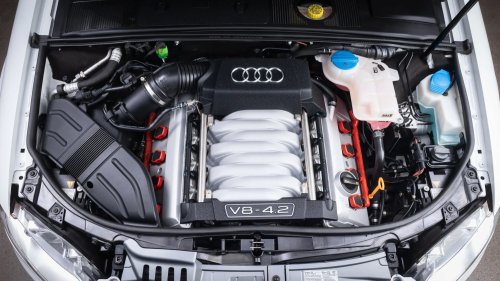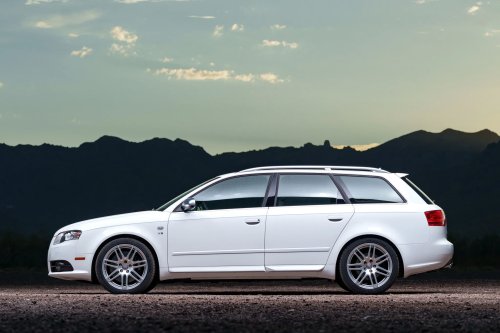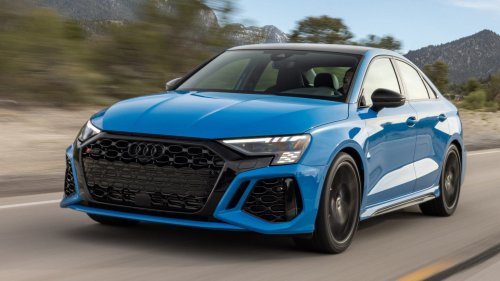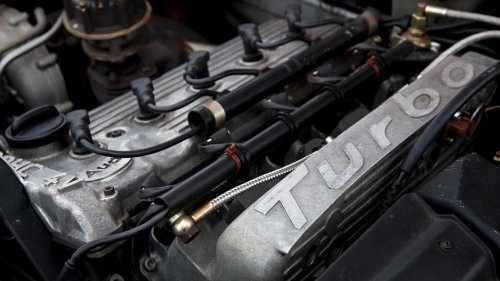
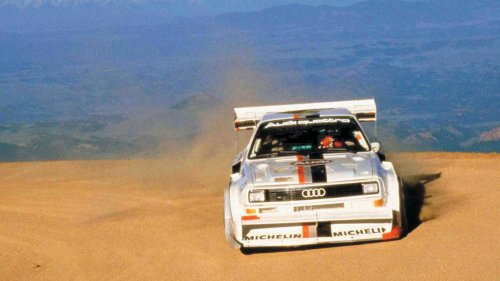
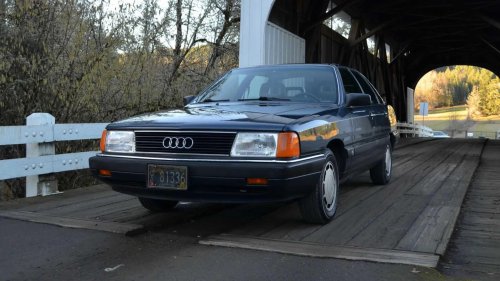
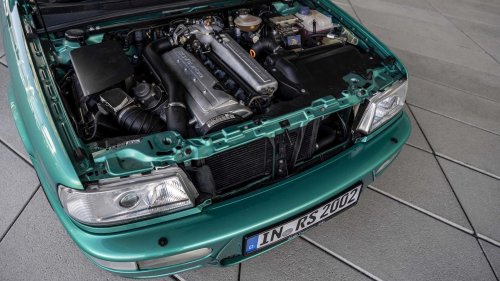
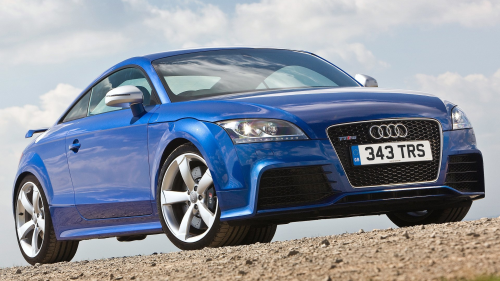
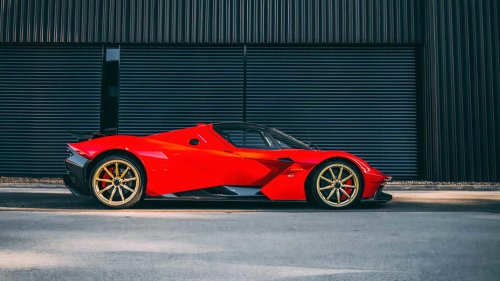
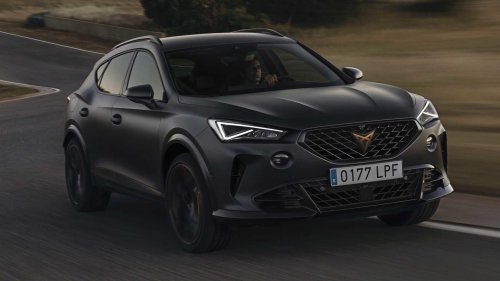



















Audi has developed its fair share of iconic engines over the years, with one of the main ones coming to mind being its glorious naturally aspirated V10. This unit powered vehicles such as the Audi RS 6, R8 supercar, and even the Lamborghini Huracán before being retired in 2024. This engine was a little out of reach for most gearheads, however, so the one arguably more revered is the marque's turbocharged inline-five powerplant.Still in production to this day, the unit has been seen in many forms throughout its history, from gas to diesel and from 2.1 to 2.5 liters in displacement. It has a rich history, and has far outlived all the V6 engines that it was built to eclipse, such as Alfa Romeo's Busso V6 and Ford's Essex V6. The First Turbocharged I5 Debuted In The Late 1970s Audi Audi first introduced its inline-five engine in naturally aspirated form in 1976, for use in its 100 sedan. Since Audi installed all its powerplants in the front of its offerings, the brand felt that a lighter unit would help improve the handling of its cars, as heavier V6 engines caused more of a weight imbalance. This induced understeer through the bends, so Audi felt that a lighter five-cylinder engine would not only help create more balanced handling, but also retain the level of refinement and power provided by a six-pot unit.It didn't take long for the German marque to start playing around with turbocharging, with the first such design appearing in 1979. The turbo was brought along to increase the engine's peak power output, with the result being 170 horsepower. The turbo I5 debuted in the 200 5T, the range-topping version of the sports sedan. While it didn't move the needle hugely beneath the hood of the 200, Audi's five-cylinder didn't have to wait long to secure worldwide fame. The Quattro Brought The I5 To Prominence Audi Audi unleashed a new coupe in 1980 called the Quattro, which was largely developed so that the brand could dominate the World Rally Championship. Its quattro four-wheel drive system was the real star of the show, but its 197-hp turbocharged I5 also deserved praise. Its distinctive wail charmed fans as it echoed through the forests of the world, while Audi's engineers continually developed the unit to become ever more competitive through the brutal Group B era. The engine kicked out 443 hp in its most potent form, and assisted the vehicle in winning two drivers and two constructors titles in the series, before it exited in 1986. It wasn't done winning yet though, as it claimed a popular success in the 1987 Pikes Peak hillclimb. Audi's Singing Five-Banger Continued Living It Up On The Road Bring a Trailer All while the Quattro was showing the competition how it was done in international rallying, the I5 was continuing to prove itself as a durable and effective upper-market engine in the likes of the 100, 200, and US-only 5000 sedans. Audi modernized it as the years went by, with the early carbureted units being superseded by more efficient fuel-injected designs. Its push for advancement eventually led to the first turbodiesel I5 making its bow in 1989, with the TDI being used in the 100. Aside from affording plenty of torque, the new engine was also much more fuel efficient than its gas-powered siblings.It ended up being effective that Volvo cut a deal with Audi to use the engine in its 850 model. The Swedish brand already had a five-cylinder engine of its own, but it felt sourcing one externally would be a better use of money than developing a diesel variant. The Five Cylinder Eventually Ran Out Of Road Porsche Audi stunned the automotive world once more under the hood of the awesome RS 2 Avant, under which a 2.2-liter variant of the weapon resided. With 310 hp being shared between the vehicle's four wheels, it was one of the fastest wagons on the road, as proven by its blazing 4.8-second 0-60 mph sprint capability. Beyond this, the turbocharged I5 lived on in the likes of the Audi A6 and its performance S6 variant in gas and diesel forms, though the lure of V6s proved hard to ignore for Audi.Alongside being more naturally refined, V6 engines were also easier to package under the hood. Audi phased out the I5 in 1997, and focused on a future of six-cylinder powerplants. The Manufacturer Eventually Revisited Its Roots Audi After over a decade on the sidelines, Audi made the popular decision to resurrect the turbocharged I5 in 2009. Engine technology had advanced to the level where the I5 could be developed to be a proper contender against six-cylinder engines, while its spine-chilling engine note was angrier and arguably more inspiring than most V6 options. Now only available in 2.5-liter displacement, and running on gas, it was first included in the TT RS. From there, Audi Sport continually developed the unit to feature in more of its offerings, such as the RS3 hot hatch and the RS Q3 SUV. Notable Models That Used Audi's Turbocharged I5 1980-1991 Audi Quattro 1994-1995 Audi RS 2 Avant 2010-Present Audi RS3 2009-2023 Audi TT RS 2013-2025 Donkevoort D8 2020-Present KTM X-Bow GTX It was producing just shy of 400 hp by 2016, while it was also lightweight thanks to much of the engine being made from aluminum. It remains in production to this day, and continues to be featured in the RS 3 and RS Q3, as well as sister brand Cupra's Formentor SUV. It's Not Just Audi That Enjoys The Fruits Of The Turbo I5 KTM Audi's TFSI Turbo I5 unit has proven such a performance weapon that other manufacturers were desperate to get their hands on it for their low-volume supercars. Dutch carmaker Donkevoort utilized the unit in its D8 between 2013 and 2025, while Austrian marque KTM has used it in several of its cars since 2020. While more famous for developing motorcycles, KTM also has a successful sports car arm that developed the lightweight X-Bow. The hardened GTX version of the model was equipped with the I5, while it was also used in the race-spec X-Bow GT2. Audi's I5 Looks Set To Live On For A While Yet Cupra Aside from continuing to power Audi's smaller performance models, the turbocharged I5 will also soon make an appearance in sister company Volkswagen's Golf. The next version of the Golf R, due in 2027, will utilize the I5 to celebrate the 25th anniversary of the Golf R first making its debut. Alongside this, it'll still be available for the likes of KTM to use in their more focused performance creations. Aside from official carmakers using it, the engine will live on as a popular aftermarket unit. Every six-cylinder competed against in period has now become a relic of the past, while the lure of Audi's five-pot is just as relevant today as it was when new.The turbocharged I5s beefed-up internals and extensive development program make it a great option for tuning, as it's easily durable enough to take a load more grunt. It comes with a raft of forged components, while its turbo can be turned up considerably higher than its factory-spec without causing reliability issues. You can find around 100 hp just by tuning the ECU to unlock extra headroom, while bringing an enhanced cooling package to the party can bring even more go-faster juice. This level of potential, when twinned with the engine's more compact size and amazing soundtrack, makes it an awesome specimen for those looking to develop an aftermarket performance hero. Indeed, KTM managed to extract 530 hp from the engine for use in its track-ready X-Bow GTX.If you do opt to blast past the 500 hp with your custom I5 though, perhaps considering the inclusion of Audi's quattro system into your build may not be the worst plan.Sources: Audi.