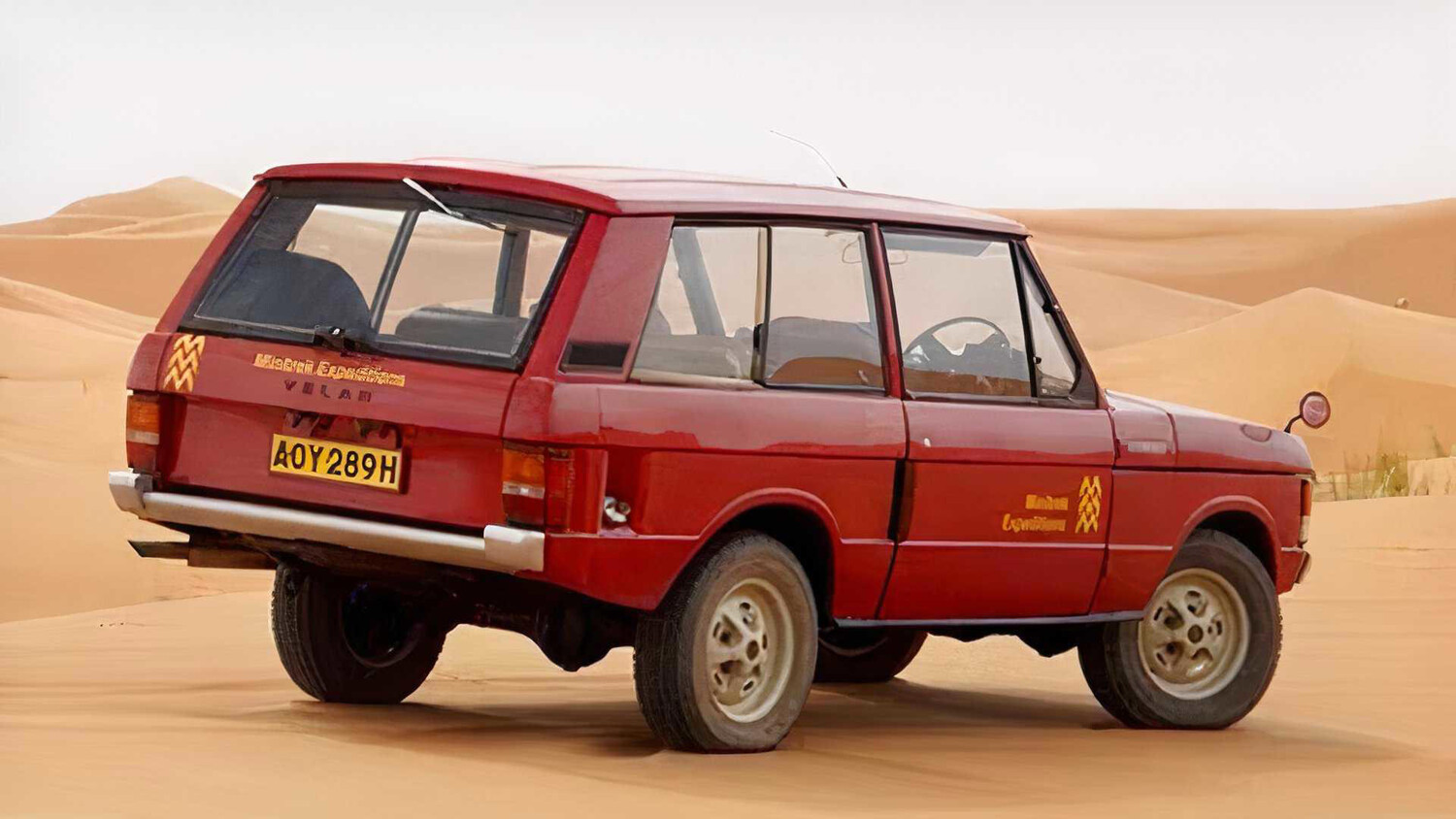
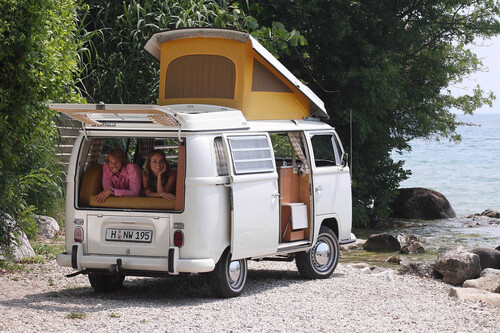
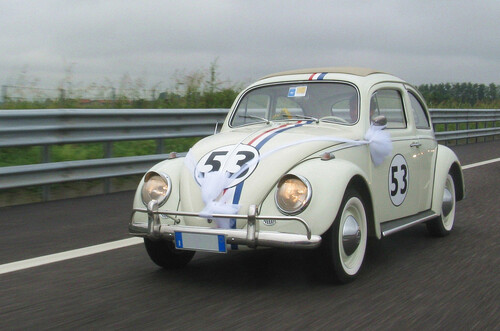
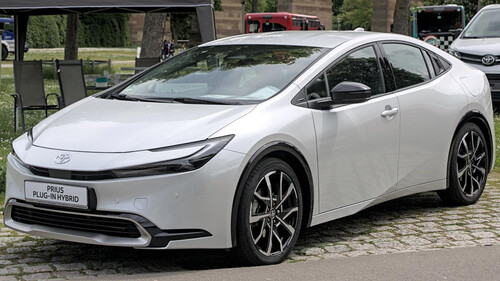
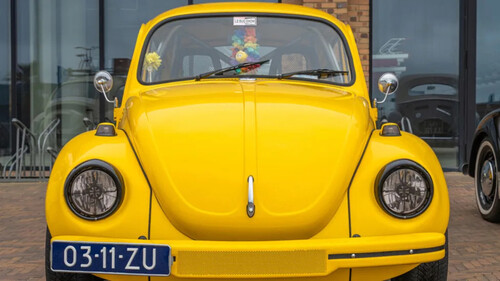
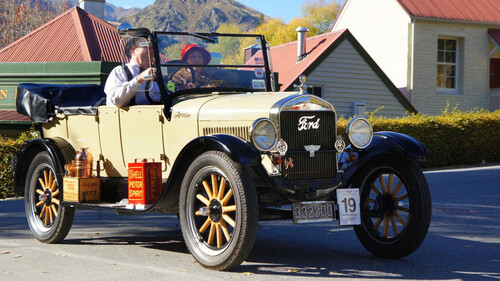
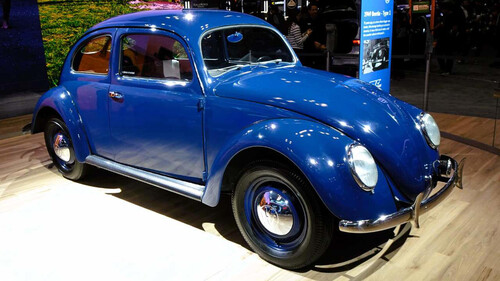
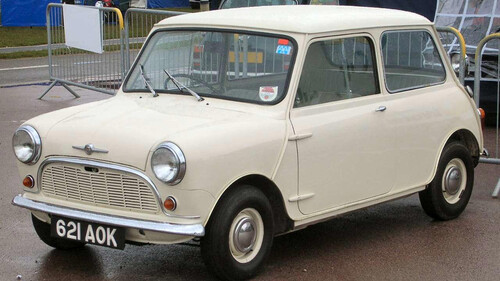
The automotive industry began more than a century ago and has grown and developed over the many decades since. Each decade has brought new and more interesting vehicles that have paved the way for what comes after them. Some cars felt like fads that were only around for a few years, while others cemented their place in the industry and became the foundational vehicles of an entire industrial movement.Where did it all begin? That is the question asked whenever a market trend lasts for many years in the automotive industry. Some cars come along and change the rules of the game as much as they alter the game itself. Automakers have tried for more than a century to be the first to market with something new, but not all have made that happen.These five cars set the tone for what would come after them. They have been instrumental in major changes in the automotive world, kickstarting new market trends. In some cases, the changes were industry-wide and adopted by all automakers, but the original idea and product were still the foundation. Ford Model T (1908) Science Photo Library The Moving Assembly Line Cars are heavy, impossible to move until they have wheels, and can be difficult to build. Even in 1908, when the first Ford Model T began reaching the market, it was difficult to build each one because they had to be put together in one location, and the workers had to move around the car to build it. It took more than twelve hours to build one car, which was problematic.Henry Ford’s goal was to build more cars and make them relatively inexpensive. The Model T was pretty basic and only offered in a few variations at the time to make them cheaper, but they weren’t cheap enough for Ford, which was determined to build cars that everyone could afford. Other Industries Did It, Why Not Cars? The moving assembly line, which Ford first developed and used in 1913, became the single greatest development in the automotive industry. This continuous-flow process was already being used by other industries, such as flour mills, breweries, canneries, and industrial bakers. While those businesses produced much smaller items than cars, Henry Ford got to work to develop a similar process for cars.He unveiled the moving-chassis assembly line in December 1913, and it quickly reduced the time to build a Ford Model T from twelve hours to one hour and 33 minutes. A mechanized belt was added to the assembly line in February 1914, which allowed the cars to move along from one worker to the next at a speed of six feet per minute.Nostalgic Motoring 10 Million Cars On June 4, 1924, the 10-millionth Model T rolled off the assembly line at the Highland Park facility. For several decades, the Model T was the most mass-produced and highest-selling vehicle in the world. It didn’t last much longer than 1927 because it had caused car prices to drop, allowing many customers to begin asking for inexpensive cars with features that the Model T didn’t offer. Still, the moving assembly line and the Model T have to be the most important combination in the history of the automotive world, changing the industry forever. Volkswagen Beetle (After World War II) GR Auto Gallery Iconic Shape And Function After World War II, Germany needed a car to call its own. That car is one that actually came from before the war and began production in 1938. This car is the Volkswagen Beetle, and it was in production from 1938 until 2003, with only a brief stoppage during World War II.The Volkswagen Beetle was introduced in 1934 when Ferdinand Porsche created a design for a “people’s car,” which was a common theme during the Nazi-controlled era in Germany. The design was proposed to Adolf Hitler, which might be the singular black mark on the car. A Masterpiece Of Innovation The Beetle was compact, practical, inexpensive, and easy to maintain. It had a small air-cooled, rear-mounted engine that powered the rear wheels, giving the car impressive handling. When compared to the massive cars built in America, the Beetle was everything they were not.Many small cars have come onto the market and haven’t lasted long because they lacked the qualities that made the Volkswagen Beetle special. Think of the Yugo that seemed to practically fall apart while driving off the dealer lot, and you’ve got the picture. Conversely, the VW Beetle was reliable, sturdy, dependable, and cheap. The company created some clever advertising campaigns to bring the Beetle directly into public consciousness.Clasiq An Iconic Car For The Masses The post-war Beetle began production in 1945, and there were 21.5 million models of this first-generation car that were sold around the world. This made it the most popular car built on a single platform in the history of the industry. In America, the Beetle was sold from 1950 to 1979, and it became a popular car for every driver.For several years, the Beetle’s singular design was the image of a fun, carefree lifestyle, which seems a bit ironic considering its Nazi roots. In 1972, the 15,007,034th Beetle rolled off the assembly line in Germany, making it the most highly produced car in history.The Volkswagen Beetle was an innovative car that became the foundational model for Porsche sports cars and was also the build used for various beach-going dune buggies in the 1960s and 1970s. Today, the Toyota Corolla has been built in higher numbers than the Beetle. Still, the Beetle, affectionately known as the “Bug” is a cultural icon that many still admire today. Mini (1959) MotoringFile The Transverse Engine Arrives Europe faced a fuel crisis long before America ever did. The post-war feeling of the continent, coupled with a shortage of fuel, spurned the development of Mini in 1959. Sir Alec Issigonis turned the crisis into an opportunity to build a car that would provide ingenious use of space and improve fuel mileage in the process. His invention became the original transverse engine built, which was an engineering and design challenge of the time.Through creative use of space, Issigonis broke the rules of car engineering. Early Mini models had what became a signature short front end and spacious cabin, making use of the available space. These early models weren’t built with heating; that was an option, but it became a standard feature later on. Still, this new car was focused on the essentials and nothing superfluous.Mini John Cooper Gets In On The Action You might wonder why Mini cars are named after John Cooper and not Sir Alec. Cooper was Sir Alec’s friend and, more importantly, a motorsport pioneer. Cooper took the prototype Mini out for a spin and realized it cornered extremely well; in fact, it was like no other car at the time. He talked about Issigonis preparing the Mini for the Rallye Monte Carlo.By combining the minimalist approach of Sir Alec with the maximalist approach of Cooper, the Minin became an extremely unique vehicle. It’s a small car that saves on fuel but provides incredible driving fun. Daring To Be Different The Mini didn’t reinvent the wheel, per se, but this car revolutionized the industry by creating new rules of engineering and possibilities. In addition to the transverse engine and impressive steering, the car had an incredible suspension system that gave it the famous feeling of a go-kart, which is still part of the Mini brand today. Toyota Prius (1997) GreenFleet The Car Of The Future Many cars have been presented at World Fairs and various shows wearing the moniker “The Car of the Future,” but only one took a realistic approach to this. The Toyota Prius was born out of the desire to build a global car for the 21st century. This led to the project name of G21, which began in 1993 and was greenlit on February 1, 1994, encompassing the ideas of environment, energy, and safety.Several burgeoning issues of the time were energy resources, global warming, and air pollution. These issues carry on today, but the G21 project was to help Toyota face some of these challenges. This led to a core development concept of a car with a wide interior and excellent fuel efficiency. Not Initially A Hybrid Despite the Prius being so synonymous with hybrid today that it goes together like peanut butter and jelly, the G21 team didn’t initially think of using a hybrid powertrain. Electrification was nothing more than a thought in the mid-1990s, and the team didn’t feel that hybrid technology could be achieved by the start of the 21st century.Instead, they focused on a direct-injection engine with an efficient transmission to raise fuel efficiency to 1.5 times that of similar cars. Then the hammer came down. In November 1994, Akihro Wada, the executive vice president of technology at the time, instructed the G21 team to make the car a hybrid, and if that couldn’t be done, the project would be axed.As they say, the rest is history.Car and Driver The Toyota Hybrid Was Born The first-generation Toyota Prius was launched in October 1997. It was a compact car with a 1.6-liter hybrid four-cylinder engine that produced 40 mph in the city and 51 on the highway. This was much better than any other car on the road. The wedge shape helped increase fuel mileage and cut down on wind resistance, and the hybrid was born.The timing of the Prius, coupled with a strong marketing campaign, was just right. Honda had built its hybrid Insight and released it in 1999, but the Prius already had a foothold and a stronger presence. With gas prices on the rise, many drivers turned to the Prius for relief. Today, hybrid technology is widely used across the automotive industry and has become a proven technology for more than just fuel savings. Range Rover (1970) Range Rover Luxury Off-Roading Is Born Before 1970, luxury SUVs weren’t nearly as popular or as successful as they became. Thanks to Range Rover, an entirely new segment of the automotive world was launched. Before 1970, most SUVs were thought of as truck-based passenger vehicles that offered high levels of capability and off-roading qualities, but not as luxury models. Range Rover changed that.The 1970 Range Rover became known as the world’s most luxurious SUV with amazing off-road capabilities. This combined the best of two worlds that many experts wouldn’t have expected to collide. Why would you need luxury features in an off-road vehicle? Instead of answering that question, Range Rover simply built its vehicles and let the public decide for themselves. The First Velar MotorTrend The Velar name, which sounds like something extra special on a Range Rover, is derived from the Italian word “velare,” meaning to veil or cover. The original prototype of the Range Rover was a closely guarded secret, and designers and engineers used this name to keep it that way. They fitted the first 26 prototypes with the Velar badge to keep its identity disguised.Once the prototypes had proven themselves, the 1970 Range Rover was offered. It was a three-door SUV that was met with widespread criticism and acclaim, making it a polarizing vehicle. The combination of capability and elegant design eventually caught on, making it a success. The first Range Rover was the first vehicle with permanent 4WD, and it had a split tailgate, clamshell hood, and continuous beltline.Can you imagine an automotive market without the Mercedes-Benz G-Class, BMW X8, Cadillac Escalade, Lincoln Navigator, or Lexus LX? These luxury SUVs might not have come about if it weren’t for the original, the 1970 Range Rover.Sources: History, Wired, Volkswagen, Car and Driver, Mini, Toyota, Range Rover.