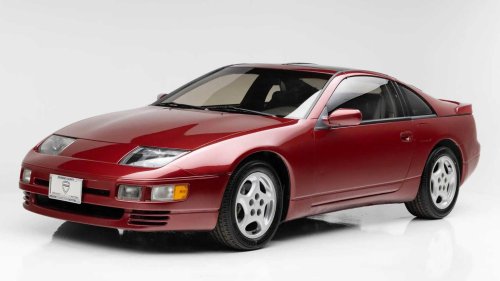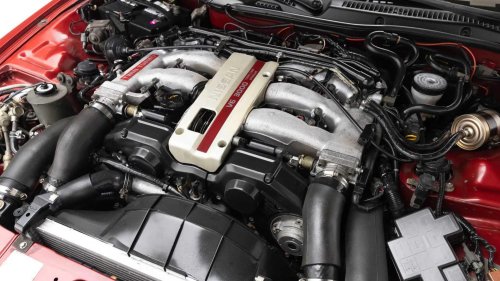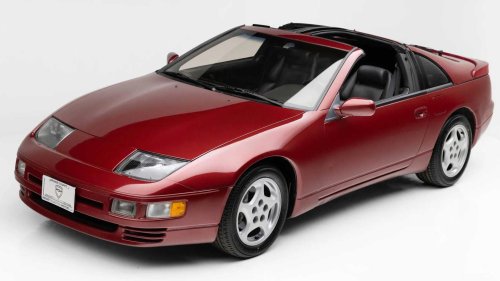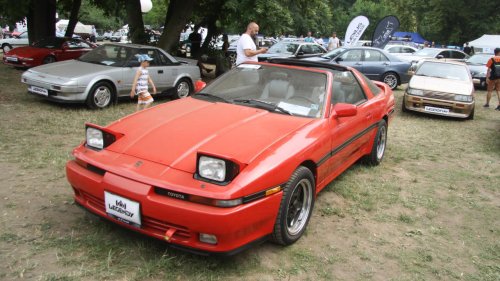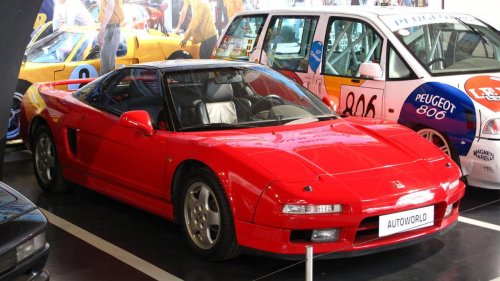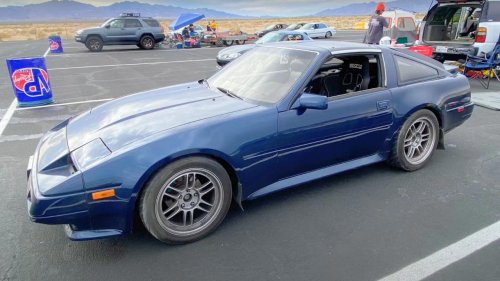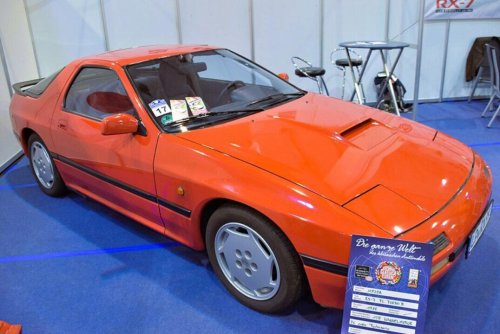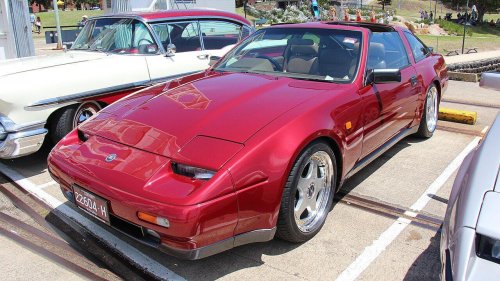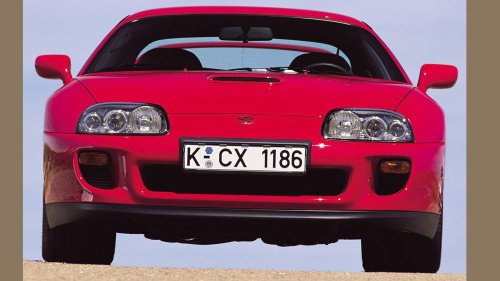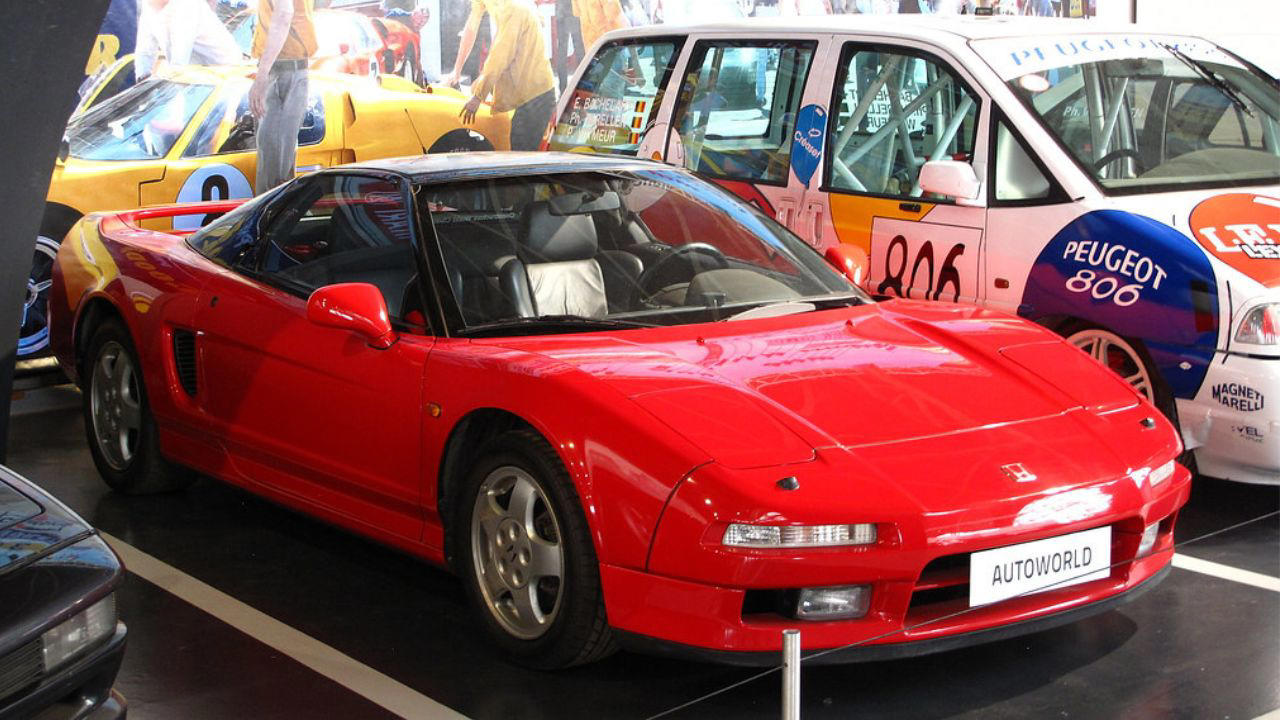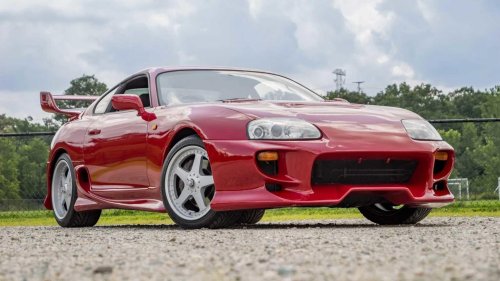







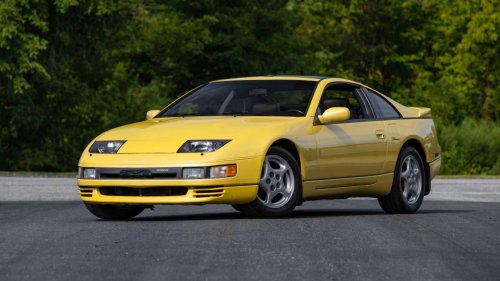
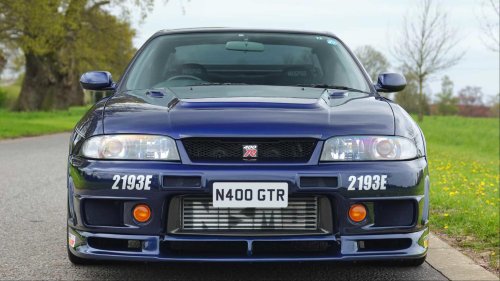

















If the '60s were the golden age of American cars, then the '90s were undoubtedly the golden era of JDMs. While American muscle cars were still fighting for a taste of the power they'd lost to the oil crisis, Japanese sports cars were thriving. In fact, they outran more exotic European brands' offerings such as Jags, Porsches, and even Ferraris.In an effort to put an end to the raging horsepower wars going on in the East, Japanese automakers had to establish a Gentleman's Agreement to limit power outputs to just 280 hp. But, as a result, most of these brands purposely over-engineered their cars, leaving the owners to do the rest and creating some of history's greatest tuner cars and sleepers in the process, many of which can still crush modern sports cars in 2025. Here are ten Japanese cars that deliver on that claim. Toyota MkIV Supra Turbo Bring a Trailer Specs We wanted to get the MkIV Supra out of the way first because it's easily the most famous JDM car on this list. It all comes down to the legendary 2JZ-GTE inline-six under its hood. From the factory, the MkIV Supra Turbo pushes just over 320 hp to the rear wheels for a sub-5-second 0-60 mph, which already puts it ahead of most muscle cars and sports cars of its era (and even modern ones).However, the engine under its hood is arguably even more beloved than the car that made it famous. One could venture as far as to call it overrated. Stock, it's not much better than many other similar engines. However, the 2JZ features a myriad of design decisions that make it a no-brainer choice for tuners to choose over other engines for the safest four-figure horsepower build possible with virtually zero risks or downsides. These include a robust cast iron block, forged internals including connecting rods, and a strong bottom end. It's also extremely easy to install and replace mods, and the aftermarket support is massive at this point.Long story short: no, a stock Supra will not outrun any supercar (or even the new 2.0 MKV Supra), but throw a few grand at it and watch it turn into a reliable supercar killer. Mazda RX-7 FD3S via Doug DeMuro YouTube Channel Specs The RX-7 FD3S has slowly earned a reptuation as one of the best-looking, best-driving, and most desirable JDM sports cars ever made. From its cool and extinct rotary engine that revs to 9000 rpm to its sleek and timeless design, everything about the RX-7 is unique and only allows it age like fine wine.Like most JDM cars on this list, the tiny RX-7's 280-hp power figure was mandated by Japan's Gentleman's Agreement and grossly underrated. It's also very easy to tune with an incredible aftermarket support. Weighing no more than 2600 lbs, the RX-7 will reach 60 mph in 5 seconds flat. But it's very rare to find an FD RX-7 that hasn't been tuned or modded to at least 350-400 hp nowadays, and that's enough power to show its tail lights to most new sports cars. Nissan Skyline GT-R R34 2000 Nissan Skyline R34 GT-R Specs Despite recently becoming a bona fide classic, the R34 GT-R is one of the most competent Japanese sports cars ever produced. When it hit the market in 1999, it was at least a decade ahead of its time, using advanced real-time data logging with a multi-function display designed to track important performance metrics on the track.Combining the brand's ATTESA E-TS AWD system that earned its predecessor the nickname "Godzilla" with an underrated engine that puts out north of 320 hp from the factory, the GT-R will still outrun most modern sports cars and muscle cars in a straight line and on the track. Take the R34 to a certified tuner shop, and watch the legendary twin-turbo RB26DETT inline-six make twice the power with some bolt ons such as a better fuel system with larger injectors, new exhaust, ECU mod, and bigger turbos. Though, more extensive mods will easily bring these JDM legends to over 1000 hp. Gearheads already knew this in the early 2000s, though, helping the car secure numerous iconic pop culture appearances including starring in Fast and Furious driven by Brian O'Conner, after which its value on the used market absolutely skyrocketed. Honda NSX-R (NA1) Honda NSX-R front end Specs More specifically, the second generation of Honda's innovative daily driver supercar. The NSX burst on the car scene in 1991 as Honda's ultimate daily driver supercar – the first of its kind. It was carefully engineered with input from F1 legend Ayrton Senna and rode on the world's first aluminum body and chassis in a mass-market car.Mounted behind the driver, for a near-perfect weight distribution, is a 3.0-liter VTEC V6 advertised at 270 hp and mated to a 5-speed stick. Power was increased with subsequent models to 290 claimed hp. Like a proper exotic supercar, it uses no forced induction, instead spinning the crank up to 8000 rpm to make its power.The car we're talking about here, however, isn't your regular NSX. It's the ultimate evolution of the first-gen models, representing the epitome of Honda's late '90s and early 2000s engineering. Perfecting on the original NSX recipe, the first-gen NSX-R is completely hand-assembled and shaves 172 lbs thanks to carbon fiber components.Representing the epitome of Honda's late '90s engineering, the NSX-R took the original NSX recipe and perfected it, shaving 172 lbs by using carbon fiber. It's easily one of the most coveted JDM models ever, and while it's still forbidden fruit in America, imported models are worth an average of $362,064 according to classic.com. 1994-1999 Mitsubishi 3000GT BringaTrailer Specs Now borderline forgotten and underrated, the Mitsubishi 3000GT (also rebadged as the Dodge Stealth in America) is easily one of the greatest sports cars of the '90s. It's among the first AWD sports cars with a manual transmission in America, and its 3.0-liter twin-turbo V6 made it quicker and more powerful than pretty much any muscle car of the era short of a ZR1 Corvette or Dodge Viper (which were closer to supercars).Performance isn't the only thing that put the 3000GT ahead of its time, as the car also used active aerodynamics, electronic suspension, and even four-wheel-steering – something that was virtually unheard of in the early '90s. Subaru Impreza 22B STI 1998 Subaru Impreza STI 22b Specs The Impreza 22B STI was essentially a street-legal WRC car built to celebrate Subaru's WRC domination after the brand won three consecutive constructors' titles from 1995 to 1997. It's a special road-going coupe with a 2.2-liter boxer under the hood (hence the name) sending power to all four wheels via a 5-speed manual transmission and Subaru's famous symmetrical AWD. How much power? Well, Subaru claims 280 hp to not break the Gentleman's Agreement, but gearheads now know the real number is closer to 300 hp or more. That's because the 22B will race to 60 mph in just 4.5 seconds.Not only is the 22B STI ridiculously quick and capable on all terrains, but it's also the rarest Subaru ever built, with just 450 units leaving the factory. Because of this, it's now worth, on average, north of $200k on the used market (Classic.com). Nissan Silvia S15 Spec-R Nissan Silvia S15 Aero Spec-R Specs The four-cylinder Silvia S15 was already a great budget sports car alternative to some bigger three-liter JDMs such as the Supra and GT-R, but the Spec-R was a bona fide drift car. It got a stiffened suspension with an LSD, new 6-speed manual transmission, a faster turbo, revised camshafts, and toughened-up internals. The result was a superbly balanced sports car pushing a claimed 250 hp to the rear wheels only. S15 Spec-Rs are incredibly underrated sports cars today, worth just over $25,000 on the used market for a really nice one. However, their notoriously tunable engines can easily handle north of 500 hp, and so can the chassis. Toyota Chaser JZX100 Tourer V YouTube - 1320video Specs The first and only sports sedan on this list, the Chaser JZX100 often gets overlooked and overshadowed by other JDM cars. Yet, it's every bit as fast, with the venerable 1JZ-GTE under the hood – a slightly smaller version of the MkIV Supra's 2JZ-GTE with the same forged internals and also rated at 280 hp, but this time with just one turbo bolted on. And, like its more iconic sibling, the Chaser can handle tons of power too, and if you see one on the roads, chances are it's pushing well north of 400 hp, which means it will outrun 90% of the sports cars out there. The fact that not many people know about it makes it that much more of a sleeper. Nissan 300ZX Twin Turbo (Z32) front Specs The 300ZX was designed to go directly after exotic sports cars like the Porsche 911, offering state-of-the-art technology for the time such as active aero and 4-wheel steering. The VG30DETT twin-turbo V6 was responsible for 300 hp and 283 lb-ft being sent to the rear wheels, helping the 300ZX to a 0-60 mph time of just under 5 seconds.For all intents and purposes, the 300ZX succeeded in its mission of beating a base Porsche 911 at a much more approachable price, and today, it remains an especially nice used sports car bargain. Nissan Skyline GT-R NISMO 400R Nissan GT-R R33 NISMO 400R front bumper Specs The absolute king of high-performance '90s JDM cars isn't a Honda NSX or even the legendary MkIV Supra – it's actually this thing. A Godzilla on steroids, the 400R burst on the market to celebrate the Nissan R33 GT's Le Mans successes, featuring a re-engineered version of the car's 2.6-liter twin-turbo RB26DETT inline-six dubbed the RB-X GT2.Boasting a 2.8-liter displacement with new N1 turbos and a redline increased to 8000 rpm, the car was pushing (at least) 400 hp to all four wheels. Pair that up with advanced aero and carbon fiber components, and you're in for a sub-4-second 0-60 mph and race-car worthy perfomrance on the track.Nissan originally planned to build 100 units, but only 44 are known to exist today, inflating their prices on the used market to over a million dollars (if you can find one in America, that is). That's partly because they're also impossible to replicate, since the parts to make them were only ever made for these cars by NISMO, and no aftermarket shop offers them.