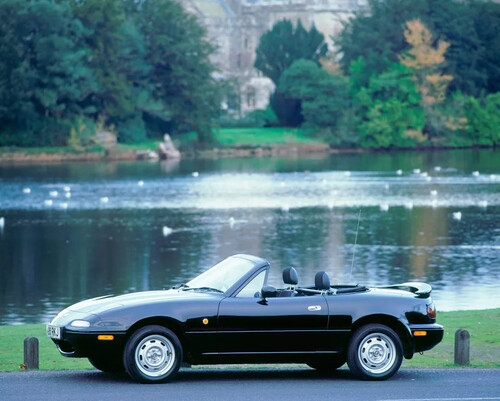
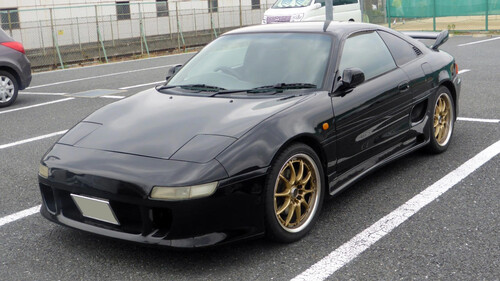
In the 1990s, a wave of compact sports cars flooded the market. Many of them were meant to capture a new kind of driver – young, style-conscious, and ready for something different. Some models caught on instantly. Others were dismissed, seen as strange experiments or half-steps between categories. Yet, time has a way of reshaping reputations. Among the forgotten misfits, one small Honda has quietly grown into a cult favorite. It was quirky, different, and easy to overlook. But not anymore.This article tracks the rise of a car that was once mocked, now embraced. From its misunderstood launch to its surprising specs, from secondhand obscurity to enthusiast favorite, we dig into why this car finally found its audience. The Honda Del Sol Was A Sports Car Everyone Laughed At Honda Civic Del Sol driving on the backroads ariel view The Honda Del Sol arrived in 1992, replacing the CR-X and aiming to appeal to young drivers who wanted something more stylish than a Civic but still affordable and practical. Officially known as the Civic del Sol in some markets, it shared a platform with the fifth-generation Honda Civic. This gave it a solid base to work from – reliable, lightweight, and efficient. But Honda had something else in mind: a fun, open-top driving experience without the drawbacks of a full convertible.The Del Sol was a two-seat targa-top coupe, meaning its roof panel could be removed by hand and stored in the trunk. That was new for Honda, and rare in its class. There was even a power rear window that dropped down like a convertible's, adding to the open-air feel. Yet, from the beginning, many didn't take it seriously. The proportions looked odd to some. The rear end was bulky. It was front-wheel drive. Critics questioned if it was a true sports car at all. Honda Del Sol US Sales By Model Year Source: HondaWhat hurt the Del Sol most wasn't the way it drove, but the way it looked. Some thought it resembled a toy. Others said it looked like a Civic in costume. In a decade full of turbocharged coupes and rear-drive roadsters, the Del Sol seemed tame. Reviewers often praised its build quality and handling, but enthusiasm was low. Sales were decent at first, but waned over time. The Del Sol lasted only until 1997 in the U.S., and quietly left the scene.For years, the car slipped into the background. It became cheap, often modified poorly, and rarely seen in good condition. Enthusiasts turned their attention to models like the Miata, Integra, or Eclipse. The Del Sol? It was forgotten, or worse, mocked. It was even called Del Slow. VTEC Engines, Manual Transmission, And Open-Air Experience Via Mecum Auctions Honda Del Sol Key Tech Specs Source: HondaDespite its reputation, the Del Sol had real performance potential. Honda offered it with several engines during its life, ranging from practical to peppy. The base model came with a 1.5-liter SOHC engine producing around 102 horsepower. Not impressive, but frugal. Things got more interesting with the Si trim, which added a 1.6-liter SOHC VTEC engine making 125 horsepower.The real standout was the Del Sol VTEC, introduced in 1994. This model packed a 1.6-liter DOHC VTEC engine, the B16A3, producing 160 horsepower. This high-revving engine could scream up to 8,000 RPM and was shared with some of Honda’s more performance-focused models overseas. In a car that weighed around 2,600 pounds, it made a difference. The Del Sol VTEC could hit 0-60 mph in about seven seconds – quick for its class.The car used a front-wheel-drive layout, paired with a five-speed manual transmission. Suspension was fully independent, giving it a sharp and nimble feel on twisty roads. Braking was solid, especially on the VTEC model with four-wheel disc brakes. Even the steering had good feedback, typical of Honda's tuning in that era.Inside, the cabin was simple but driver-focused. The seating position was low, the shifter was short and precise, and visibility was excellent. There weren’t many gadgets, but everything worked. The removable targa roof could be stored securely in the trunk, which remained usable thanks to a smart design. People Are Starting To Appreciate The Del Sol Via: Mecum Auctions Fast forward to today, and the Honda Del Sol is making a quiet comeback. Car enthusiasts are giving it a second look, and it’s gaining respect in the community. One reason? Its rarity. Clean, unmodified Del Sols are now hard to find. Most were either modified, wrecked, or neglected. Finding a stock example feels like a discovery.Prices have started to climb, especially for the VTEC models. While base models can still be had for a few thousand dollars, pristine VTECs in original condition can fetch over $15,000. That’s a sharp rise from just a few years ago. Collectors are beginning to realize that this was a unique chapter in Honda's history – a car that tried something new and now stands out because of it.The car scene has also changed. Retro '90s style is in. Enthusiasts are chasing cars that feel analog and fun without being too expensive. The Del Sol fits that bill perfectly. It’s lightweight, simple, and offers open-top driving with Honda reliability. It also benefits from the halo effect of the Honda badge. That same VTEC technology and build quality that made other Hondas of the era legends now boosts the Del Sol's image. Honda Del Sol Average Prices Fair Condition (High Mileage, Cosmetic/Mechanical Issues): $2,300–$3,300 Typical of base S models with over 100,000 miles. Source: Kelley Blue Book Good Condition (Well-Maintained, Moderate Mileage): $3,500–$5,700 Includes Si trims with service records and fewer modifications. Source: Edmunds Very Good to Excellent Condition (Low Mileage, Mostly Stock): $6,500–$10,000+ Often Si or VTEC trims with clean history and minimal modifications. Source: Kelley Blue Book Collector-Grade (Low Mileage, Original Condition): $13,000–$18,000+ Primarily VTEC models with under 50,000 miles, often sold at auctions. Source: Classic.comIf you browse Bring a Trailer's history, you'll discover that indeed some of the cleanest VTEC examples sold for more than $18,000. Ironically, that was the starting price of the Del Sol VTEC from the later model years when the model was in the showrooms. Honda Del Sol And The Competition Bring A Trailer Back in the 1990s, the Honda Del Sol had plenty of rivals – many of which overshadowed it. The most direct was the Mazda MX-5 Miata. The Miata had rear-wheel drive, a classic roadster shape, and a more traditional convertible top. It was aimed squarely at driving purists. From day one, it won hearts and accolades. Compared to that, the Del Sol’s front-wheel drive and quirky styling made it seem like an odd compromise.Then there was the Toyota MR2. In its second generation, the MR2 was mid-engined, sleek, and offered turbocharged power. It was quicker and more aggressive than the Del Sol. It also carried a higher price and less practicality, but for many enthusiasts, it was worth it.Other rivals included the Eagle Talon and Mitsubishi Eclipse. These were sport compacts with turbo options and available all-wheel drive. They appealed to speed fans and tuners, offering more raw performance than the Del Sol could match. The Nissan 240SX also made waves, with its rear-drive layout and tuning potential.The Del Sol wasn’t trying to beat them all in power or prestige. It aimed to blend everyday usability with open-air fun and Honda engineering. That niche left it misunderstood. But today, that same niche makes it interesting.